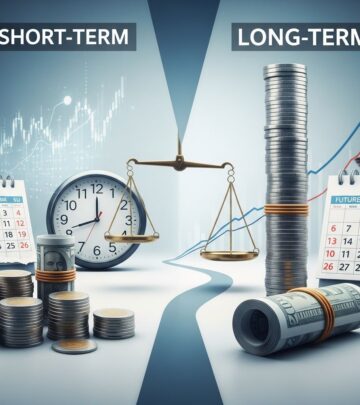
Lock in CD Rates Before They Decline in 2026
Secure your savings with competitive 6-month CD rates while they remain elevated

The financial landscape in 2026 presents a unique opportunity for savers seeking reliable returns on their deposits. With interest rates expected to trend downward as the Federal Reserve implements additional rate cuts, now may represent an optimal window to secure favorable rates on certificates of deposit (CDs), particularly six-month terms. Understanding the dynamics of short-term CDs and the timing considerations involved can help you make an informed decision about your savings strategy.
Why Six-Month CDs Matter in Today’s Environment
Six-month CDs occupy a distinctive position within the broader savings landscape. Unlike traditional savings accounts or money market accounts that offer variable interest rates, CDs provide fixed returns locked in at the time of account opening. This predictability becomes increasingly valuable as interest rate forecasts suggest declining yields across deposit products throughout 2026.
The current rate environment reflects a shift from the elevated rates that characterized 2024 and early 2025. According to Federal Deposit Insurance Corporation (FDIC) data, six-month CDs are currently averaging around 1.57% annual percentage yield (APY), though promotional rates from competitive institutions substantially exceed this figure, reaching 4% or higher. This divergence between national averages and best-available rates underscores the importance of shopping among financial institutions rather than settling for your primary bank’s standard offerings.
Understanding Current Rate Trends and Forecasts
Financial analysts and banking experts project continued rate compression throughout 2026. According to Bankrate’s industry forecasts, the highest nationally available one-year CD rate is expected to decline to approximately 3.5% APY—a drop of roughly one percentage point from 2025 levels. For five-year CDs, analysts anticipate maximum rates around 3.8% APY, reflecting a half-percentage point decrease from the previous year’s peak rates.
This downward trajectory stems from anticipated Federal Reserve policy adjustments. A falling-rate environment is already underway following three Fed rate cuts implemented in 2025. Banks typically adjust their CD offerings in response to Fed decisions, as the federal funds rate serves as a primary benchmark for deposit product yields. When the Fed signals further rate reductions, banks respond by lowering rates on new CDs—though existing CD holders continue earning their locked-in rates until maturity.
The distinction between current rates and forecasted rates creates a compelling case for action. Locking in today’s rates before anticipated cuts can preserve your earning potential and shield your returns from declining yields.
Calculating Your Potential Earnings
The concrete financial benefits of opening a six-month CD at current rates versus anticipated future rates warrant concrete calculation. Consider this practical example:
- A $10,000 deposit into a six-month CD at a competitive 4% rate generates approximately $198.04 in interest over the term.
- The same $10,000 at the national average 6-month rate of 2.36% yields only $118.04 in interest.
- This represents an $80 difference on a single $10,000 investment—a meaningful increase in returns simply through rate-shopping.
For larger deposits or multiple CDs, these differences multiply. The real value emerges when comparing current rates against the lower rates anticipated in the coming months. If current competitive six-month rates decline by 0.5 to 1 percentage point, that same $10,000 investment would generate $25 to $50 less in interest at maturity.
Key Advantages of Six-Month CD Vehicles
Beyond rate considerations, six-month CDs offer specific structural benefits that make them particularly suitable for certain savings objectives:
- Guaranteed Returns: Your rate remains fixed for the entire term, providing certainty regardless of market fluctuations. This contrasts sharply with variable-rate savings accounts where yields can decrease unpredictably.
- Competitive Yields: Six-month CDs currently offer substantially higher APYs than most savings accounts, sometimes delivering four to eleven times the returns of standard savings products.
- Balanced Time Horizon: The six-month maturity creates a middle ground between immediate liquidity and extended commitment. You access funds sooner than longer-term CDs while earning more than very short-term instruments.
- Reinvestment Flexibility: Upon maturity, you regain full control of your principal and earned interest. In a declining-rate environment, this allows you to reassess your options rather than being locked into lower renewal rates automatically.
Important Limitations and Considerations
While six-month CDs present attractive opportunities, they carry specific constraints that require careful evaluation:
- Early Withdrawal Penalties: If you need to access funds before the maturity date, banks impose penalties that typically reduce earned interest or charge flat fees. In some cases, early withdrawal penalties can exceed earned interest, resulting in principal reduction.
- Lower Rates Than Longer Terms: Banks structure CD pricing to incentivize longer commitments. Five-year CDs typically offer better rates than six-month CDs, meaning you sacrifice some yield for enhanced liquidity.
- Rate Renewal Risk: When your CD matures, current rates may be considerably lower, affecting your ability to renew at comparable yields. Planning for reinvestment becomes important in declining-rate environments.
- Capped Earnings Potential: Unlike stocks or mutual funds that offer unbounded upside, CDs cap your returns at the fixed rate, limiting participation in potential market gains.
Evaluating Your Financial Readiness
Deciding whether to open a six-month CD depends on assessing your specific financial circumstances and objectives. Several key questions merit consideration:
- Do you have emergency funds already established? CDs work best as supplementary savings vehicles, not replacements for accessible emergency reserves.
- Can you commit to not accessing these funds for six months without financial hardship? Confirming that you won’t face penalty-triggering withdrawals is essential.
- What are your savings goals for the next six to twelve months? Aligning CD maturity dates with planned expenses or investment opportunities can optimize your strategy.
- Have you compared rates across multiple institutions? Shopping among online banks, credit unions, and traditional banks reveals substantial differences in available rates.
FDIC Insurance and Security Protections
A significant advantage of bank-issued CDs involves federal deposit insurance coverage. Most CDs offered through FDIC-insured banks or NCUA-insured credit unions provide protection up to $250,000 per depositor, per institution, per ownership category. This insurance eliminates credit risk—even if your financial institution fails, your deposit remains protected up to the insurance limit.
Verifying that your chosen institution maintains appropriate federal insurance before opening a CD provides essential peace of mind. Deposits exceeding insurance limits carry unprotected risk, making it important to structure larger savings across multiple institutions or ownership categories when necessary.
Strategic Timing in Rate Cycles
Financial advisors increasingly suggest that current market conditions create opportune timing for CD commitments. If the Federal Reserve implements anticipated rate reductions throughout 2026, short-term rates will likely decline relatively quickly given their sensitivity to Fed policy changes. Short-term CDs track closely with federal funds rate movements, meaning they typically decline faster than longer-term rates during tightening cycles.
Locking in six-month CDs now captures higher rates before the anticipated decline. Upon maturity, if rates have fallen as expected, you’ll have enjoyed six months of returns at the more favorable rate. You also regain the option to reassess your strategy—potentially splitting your matured proceeds between new CDs at lower rates and other investment vehicles.
Comparing CD Options Across Institutions
| Institution Type | Typical Rate Range | Advantages | Considerations |
|---|---|---|---|
| Online Banks | 3.90-4.25% | Competitive rates, minimal overhead costs | Limited personal service, potential accessibility concerns |
| Traditional Banks | 1.50-3.00% | Local branch access, established reputation | Typically lower rates than online competitors |
| Credit Unions | 2.00-4.00% | Member-focused service, competitive rates | May require membership, smaller product selection |
| Brokered CDs | 3.90-4.00% | Professional management, diverse terms | Potentially higher fees, secondary market considerations |
Planning for CD Maturity and Reinvestment
Thinking beyond the initial six-month term strengthens your overall CD strategy. When your CD matures, circumstances may have changed substantially. Interest rates could be lower, your financial situation may have evolved, and new savings goals might have emerged.
Consider establishing a maturity plan before opening your CD: Will you automatically renew? Reinvest in a different CD term? Move proceeds to savings accounts or other investments? Planning ahead prevents making rushed decisions at maturity when rates may be less favorable than current offerings.
Alternative Strategies Worth Considering
- CD Laddering: Opening multiple CDs with staggered maturity dates creates regular access to maturing funds while maintaining portions of your savings at potentially higher rates for longer durations.
- No-Penalty CDs: These alternatives eliminate early withdrawal penalties, providing greater flexibility, though typically at slightly lower rates than traditional CDs.
- High-Yield Savings Accounts: For emergency funds requiring immediate access, high-yield savings accounts offer competitive rates without maturity restrictions, though typically at rates lower than CDs.
Making Your Final Decision
Determining whether to open a six-month CD requires balancing several factors: current competitive rates significantly exceed anticipated future rates, your financial situation supports the six-month commitment, you’ve confirmed adequate emergency reserves exist, and you’ve compared offerings across institutions to secure the most favorable rate available. Meeting these conditions suggests that locking in a six-month CD now represents a prudent financial decision.
The convergence of relatively attractive current rates with forecasted declining yields creates a window of opportunity that may not persist throughout 2026. By taking action while competitive six-month CD rates remain elevated, you preserve your earning potential and benefit from favorable rate conditions before the anticipated downward adjustment occurs.
References
- Best 6 Month CD Rates: Up to 4.25% for February 2026 — Experian. 2026. https://www.experian.com/blogs/ask-experian/6-month-cd-rates/
- How Much Can You Earn with 6-Month CD Rates? — DR Bank. 2026. https://drbank.com/whats-new/how-much-can-you-earn-with-6-month-cd-rates/
- 2026 CD rate forecast: Should you lock in rates now? — MyBankTracker. 2026. https://www.mybanktracker.com/cd/cd-rate-forecast
- CD rates forecast for 2026: APYs will trend lower but still beat inflation — Bankrate. 2026. https://www.bankrate.com/banking/cds/cd-rate-forecast/
- Certificates of deposit: Rates & CD investment options — Vanguard. 2026. https://investor.vanguard.com/investment-products/cds
- CD Rate Forecast: Are CD Rates Going Up in 2026? — NerdWallet. 2026. https://www.nerdwallet.com/banking/news/cd-rates-forecast
- Best no-penalty CDs of 2026: What you need to know — Fortune. 2026. https://fortune.com/article/best-no-penalty-cds/
Similar Articles








Read full bio of Sneha Tete