Loan vs. Line of Credit: Key Differences Explained
Understand the key differences between loans and lines of credit to make informed borrowing decisions.

Understanding Loans and Lines of Credit
When you need to borrow money, two common options emerge: traditional loans and lines of credit. While both allow you to access funds and repay over time, they function quite differently. Understanding these distinctions is crucial for making informed financial decisions that align with your specific borrowing needs and financial circumstances.
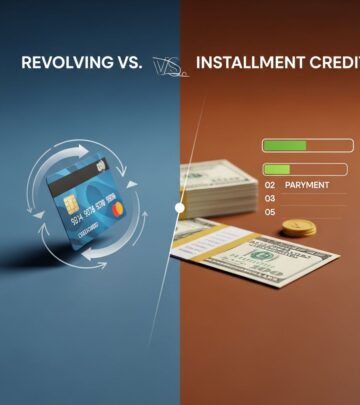
A loan is a fixed amount of money that a lender provides to you in a single lump sum. You receive all the funds at once and are obligated to repay the entire amount plus interest over a predetermined period. In contrast, a line of credit is a revolving credit arrangement that gives you ongoing access to funds up to a specified limit. You can borrow, repay, and borrow again as needed, paying interest only on the amount you actually use.
How Loans Work
A loan operates on a straightforward principle: you borrow a specific amount and repay it systematically. When you take out a loan, the lender disburses the entire borrowed amount upfront. This lump-sum approach means you have immediate access to all the funds you need, whether for purchasing a vehicle, financing education, or funding a home renovation.
Loans typically come with fixed interest rates, meaning your rate remains constant throughout the loan term. Your monthly payments are also fixed, allowing you to budget predictably since you know exactly how much you’ll pay each month. The repayment period is predetermined, usually ranging from a few years to several decades, depending on the loan type.
One significant characteristic of loans is that interest accrues immediately on the entire borrowed amount. Whether you need all the money right away or plan to use it gradually, you’ll be charged interest on the full loan amount from day one. This can result in higher overall interest costs compared to other borrowing methods.
How Lines of Credit Work
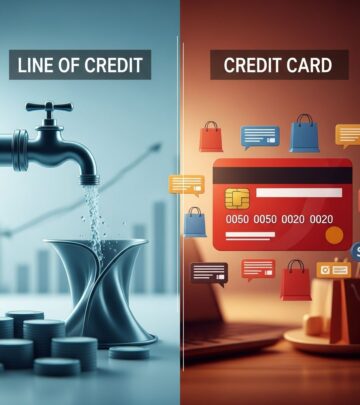
A line of credit functions more like a credit card than a traditional loan. Instead of receiving a lump sum, you receive approval for a maximum borrowing limit. You can then draw from this limit as needed, making it ideal for situations where your borrowing needs are uncertain or evolving.
Interest on a line of credit accrues only on the amount you’ve actually borrowed, not on your entire credit limit. If you have a $10,000 line of credit but only use $3,000, you’ll only pay interest on that $3,000. This feature makes lines of credit particularly attractive for those who want to borrow flexibly without committing to using the entire available amount.
Lines of credit typically feature variable interest rates, meaning your rate can fluctuate based on market conditions and the lender’s prime rate. Your monthly payments also vary, depending on how much you’ve borrowed and the current interest rate. Most lines of credit include a draw period—usually two to five years—during which you can access funds and make interest-only payments. After the draw period ends, you enter a repayment phase where you must pay back the outstanding balance.
Key Differences Between Loans and Lines of Credit
Interest Rates
One of the most significant differences lies in interest rates. Loans typically have lower interest rates than lines of credit. This disparity exists because loans are more structured and predictable products, making them less risky for lenders. A personal loan might carry an interest rate of prime minus 0.5%, while a line of credit might be priced at prime plus 0.5%—a full percentage point difference.
Your actual interest rate depends heavily on your credit score. Borrowers with excellent credit qualify for lower rates, while those with fair credit may face higher rates. Regardless, loans generally offer more favorable rates than lines of credit.
Borrowing Amount
Loans typically allow you to borrow larger amounts compared to lines of credit. For example, with a mortgage (a type of loan), you can borrow up to 95% of a property’s value under certain conditions. A home equity line of credit, by contrast, usually limits borrowing to 65% of the home’s appraised value, though this may reach 80% in some circumstances. This difference reflects lenders’ greater comfort with fixed-payment loan structures compared to revolving credit arrangements.
Flexibility and Use
Loans are less flexible in terms of how you can use the funds. A loan is typically designated for a specific purpose. You obtain an auto loan to purchase a vehicle or a mortgage to buy a home. It would be complicated or impossible to secure an auto loan that you could redirect toward home renovations.
Lines of credit offer significantly greater flexibility. You can use the borrowed funds for virtually any purpose—home improvements, education, debt consolidation, or emergency expenses. This adaptability makes lines of credit ideal for situations where your exact needs may be unclear or subject to change.
Access to Funds
With a loan, you receive all funds at once upon disbursement. This immediate access to your entire borrowing amount proves advantageous when you need a large sum for a specific transaction, such as purchasing a car or paying for college tuition. However, if you don’t need all the money immediately, you’re still charged interest on the entire amount from day one.
Lines of credit provide on-demand access to funds over an extended period. You can draw money as you need it, making this structure ideal for ongoing or unpredictable expenses where you can’t determine upfront exactly how much you’ll need.
Closing Costs
Loans often carry higher closing costs than lines of credit. These costs may include origination fees, application fees, and other charges associated with establishing the loan. While not all loans have closing costs, those that do typically exceed the administrative costs associated with setting up a line of credit.
Repayment Structure
Loans require fixed monthly payments over a predetermined term. Once you sign the loan agreement, your payment schedule is set. This predictability simplifies budgeting and financial planning.
Lines of credit feature variable payment structures. During the draw period, you might make interest-only payments, which can be quite low. Once the draw period ends, your payments increase as you enter the repayment phase and must pay down the principal. This variability can make budgeting more challenging.
Comparative Overview
| Feature | Loan | Line of Credit |
|---|---|---|
| Interest Rate | Lower, typically fixed | Higher, typically variable |
| Borrowing Amount | Typically larger | Typically smaller |
| Funds Disbursement | Lump sum upfront | Draw as needed |
| Interest Charges | On full amount immediately | Only on amount used |
| Flexibility | Less flexible, purpose-specific | More flexible, multiple uses |
| Monthly Payments | Fixed amount | Variable amount |
| Closing Costs | Often higher | Usually lower |
| Repayment Term | Fixed, predetermined | Draw period then repayment period |
| Eligibility | Stricter requirements | Stricter requirements |
When to Choose a Loan
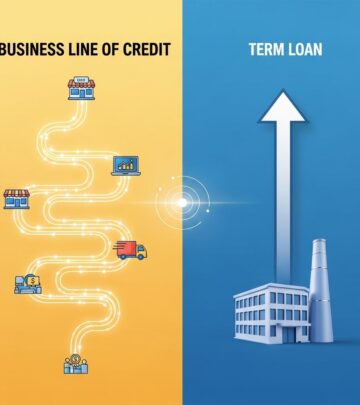
A loan is the right choice when you need a large sum for a specific, one-time purchase. Major expenses like buying a home, purchasing a vehicle, or financing education are ideal loan candidates. If you know exactly how much you need and when you need it, a loan’s structured approach works well.
Loans are also appropriate when you want predictable monthly payments and prefer fixed interest rates. If budgeting certainty matters to you and you want to avoid payment fluctuations, a loan provides that stability. Additionally, if you can secure a favorable interest rate due to good credit, a loan’s lower rates make it an economical choice.
When to Choose a Line of Credit
A line of credit serves you best when your borrowing needs are uncertain or evolving. Home renovation projects, education expenses, or business needs that might change are ideal scenarios for lines of credit. If you might not need to use the entire available amount, a line of credit ensures you only pay interest on what you actually borrow.
Lines of credit excel for those who value flexibility and want to maintain access to emergency funds. They’re also suitable if you have multiple smaller expenses spread over time rather than one large upfront cost. Additionally, if you prefer lower monthly payments during initial borrowing periods, a line of credit’s interest-only payment option during the draw phase may appeal to you.
Impact on Credit Score
Both loans and lines of credit affect your credit score, but differently. Taking out a loan typically causes a slight temporary dip due to the hard inquiry. However, a responsibly managed loan with consistent on-time payments builds positive credit history.
A line of credit impacts your credit utilization ratio—the percentage of available credit you’re using. Borrowing a large portion of your line of credit can negatively affect your score, even if you’re making payments on time. Maintaining a low utilization ratio helps protect your credit score.
Pros and Cons Summary
Loan Advantages
Loans provide funding in one lump sum, consistent payment amounts, fixed interest rates and repayment timelines, and funds usable for nearly any legal purpose. These features make loans predictable and straightforward.
Loan Disadvantages
Loans may have origination or application fees, require monthly payments based on the full borrowed amount even if you don’t immediately need all the funds, and typically have stricter eligibility requirements. Interest accruing on the full amount immediately is also a drawback.
Line of Credit Advantages
You pay only for what you use, potentially enjoy lower interest rates than credit cards, maintain ongoing access to funds, and have greater flexibility in how you use the money. These benefits appeal to those with uncertain borrowing needs.
Line of Credit Disadvantages
Variable interest rates mean your payments fluctuate, borrowing caps are typically lower than with loans, and high utilization can negatively impact your credit score. Stricter eligibility requirements also apply.
Frequently Asked Questions
Q: What’s the main difference between a loan and a line of credit?
A: The primary difference is how you receive funds. A loan provides a lump sum upfront, while a line of credit lets you borrow as needed up to a limit, paying interest only on the amount borrowed.
Q: Which has lower interest rates: loans or lines of credit?
A: Loans typically have lower interest rates. Loans are more structured, making them less risky for lenders, resulting in more favorable rates for borrowers.
Q: Can I use a loan for any purpose?
A: While loans can be used for various purposes, they’re typically designated for specific uses. Getting an auto loan for home renovations would be complicated or impossible.
Q: What happens if I don’t use my entire line of credit?
A: You only pay interest on the amount you’ve actually borrowed, not your entire credit limit. This is a key advantage of lines of credit.
Q: Which option is better for emergencies?
A: A line of credit is better for emergencies because you have ongoing access to funds and can draw as needed without a new application process.
Q: Do both options require collateral?
A: Most personal loans and personal lines of credit are unsecured, meaning they don’t require collateral. However, home equity loans and home equity lines of credit do use your home as collateral.
Q: How do these products affect my credit score?
A: Both affect your credit through hard inquiries and payment history. Lines of credit also impact your credit utilization ratio, potentially lowering your score if you borrow a large percentage of your limit.
References
- What’s the difference between a loan and a line of credit? — Fidelity Canada. 2024. https://www.fidelity.ca/en/insights/articles/loan-vs-line-of-credit/
- Line of Credit vs Loan — TD Canada Trust. 2024. https://www.td.com/ca/en/personal-banking/advice/borrowing/loan-vs-line-of-credit
- Personal Loans vs. Personal Lines of Credit — Bankrate. 2024. https://www.bankrate.com/loans/personal-loans/personal-loan-line-of-credit/
- Personal Loan vs. Personal Line of Credit — PNC Insights. 2024. https://www.pnc.com/insights/personal-finance/borrow/personal-loan-vs-personal-line-of-credit.html
- Personal Loan vs. Personal Line of Credit: What’s the Difference? — Experian. 2024. https://www.experian.com/blogs/ask-experian/personal-loan-vs-line-of-credit/
- Comparing Personal Loans and Lines of Credit — CIBC. 2024. https://www.cibc.com/en/personal-banking/loans-and-lines-of-credit/articles-resources/personal-loans-line-of-credit.html
Similar Articles








Read full bio of medha deb