Loan-to-Value Ratio: Definition and How LTV Works
Understanding LTV ratios: How lenders assess mortgage risk and determine your borrowing costs.
What Is a Loan-to-Value Ratio?
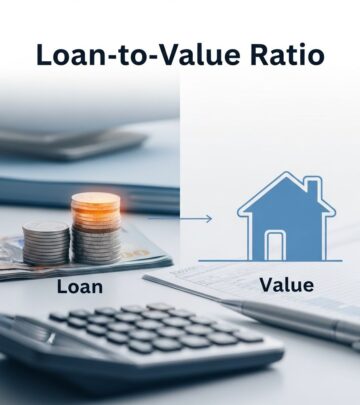
The loan-to-value (LTV) ratio is a financial assessment tool used by lenders to express the relationship between the amount of money borrowed and the appraised value of the asset being purchased. In real estate transactions, the LTV ratio represents the percentage of a property’s value that a lender is willing to finance through a mortgage loan. This metric serves as a critical risk indicator for financial institutions when determining lending decisions, interest rates, and whether additional insurance requirements apply to a mortgage.
For example, if a borrower obtains a mortgage of $130,000 to purchase a home appraised at $150,000, the LTV ratio would be calculated as ($130,000 ÷ $150,000) × 100, which equals 86.67%. This means the lender is financing approximately 87% of the property’s value, while the borrower is contributing 13% as a down payment or equity. Understanding this ratio is essential for prospective homebuyers because it directly influences the terms, costs, and feasibility of obtaining mortgage financing.
How Loan-to-Value Ratios Work
Lenders calculate LTV ratios to determine the level of risk associated with a particular mortgage. The fundamental principle underlying LTV assessment is that the higher the ratio, the greater the risk for the lender. When a borrower finances a larger percentage of a property’s purchase price, they have less equity invested in the home, which means the lender has less protection if the borrower defaults on the loan.
The valuation of a property is typically determined by a professional appraiser, although lenders often use the lower of either the appraised value or the purchase price, particularly when the transaction has occurred recently (within one to two years). This conservative approach protects lenders by ensuring they are not overextending credit based on potentially inflated valuations.
LTV ratios directly influence several aspects of the mortgage experience:
- Interest Rates: Borrowers with lower LTV ratios typically qualify for lower interest rates because they represent less risk to the lender.
- Loan Approval: Higher LTV ratios mean stricter qualification requirements and more rigorous underwriting processes.
- Mortgage Insurance: When LTV exceeds 80%, lenders often require private mortgage insurance (PMI) to protect against default.
- Loan Options: Different loan products have different LTV requirements and restrictions.
LTV and Mortgage Insurance Requirements
One of the most significant consequences of having a higher LTV ratio is the potential requirement for mortgage insurance. When borrowers cannot make a down payment of at least 20% (resulting in an LTV of 80% or higher), lenders typically require private mortgage insurance. This insurance protects the lender from losses in case the borrower defaults, but it increases the overall cost of the mortgage for the borrower.
Mortgage insurance premiums are added to the monthly mortgage payment and represent a substantial additional expense. For example, a borrower with a 90% LTV ratio might pay significantly more per month than a borrower with an 80% LTV ratio on the same property. The insurance requirement continues until the borrower’s equity in the home reaches 20%, at which point they can request to have the insurance removed.
Government-backed loan programs, such as FHA loans, have different insurance requirements and LTV thresholds. These programs may allow borrowers with lower credit scores or smaller down payments to qualify, but they often come with mandatory mortgage insurance that may persist for the life of the loan.
LTV Ratios and Interest Rates
The LTV ratio significantly affects the interest rate a borrower receives on their mortgage. Lenders use LTV as a key metric for assessing risk, and they price their loans accordingly. Borrowers with lower LTV ratios are considered lower-risk and typically receive more favorable interest rates. Conversely, borrowers with higher LTV ratios are viewed as higher-risk and may be offered higher interest rates to compensate the lender for taking on additional risk.
A difference of just a few percentage points in the interest rate can translate into thousands of dollars over the life of a 30-year mortgage. This means that making a larger down payment to reduce the LTV ratio can result in substantial savings over time. Many financial advisors recommend that borrowers prioritize saving for a larger down payment to achieve an LTV ratio below 80%, which typically qualifies them for better interest rates and eliminates the need for mortgage insurance.
Understanding LTV Risk Assessment
Loan-to-value is one of the key risk factors that lenders assess when qualifying borrowers for a mortgage. The risk of borrower default is always at the forefront of lending decisions, and the likelihood of a lender absorbing a loss increases as the amount of borrower equity decreases. When a borrower has invested only a small percentage of the purchase price as a down payment, they have less financial incentive to continue making mortgage payments if the home’s value declines.
Therefore, as the LTV ratio of a loan increases, the qualification guidelines for certain mortgage programs become much stricter. Lenders can require borrowers of high LTV loans to purchase mortgage insurance to protect the lender from the buyer’s default, which increases the costs of the mortgage.
Low LTV ratios (below 80%) may result in lower rates for borrowers and allow lenders to consider higher-risk borrowers with characteristics such as:
- Lower credit scores
- Previous late payments in mortgage history
- Higher debt-to-income ratios
- Higher loan amounts or cash-out requirements
- Insufficient reserves
- Limited income documentation
Combined Loan-to-Value Ratio (CLTV)
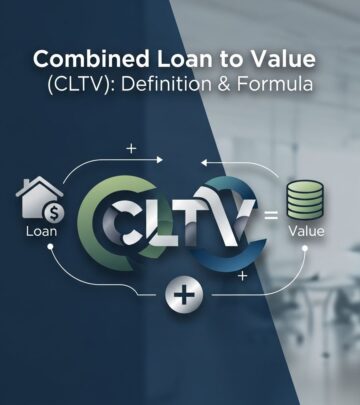
For properties with multiple liens or mortgages, lenders use the combined loan-to-value (CLTV) ratio to assess risk more accurately. The CLTV is calculated by adding all outstanding mortgage balances on a property and dividing that total by the property’s appraised value or purchase price (whichever is lower).
For example, a property valued at $100,000 with a first mortgage of $50,000 and a second mortgage of $25,000 would have a CLTV of 75% (($50,000 + $25,000) ÷ $100,000). While the LTV of the first mortgage alone would be 50%, the CLTV provides a more comprehensive picture of the borrower’s total mortgage debt relative to the property’s value.
CLTV is particularly important for borrowers considering home equity lines of credit (HELOCs) or second mortgages. These additional loans increase the total amount financed against the property, which raises the CLTV and may result in stricter lending terms or additional insurance requirements. Lenders use CLTV to measure the overall riskiness of the borrower by examining all outstanding mortgage debt, not just the primary loan.
LTV Ratios and Property Valuation
Accurate property valuation is essential for determining appropriate LTV ratios. While professional appraisals are commonly used, the most reliable measure is an arm’s-length transaction between a willing buyer and a willing seller in typical market conditions. Lenders typically use the lesser of the appraised value and the purchase price, particularly for recent transactions, to ensure they are not financing based on inflated values.
In volatile real estate markets, property values can fluctuate significantly. If a property’s value declines after purchase, the borrower may find themselves with a higher LTV ratio than they had originally. In extreme cases, if the property value drops below the mortgage balance, the borrower would have an LTV greater than 100%, which is referred to as being “underwater” on the mortgage. Underwater mortgages present significant challenges for borrowers who wish to sell or refinance their properties.
Strategies to Improve Your LTV Ratio
Borrowers can employ several strategies to achieve a lower LTV ratio and benefit from better lending terms:
- Increase Down Payment: Saving for a larger down payment is the most direct way to reduce the LTV ratio.
- Refinance: As home equity builds through mortgage payments and property appreciation, borrowers can refinance to achieve a lower LTV.
- Pay Down Principal: Making extra principal payments accelerates equity buildup and reduces the LTV over time.
- Wait for Appreciation: In appreciating markets, property values may increase, effectively lowering the LTV without additional borrower investment.
- Choose Lower-Priced Property: Purchasing a less expensive property relative to available funds results in a naturally lower LTV.
LTV Requirements by Loan Type
Different mortgage products have varying LTV requirements and terms:
| Loan Type | Maximum LTV | Key Features |
|---|---|---|
| Conventional Loans | 97% | Generally require PMI above 80% LTV; available to creditworthy borrowers |
| FHA Loans | 96.5% | Require mortgage insurance; more flexible credit requirements |
| VA Loans | 100% | No down payment required; no PMI; for eligible veterans |
| USDA Loans | 100% | No down payment; no PMI; for eligible rural properties |
Impact of LTV on Borrowing Costs
The LTV ratio has a substantial impact on the total cost of borrowing. A higher LTV typically results in higher interest rates, mandatory mortgage insurance, and stricter lending terms. The combined effect of these factors can add tens of thousands of dollars to the total cost of a mortgage over its lifetime.
For instance, consider two borrowers purchasing the same $300,000 home. Borrower A makes a 20% down payment ($60,000), resulting in an 80% LTV, while Borrower B makes a 10% down payment ($30,000), resulting in a 90% LTV. Borrower B will likely pay a higher interest rate, be required to carry mortgage insurance, and face less favorable loan terms. Over a 30-year mortgage period, these differences could easily amount to $100,000 or more in additional costs.
Special LTV Scenarios
Certain borrowing situations present unique LTV considerations. Cash-out refinances, where borrowers refinance their mortgage and extract equity as cash, effectively increase the LTV on the new loan. Purchase transactions in competitive markets may push buyers toward accepting higher LTV ratios if they cannot accumulate sufficient down payment funds. Additionally, 100% LTV loans designed for buyers without deposits are contingent upon stringent requirements, including guarantors, and reflect the market’s capacity to cater to diverse borrowing needs while balancing inherent lending risks.
Frequently Asked Questions (FAQs)
Q: What is considered a good LTV ratio?
A: An LTV ratio below 80% is generally considered good and typically qualifies borrowers for better interest rates and eliminates the need for private mortgage insurance. However, the ideal LTV depends on individual circumstances and credit profiles.
Q: Can I remove mortgage insurance if my LTV improves?
A: Yes, once your LTV reaches 80% through a combination of payments and property appreciation, you can request to have private mortgage insurance removed, provided your loan is in good standing.
Q: How does LTV differ from loan-to-value ratio used in other types of lending?
A: While the LTV concept applies to various types of secured lending (auto loans, personal loans), mortgage LTV is specifically focused on real estate and is calculated based on the property’s appraised value rather than its sale price alone.
Q: What happens if my home value decreases and my LTV goes above 100%?
A: If your home depreciates significantly, you may end up “underwater” with an LTV above 100%. This complicates refinancing and selling, as you would owe more than the property is worth.
Q: Does a lower credit score affect my LTV requirements?
A: Yes, borrowers with lower credit scores may face stricter LTV requirements or higher interest rates to compensate for increased lending risk.
References
- Loan-to-value ratio — Wikipedia. Accessed November 29, 2025. https://en.wikipedia.org/wiki/Loan-to-value_ratio
- What is a loan-to-value ratio and how does it relate to my costs? — Consumer Finance Protection Bureau (CFPB). Accessed November 29, 2025. https://www.consumerfinance.gov/ask-cfpb/what-is-a-loan-to-value-ratio-and-how-does-it-relate-to-my-costs-en-121/
Similar Articles








Read full bio of Sneha Tete