Loan-To-Value Ratio Explained: 4 Ways To Improve LTV
Master the loan-to-value ratio to secure better mortgage terms and minimize lending risks in home financing.

The
loan-to-value (LTV) ratio
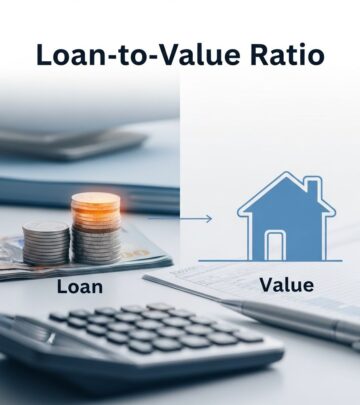
serves as a critical metric in mortgage lending, representing the proportion of a property’s value financed through a loan. Lenders rely on this percentage to evaluate risk, approve loans, and set terms like interest rates and required insurance.Defining the Core Concept of LTV
In simple terms, LTV measures how much of a home’s worth is borrowed versus owned outright by the buyer. It uses the lower figure between the purchase price and professional appraisal to ensure conservative valuations. For instance, borrowing $320,000 on a $400,000 appraised home yields an 80% LTV, signaling moderate risk to the lender.
This ratio directly influences borrowing power. High LTVs indicate larger loans relative to asset value, heightening lender exposure if property values drop or borrowers default. Conversely, low LTVs reflect substantial buyer equity, often unlocking premium loan features.
Step-by-Step LTV Calculation Guide
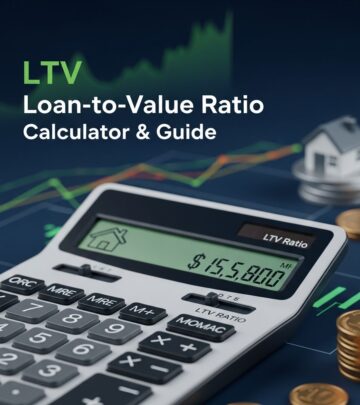
Computing LTV requires basic arithmetic: divide the loan principal by the property’s lower value (purchase price or appraisal), then multiply by 100 for the percentage. Formula: (Loan Amount ÷ Property Value) × 100 = LTV%.
Consider a $450,000 home purchase with a $90,000 down payment, resulting in a $360,000 loan. Using the purchase price: ($360,000 ÷ $450,000) × 100 = 80% LTV. If an appraisal values it at $460,000, the calculation remains based on the lower $450,000 figure.
| Scenario | Purchase Price | Appraised Value | Down Payment | Loan Amount | Value Used | LTV Ratio |
|---|---|---|---|---|---|---|
| Standard Buy | $400,000 | $410,000 | $80,000 | $320,000 | $400,000 | 80% |
| Appraisal Lower | $400,000 | $390,000 | $78,000 | $312,000 | $390,000 | 80% |
| High Equity | $500,000 | $520,000 | $150,000 | $350,000 | $500,000 | 70% |
This table illustrates how appraisals affect outcomes. Always secure an independent appraisal for accuracy.
Why Lenders Prioritize Specific LTV Thresholds
Banks cap LTV at 80-97% depending on loan type. Conventional loans often demand 80% max to avoid private mortgage insurance (PMI), while FHA permits up to 96.5% with upfront premiums. Exceeding 80% flags higher default risk, prompting stricter underwriting.
- Low Risk (≤80%): Qualifies for best rates; no PMI needed.
- Moderate (81-90%): PMI applies; rates slightly elevated.
- High (91-97%): Limited to government-backed loans; highest scrutiny.
Post-closing, LTV evolves with payments and market shifts, impacting refinancing or equity access.
Boosting Your LTV Profile for Better Deals
Aiming below 80% LTV enhances approval odds and cuts costs. Strategies include:
- Increasing down payments from savings or gifts.
- Shopping properties in stable markets to minimize appraisal gaps.
- Improving credit for higher loan caps at lower LTVs.
- Using points to buy down rates on borderline ratios.
Refinancing when home values rise can drop LTV, potentially eliminating PMI once equity hits 20%. Track via annual statements or online tools.
Private Mortgage Insurance and LTV Ties
Loans over 80% LTV trigger PMI, protecting lenders against losses. Annual costs range 0.5-1.5% of the loan, added to monthly payments. Request cancellation at 78% LTV via automatic or borrower-initiated processes.
FHA loans use mortgage insurance premiums (MIP) regardless, but conventional PMI drops off easier. Budget this in high-LTV scenarios.
LTV in Refinancing and Equity Borrowing
Current LTV for refinancing uses outstanding balance against updated appraisal. A $250,000 balance on a $350,000 home (71% LTV) suits cash-out options up to 80%.
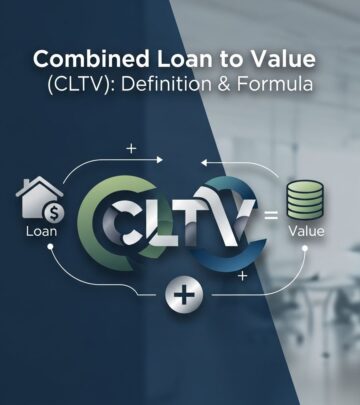
Combined LTV (CLTV) factors multiple debts like HELOCs. Example: $200,000 mortgage + $40,000 HELOC on $300,000 value = 80% CLTV. Lenders cap CLTV at 85-100% for these products.
Market Fluctuations and Negative Equity Risks
Declining values can push LTV over 100%, creating “underwater” loans where balances exceed worth. This occurred post-2008, complicating sales or refis.
Mitigate by choosing growing areas, avoiding overborrowing, and building reserves. Rising values inversely lower LTV, building wealth.
Comparing LTV Across Loan Programs
| Loan Type | Max LTV | PMI/MIP | Ideal For |
|---|---|---|---|
| Conventional | 97% | PMI >80% | Strong credit buyers |
| FHA | 96.5% | MIP always | First-timers, low down |
| VA | 100% | Funding fee | Veterans |
| USDA | 100% | Guarantee fee | Rural buyers |
Select based on finances; low/no-down options trade higher LTV for fees.
Frequently Asked Questions
What constitutes a strong LTV ratio?
Under 80% is optimal for avoiding PMI and securing top rates.
Does purchase price or appraisal dictate LTV?
The lower of the two ensures lender protection.
Can LTV change after closing?
Yes, via payments, appreciation, or refis.
Is 100% LTV financing available?
Limited to VA/USDA; most require down payments.
How does LTV affect interest rates?
Lower LTVs yield better rates due to reduced risk.
Practical Tips for Homebuyers
Prioritize LTV in budgeting: save 20% down for ideal terms. Get pre-approved to know limits early. Consult appraisers pre-offer in volatile markets. Monitor equity yearly for opportunities.
References
- Understanding Loan-to-Value Ratio (LTV) — Chase Bank. 2023. https://www.chase.com/personal/mortgage/education/financing-a-home/loan-to-value-ratio
- What Is A Loan-To-Value Ratio? — Bankrate. 2025-01-15. https://www.bankrate.com/mortgages/what-is-loan-to-value-ratio-ltv/
- What Is a Loan-to-Value Ratio? (LTV) — Equifax. 2024. https://www.equifax.com/personal/education/loans/articles/-/learn/what-is-ltv/
- What Is Loan-to-Value (LTV) Ratio? — PNC Insights. 2024-06-10. https://www.pnc.com/insights/personal-finance/borrow/what-is-ltv.html
- What is loan to value ratio? — Lloyds Bank. 2025. https://www.lloydsbank.com/mortgages/help-and-guidance/first-time-buyer-help/what-is-loan-to-value-ratio.html
- Understanding Loan-to-Value Ratio (LTV) — Freedom Mortgage. 2024. https://www.freedommortgage.com/learning-center/articles/loan-to-value-ratio
Similar Articles








Read full bio of medha deb