Loan Register: Definition, Purpose, and Key Components
Complete guide to loan registers: Understanding documentation, tracking, and management in lending.
What Is a Loan Register?
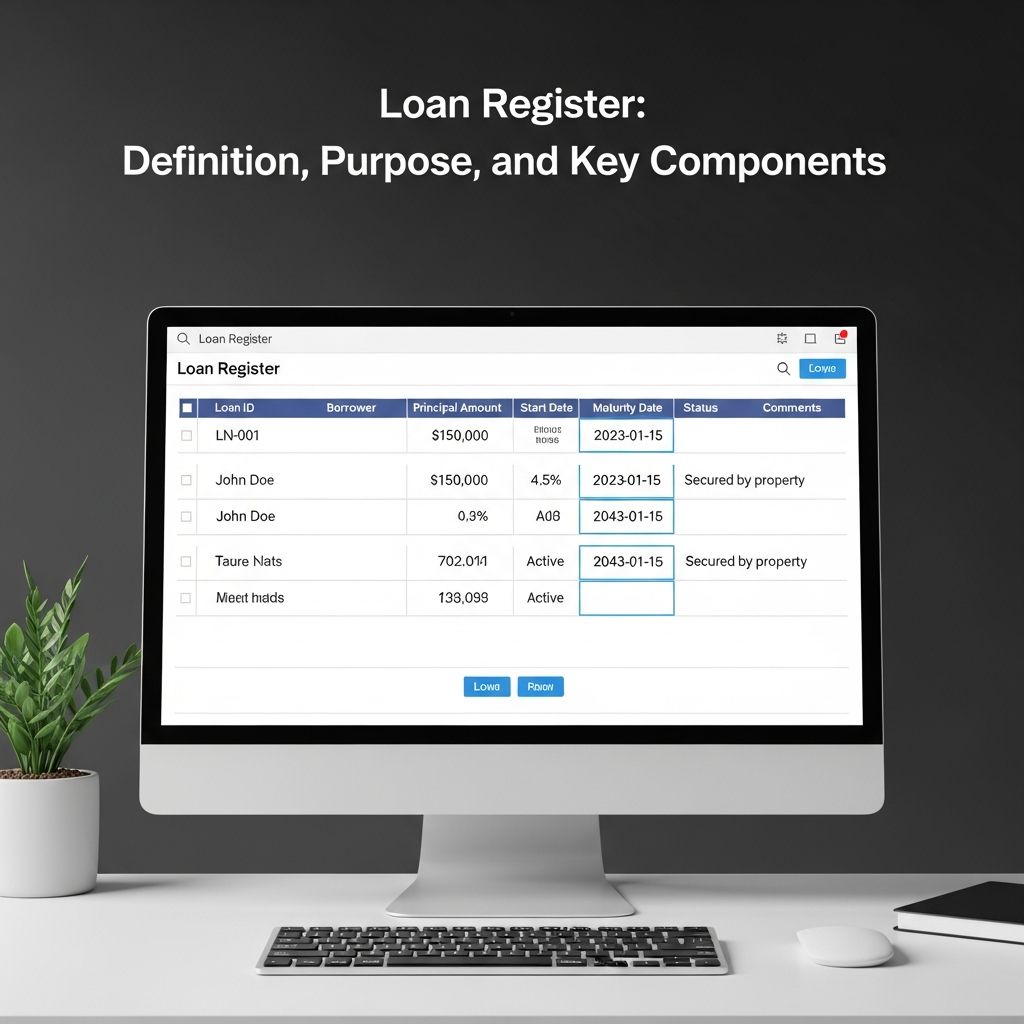
A loan register is a comprehensive, official record maintained by financial institutions and lenders to document and track all loan transactions, borrower information, and loan performance metrics. It serves as a critical administrative tool that records the complete lifecycle of each loan, from origination through repayment or default. The loan register functions as a central repository of information that enables lenders to monitor their loan portfolios, maintain compliance with regulatory requirements, and make informed lending decisions.
Financial institutions use loan registers to create an organized system for managing multiple loans simultaneously. This systematic approach helps lenders keep accurate records of borrowing arrangements, payment histories, collateral details, and borrower creditworthiness. The register serves both internal operational purposes and external regulatory requirements, making it an indispensable component of modern banking infrastructure.
Purpose and Importance of Loan Registers
Loan registers serve multiple critical functions within financial institutions and the broader lending ecosystem. Understanding these purposes illuminates why loan registers are essential tools for modern banking and finance.
Documentation and Record-Keeping
The primary purpose of a loan register is to maintain detailed documentation of all loan agreements and transactions. Each entry in the register captures essential information about the loan, including the borrower’s identity, loan amount, interest rate, repayment terms, and disbursement schedule. This comprehensive documentation creates an auditable trail that protects both the lender and the borrower by establishing clear evidence of the loan agreement and its terms.
Risk Management and Portfolio Monitoring
Loan registers enable financial institutions to monitor their loan portfolios effectively. By tracking loan performance metrics such as payment status, outstanding balances, and default history, lenders can identify at-risk loans and take proactive measures to mitigate potential losses. This ongoing monitoring capability helps institutions assess credit risk and make adjustments to their lending strategies as needed.
Regulatory Compliance
Financial institutions are subject to extensive regulatory requirements that mandate proper documentation and reporting of lending activities. Loan registers fulfill these compliance obligations by maintaining detailed records that can be audited by regulators and external auditors. Proper loan register maintenance helps institutions demonstrate compliance with lending laws, anti-money laundering regulations, and other financial regulations.
Performance Analysis and Decision-Making
The data contained in loan registers provides valuable insights into lending performance and trends. Financial institutions analyze this data to evaluate the effectiveness of their lending strategies, identify patterns in borrower behavior, and make informed decisions about future lending practices. This analytical capability supports strategic planning and helps institutions optimize their loan portfolios.
Key Components of a Loan Register
A comprehensive loan register contains multiple categories of information organized to provide complete visibility into each loan transaction. The following components typically comprise a well-maintained loan register:
Borrower Information
The loan register includes detailed identification information about the borrower, including legal name, address, contact information, and identification numbers such as social security numbers or business registration numbers. For corporate borrowers, the register may include information about the company’s legal structure, ownership, and management. This section establishes the borrower’s identity and basic contact details for communication and correspondence purposes.
Loan Details and Terms
This section documents the specific characteristics of each loan, including:
- Loan amount and disbursement schedule
- Interest rate and rate type (fixed or variable)
- Repayment terms and loan maturity date
- Payment frequency and payment amount
- Loan purpose and intended use of funds
- Any special conditions or covenants
Collateral and Security Information
When loans are secured, the register documents details about the collateral pledged to secure the loan. This includes descriptions of the collateral, its estimated value, location, and any liens or security interests. For loans secured by real estate, the register typically includes property descriptions and details about the mortgage or deed of trust. This information is essential for assessing the lender’s position in case of default or bankruptcy.
Payment History and Performance Records
The loan register maintains a detailed record of all payments made on the loan, including payment dates, amounts, and whether payments were made on time. This payment history section documents any late payments, missed payments, or defaults. Tracking payment performance helps lenders identify borrowers experiencing financial difficulties and enables early intervention to prevent defaults.
Interest Calculations and Accruals
Loan registers document interest calculations, accrued interest, and interest payment records. This section maintains accurate records of how much interest has been charged, when it accrues, and when it is paid. Proper interest calculation documentation is critical for accuracy in accounting and for ensuring borrowers understand their interest obligations.
Guarantees and Co-Signer Information
When loans include personal or corporate guarantees, the register documents information about guarantors and co-signers, including their identification, contact information, and the nature and extent of their guarantee. This information is important for collection efforts and enforcement of guarantee obligations in default scenarios.
Administration and Management of Loan Registers
Effective loan register management requires robust administrative processes and clear assignment of responsibilities. Financial institutions typically designate facility agents or loan administration teams to oversee loan register maintenance and ensure accurate record-keeping.
The Role of Facility Agents
In complex lending arrangements involving multiple lenders or syndicated loans, facility agents play a crucial role in administering the loan register. The facility agent acts as the central point of contact and coordination among all parties, managing administrative aspects of the loan and maintaining accurate records in the loan register. Facility agents handle key responsibilities including processing interest calculations, recording payments, managing amendments and waivers, and ensuring compliance with loan documentation requirements. This centralized administration reduces confusion and ensures consistent record-keeping across all participants in the lending arrangement.
Regular Updates and Maintenance
Loan registers require regular updates to maintain accuracy and relevance. Financial institutions establish procedures for timely recording of all loan transactions, including disbursements, payments, interest accruals, and any modifications to loan terms. Regular reconciliation processes verify that loan register entries match actual transactions and underlying documentation.
Security and Access Controls
Given the sensitive nature of borrower and loan information, loan registers are subject to strict security protocols and access controls. Financial institutions implement measures to restrict access to loan register information to authorized personnel with legitimate business needs. These security measures protect borrower privacy and prevent unauthorized access to confidential financial information.
Loan Registers in Different Lending Contexts
Loan registers are utilized across various types of lending arrangements, each with specific documentation and tracking requirements.
Secured vs. Unsecured Loans
Loan registers for secured loans, such as mortgages and auto loans backed by real estate or vehicles, include detailed collateral information and security interest documentation. In contrast, unsecured loan registers focus primarily on borrower creditworthiness and payment history, as these loans lack physical collateral backing. The register structure may vary depending on the nature of the security interest and the priorities of different creditors.
Syndicated and Structured Loans
In syndicated lending arrangements where multiple financial institutions participate in providing credit to a single borrower, the loan register becomes particularly important for coordinating among lenders. Each lender maintains its own records, but the facility agent maintains a master loan register that tracks all syndicated loan components, ensuring consistency and coordination. Structured loan products, such as collateralized loan obligations (CLOs), rely heavily on comprehensive loan registers to track numerous underlying loans within the portfolio and monitor their performance against various tests and covenants.
Consumer vs. Commercial Loans
Consumer loan registers typically emphasize borrower creditworthiness, employment verification, and payment history, reflecting the focus on individual borrowers’ ability to repay. Commercial and business loan registers provide greater emphasis on company financial statements, business performance metrics, and collateral valuation, reflecting the more complex nature of business lending arrangements.
Technology and Digital Loan Registers
Modern financial institutions increasingly maintain loan registers using sophisticated digital systems and loan management software. These technological systems offer numerous advantages over traditional paper-based registers, including:
- Automated calculation of interest, fees, and payment schedules
- Real-time access to loan information for authorized users
- Automated payment processing and reconciliation
- Advanced reporting and analytics capabilities
- Enhanced security and data protection measures
- Improved audit trails and regulatory compliance documentation
Regulatory Requirements and Compliance
Loan registers must be maintained in accordance with various regulatory requirements and accounting standards. Financial institutions are required to maintain accurate, contemporaneous records of all loan transactions as part of their regulatory obligations. Regulators conduct examinations of loan register practices to ensure compliance with lending laws, truth-in-lending requirements, fair lending practices, and other regulatory standards.
Accounting standards require that loan registers support accurate financial reporting of the institution’s loan portfolio, including proper classification of loans by risk category and appropriate valuation and reserve provisions. External auditors review loan registers as part of their audit procedures to verify the accuracy of financial statements and the institution’s compliance with applicable accounting principles.
Benefits and Challenges of Loan Register Management
While loan registers provide essential benefits to financial institutions and borrowers, their management also presents certain challenges.
Benefits
- Comprehensive documentation of all loan transactions and terms
- Improved portfolio monitoring and risk management
- Enhanced regulatory compliance and audit capabilities
- Better customer service through accurate record-keeping
- Reduced disputes and misunderstandings about loan terms
- Strategic insights from analysis of lending patterns and performance
Challenges
- Complexity of maintaining accurate records for large, diverse portfolios
- Need for robust data security and privacy protections
- Cost of implementing and maintaining sophisticated loan management systems
- Integration challenges when merging multiple institutions’ loan registers
- Ensuring consistency and accuracy across multiple data entry points
- Staying current with evolving regulatory requirements
Frequently Asked Questions About Loan Registers
Q: What information must be included in a loan register?
A: A comprehensive loan register should include borrower identification information, detailed loan terms, collateral descriptions, payment history, interest calculations, guarantor information, and any modifications to loan agreements. The specific information required may vary based on the type of loan and applicable regulatory requirements.
Q: Who is responsible for maintaining the loan register?
A: Financial institutions assign responsibility for loan register maintenance to qualified personnel or specialized teams. In complex lending arrangements, facility agents often oversee loan register administration. The institution as a whole remains responsible for ensuring accurate, timely maintenance of loan registers.
Q: How long must loan registers be retained?
A: Regulatory requirements typically mandate retention of loan registers for several years after loan maturity or payoff. The specific retention period varies by jurisdiction and regulatory authority, but generally ranges from three to seven years or longer for certain loan types.
Q: Can borrowers access their information in the loan register?
A: Yes, borrowers generally have the right to access information about their own loans maintained in loan registers. Financial institutions must provide borrowers with statements and documentation as required by consumer protection laws and their loan agreements.
Q: How do loan registers support regulatory compliance?
A: Loan registers provide the documentation necessary to demonstrate compliance with lending regulations, fair lending requirements, and other financial regulations. They create auditable trails that regulators can review during examinations and help institutions provide required regulatory reports.
References
- Understanding Collateralized Loan Obligations (CLOs) — Guggenheim Investments. 2024-12-31. https://www.guggenheiminvestments.com/perspectives/portfolio-strategy/understanding-collateralized-loan-obligations-clo
- Understanding the Role of a Facility Agent — Ocorian. https://www.ocorian.com/knowledge-hub/insights/understanding-role-facility-agent
- Understand the Different Kinds of Loans Available — U.S. Consumer Finance Protection Bureau. https://www.consumerfinance.gov/owning-a-home/explore/understand-the-different-kinds-of-loans-available/
Similar Articles








Read full bio of medha deb