Loan Origination Fees: Understanding Costs
Master the essentials of loan origination fees and how they affect your borrowing decisions.

When you apply for a loan—whether it’s a mortgage, auto loan, personal loan, or student loan—lenders often charge various fees to process your application and establish your account. Among the most common of these charges is the origination fee, a one-time upfront cost that can significantly affect your total borrowing expenses. Understanding what origination fees are, how they’re calculated, and how they compare across different loan types is essential for making informed financial decisions.
Defining Loan Origination Fees and Their Purpose
An origination fee, sometimes referred to as an establishment fee or administrative fee, is a charge levied by a lender to cover the costs associated with creating and processing your loan. When a lender originates a loan, they incur various expenses that must be recovered through fees charged to borrowers. These costs encompass several distinct activities that happen behind the scenes.
The primary purpose of an origination fee is to compensate the lender for the labor-intensive work required to set up a new loan account. This includes reviewing and processing your application, conducting credit checks to assess your creditworthiness, preparing and reviewing loan documents, underwriting the loan to verify your qualifications, and performing property inspections or appraisals when applicable.
Different lenders structure their fee systems in varying ways. Some lenders charge separate fees for each service—document preparation fees, processing fees, and underwriting fees—listed as distinct line items. Other lenders bundle all these costs together and present them as a single origination fee. Understanding your lender’s fee structure helps you accurately compare loan offers from different institutions.
How Origination Fees Are Calculated and Expressed
Origination fees are most commonly expressed as a percentage of the total loan amount, though some lenders may use flat fee structures instead. The percentage-based approach is the industry standard and allows for proportional scaling based on loan size.
Percentage-Based Calculation
When calculated as a percentage, the formula is straightforward:
Origination Fee = Loan Amount × Origination Fee Percentage
For example, if you borrow $250,000 with a 1.5% origination fee, your fee would be $250,000 × 0.015 = $3,750. This amount is then either paid upfront at closing or deducted from your loan proceeds.
Typical Fee Ranges Across Loan Types
Origination fee percentages vary significantly depending on the loan type and market conditions. Generally, origination fees typically range from 0.5% to 8% of the loan amount. However, different loan categories fall into distinct ranges:
- Mortgage loans typically have lower origination fees, usually ranging from 0.5% to 2% of the loan amount
- Auto loans generally fall in the 0.5% to 3% range
- Personal loans tend to have higher origination fees, often between 1% and 10% of the borrowed amount
- Federal student loans have Congress-set origination fees of 1.057% for direct subsidized and unsubsidized loans, and 4.228% for PLUS loans
The variation in these ranges reflects market competition, risk assessment, and the administrative costs associated with different loan types.
Payment Methods and Their Impact on Borrowing
One important aspect of origination fees that borrowers often overlook is the method by which the fee is collected. Lenders typically offer two distinct payment approaches, each with different implications for the amount of cash you receive and the total amount you’ll repay.
Deduction from Loan Proceeds
The first method involves deducting the origination fee directly from the loan proceeds you receive. In this scenario, the lender transfers the full loan amount minus the fee to your account. Using the earlier example of a $5,000 personal loan with a 5% origination fee ($250):
- You request a $5,000 loan
- The origination fee of $250 is deducted upfront
- You receive $4,750 in actual cash
- You repay the original $5,000 loan amount plus interest
This method means you have less money available to use for your intended purpose, even though you’re borrowing the full stated amount.
Adding the Fee to Your Loan Balance
The alternative approach incorporates the origination fee into your principal balance, which you then repay with interest over the loan term. In this case:
- You request a $5,000 loan financed
- The origination fee of $250 is added to create a principal balance of $5,250
- You receive the full $5,000 in cash
- You repay $5,250 plus interest over time
While this method provides access to the full requested amount, it means you’ll pay interest on the origination fee itself throughout the loan term, increasing your total cost of borrowing.
Factors Influencing Origination Fee Amounts
Several variables affect the origination fee you’ll be quoted by a lender. Understanding these factors empowers you to negotiate more effectively and identify the most favorable lending terms.
Loan Amount
Since origination fees are calculated as a percentage of the loan amount, the size of your loan directly impacts the fee. A larger loan produces a larger fee in absolute dollars. For instance, a 1.5% origination fee on a $25,000 loan equals $375, while the same rate on a $100,000 loan equals $1,500. This explains why mortgage origination fees, typically charged on larger loan amounts, tend to be higher in total dollars despite having lower percentages.
Lender Selection
Different lenders compete for business by offering varying origination fee structures. Just as interest rates differ among lenders for the same loan type, origination fees vary as well. Shopping around and comparing multiple lenders’ offers can reveal significant savings opportunities. Some lenders may offer lower origination fees to attract borrowers, while others might charge higher fees but offset them with better interest rates or more flexible terms.
Credit Profile and Risk Assessment
Your creditworthiness influences not only your interest rate but potentially your origination fee as well. Borrowers with stronger credit profiles may qualify for lower fees, while those with limited credit histories or lower credit scores may face higher fees to compensate the lender for increased risk.
Loan Type Variations
Percentages typically range from 1.0% to 5.0% of the loan amount, with variation based on whether the loan is in the prime or subprime market. Prime borrowers typically receive lower fees, while subprime lending markets—where lenders take on greater risk—command higher origination fees.
Disclosure and Transparency Requirements
Regulatory frameworks require lenders to clearly disclose origination fees and other associated costs to borrowers. Understanding where to find this information protects you from surprises at closing and enables accurate comparison shopping.
Loan Estimate Document
When you apply for a loan, lenders must provide a Loan Estimate within three business days of your application. This document outlines all estimated costs associated with your loan, including the origination fee. The Loan Estimate presents fees in a standardized format, allowing you to compare different lenders’ offers side by side.
Loan Agreement Details
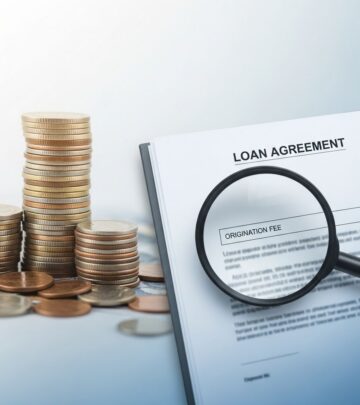
The loan agreement itself must clearly specify the origination fee amount and the method by which it will be collected. Borrowers should carefully review these documents before signing to understand their total loan costs and ensure no unexpected fees appear.
Closing Disclosure
For mortgage loans, the Closing Disclosure document, provided at least three business days before closing, contains the final charges in section A of page 2. Origination fees generally cannot increase at closing except under certain circumstances, providing protection for borrowers.
Impact on Total Cost of Borrowing
Origination fees represent only one component of your total borrowing cost, but they can be substantial. When evaluating loan offers, you must consider origination fees alongside interest rates, loan terms, and other charges to determine the true cost of borrowing.
Comparing Total Cost Impact
Consider three hypothetical loan scenarios to understand how origination fees affect your overall borrowing costs:
| Loan Parameter | Loan Option 1 | Loan Option 2 | Loan Option 3 |
|---|---|---|---|
| Loan Amount | $25,000 | $25,000 | $27,250 |
| Interest Rate | 15% | 9% | 9% |
| Origination Fee | 0% | 8% ($2,000) | 8% ($2,180) |
In this comparison, Loan Option 1 has no origination fee but carries the highest interest rate. While it avoids upfront costs, the high interest rate increases the total amount repaid over time. Loan Option 2 includes an 8% origination fee but offers a lower interest rate, potentially resulting in lower total costs despite the higher upfront charge. This illustrates why you must evaluate origination fees within the context of all loan terms.
Strategies for Managing Origination Fee Impact
While borrowers cannot eliminate origination fees entirely, several strategies can help minimize their impact on your finances.
- Compare Multiple Lenders: Obtain quotes from several lenders and compare their complete fee structures. A difference of just 1% in origination fees can save hundreds or thousands of dollars depending on loan size
- Negotiate Fee Reduction: Some lenders may be willing to reduce or waive origination fees to win your business, particularly if you have strong credit or are bringing other business to the lender
- Evaluate Interest Rates in Context: A lender offering a higher origination fee but lower interest rate may provide better total value than one charging lower fees with higher rates
- Consider Loan Amount Carefully: Borrowing only what you need keeps the absolute dollar amount of the origination fee lower
- Understand Payment Method Implications: Calculate whether deducting fees from proceeds or adding them to your balance creates a more favorable outcome for your specific situation
Frequently Asked Questions About Origination Fees
Do all loans have origination fees?
Not all loans charge origination fees, though they are common across mortgages, auto loans, personal loans, and student loans. Some lenders, particularly in competitive markets, may waive origination fees to attract borrowers. Always ask lenders directly about their fee structure.
Can origination fees be negotiated?
Yes, origination fees can sometimes be negotiated, particularly in the mortgage industry where lenders compete aggressively for business. Borrowers with excellent credit or larger loan amounts may have more negotiating power. It never hurts to ask if a lender can reduce or eliminate the origination fee.
How do origination fees compare to other loan costs?
Origination fees are one component of total loan costs, which also include interest, closing costs, and potentially other fees. While origination fees are typically upfront, the interest you pay over the loan’s lifetime usually represents a much larger portion of total costs.
Can origination fees be paid in installments?
Typically, origination fees must be paid upfront at closing or deducted from proceeds. However, some lenders may allow you to roll the fee into your loan balance, effectively paying it off over time with interest. Confirm the payment options available with your specific lender.
Are origination fees tax-deductible?
In some cases, origination fees may be tax-deductible if they’re considered loan interest or points, but this depends on the loan type and your specific tax situation. Consult a tax professional to determine whether your origination fees qualify for deduction.
Conclusion: Making Informed Borrowing Decisions
Origination fees are an unavoidable aspect of the lending landscape, compensating lenders for the costs of processing your loan application and establishing your account. By understanding what these fees are, how they’re calculated, and how they compare across different lending options, you can make more informed borrowing decisions. Always request complete fee disclosures from multiple lenders, calculate your total cost of borrowing including origination fees, interest, and other charges, and don’t hesitate to negotiate fees when possible. Ultimately, viewing origination fees as one component of your overall borrowing cost—rather than focusing exclusively on interest rates—leads to better financial outcomes and helps you secure the most favorable loan terms available for your situation.
References
- Origination Fee | Financial Glossary — Lighter Capital. Accessed February 2026. https://www.lightercapital.com/glossary/origination-fee
- What is a loan origination fee? — Oportun Financial Education. Accessed February 2026. https://oportun.com/financial-education/what-is-a-loan-origination-fee/
- Origination fee — Wikipedia. Accessed February 2026. https://en.wikipedia.org/wiki/Origination_fee
- What Is an Origination Fee? — Experian. Accessed February 2026. https://www.experian.com/blogs/ask-experian/what-is-an-origination-fee/
- Origination Fee | Super Brokers Glossary — Super Brokers. Accessed February 2026. https://www.superbrokers.ca/library/glossary/term/origination-fee
- What are mortgage origination services? What is an origination fee? — Consumer Finance Protection Bureau. Accessed February 2026. https://www.consumerfinance.gov/ask-cfpb/what-are-mortgage-origination-services-what-is-an-origination-fee-en-155/
Similar Articles








Read full bio of medha deb