Loan Origination Fees: 5 Smart Ways To Lower Closing Costs
Discover what loan origination fees are, their typical costs, negotiation strategies, and smart ways to minimize them when buying a home.

Loan origination fees represent a key component of mortgage closing costs, compensating lenders for evaluating and preparing your home loan application. These charges, often ranging from 0.5% to 1% of the total loan amount, fund essential administrative tasks like document verification and risk assessment.
Defining the Core Purpose of Origination Fees
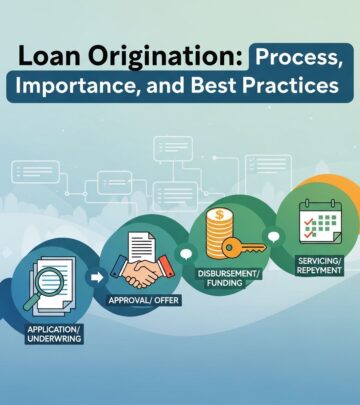
At its essence, a loan origination fee reimburses the lender for the labor-intensive process of turning your application into an approved mortgage. This includes gathering financial documents, conducting credit checks, and coordinating with appraisers. Unlike broader closing costs, origination fees specifically target the lender’s internal operations, such as underwriting, where experts review your eligibility and property details.
Regulatory bodies like the Consumer Financial Protection Bureau (CFPB) classify these as part of mortgage origination services, ensuring transparency in loan estimates. Borrowers receive a detailed breakdown early in the process, listing the fee alongside related charges like processing or administrative costs.
Typical Cost Structures and Examples
Most lenders set origination fees at 0.5% to 1% of the borrowed principal, making them scalable to loan size. For a $300,000 mortgage, expect $1,500 to $3,000; on a $500,000 loan, it climbs to $2,500–$5,000. These percentages can bundle sub-fees, including:
- Processing: Handling paperwork and scheduling.
- Underwriting: Risk evaluation by specialists.
- Funding: Finalizing loan disbursement.
The table below illustrates origination fee ranges across common loan amounts:
| Loan Amount | 0.5% Fee | 1% Fee |
|---|---|---|
| $200,000 | $1,000 | $2,000 |
| $300,000 | $1,500 | $3,000 |
| $400,000 | $2,000 | $4,000 |
| $500,000 | $2,500 | $5,000 |
| $600,000 | $3,000 | $6,000 |
This variability underscores the need to scrutinize your Loan Estimate form, where Section A of closing costs itemizes these charges.
When and How These Fees Are Assessed
Origination fees materialize at closing, rolled into your total settlement expenses alongside appraisals, title insurance, and prepaid interest. Some lenders require an upfront application fee—often $300–$500—as a deposit toward origination costs. If the loan proceeds, it’s credited; if not, you may forfeit it to cover initial checks like credit pulls.
Not every lender mandates this fee; some waive it to attract borrowers, potentially offsetting via higher interest rates. Legal definitions from sources like Cornell’s Legal Information Institute note that these fees are negotiable, especially for larger loans where competition intensifies. Post-2008 reforms capped abusive practices, tying fees to actual processing costs.
Distinguishing Origination Fees from Related Charges
Buyers often confuse origination fees with discount points or third-party fees. Discount points are optional prepaid interest (1 point = 1% of loan) to secure lower rates, separate from origination. Appraisal fees (around $500) or surveys fall outside lender-controlled origination buckets.
A sample Loan Estimate might show:
- Origination Fee: $1,500 (core charge).
- Processing: $395.
- Underwriting: $435.
- Total Origination Services: $2,330.
This granularity, mandated by the Truth in Lending Act, empowers comparison shopping.
Negotiation Tactics for Lower Fees
Shop multiple lenders—request at least three Loan Estimates within 45 days to minimize credit impacts. Highlight competitor offers; many reduce fees by 0.25% or waive them entirely. In seller’s markets, request concessions covering up to 3%–6% of costs.
Leverage strong credit (above 740 FICO) or large down payments for concessions. Avoid no-origination lenders if their APRs inflate due to elevated rates—always prioritize APR over isolated fees for true cost.
Strategic Trade-offs: Fees vs. Interest Rates
Waiving a $2,400 origination fee might hike your rate from 7.75% to 8.5% on a $240,000 loan. With points, monthly payments hit $1,720, totaling $378,981 interest; without, $1,846 monthly and $424,342 interest—a $45,361 lifetime premium.
Calculate break-even: Divide fee savings by monthly interest differential. For long-term ownership (10+ years), paying points saves money. Tools like mortgage calculators aid this analysis.
Regulatory Safeguards and Borrower Rights
FHA loans cap origination at 1%, excluding points. CFPB rules require fee disclosures within three business days of application, with no changes post-lock-in unless borrower-driven. Report discrepancies via CFPB complaints portal.
Post-subprime era laws like Dodd-Frank limit fees to reasonable processing costs, preventing predatory bundling.
FAQs on Loan Origination Fees
Can I avoid origination fees entirely?
Yes, select no-fee lenders, but verify via APR. Some absorb costs into rates.
Are origination fees tax-deductible?
Points often are, if paid for purchase loans; origination fees typically aren’t—consult a tax advisor.
How do fees differ for refinances?
Similar structure, but cash-out refinances may incur higher scrutiny and fees.
What’s the average origination fee in 2026?
Still 0.5%–1%, though market competition keeps many under 0.75%.
Do online lenders charge less?
Often yes, due to lower overhead—examples like digital platforms waive them.
Practical Steps to Optimize Your Mortgage Costs
1. Pre-qualify with 3–5 lenders for fee comparisons.
2. Review Loan Estimates side-by-side using APR.
3. Negotiate post-offer, citing rivals.
4. Time applications for low-rate environments.
5. Consider lender credits trading higher rates for fee coverage.
By mastering these elements, homebuyers slash thousands from outlays, paving smoother paths to ownership. Proactive fee management transforms daunting closings into efficient transactions.
References
- Mortgage origination fee: The inside scoop — Rocket Mortgage. 2023. https://www.rocketmortgage.com/learn/mortgage-origination-fee
- What is a origination fee? — Tomo Mortgage. 2023. https://tomo.com/blog/what-is-a-origination-fee/
- Origination fee: What it is and how to lower your mortgage costs — Bankrate. 2023. https://www.bankrate.com/mortgages/origination-fee/
- Origination fee — Legal Information Institute, Cornell Law School. 2020-07-01. https://www.law.cornell.edu/wex/origination_fee
- Definition of Origination Fee — FHA.com. 2023. https://www.fha.com/define/origination-fee
- What are mortgage origination services? What is an origination fee? — Consumer Financial Protection Bureau. 2023. https://www.consumerfinance.gov/ask-cfpb/what-are-mortgage-origination-services-what-is-an-origination-fee-en-155/
Similar Articles








Read full bio of medha deb