Understanding Loan Fundamentals
Essential insights into borrowing, loan structures, and financial decision-making
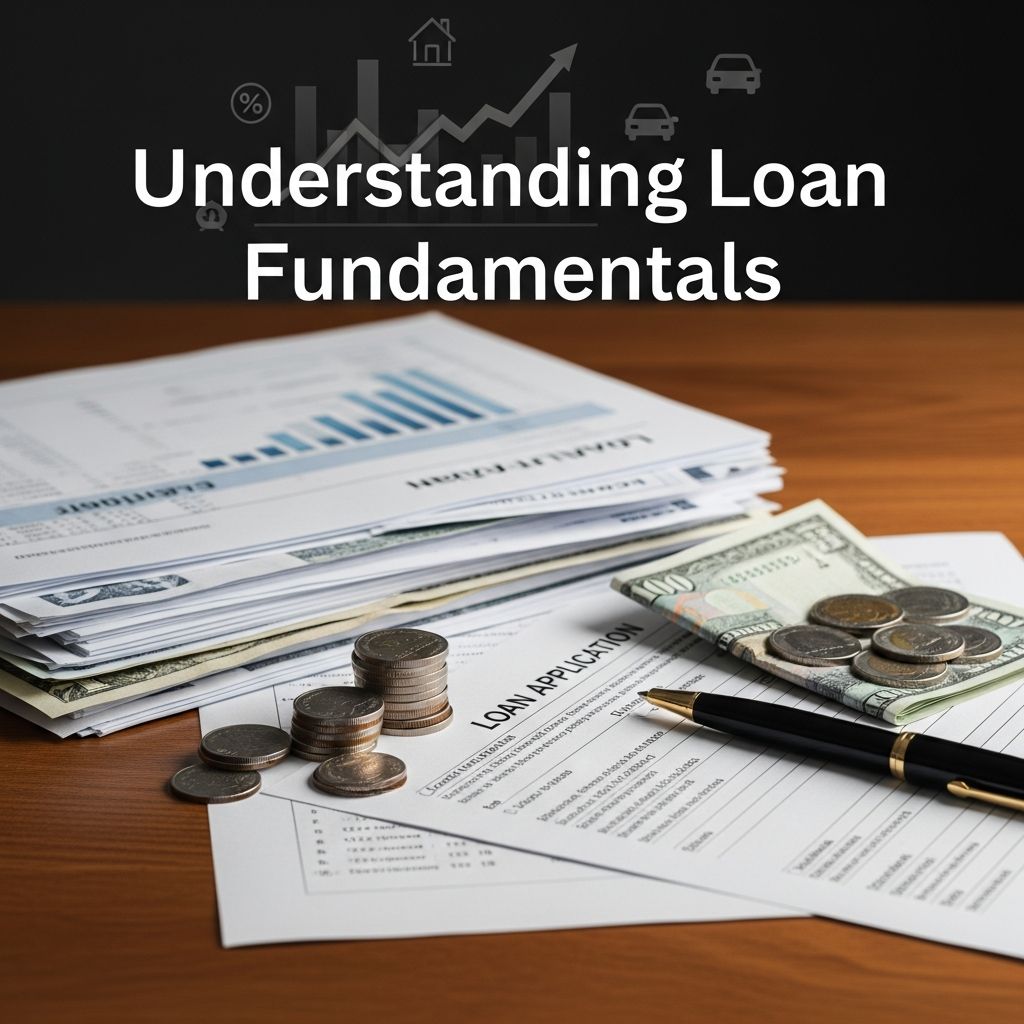
Navigating the world of borrowing can be challenging, especially when faced with numerous loan options and complex financial terminology. Whether you’re planning to consolidate existing debt, fund a major life event, or handle unexpected expenses, understanding the fundamentals of loans is essential to making informed financial decisions. This guide explores the various dimensions of borrowing, helping you identify which loan structure aligns best with your circumstances and goals.
The Foundation: What Makes a Loan Work
A loan represents a financial agreement where a lender provides funds to a borrower with the expectation of repayment, typically with interest, over a predetermined timeframe. The cost of borrowing—expressed as an interest rate or annual percentage rate (APR)—compensates the lender for the risk of lending money. The core elements of any loan include the principal amount borrowed, the interest rate applied, the repayment term, and the monthly payment obligation.
Most personal loans function as installment loans, meaning borrowers receive a lump sum upfront and repay it through fixed monthly installments. This structure differs significantly from revolving credit, such as credit cards, where borrowers can repeatedly borrow and repay within an established credit limit. Understanding this distinction helps borrowers anticipate their payment obligations and plan their budgets accordingly.
Collateral Considerations: Secured Versus Unsecured Lending
One of the most fundamental classifications in lending distinguishes between secured and unsecured loans, each carrying distinct advantages and risks for both borrower and lender.
Unsecured Lending Arrangements
Unsecured loans do not require borrowers to pledge assets as collateral. Since lenders assume greater risk in unsecured arrangements, they typically compensate by charging higher interest rates and imposing stricter credit requirements. These loans appeal to borrowers who lack valuable collateral or prefer not to risk personal assets. Unsecured personal loans remain the most common type of personal lending available from banks, credit unions, and online lenders.
The accessibility of unsecured loans comes with a cost—borrowers generally face less favorable interest rates and terms compared to secured alternatives. However, for individuals with solid credit histories, competitive rates are achievable. Lenders specializing in unsecured lending often maintain tiered approval criteria, with some focusing exclusively on borrowers with excellent credit while others accommodate those with fair credit profiles.
Collateral-Backed Lending Structures
Secured personal loans require borrowers to provide collateral—tangible assets that lenders can seize if repayment obligations go unmet. Common collateral options include certificates of deposit (CDs), savings account balances, money market accounts, vehicle equity, or home equity. By securing the loan against these assets, lenders reduce their risk exposure, enabling them to offer lower interest rates and potentially higher borrowing limits.
The trade-off for favorable rates is straightforward: failure to repay results in loss of collateral. Lenders retain legal authority to seize pledged assets to offset outstanding balances. Despite this risk, secured loans remain attractive for borrowers with damaged credit histories, as lenders’ reduced risk often translates to easier qualification and more lenient credit score requirements.
A specialized form of secured lending, the credit-builder loan, serves a dual purpose: providing necessary funds while simultaneously establishing or rebuilding credit history through on-time payments.
Interest Rate Structures: Predictability Versus Flexibility
How lenders calculate interest during the loan term significantly impacts the total cost of borrowing and payment predictability.
Fixed-Rate Loans: Budgeting Certainty
Fixed-rate loans maintain consistent interest rates throughout the entire repayment term. This means monthly payments remain identical from the first installment through final payoff, providing borrowers with complete payment predictability and simplified budgeting. The vast majority of personal loans employ fixed-rate structures, particularly appealing to borrowers who secure competitive initial rates and wish to lock in favorable terms.
Fixed rates protect borrowers from market fluctuations and rate increases, making long-term financial planning more straightforward. This stability proves especially valuable for those on tight budgets or with limited financial flexibility.
Variable-Rate Loans: Market-Responsive Pricing
Variable-rate loans feature interest rates that fluctuate with market conditions, causing monthly payments to change over the loan’s life. While variable-rate loans may initially offer lower annual percentage rates (APRs) compared to fixed-rate alternatives, they introduce budgeting uncertainty as rates can increase substantially.
Variable-rate structures suit borrowers pursuing aggressive short-term payoff strategies—those planning to repay quickly before potential rate increases occur. However, the payment unpredictability makes these loans unsuitable for borrowers requiring stable, predictable monthly obligations.
Loan Categories by Purpose and Structure
Debt Consolidation Solutions
Debt consolidation loans combine multiple existing debts—credit cards, medical bills, personal loans—into a single new loan with one monthly payment. The strategy works when the new loan carries a lower APR than the average rate across existing debts. Successfully consolidating debt allows borrowers to reduce total interest paid and simplify financial management through unified monthly payments rather than juggling multiple creditors.
However, borrowers must exercise caution, as consolidation loans often include origination fees and other charges that can erode anticipated savings. Additionally, successfully consolidating requires discipline to avoid re-accumulating debt on previously paid-down credit cards, which could deepen financial distress.
Joint and Cosigned Arrangements
Borrowers with limited credit histories or damaged credit profiles may struggle qualifying for favorable loan terms independently. Joint and cosigned loans offer solutions by incorporating a second person’s financial profile into the approval decision.
Joint loans feature co-borrowers who share equal access to funds and equal responsibility for repayment. Both parties’ income, debts, and credit scores influence approval decisions and rate determination.
Cosigned loans differ fundamentally: the primary borrower receives funds and bears primary repayment responsibility, while the cosigner serves as a backup obligor activated only if the primary borrower defaults. Creditworthy cosigners enable primary borrowers to access larger loan amounts and superior terms than they could obtain independently.
Personal Lines of Credit
Personal lines of credit (PLOCs) diverge significantly from traditional installment loans. Rather than receiving a lump sum, borrowers access a revolving credit account, drawing funds as needed and repaying only borrowed amounts. This flexibility resembles credit card functionality but typically operates under different terms.
PLOCs typically employ a two-phase structure: an initial three-to-five-year draw period during which borrowers can access credit and make minimum payments, followed by a repayment phase lasting up to ten years where borrowed amounts must be fully repaid. Most PLOCs feature variable interest rates, introducing payment unpredictability over time.
Buy Now, Pay Later Options
Buy now, pay later (BNPL) loans enable purchases with deferred payment, dividing purchase prices into equal installments typically due within six weeks. Offered through mobile applications like Afterpay, Klarna, and Affirm, BNPL loans represent emerging alternatives to traditional financing.
Approval processes often prove less stringent than conventional lending, typically involving soft credit checks that don’t impact credit scores, with lenders instead reviewing bank activity and income verification. Borrowers with less-than-perfect credit can potentially qualify if income demonstrates ability to meet payment obligations.
Qualifying Factors and Approval Considerations
Lenders evaluate multiple dimensions when assessing loan applications and determining approval eligibility, interest rates, and loan amounts. Credit scores represent primary evaluation criteria, with higher scores generally yielding lower rates and easier approval. Credit history demonstrates repayment patterns and financial responsibility over extended periods. Debt-to-income ratios measure monthly debt obligations relative to gross income, with lower ratios indicating greater repayment capacity.
Borrowers unable to qualify for traditional unsecured loans should consider secured or cosigned alternatives, which reduce lender risk through collateral or additional creditworthy participants. Employment stability, income consistency, and existing relationship history with lenders also influence approval decisions.
Strategic Applications: When and How to Borrow
Personal loans serve diverse financial purposes. Debt consolidation ranks among the most common applications, allowing borrowers to reduce interest costs and simplify payments. Home improvements represent another frequent use case, enabling property upgrades without home equity extraction. Major purchases—vehicles, appliances, technology—can be financed through personal loans rather than retailer financing.
Medical and emergency expenses frequently necessitate rapid funding access, making personal loans valuable for managing unexpected healthcare costs or urgent household needs. Short-term borrowing needs for relatively modest amounts—typically several hundred dollars—appeal to borrowers facing temporary cash flow challenges.
Comparing Loan Types: A Framework for Decision-Making
| Loan Type | Collateral Required | Typical Rate Range | Best For | Key Consideration |
|---|---|---|---|---|
| Unsecured Personal Loan | No | Higher rates | Those with good credit; asset protection priority | Higher interest costs |
| Secured Personal Loan | Yes (CD, savings, assets) | Lower rates | Lower credit scores; access to favorable terms | Risk of asset loss |
| Debt Consolidation Loan | Varies | Lower than existing debts | Multiple existing debts; simplifying payments | Origination fees apply |
| Personal Line of Credit | Varies | Variable rates | Flexible, ongoing credit access; recurring expenses | Payment unpredictability |
| Buy Now, Pay Later | No | Often interest-free | Smaller purchases; quick approvals; fair credit | Short repayment windows |
Frequently Asked Questions
What determines whether I qualify for a personal loan?
Lenders assess credit scores, credit history, debt-to-income ratios, income stability, and employment history. Even borrowers with limited credit access secured or cosigned options, though typically at higher rates or with collateral requirements.
How do I decide between fixed and variable rate loans?
Fixed rates provide payment certainty and suit most borrowers. Variable rates work only for those planning aggressive payoff strategies within short timeframes before rates potentially increase.
Can I use personal loan proceeds for any purpose?
Generally yes, though some lenders restrict certain uses. Most support debt consolidation, home improvements, medical expenses, emergencies, and major purchases. Verify specific lender restrictions before applying.
What’s the difference between a cosigner and a co-borrower?
Cosigners bear responsibility only if the primary borrower defaults. Co-borrowers share equal access to funds and equal repayment responsibility from the outset.
Should I choose a personal loan or credit card for my needs?
Personal loans offer fixed repayment timelines, typically lower interest rates for those with good credit, and lump-sum funding. Credit cards provide revolving access but carry variable rates and encourage ongoing balances. Choose based on funding needs, repayment timeline, and rate optimization.
Critical Borrowing Principles
Before pursuing any loan, establish clear financial objectives. Borrow only necessary amounts—excessive borrowing creates unnecessary interest costs and payment burden. Evaluate whether needs versus wants justify credit utilization, ensuring responsible budget management continues despite additional monthly obligations.
Compare multiple lenders and loan structures before committing. Origination fees, prepayment penalties, and variable-rate risks can substantially impact total borrowing costs. Read all terms thoroughly, understanding rate structures, payment schedules, and default consequences before signing agreements.
References
- Types of Loans — Pathways Financial Credit Union. https://pathwayscu.com/help-center/types-of-loans
- 8 Types of Personal Loans and Their Uses — Bankrate. https://www.bankrate.com/loans/personal-loans/types-of-personal-loans/
- What Are the Different Types of Personal Loans? — Experian. https://www.experian.com/blogs/ask-experian/types-of-personal-loans/
- What Can Personal Loans Be Used For? — PNC Insights. https://www.pnc.com/insights/personal-finance/borrow/what-can-personal-loans-be-used-for.html
- What Kind of Personal Loan Types Will Help You the Most? — Associated Bank. https://www.associatedbank.com/education/articles/personal-finance/loans-and-debt/what-loan-is-right
Similar Articles








Read full bio of medha deb