Loan Calculator: Estimate Payments and Interest Costs
Calculate your loan payments and total interest costs with Bankrate's comprehensive loan calculator tool.

Understanding Loan Calculators: Your Guide to Smart Borrowing
A loan calculator is an invaluable financial tool that helps borrowers understand the true cost of borrowing money. Whether you’re considering a personal loan, auto loan, or any installment loan, calculating your potential monthly payments and total interest charges before committing to a loan can save you thousands of dollars. Bankrate’s loan calculators provide an easy-to-use platform to explore different borrowing scenarios and make informed financial decisions.
What Is an Installment Loan?
An installment loan is a type of financing that allows you to receive money upfront and spread the payments over several years. Unlike credit cards where you can borrow money continuously, installment loans give you a fixed loan amount that you repay through regular monthly installments. The loan includes both principal and interest, and your monthly payment typically remains the same throughout the loan term.
How to Use a Loan Calculator
Using a loan calculator is straightforward and requires only basic information about your borrowing needs. Follow these simple steps to get accurate estimates:
Step 1: Enter Your Loan Amount
The first piece of information you’ll need to input is the principal amount—the total amount of money you plan to borrow. This could be $5,000 for a personal loan or $40,000 for an auto loan. Your principal amount directly impacts your monthly payment, as a larger loan amount will result in higher monthly payments when all other factors remain constant.
Step 2: Choose Your Loan Term
Your loan term is the length of time you have to repay the loan. Standard terms for personal loans typically range between two and seven years at most lenders, though some lenders offer shorter terms of one year or longer terms up to ten years. Your specific lender will determine which term options you’re eligible for based on your income and credit score. Selecting a shorter term means higher monthly payments but less total interest paid, while a longer term spreads payments out but increases total interest charges.
Step 3: Enter an Interest Rate
The interest rate is the percentage you pay to borrow money, expressed as an annual percentage rate (APR). If you’re unsure what rate to enter, you can use Bankrate’s average personal loan rate as a benchmark, which currently sits at 12.25 percent. Most personal loan lenders offer rates ranging between 6.70 and 35.99 percent, depending on your creditworthiness and other factors. Your credit score is a primary driver of your interest rate—excellent credit scores unlock lower rates, while lower credit scores may result in significantly higher borrowing costs.
Step 4: Click Calculate
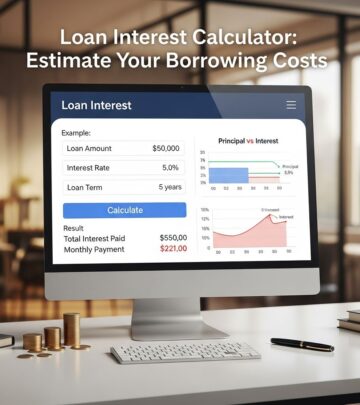
Once you’ve entered all required information, click the “Calculate” button to generate your results. Make sure to recalculate any time you change the loan amount, loan term, or interest rate to ensure you’re viewing the most accurate results for your new scenario.
Understanding Your Calculator Results
After running your calculation, you’ll receive several important pieces of information to help you understand your loan’s cost:
Monthly Payment Estimate
Your calculator will display your estimated monthly payment, which represents the fixed amount you’ll pay each month throughout your loan term. This payment includes both principal and interest components.
Total Interest Paid
The calculator shows the total amount of interest you’ll pay over the entire life of your loan. This figure demonstrates the true cost of borrowing and helps you compare different loan scenarios.
Amortization Schedule
By clicking “Show amortization schedule,” you can see a detailed month-by-month breakdown of how your principal and interest payments will change throughout your loan term. This schedule shows how much of each payment goes toward principal versus interest, revealing how your outstanding balance decreases over time.
Sample Loan Comparison Table
Consider this example showing how different terms and credit tiers affect monthly payments on a $6,000 loan:
| Repayment Term | Credit Tier | APR | Monthly Payment |
|---|---|---|---|
| 3 years | Excellent | 8% | $188 |
| 3 years | Good | 12% | $199 |
| 3 years | Fair | 20% | $223 |
| 3 years | Bad | 30% | $255 |
| 5 years | Excellent | 8% | $122 |
| 5 years | Good | 12% | $133 |
| 5 years | Fair | 20% | $159 |
| 5 years | Bad | 30% | $194 |
Ways to Use Your Calculator Results
A loan calculator serves multiple purposes beyond simple payment estimation. Here are key ways to maximize this tool:
Scenario Comparison
Try different loan amounts, repayment terms, and interest rates to find a combination that fits your budget. For example, you might compare a three-year term with an eight percent rate against a five-year term with a twelve percent rate to see which aligns better with your financial situation.
Budget Planning
Understanding your potential monthly payment helps you determine whether a particular loan fits within your monthly budget. This prevents overextending yourself financially and ensures sustainable debt repayment.
Lender Comparison
If you receive loan offers from multiple lenders with different interest rates and terms, you can input each scenario into the calculator to compare total costs objectively.
Credit Score Impact Analysis
By entering different interest rates that correspond to different credit scores, you can see how improving your credit score before applying could save you money on interest charges.
Making Your Loan Decision
When choosing between loan options, consider these strategies:
Shortest Term for Maximum Savings
If you want to minimize total interest paid and build equity quickly, choose the shortest repayment term you can comfortably afford. A three-year term means higher monthly payments but significantly lower total interest charges compared to a five-year or seven-year term.
Longer Term for Budget Flexibility
If keeping your monthly payment as low as possible is your priority, opt for a longer repayment term. A five-year term offers lower monthly payments than a three-year term, though you’ll pay more interest overall.
Factors Affecting Your Loan Costs
Several key factors influence how much your loan will ultimately cost:
Interest Rate
Your interest rate is the biggest driver of loan cost. Even a one to two percent difference in interest rates can add hundreds or thousands of dollars over the life of the loan. Always shop around for the best personal loan rates before applying to ensure you’re getting competitive pricing.
Credit Score
Lenders use your credit score to assess risk. Borrowers with higher credit scores unlock lower interest rates and better loan terms, while those with lower scores may face significantly higher borrowing costs. Improving your credit score before applying for a loan can result in substantial savings.
Loan Term
Shorter loan terms result in higher monthly payments but lower total interest charges. Longer loan terms spread payments out but increase the total amount of interest you’ll pay.
Loan Amount
The principal amount you borrow directly affects your monthly payment. Borrowing less money reduces both your monthly payment and total interest charges.
Different Types of Loan Calculators
Bankrate offers specialized calculators for different loan types:
Personal Loan Calculator
Designed specifically for personal loans, this calculator helps you estimate monthly payments and compare different lending options. Personal loans typically offer fixed interest rates and set repayment terms.
Auto Loan Calculator
This specialized calculator helps you estimate monthly payments on auto loans, accounting for factors like down payment, vehicle condition (new or used), and interest rates from different lenders. It shows how much total interest you’ll pay over the life of the auto loan.
Simple Loan Payment Calculator
This straightforward calculator helps you estimate monthly payments for any simple interest loan by entering the principal, interest rate, and loan term in years.
Loan Comparison Calculator
This advanced tool helps you compare multiple loan options simultaneously, considering all associated costs and fees to determine which loan option provides the best value.
Understanding Interest Calculation Methods
Lenders calculate interest in two primary ways: simple interest and amortized interest. Understanding the difference helps you become a better-informed borrower and predict your actual costs more accurately.
Simple Interest
Simple interest is calculated using the formula: Principal × Interest Rate × Loan Term (in years) = Total Interest. With simple interest, your monthly payment remains fixed, but the interest you pay each month fluctuates based on your outstanding principal balance. Making payments early reduces your principal faster, resulting in less interest charged overall.
Amortized Interest
Larger loans like mortgages, personal loans, and most auto loans use an amortization schedule. With amortized interest, you divide your annual interest rate by twelve (for monthly payments), multiply that by your remaining loan balance to find your monthly interest charge, then subtract this from your fixed monthly payment to determine how much goes toward principal. Over time, more of your payment goes toward principal as the remaining balance decreases.
Why Use a Loan Calculator?
A loan calculator is particularly useful if you want to understand how much it costs to borrow money, compare different loan scenarios, see the impact of various interest rates on your total borrowing cost, or determine whether a particular loan fits your budget and financial goals. By experimenting with different numbers before applying, you can make confident, informed decisions about which loan option serves your needs best.
Frequently Asked Questions
Q: What is the difference between APR and interest rate?
A: The interest rate is the percentage you pay to borrow money. The APR (Annual Percentage Rate) includes the interest rate plus any additional fees charged by the lender, providing a more complete picture of the total cost of borrowing.
Q: Can I change my loan term after I’ve taken out a loan?
A: Generally, you cannot change your loan term after approval, but you can refinance your loan with a new term if interest rates drop or your credit improves. Refinancing creates a new loan that pays off the old one.
Q: How accurate are loan calculator estimates?
A: Loan calculators provide accurate estimates based on the information you enter. However, your actual payment may vary slightly depending on factors like payment dates, additional fees, or variable interest rates.
Q: Should I choose the shortest loan term possible?
A: Choose a loan term you can comfortably afford. While shorter terms save on interest, the higher monthly payments might strain your budget. Balance interest savings with monthly payment affordability.
Q: How does my credit score affect my loan interest rate?
A: Your credit score is a primary factor lenders use to assess risk. Higher credit scores typically qualify for lower interest rates, while lower scores may result in higher rates or loan denial.
Q: What’s the best way to compare loans from different lenders?
A: Use a loan comparison calculator to input offers from multiple lenders with their specific rates and terms. This shows you the true total cost of each loan option, making comparison straightforward.
References
- Personal Loan Calculator — Bankrate. 2025-10-02. https://www.bankrate.com/loans/personal-loans/personal-loan-calculator/
- How To Calculate Loan Interest: Simple And Amortized — Bankrate. 2025-11-01. https://www.bankrate.com/loans/personal-loans/how-to-calculate-loan-interest/
- How To Calculate Loan Payments And Costs — Bankrate. 2025-11-01. https://www.bankrate.com/loans/personal-loans/how-to-calculate-loan-payments/
- Auto Loan Calculator — Bankrate. 2025-09-05. https://www.bankrate.com/loans/auto-loans/auto-loan-calculator/
- Simple Loan Payment Calculator — Bankrate. 2025-10-02. https://www.bankrate.com/loans/simple-loan-payment-calculator/
- Loan Comparison Calculator — Bankrate. 2025-11-01. https://www.bankrate.com/loans/loans-comparison-calculator-old/
Similar Articles








Read full bio of Sneha Tete