Loan Application Fees: What Borrowers Need To Know
Discover what loan application fees are, their typical costs, differences from other charges, and smart strategies to minimize them when borrowing.
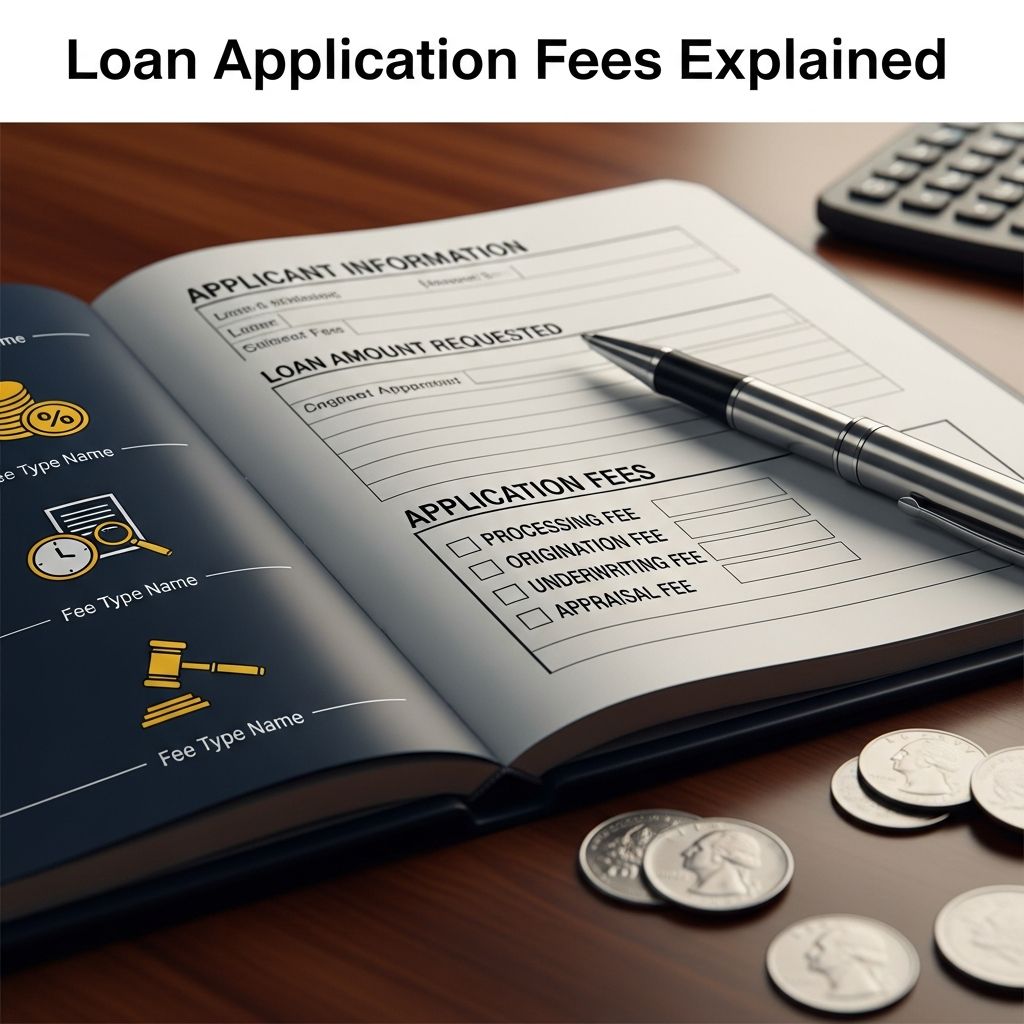
Loan application fees represent an initial charge that certain lenders impose to offset the expenses involved in evaluating a borrower’s request for funds. These fees, typically structured as a fixed amount rather than a portion of the borrowed sum, arise during the early stages of the lending process and apply across diverse borrowing categories such as personal financing, vehicle purchases, home mortgages, and business funding.
Defining Loan Application Fees
At their core, these fees compensate financial institutions for the labor-intensive tasks of reviewing submitted documents, conducting preliminary credit assessments, and performing basic verification steps. Unlike recurring costs, they constitute a singular payment due upon submission, irrespective of the outcome—whether approval or denial. This upfront nature underscores their role in filtering serious applicants while helping lenders manage operational overheads like staff time and software usage.
Borrowers encounter these charges most frequently with larger-scale loans where administrative demands escalate. For instance, mortgage providers often levy them to cover initial paperwork handling, while personal loan issuers might apply smaller amounts for streamlined digital processes.
Typical Costs Associated with Application Fees
The monetary value of these fees fluctuates significantly depending on the lender’s policies, the complexity of the loan product, and market norms. Personal loans generally feature modest fees ranging from $15 to $50, reflecting simpler underwriting. In contrast, mortgage applications can demand over $1,000, accounting for extensive documentation and compliance checks.
Business lenders often set fees between $100 and $1,000, sometimes crediting them toward subsequent charges if the deal proceeds. Factors influencing these amounts include the borrower’s credit profile, loan size, and regional regulations, with full disclosure mandated at application to promote transparency.
| Loan Type | Typical Fee Range | Notes |
|---|---|---|
| Personal Loans | $15 – $50 | Low due to digital processing |
| Auto Loans | $50 – $200 | Includes vehicle-specific checks |
| Mortgages | $500 – $1,500+ | High for appraisals and titles |
| Business Loans | $100 – $1,000 | May offset later fees |
This table illustrates average ranges drawn from industry practices, highlighting how scale correlates with cost.
Distinguishing Application Fees from Other Common Charges
Lenders deploy multiple fee types to distribute processing expenses, but application fees stand apart in timing and structure. Origination fees, for example, activate post-approval at closing, often calculated as 0.5% to 8% of the principal, encompassing comprehensive underwriting and fund disbursement efforts.
Other prevalent charges include:
- Underwriting Fees: Dedicated to risk evaluation, sometimes bundled with applications.
- Processing Fees: Cover document management, akin to applications but post-initial review.
- Documentation Fees: Handle paperwork for loans like mortgages.
Application fees remain nonrefundable and flat-rate, while origination variants scale with loan volume and deduct directly from proceeds.
Key Differences: Application vs. Origination Fees
| Aspect | Application Fee | Origination Fee |
|---|---|---|
| Timing | Upfront at submission | At loan closing/approval |
| Structure | Flat amount | Percentage (1-10% typically) |
| Refundability | Usually nonrefundable | Nonrefundable, deducted from funds |
| Purpose | Initial processing | Full underwriting and setup |
| Prevalence | Less universal | Common in personal/mortgage loans |
These distinctions aid borrowers in anticipating cash flows and total expenses.
Prevalence Across Loan Categories
Not all lenders impose application fees, particularly online platforms prioritizing volume over per-application recovery. Traditional banks and credit unions vary, with some waiving for preferred customers. Mortgages invariably include them alongside appraisals and credit pulls, inflating totals.
Personal loans from fintechs might omit them to attract borrowers, folding costs into rates instead. Small business financing often mandates them to ensure applicant commitment amid rigorous due diligence.
Negotiation and Waiver Possibilities
While often fixed, savvy borrowers can negotiate, especially with strong credit or competing offers. Loyalty programs or promotional periods yield waivers. Comparing multiple providers reveals no-fee alternatives, though higher rates may offset savings—calculate via total APR.
Regulations like the Truth in Lending Act compel disclosures, empowering informed decisions.
Strategic Tips for Minimizing Fee Impact
To optimize borrowing:
- Research lenders upfront for fee policies.
- Prioritize those crediting fees toward closing costs.
- Leverage excellent credit for waivers or reductions.
- Use loan calculators to model net proceeds post-fees.
- Shop rates across 3-5 providers within 14-45 days to limit credit inquiries.
These steps preserve capital and enhance affordability.
Impact on Overall Borrowing Costs
Though seemingly minor, fees compound with interest. A $300 origination on a $10,000 loan at 12% APR elevates total repayment by hundreds over terms. Fee-free options demand scrutiny against rate hikes; a no-fee 15% loan may exceed a 4% fee 12% counterpart.
| Scenario | Loan Amount | Fee | APR | Net Received | Total Repaid |
|---|---|---|---|---|---|
| Option 1 | $10,000 | 0% | 12% | $10,000 | $13,347 |
| Option 2 | $10,000 | 4% ($400) | 12% | $9,600 | $13,347 |
| Option 3 | $10,000 | 0% | 15% | $10,000 | $14,274 |
Illustrating equivalent costs despite variances.
Frequently Asked Questions
Are loan application fees refundable?
Most are not, even upon denial, as they fund initial reviews.
Can I avoid application fees entirely?
Yes, select no-fee lenders, though compare holistic costs.
How do fees affect my loan amount?
They don’t reduce principal but demand budgeting for upfront payment.
Are fees higher for bad credit?
Indirectly, via risk-based pricing, but application fees stay flat.
Must lenders disclose these fees?
Affirmative, per federal rules at application.
Navigating Fees in Today’s Lending Market
Digital evolution reduces some fees, yet mortgages retain them for regulatory rigor. Borrowers benefit from tools comparing APRs inclusive of all charges. Proactive inquiry into fee structures ensures empowered choices amid diverse options.
Understanding these elements demystifies lending, fostering financial prudence. Always verify lender terms and consult advisors for personalized guidance.
References
- What Is a Loan Application Fee? — Experian. 2023. https://www.experian.com/blogs/ask-experian/what-is-loan-application-fee/
- Loan Terminology — LISC. 2023. https://www.lisc.org/charter-schools/understanding-your-needs/financing/loan-terminology/
- Common Loan Fees – Small Business Loans — Pursuit Lending. 2023. https://pursuitlending.com/resources/common-loan-fees-what-small-business-owners-need-to-know/
- Understanding Loan Fees and Charges — Rocket Loans. 2023. https://www.rocketloans.com/learn/personal-loan-basics/understanding-loan-fees-and-charges
- Origination Fees on Personal Loans: What To Know — LendingTree. 2023. https://www.lendingtree.com/personal/understanding-origination-fees/
- Personal Loan Origination Fees: What To Know — Bankrate. 2023. https://www.bankrate.com/loans/personal-loans/personal-loan-origination-fees/
- Mortgage Origination Fee: The Inside Scoop — Rocket Mortgage. 2023. https://www.rocketmortgage.com/learn/mortgage-origination-fee
- What Costs Come with Taking Out a Mortgage? — Consumer Financial Protection Bureau. 2023. https://www.consumerfinance.gov/ask-cfpb/what-costs-come-with-taking-out-a-mortgage-en-153/
Similar Articles








Read full bio of Sneha Tete