LLC vs Incorporation: Which Should You Choose?
Compare LLC and incorporation structures to find the right business entity for your needs.
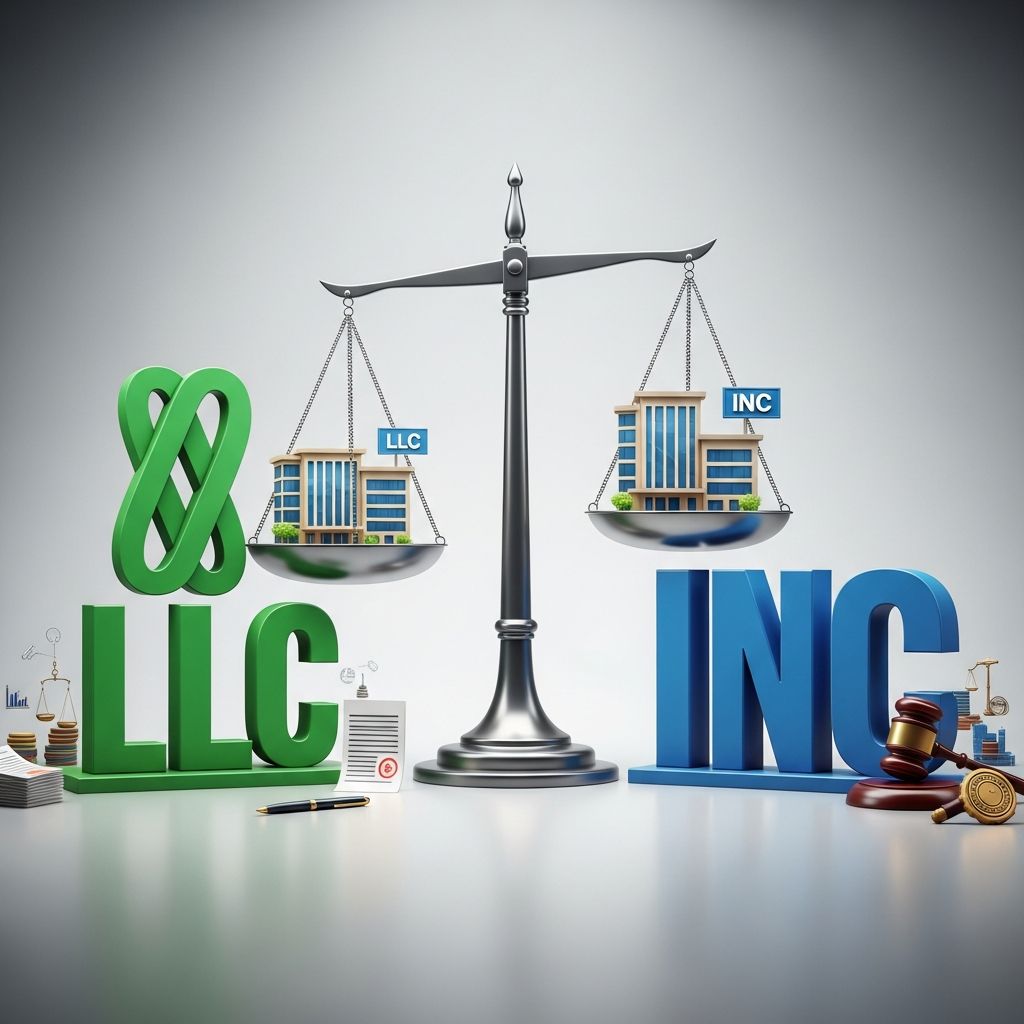
LLC vs Incorporation: Which Business Structure Is Right for You?
When starting a business, one of the most critical decisions you’ll make is selecting the right legal structure. Two of the most popular options are forming a Limited Liability Company (LLC) or incorporating as a corporation. Each structure offers distinct advantages and disadvantages that can significantly impact your taxes, personal liability protection, management flexibility, and ability to raise capital. Understanding the differences between these two business entities is essential for making an informed decision that aligns with your entrepreneurial goals and financial situation.
Understanding the Basics: What Are LLCs and Corporations?
Before diving into comparisons, it’s important to understand what each structure represents. An LLC is a business entity that combines the liability protection of a corporation with the tax flexibility and management simplicity of a partnership or sole proprietorship. When you form an LLC, you create a separate legal entity that protects your personal assets from business debts and legal claims.
A corporation, often referred to as an “Inc.” (short for incorporated), is a distinct legal entity separate from its owners, known as shareholders. Corporations are recognized by the state where they are formed and operate under a formal governance structure that includes a board of directors, officers, and shareholders who hold ownership through shares of stock.
Formation and Setup Requirements
The formation process varies significantly between LLCs and corporations, with corporations requiring more extensive steps and paperwork.
LLC Formation Process
Forming an LLC is relatively straightforward and cost-effective. You typically file Articles of Organization with your state’s secretary of state, which requires basic information about your company. The process is designed to be simple and accessible for small business owners. Once formed, you create an operating agreement that outlines how your LLC will be managed, the rights and responsibilities of members, and profit distribution arrangements. This operating agreement is internal documentation and doesn’t need to be filed with the state, offering significant flexibility in customizing your business structure.
Corporation Formation Process
Incorporating involves more complex steps and greater expense. You must file Articles of Incorporation with your state’s secretary of state and establish corporate bylaws that govern how the company operates. After incorporation, you are required to hold an organizational meeting to create these bylaws and elect a board of directors. Corporations must also maintain more detailed records, including minutes from board meetings and shareholder meetings, for legal and tax compliance purposes.
Management Structure and Operational Control
The management structures of LLCs and corporations differ substantially, affecting how decisions are made and how the business operates on a day-to-day basis.
LLC Management Flexibility
One of the primary advantages of an LLC is its flexible management structure. Members of an LLC can choose to manage the company directly, or they can appoint managers to handle day-to-day operations while members focus on strategic decisions. This flexibility allows you to structure management in whatever way works best for your business. LLCs also have minimal requirements regarding board meetings, annual reports, or formal record-keeping procedures, allowing for a more relaxed operational approach compared to corporations.
Corporation Management Requirements
Corporations operate under a more rigid and formalized governance structure. A corporation must have a board of directors elected by shareholders who are responsible for overseeing major business decisions and setting company strategy. The board appoints corporate officers, such as a CEO, CFO, and Secretary, to manage day-to-day operations. Corporations must hold regular board meetings and shareholder meetings, maintain detailed records of all decisions, and follow specific voting procedures. While this formal structure provides clear oversight and protects shareholders’ interests, it creates significantly more administrative work and compliance burden.
Taxation Differences and Implications
Taxation is one of the most significant differences between LLCs and corporations, and it can substantially impact your bottom line.
LLC Taxation
By default, LLCs enjoy pass-through taxation, meaning the business itself does not pay taxes at the entity level. Instead, profits and losses “pass through” directly to the members’ personal tax returns, where they are taxed at individual income tax rates. This arrangement avoids double taxation and is often more advantageous for small business owners. LLCs also offer tax election flexibility—a single-member LLC can be taxed as a sole proprietorship, a multi-member LLC can be taxed as a partnership, and LLCs can elect to be taxed as an S corporation if certain requirements are met.
Corporation Taxation
Corporations are subject to corporate income tax by default as a C corporation. This means the corporation pays taxes on its profits at the corporate level, and then shareholders must pay taxes again on any distributions they receive—a situation known as double taxation. However, corporations with fewer than 100 shareholders (all of whom must be U.S. citizens or permanent residents) can elect to be taxed as an S corporation, which provides pass-through taxation similar to an LLC. Despite the potential tax disadvantage, corporations can reinvest profits back into the business without distributing them to shareholders, reducing the immediate tax burden.
Liability Protection
Both LLCs and corporations provide limited liability protection, but the degree and nature of that protection differ slightly.
Both business structures shield personal assets from business debts and legal liabilities. This means creditors cannot typically pursue your personal bank accounts, home, or other personal property to satisfy business obligations. However, corporations, as separate legal entities, offer a stronger and more clearly established separation between the business and its owners. This formal recognition has been established through decades of corporate law and court precedent. LLCs also provide substantial liability protection, though the legal framework is newer and varies somewhat by state.
It’s important to note that personal liability protection is not absolute in either structure. If you personally guarantee a business debt or engage in fraudulent or grossly negligent behavior, creditors may be able to pierce the corporate or LLC veil and pursue your personal assets. Additionally, professional malpractice claims may expose personal liability in certain circumstances.
Capital Raising and Investment Opportunities
If you anticipate needing to raise capital from external investors, the structure you choose can significantly impact your ability to do so.
LLC Capital Raising Limitations
LLCs have limited options for raising external capital. They cannot issue stock or go public. Instead, new investors must be added to the LLC’s Articles of Organization as members and receive membership interests according to the operating agreement. This arrangement can be cumbersome and may require significant restructuring of the LLC’s ownership. Additionally, transferring ownership interests in an LLC is often restricted and more complicated than transferring corporate stock.
Corporation Capital Raising Advantages
Corporations can raise capital much more easily by issuing shares of stock to investors. This allows you to bring in multiple investors without fundamentally changing the company’s structure. Corporations can also potentially go public by listing shares on a stock exchange, subject to SEC regulations. This ability to easily bring in investors and scale capital makes corporations particularly attractive for high-growth businesses seeking significant funding. Investors often prefer the structured governance of corporations, which provides clear oversight and established legal protections.
Compliance, Record-Keeping, and Administrative Burden
The amount of paperwork and administrative requirements you’ll face varies considerably between these structures.
LLC Compliance Requirements
LLCs have significantly fewer compliance requirements than corporations. You don’t need to hold regular board meetings or maintain detailed minutes of corporate decisions. Your primary obligation is to follow the terms outlined in your operating agreement. LLCs still require basic financial records and tax filings, but the administrative burden is considerably lighter than for corporations. This reduced red tape makes LLCs attractive to small business owners who want to focus on growing their business rather than navigating complex compliance procedures.
Corporation Compliance Requirements
Corporations face much stricter compliance obligations. They must hold regular board meetings and maintain detailed records of all decisions, including meeting minutes. Corporations must also file annual reports with the state, maintain corporate records, follow specific voting procedures, and comply with IRS regulations. While these requirements create more administrative work and complexity, they provide stability, clear oversight, and comprehensive documentation that can be valuable during disputes, audits, or when seeking external investment.
Ownership Structure and Stock Options
The way ownership is structured and how you can incentivize employees differs between LLCs and corporations.
LLC Ownership Structure
LLC members hold membership interests, which provide flexible ownership arrangements. Profits and losses can be distributed according to the operating agreement, which doesn’t necessarily have to correspond to ownership percentages. This flexibility allows for creative ownership structures. However, LLCs cannot offer traditional stock options to employees. Instead, they may use synthetic equity arrangements, which are more complex and less standardized than corporate stock options.
Corporation Ownership and Incentives
Corporations divide ownership among shareholders through shares of stock. Corporations can create different classes of stock with varying voting rights and profit-sharing arrangements, providing sophisticated ownership structures. Corporations can offer traditional stock options to employees, which is a powerful tool for attracting and retaining talent. This ability to offer equity incentives makes corporations particularly attractive for competitive industries where stock options are expected compensation.
Employee Benefits and Tax Deductibility
The tax treatment of employee benefits differs between LLC and corporate structures.
In a corporation, health insurance and other employee benefits are fully tax-deductible business expenses, and employee health insurance is not considered taxable income to employees. In contrast, LLC owners who own more than 2% of the company must include health insurance premiums in their taxable income, reducing the tax advantage. This difference can be significant if you’re providing health insurance coverage and affects your overall tax liability.
Choosing the Right Structure for Your Business
Selecting between an LLC and a corporation depends on several factors specific to your business situation and goals.
Choose an LLC If:
You should consider forming an LLC if you are starting a small business and prioritize simplicity and flexibility over rapid growth and external investment. LLCs work well when you want to minimize administrative burdens and paperwork. They are ideal if you prefer pass-through taxation and want to avoid double taxation. LLCs are also suitable if you plan to manage the business yourself or with a few partners and don’t anticipate needing significant outside investment.
Choose a Corporation If:
You should consider incorporating if you plan to significantly grow your business and seek outside investment or venture capital. Corporations are appropriate if you want to offer stock options to employees as part of your compensation strategy. Incorporating makes sense if you anticipate needing to go public or attract institutional investors. Corporations are also better suited if you want a clear, formal governance structure with defined roles and responsibilities. They work well for established businesses seeking stability and formal oversight.
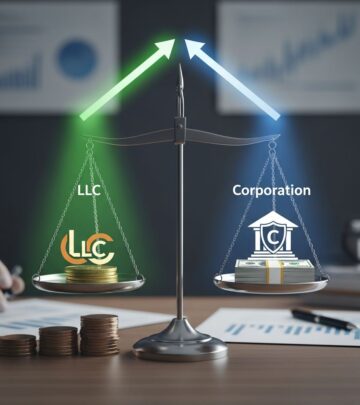
Comparison Table: LLC vs Corporation
| Factor | LLC | Corporation |
|---|---|---|
| Formation Complexity | Simple process with fewer steps | Complex process requiring board formation |
| Management Structure | Flexible, member or manager-managed | Rigid, requires board of directors |
| Taxation | Pass-through, no double taxation | Corporate tax plus shareholder tax (C corp) |
| Capital Raising | No stock issuance, limited investor options | Can issue stock, go public |
| Compliance Burden | Minimal paperwork, relaxed rules | Strict records, mandatory meetings |
| Stock Options | No traditional stock options | Can offer stock options to employees |
| Employee Benefits | Limited tax deductibility | Fully tax-deductible benefits |
| Liability Protection | Limited liability protection | Strong liability protection |
| Ownership Flexibility | Highly flexible profit distribution | Based on stock ownership |
| Ideal For | Small businesses, simplicity seekers | Growing businesses, investor-backed |
Frequently Asked Questions
Q: Can I convert my LLC to a corporation later?
A: Yes, you can convert an LLC to a corporation through a process called “entity conversion” or “statutory conversion.” However, this involves filing appropriate paperwork with your state and may have tax implications, so consult with a tax professional before making this change.
Q: Which structure provides better liability protection?
A: Both structures provide limited liability protection, but corporations offer a stronger and more clearly established legal separation between the business and owners. However, both can be pierced if you engage in fraud or gross negligence.
Q: Do I need an operating agreement for my LLC?
A: While not always legally required, having an operating agreement is highly recommended. It clarifies member rights, profit distribution, management structure, and procedures for resolving disputes, protecting all members’ interests.
Q: Can an LLC have only one owner?
A: Yes, single-member LLCs are common and legal in all states. A single-member LLC can be taxed as a sole proprietorship, partnership (if electing differently), or S corporation.
Q: What is the difference between a C corporation and an S corporation?
A: Both are incorporated entities, but they differ in taxation. C corporations pay corporate tax and are subject to double taxation, while S corporations pass profits through to shareholders’ personal returns, avoiding double taxation. S corpsole limitations on the number and type of shareholders.
Q: Which structure is cheaper to form?
A: LLCs are generally cheaper to form than corporations. LLC formation typically costs $100-$500 in state filing fees, while corporation formation usually costs $200-$1,000 or more, plus additional costs for bylaws and board meetings.
Q: Can I be personally liable in an LLC or corporation?
A: Generally no, but exceptions exist. Personal liability can occur if you personally guarantee a debt, engage in fraudulent activity, fail to maintain proper formalities, or in cases of professional malpractice. It’s essential to maintain separation between personal and business finances.
Final Considerations and Professional Guidance
The decision between an LLC and a corporation is significant and should not be made lightly. Your choice will affect your tax obligations, personal liability exposure, management responsibilities, ability to raise capital, and overall business operations for years to come. While this guide provides comprehensive information about both structures, business formation is complex, and tax laws vary by state and jurisdiction.
Before making a final decision, consider consulting with a business attorney and a tax professional who understand your specific situation, industry, and growth plans. They can provide personalized advice based on your financial projections, intended business activities, and long-term objectives. A small investment in professional guidance now can save considerable time, money, and headaches in the future. Remember, the “right” choice is the one that aligns with your business goals, protects your personal assets, and optimizes your tax situation.
References
- LLC vs. Corporation: What’s Right For You? — Shopify Canada. 2025. https://www.shopify.com/ca/blog/llc-vs-corporation
- LLC vs Inc: Key Differences Explained — Wolters Kluwer. https://www.wolterskluwer.com/en/expert-insights/llc-vs-inc-understanding-the-key-similarities-and-differences-between-an-llc-and-inc
- LLC vs Corporation: How to Choose a Business Structure — Ramp. https://ramp.com/blog/llc-vs-corporation
Similar Articles








Read full bio of medha deb