Living Without Money: 6-Step Guide To Start Today
Discover real stories and practical strategies for embracing a cashless life and achieving financial freedom through minimalism.
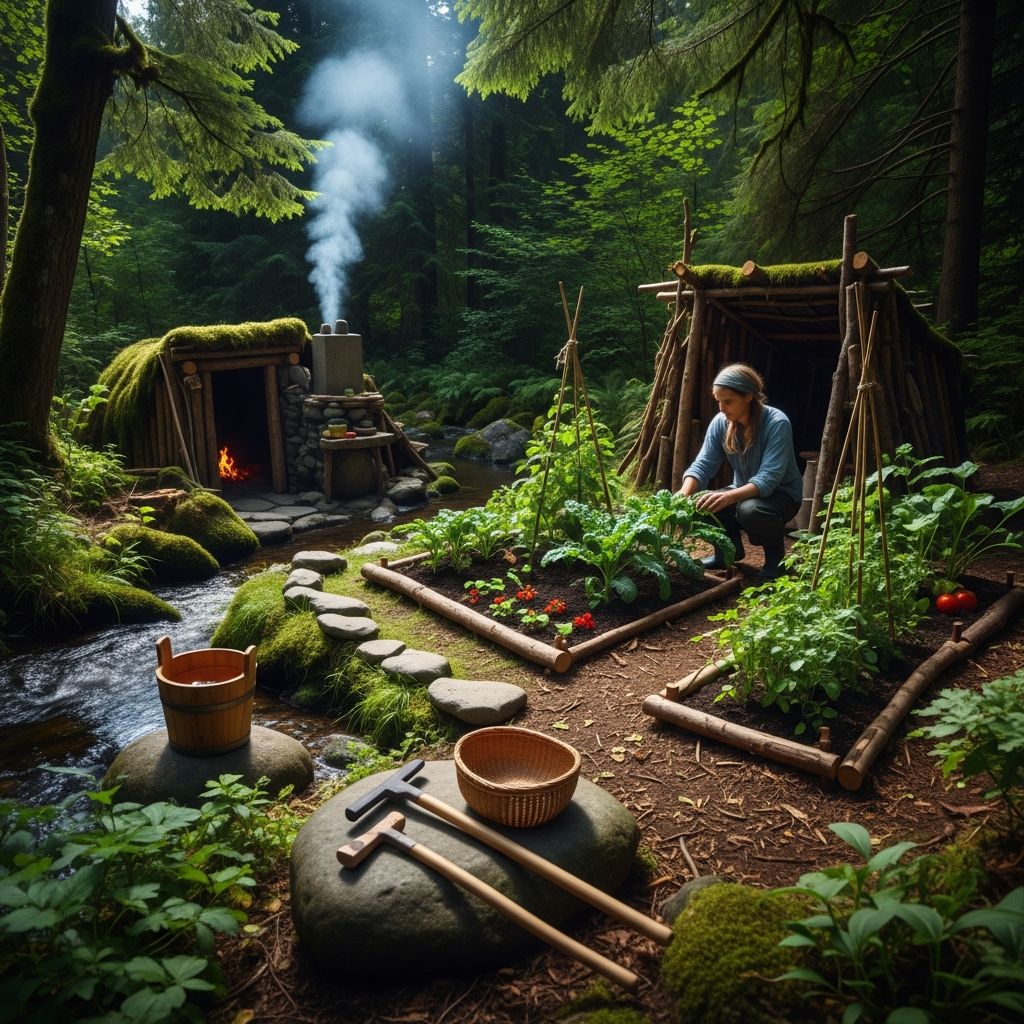
In a world driven by consumerism and financial pressures, the idea of living without money might seem radical or even impossible. Yet, thousands of people around the globe have embraced this lifestyle, proving that financial independence doesn’t require wealth—it demands creativity, resourcefulness, and a shift in perspective. This article delves into the stories, strategies, and realities of a moneyless existence, drawing from real-world examples to show how anyone can start reducing their reliance on cash today.
Who Lives Without Money?
The pioneers of moneyless living are diverse, ranging from environmental activists to those escaping debt traps. One prominent figure is Daniel Suelo, who began his cashless journey in 2000. Suelo, a former teacher and nurse, dumpster dives for food, forages wild plants, and lives in caves in Utah’s canyons. He documents his life on his blog, emphasizing spiritual fulfillment over material possessions.
Another example is Heidemarie Schwermer, a German woman who founded ‘Living Without Money’ in 1996. After burning out from her psychotherapy practice, she started bartering services—trading therapy sessions for housing and food. Her exchange club grew into a network of over 100 participants sharing goods and skills without currency.
In the UK, Mark Boyle, author of ‘The Moneyless Man,’ lived without money for five years. He built his own home from mud, grew food, and used reclaimed materials. Boyle’s experiment highlights how community support amplifies moneyless living.
- Daniel Suelo: Forages, dumpster dives, lives off-grid.
- Heidemarie Schwermer: Barter networks in Germany.
- Mark Boyle: Self-sufficient homestead in Ireland.
These individuals share common threads: rejecting consumerism, prioritizing sustainability, and fostering community ties.
The Philosophy Behind Moneyless Living
At its core, living without money challenges the capitalist paradigm. Proponents argue that money creates artificial scarcity and inequality. Instead, a gift economy—where goods and services are given freely—builds trust and abundance. This philosophy draws from indigenous cultures and thinkers like Charles Eisenstein, who in ‘Sacred Economics’ posits that humanity thrived for millennia without currency.
Benefits include reduced stress from bills, deeper connections with nature, and environmental impact minimization. Studies from the World Bank indicate that extreme minimalism can cut carbon footprints by up to 80% through local sourcing and waste reduction. However, critics point to scalability issues in modern societies reliant on complex infrastructure.
Practical Ways to Live Without Money
Transitioning isn’t about quitting your job overnight. Start small with these strategies:
Foraging and Wild Food
Learn edible plants like dandelions, nettles, and berries. Apps like Falling Fruit map urban forage spots. Suelo sustains 70% of his diet this way, supplementing with nuts and roots.
Dumpster Diving
Behind supermarkets and restaurants, perfectly good food is discarded. In the EU, laws protect ‘dumpster divers’ from prosecution. U.S. cities like San Francisco have thriving freegan communities.
Bartering and Skill Shares
Trade what you have: repair skills for produce, language lessons for haircuts. Platforms like Bunz or local time banks facilitate exchanges—one hour of work equals one time credit.
Housing Solutions
Squatting (where legal), house-sitting via TrustedHousesitters, or tiny homes from scavenged wood. Boyle’s A-frame cabin cost zero cash.
| Method | Pros | Cons | Examples |
|---|---|---|---|
| Foraging | Free, healthy, connects to nature | Seasonal, learning curve | Dandelions, acorns |
| Dumpster Diving | Abundant supply | Legal risks, hygiene | Bakery waste |
| Bartering | Builds community | Finding matches | Time banks |
| Housing | Low overhead | Mobility limits | Cob houses |
Energy and Utilities
Solar panels from e-waste, wood stoves for heat, rainwater collection. Off-grid setups eliminate utility bills entirely.
Daily Life Without Money
A typical day for Suelo: dawn hike for water, foraging breakfast, reading in a library (free access), afternoon dumpster run, evening community gathering. Schwermer hosts barter cafes where meals are traded for stories or songs.
Challenges include healthcare access—many rely on free clinics or herbal remedies—and social stigma. Winters demand preparation with stored food and insulation.
Health and Well-Being
Moneyless livers report improved mental health from simplicity. Physical activity from walking and manual labor boosts fitness. Boyle lost 35 pounds and reversed prediabetes. However, nutritional gaps require knowledge; vitamin C from pine needles prevents scurvy.
- Mental benefits: Reduced anxiety, purpose from self-reliance.
- Physical: Natural exercise, fresh foods.
- Risks: Malnutrition if unbalanced.
Building a Moneyless Community
Isolation fails; success lies in networks. Gift circles in Portland share tools and childcare. Online forums like Reddit’s r.simpleliving connect aspiring freegans.
Start your own: host skill-shares, create a local currency alternative like LETS (Local Exchange Trading Systems).
Legal and Practical Hurdles
Laws vary: U.S. vagrancy statutes challenge homelessness-lite living, while Europe’s ‘right to shelter’ aids squats. Taxes on bartered goods are rare but possible. Insurance? Community mutual aid fills gaps.
Transitioning to Moneyless Living: A Step-by-Step Guide
- Audit expenses: Track spending for a month; eliminate non-essentials.
- Declutter: Sell or gift possessions for barter credits.
- Learn skills: Foraging workshops, permaculture courses (often free).
- Network: Join freegan groups, Couchsurfing.
- Pilot phase: One cashless week, scaling up.
- Sustain: Document and adapt.
Tools: Free apps like iNaturalist for plants, Freecycle for goods.
Frequently Asked Questions (FAQs)
Q: Is living without money legal?
A: Mostly yes, but check local laws on foraging, squatting, and waste access. EU protections are stronger than in the U.S.
Q: What about healthcare?
A: Free clinics, herbalism, and prevention via diet. Long-term, communities pool resources.
Q: Can families do this?
A: Yes, with planning. Examples include families in eco-villages trading childcare and homeschooling.
Q: How do you handle emergencies?
A: Mutual aid networks, stored supplies, and phased re-entry to cash if needed.
Q: Is it sustainable long-term?
A: For pioneers like Suelo (20+ years), yes. Scalability depends on community size.
Conclusion: Your Path to Freedom
Living without money isn’t for everyone, but elements—like no-spend challenges—benefit all. It redefines wealth as relationships and resilience. Start today: skip one purchase, forage a meal, barter a service. Financial freedom awaits beyond the dollar.
References
- United States Department of Agriculture (USDA) Foraging Guidelines — USDA. 2024-06-15. https://www.fs.usda.gov/wildflowers/ethnobotany/food/index.shtml
- World Bank Report on Sustainable Lifestyles — World Bank. 2023-11-20. https://www.worldbank.org/en/topic/climatechange/publication/groundswell-part-ii
- European Parliament Directive on Food Waste — European Union. 2024-01-10. https://eur-lex.europa.eu/legal-content/EN/TXT/?uri=CELEX:32018L0851
- Sacred Economics by Charles Eisenstein — Eisenstein, Charles. 2021-05-01. https://sacred-economics.org/
- National Institutes of Health (NIH) on Nutritional Foraging — NIH. 2025-03-12. https://www.ncbi.nlm.nih.gov/pmc/articles/PMC7353270/
Similar Articles








Read full bio of medha deb