Listing Agent vs. Selling Agent: Key Differences
Understand the critical roles of listing and selling agents in real estate transactions.
Listing Agent vs. Selling Agent: What’s the Difference?
When buying or selling a home, understanding the roles of different real estate professionals is essential to successfully navigating the transaction. While listing agents and selling agents work toward the same goal—completing a real estate sale—they represent different parties and have distinct responsibilities throughout the process. Learning the key differences between these two roles can help you make informed decisions when entering the real estate market.
The Core Difference: Who They Represent
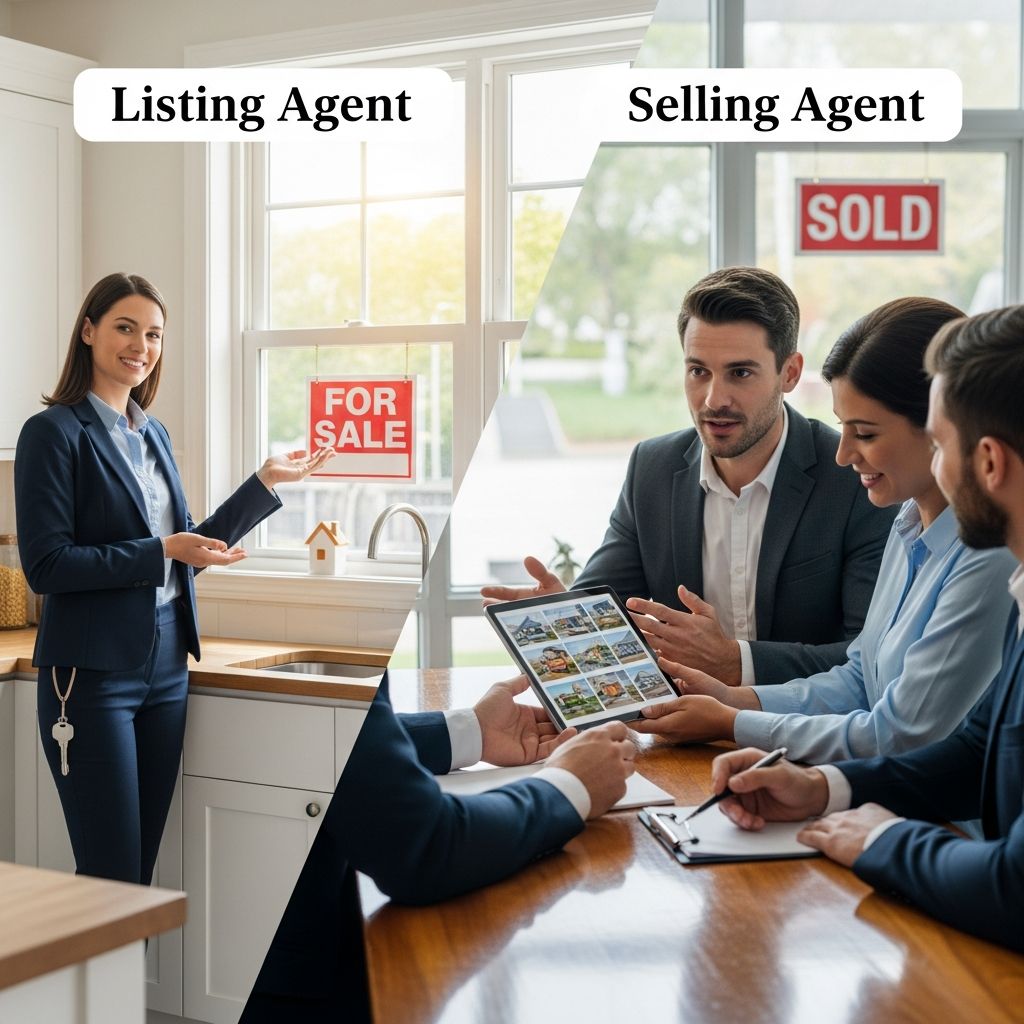
The fundamental distinction between a listing agent and a selling agent lies in the party they represent. A listing agent, also commonly referred to as a seller’s agent, represents the property owner who wants to sell their home. Conversely, a selling agent—often called a buyer’s agent—represents the individual or family looking to purchase a property. This difference in representation shapes their entire approach to the transaction and the services they provide to their clients.
Both agents work within the same real estate ecosystem and often collaborate to complete transactions. However, their priorities, duties, and day-to-day activities differ significantly based on whom they serve.
What Does a Listing Agent Do?
A listing agent helps homeowners prepare, market, and sell their properties. Their expertise and knowledge of the local housing market are invaluable during this process. Here are the primary responsibilities of a listing agent:
Setting the Right Price
One of the first and most critical tasks a listing agent performs is determining the appropriate price for the home. They accomplish this by conducting a Comparative Market Analysis (CMA), which examines recent sales of similar properties in the neighborhood. This analysis ensures the home is priced competitively—high enough to maximize profit for the seller but not so high that it deters potential buyers or leaves the property sitting on the market longer than necessary.
Marketing and Presentation
Once a price is established, listing agents actively market the property to attract qualified buyers. They may advise homeowners on staging techniques, such as suggesting fresh paint, landscaping improvements, or decluttering strategies to make the home more appealing. Professional photography is often arranged to create high-quality images that showcase the property’s best features. These photos are then distributed through various marketing channels to generate interest from potential buyers.
Facilitating Showings and Open Houses
Listing agents coordinate property showings and host open houses to bring potential buyers into the home. Beyond simply unlocking the door, they provide informed tours and answer questions about the property, highlighting its strengths and special features. Hosting open houses allows multiple interested parties to view the property simultaneously, creating more efficient marketing opportunities.
Evaluating Buyers and Handling Negotiations
When offers come in, the listing agent plays a crucial role in evaluating buyers and negotiating terms on behalf of the seller. They walk their clients through each offer, explaining the strengths and weaknesses of different proposals. The listing agent then negotiates the purchase price, terms, contingencies, and other critical details to secure the best possible deal for the seller. This negotiation process requires diplomacy, market knowledge, and strong communication skills.
Coordinating the Closing Process
After an offer is accepted, the listing agent continues to support the seller through the closing process. They coordinate inspections, appraisals, and other necessary documentation, ensuring all paperwork is completed accurately and on schedule. The listing agent serves as a communication liaison between the seller, buyer, buyer’s agent, lender, and other professionals involved in the transaction, helping to resolve any issues that arise before closing.
Commission Structure for Listing Agents
Listing agents typically earn a commission of approximately 2 to 3 percent of the final sale price. This commission is paid by the seller and is usually split between the listing agent’s brokerage firm and the seller’s agent personally. In some cases, part of the commission may also be shared with the buyer’s agent’s brokerage.
What Does a Selling Agent Do?
A selling agent, also known as a buyer’s agent, helps house-hunters find homes that meet their specific needs and represents them throughout the purchase process. Here are the key responsibilities of a selling agent:
Understanding the Buyer’s Needs
The selling agent begins by having detailed conversations with their clients to understand what they’re looking for in a home. This includes discussing preferences regarding location, size, price range, architectural style, amenities, and other important factors. By thoroughly understanding their clients’ needs and preferences, selling agents can efficiently identify properties that are likely to be of genuine interest.
Searching for Suitable Properties
Selling agents use their extensive knowledge of the local market and access to the Multiple Listing Service (MLS) to search for properties that match their clients’ criteria. The MLS is an exclusive database that contains current listings available for sale in the area. In addition to MLS listings, experienced selling agents often have knowledge of pocket listings—properties that haven’t been publicly advertised but may be available for sale. By leveraging these resources, selling agents can present buyers with a comprehensive selection of options.
Coordinating Property Showings
Once suitable properties are identified, the selling agent contacts the listing agents to schedule showings. They then guide their clients through each property, providing objective analysis and highlighting features that align with the buyer’s specific needs and preferences. More importantly, selling agents offer valuable insights about the local market, property values, and potential for appreciation or depreciation, helping buyers make informed decisions.
Assisting with Offers and Negotiations
When buyers identify a property they want to purchase, the selling agent helps them draft a competitive offer. This involves researching comparable recent sales to determine an appropriate offer price, structuring contingencies, and identifying favorable terms. The selling agent then presents the offer to the listing agent and helps negotiate counteroffers if the initial bid is rejected. In competitive housing markets with bidding wars, an experienced selling agent’s negotiation skills can be invaluable in helping buyers secure the property on favorable terms.
Guiding Clients Through Closing
After an offer is accepted, the selling agent coordinates all aspects of the closing process on behalf of their buyer clients. This includes working with home inspectors, appraisers, lenders, and title companies to ensure all paperwork is completed accurately and efficiently. The selling agent reviews important documents, explains financial terms, and addresses any concerns or questions that arise during the final stages of the transaction.
Commission Structure for Selling Agents
Selling agents typically earn a commission fee similar to listing agents—around 2 to 3 percent of the sale price. This commission is usually paid from the total commission pool, which is typically split between the listing and selling agents’ brokerage firms. Unlike the listing agent, the selling agent’s commission doesn’t come directly from the buyer; instead, it’s paid from the seller’s proceeds at closing.
How Listing and Selling Agents Work Together
Although listing and selling agents represent different parties, they must work collaboratively to complete real estate transactions. When a buyer represented by a selling agent is interested in a property listed by a listing agent, the two agents communicate to coordinate showings, present offers, and negotiate terms. This cooperative relationship, though sometimes adversarial during negotiations, is essential for facilitating smooth transactions. Both agents share a financial incentive to complete the sale successfully, as neither receives a commission if the transaction falls through.
Key Responsibilities Comparison
| Responsibility | Listing Agent | Selling Agent |
|---|---|---|
| Primary Client | Property Seller | Property Buyer |
| Price Determination | Conducts CMA and sets listing price | Analyzes pricing and advises on fair offers |
| Marketing | Markets property to potential buyers | Markets available properties to buyers |
| Property Showings | Hosts open houses and coordinates showings | Arranges and guides showings for clients |
| Negotiations | Negotiates on behalf of seller | Negotiates on behalf of buyer |
| Offer Handling | Reviews and presents offers to seller | Helps buyer craft competitive offers |
| Closing Coordination | Coordinates closing for seller | Coordinates closing for buyer |
Why You Need Professional Representation
While it may be tempting to skip professional representation and negotiate directly with the listing agent, this approach can be risky for buyers. When you work with a dedicated selling agent, your interests are protected through fiduciary duties—a legal obligation to act in your best interest. This means your agent must remain loyal to your needs, disclose all pertinent information, maintain confidentiality, and negotiate the best possible terms. A listing agent, by contrast, has fiduciary duties to the seller, not the buyer. By having your own representation, you ensure that someone is exclusively looking out for your interests throughout the transaction.
Special Situations: When One Agent Represents Both Parties
In some instances, a listing agent may also serve as the selling agent if they find a direct buyer who doesn’t have their own representation. This situation is sometimes referred to as a “in-house sale” or “pocket buyer.” While this arrangement is possible, it’s important to understand that even in these cases, the agent’s primary fiduciary duty remains with the original client (the seller). If you’re a buyer in this situation, it’s still advisable to have your own agent representation to ensure your interests are adequately protected.
Frequently Asked Questions
Q: What is the main difference between a listing agent and a selling agent?
A: The main difference is whom they represent. Listing agents represent sellers and help them market and sell their homes, while selling agents (buyer’s agents) represent buyers and help them find and purchase properties.
Q: Do listing agents and selling agents always work for different brokerages?
A: Not necessarily. Both agents can work for the same brokerage, though they still maintain separate fiduciary duties to their respective clients—one to the seller and one to the buyer.
Q: How much commission do listing and selling agents earn?
A: Both typically earn approximately 2 to 3 percent of the final sale price. This rate can vary by location and market conditions, and is often negotiable.
Q: Should I work with a selling agent when buying a home?
A: Yes, it’s highly recommended. A selling agent provides valuable market expertise, ensures your interests are protected through fiduciary duties, and often doesn’t cost you anything directly since their commission comes from the seller’s proceeds.
Q: What happens if I contact a listing agent directly as a buyer?
A: While listing agents can provide information about their listings, they have a duty to the seller, not to you. Without your own representation, your confidential information and negotiating position may be shared with the seller’s side, potentially disadvantaging you in the transaction.
Q: Can a real estate agent be both a listing agent and a selling agent simultaneously?
A: An agent can handle both roles, but typically for different properties and clients. An agent cannot represent both the buyer and seller in the same transaction without special written consent from both parties and proper disclosure.
References
- Listing Agent vs. Selling Agent (Plus Key Skills To Develop) — Indeed. Accessed November 2025. https://www.indeed.com/career-advice/finding-a-job/listing-agent-vs-selling-agent
- Listing Agent Vs. Selling Agent — Bankrate. Accessed November 2025. https://www.bankrate.com/real-estate/listing-agent-selling-agent-whats-the-difference/
- Listing Agent vs Selling Agent: What’s the Difference? — Homes for Heroes. Accessed November 2025. https://www.homesforheroes.com/blog/listing-agent-vs-selling-agent/
- Listing Agent vs Selling Agent – What’s the Difference in NYC? — Haus.it. Accessed November 2025. https://www.hauseit.com/listing-agent-vs-selling-agent-nyc/
- Listing Agent Vs. Selling Agent: Understanding The Difference — Raleigh Realty. Accessed November 2025. https://raleighrealty.com/blog/listing-agent-vs-selling-agent
- Listing Agent vs. Selling Agent: What’s the Difference? — Moving.com. Accessed November 2025. https://www.moving.com/tips/listing-agent-vs-selling-agent-whats-the-difference/
- Listing Agent vs. Selling Agent: What’s the Difference? — Colibri Real Estate. Accessed November 2025. https://www.colibrirealestate.com/career-hub/blog/listing-agent-vs-selling-agent-whats-the-difference/
- Selling vs Listing Agent: What’s The Difference? — Clever Real Estate. Accessed November 2025. https://listwithclever.com/real-estate-blog/difference-between-listing-and-selling-agent/
Similar Articles








Read full bio of Sneha Tete