Liquidity Ratios: Definition, Types, and Calculation
Master liquidity ratios to assess a company's financial health and short-term solvency.

What Are Liquidity Ratios?
Liquidity ratios are financial metrics that measure a company’s ability to pay its short-term obligations with its current assets. These ratios are essential tools for investors, creditors, and financial analysts to assess whether a business can meet its debt payments and operational expenses in the near term. A company with strong liquidity ratios demonstrates financial stability and operational efficiency, while weak liquidity ratios may indicate potential financial distress.
The concept of liquidity refers to how quickly assets can be converted into cash without significant loss of value. Liquidity ratios typically compare current assets to current liabilities, providing insight into a company’s cash flow management and working capital efficiency. Understanding these ratios is crucial for stakeholders who need to evaluate financial health and make informed investment or lending decisions.
Why Liquidity Ratios Matter
Liquidity ratios serve as critical indicators of financial health for several reasons:
- Risk Assessment: They help identify whether a company faces short-term financial difficulties or potential insolvency.
- Investment Decisions: Investors use these ratios to evaluate the stability and reliability of potential investments.
- Credit Analysis: Lenders assess liquidity ratios before extending credit to determine default risk.
- Operational Efficiency: Management can monitor working capital management and optimize cash flow.
- Industry Comparison: Liquidity ratios enable benchmarking against competitors within the same industry.
Types of Liquidity Ratios
Several liquidity ratios exist, each providing different perspectives on a company’s short-term financial position. The most commonly used ratios include the current ratio, quick ratio, and cash ratio.
1. Current Ratio
The current ratio is the most widely used liquidity ratio. It compares a company’s current assets to its current liabilities. The formula is:
Current Ratio = Current Assets ÷ Current Liabilities
Current assets include cash, marketable securities, accounts receivable, and inventory. Current liabilities encompass accounts payable, short-term debt, and accrued expenses due within one year. A current ratio of 1.5 to 3.0 is generally considered healthy, indicating that the company has sufficient current assets to cover its short-term obligations. However, the ideal ratio varies by industry and business model.
Example: If a company has $500,000 in current assets and $250,000 in current liabilities, the current ratio would be 2.0, suggesting the company can cover its short-term liabilities twice over.
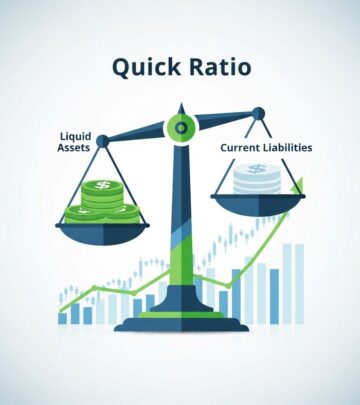
2. Quick Ratio (Acid-Test Ratio)
The quick ratio is a more conservative measure than the current ratio because it excludes inventory and prepaid expenses from current assets. This ratio focuses on the most liquid assets only. The formula is:
Quick Ratio = (Current Assets – Inventory – Prepaid Expenses) ÷ Current Liabilities
The quick ratio is particularly useful for assessing a company’s ability to meet immediate obligations without relying on inventory sales. A quick ratio of 1.0 or higher is generally considered acceptable, though this varies by industry. Retail businesses with significant inventory may have lower quick ratios, while service companies might maintain higher ratios.
Example: Using the same company from above, if inventory is $150,000, the quick ratio would be ($500,000 – $150,000) ÷ $250,000 = 1.4.
3. Cash Ratio
The cash ratio is the most conservative liquidity measure, considering only cash and cash equivalents in relation to current liabilities. The formula is:
Cash Ratio = (Cash + Cash Equivalents + Marketable Securities) ÷ Current Liabilities
While this ratio provides the most stringent assessment of liquidity, it is rarely used alone because few companies maintain cash levels high enough to cover all current liabilities. A cash ratio above 0.5 is generally considered strong, but most industries maintain ratios between 0.2 and 0.5.
Example: If the company has $200,000 in cash and equivalents, the cash ratio would be $200,000 ÷ $250,000 = 0.8.
Interpreting Liquidity Ratios
Understanding what liquidity ratios reveal requires context and industry knowledge:
- High Ratios: While healthy liquidity ratios indicate financial stability, excessively high ratios may suggest the company is holding too much cash that could be invested for growth or returned to shareholders.
- Low Ratios: Low liquidity ratios may indicate financial stress, but some industries naturally operate with lower ratios due to their business model.
- Trend Analysis: Examining liquidity ratios over time reveals whether a company’s financial position is improving or deteriorating.
- Industry Benchmarking: Comparing a company’s ratios to industry averages provides context for evaluation.
Factors Affecting Liquidity Ratios
Several factors influence liquidity ratio calculations and interpretations:
Seasonal Variations
Many businesses experience seasonal fluctuations in sales and cash flow. Retail companies, for example, typically have higher inventory and lower liquidity ratios before the holiday season. Analyzing liquidity ratios at different times of the year provides more accurate insights into financial health.
Industry Characteristics
Different industries have naturally different liquidity profiles. Manufacturing companies typically carry significant inventory, affecting their quick and current ratios. Financial institutions and utilities often operate with lower current ratios due to their business models.
Business Cycle Stage
Startup companies and those in growth phases may have lower liquidity ratios as they reinvest cash into operations. Mature companies typically maintain higher liquidity ratios as they generate consistent cash flows.
Limitations of Liquidity Ratios
While liquidity ratios are valuable tools, they have important limitations:
- Snapshot Nature: Ratios provide a point-in-time view and may not reflect ongoing trends or future cash flows.
- Account Manipulation: Companies can manipulate ratios through accounting methods, such as timing asset sales or liability payments.
- Quality of Assets: Ratios don’t consider whether current assets are truly liquid or collectible. Accounts receivable and inventory may not convert to cash quickly.
- Lack of Context: Ratios alone don’t explain underlying business performance or management quality.
- Industry Variations: Comparing ratios across different industries may lead to incorrect conclusions.
How to Improve Liquidity Ratios
Companies seeking to enhance their liquidity positions can implement several strategies:
- Accelerate Collections: Improve accounts receivable collection processes to increase cash inflow.
- Manage Inventory: Optimize inventory levels to reduce tied-up capital while maintaining operational efficiency.
- Negotiate Payment Terms: Extend payment terms with suppliers to preserve cash.
- Reduce Expenses: Lower operating costs to improve cash generation.
- Secure Credit Lines: Establish backup financing options for unexpected needs.
- Sell Assets: Liquidate non-core assets to increase available cash.
Liquidity Ratios in Financial Analysis
Financial analysts use liquidity ratios as part of comprehensive financial assessments. These ratios complement other analysis tools such as profitability ratios, leverage ratios, and efficiency ratios. A complete financial evaluation examines multiple metrics to develop a holistic understanding of a company’s financial position.
Banks and credit rating agencies heavily weight liquidity analysis when determining creditworthiness. Companies with strong liquidity ratios receive better credit terms and lower interest rates, while those with weak ratios face borrowing restrictions or higher costs. Investors also prioritize liquidity assessment, particularly in volatile market conditions or economic downturns.
Comparative Liquidity Analysis
When evaluating liquidity across companies or time periods, analysts create comparison tables showing different ratios side by side:
| Liquidity Metric | Formula | Healthy Range | Interpretation |
|---|---|---|---|
| Current Ratio | Current Assets ÷ Current Liabilities | 1.5 – 3.0 | Ability to cover short-term obligations |
| Quick Ratio | (Current Assets – Inventory) ÷ Current Liabilities | 1.0 – 1.5 | Ability to meet immediate obligations |
| Cash Ratio | Cash ÷ Current Liabilities | 0.2 – 0.5 | Most conservative liquidity measure |
Frequently Asked Questions (FAQs)
Q: What is considered a good liquidity ratio?
A: A current ratio between 1.5 and 3.0 is generally considered healthy, indicating the company has sufficient liquid assets to cover short-term obligations. However, the ideal ratio varies by industry and business type.
Q: Can a company have too high a liquidity ratio?
A: Yes. Excessively high liquidity ratios suggest the company may be holding excessive cash that could be invested in growth initiatives, debt reduction, or returned to shareholders through dividends.
Q: How do liquidity ratios differ from solvency ratios?
A: Liquidity ratios measure the ability to meet short-term obligations (within one year), while solvency ratios assess long-term financial viability and the ability to pay all debts.
Q: Why do retail companies typically have lower quick ratios?
A: Retail companies carry significant inventory, which is excluded from quick ratio calculations. This makes their quick ratios appear lower than other industries, despite potentially having adequate liquidity.
Q: How frequently should liquidity ratios be analyzed?
A: Liquidity ratios should be reviewed quarterly or annually as part of regular financial analysis. More frequent monitoring may be appropriate during periods of economic uncertainty or rapid business changes.
Q: What actions can management take to improve liquidity?
A: Management can accelerate accounts receivable collections, optimize inventory levels, negotiate extended payment terms with suppliers, reduce operating expenses, and establish credit facilities to improve liquidity positions.
References
- U.S. Securities and Exchange Commission (SEC) – Financial Reporting and Disclosure — U.S. Government. 2024. https://www.sec.gov/investor/pubs/basics.htm
- The Chartered Financial Analyst (CFA) Institute – Financial Analysis Standards — CFA Institute. 2024. https://www.cfainstitute.org/
- International Accounting Standards Board (IASB) – Financial Reporting Standards — IASB. 2024. https://www.ifrs.org/
- Investopedia Editorial – Financial Ratios and Analysis — Investopedia. 2024. https://www.investopedia.com/terms/l/liquidityratios.asp
- National Bureau of Economic Research (NBER) – Working Capital and Corporate Finance — NBER. 2023. https://www.nber.org/
Similar Articles








Read full bio of medha deb