Liquidity: Definition, Ratios & Management Guide
Master liquidity ratios and financial management strategies to strengthen your business.

Understanding Liquidity: Definition and Importance
Liquidity is a fundamental concept in financial management that refers to the ease with which assets can be converted into cash without significant loss of value. More specifically, liquidity measures a company’s ability to meet its short-term financial obligations using its most accessible assets. This concept is crucial for businesses of all sizes, as it directly impacts operational efficiency, credibility with lenders, and overall financial health.
The importance of liquidity cannot be overstated. A company with strong liquidity can pay its bills on time, take advantage of investment opportunities, and weather unexpected financial challenges. Conversely, poor liquidity can lead to missed payments, damaged relationships with suppliers, difficulty securing financing, and in severe cases, business failure. Understanding and managing liquidity is therefore essential for any organization seeking long-term success.
What Are Liquidity Ratios?
Liquidity ratios are financial metrics that assess how well a company can turn its assets into cash to meet its short-term obligations. These ratios provide valuable insights into a company’s operational effectiveness and financial well-being by evaluating its capacity to efficiently settle current liabilities. Lenders, investors, and business managers frequently use liquidity ratios to make informed decisions about financing, investments, and operational strategies.
Liquidity ratios work by comparing current assets to current liabilities. The higher the ratio, the better positioned a company is to meet its immediate financial needs. However, ratios that are too high can indicate that a company is not efficiently deploying its capital in profitable projects. Therefore, finding the right balance is essential for optimal financial management.
The Three Main Liquidity Ratios
There are three primary liquidity ratios that financial analysts and business managers use to evaluate corporate financial health. Each ratio takes a different approach to measuring liquidity, from most inclusive to most conservative.
Current Ratio
The current ratio is the most commonly used and least conservative liquidity ratio. It measures a company’s ability to cover short-term liabilities with its current assets, which include cash, accounts receivable, inventory, and other assets expected to be converted to cash within one year.
Current Ratio Formula:
Current Ratio = Current Assets ÷ Current Liabilities
A current ratio above 1.0 indicates that a company has more current assets than current liabilities, suggesting good short-term financial health. Generally, a ratio between 1.5 and 3.0 is considered healthy, though this varies by industry. For example, retail companies typically operate with lower current ratios than manufacturing companies due to their faster inventory turnover.
Quick Ratio
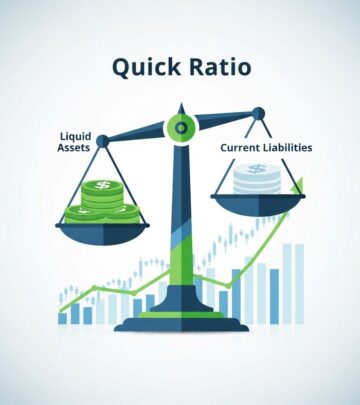
The quick ratio, also known as the acid-test ratio, is a more conservative measure than the current ratio. It evaluates a company’s ability to cover short-term liabilities with its quick assets—those that can be rapidly converted into cash. Quick assets include cash, short-term investments, and accounts receivable, but exclude inventory and prepaid expenses.
Quick Ratio Formula:
Quick Ratio = (Current Assets – Inventory) ÷ Current Liabilities
Alternatively:
Quick Ratio = (Cash + Short-Term Investments + Accounts Receivable) ÷ Current Liabilities
A quick ratio below 0.5 suggests significant liquidity issues, as the company might struggle to meet short-term obligations without selling inventory. A ratio of 1.0 or greater is generally considered healthy and indicates that a company can cover its short-term obligations without relying on inventory sales.
Cash Ratio
The cash ratio is the most stringent and conservative liquidity measure. It focuses exclusively on a company’s most liquid assets—cash and cash equivalents—relative to current liabilities. This ratio excludes accounts receivable since they require time to collect, making it useful for analyzing worst-case financial scenarios.
Cash Ratio Formula:
Cash Ratio = (Cash + Short-Term Investments) ÷ Current Liabilities
A cash ratio of 1.0 or greater is generally considered healthy, indicating the company has enough liquid assets to cover all short-term obligations without selling any other assets. However, a very high cash ratio might suggest that the company is holding excessive cash that could be invested more productively.
Comparison of Liquidity Ratios
| Ratio | Formula | Assets Included | Conservative Level | Best Use |
|---|---|---|---|---|
| Current Ratio | Current Assets ÷ Current Liabilities | All current assets | Least Conservative | General liquidity assessment |
| Quick Ratio | (Current Assets – Inventory) ÷ Current Liabilities | Cash, investments, receivables | Moderately Conservative | Realistic short-term liquidity |
| Cash Ratio | (Cash + Investments) ÷ Current Liabilities | Only cash equivalents | Most Conservative | Worst-case scenario analysis |
How to Calculate Liquidity Ratios
Calculating liquidity ratios requires gathering specific information from a company’s balance sheet. Here’s a step-by-step guide for calculating each ratio:
Step 1: Gather Balance Sheet Data
Locate your company’s balance sheet, which typically shows current assets and current liabilities. Current assets include cash, accounts receivable, inventory, and prepaid expenses. Current liabilities include accounts payable, short-term debt, and accrued expenses.
Step 2: Calculate Current Ratio
Divide total current assets by total current liabilities. For example, if a company has $500,000 in current assets and $300,000 in current liabilities, the current ratio would be 1.67 ($500,000 ÷ $300,000).
Step 3: Calculate Quick Ratio
Subtract inventory from current assets, then divide by current liabilities. Using the same example, if inventory is $200,000, the quick ratio would be 1.0 (($500,000 – $200,000) ÷ $300,000).
Step 4: Calculate Cash Ratio
Add cash and short-term investments, then divide by current liabilities. If cash and investments total $100,000, the cash ratio would be 0.33 ($100,000 ÷ $300,000).
Interpreting Liquidity Ratios
Interpreting liquidity ratios requires understanding both absolute values and industry context. A ratio above 1.0 generally indicates that a company has sufficient liquid assets to cover its short-term obligations. However, interpretation depends on the specific company, its industry, and its competitors.
A ratio below 1.0 raises concerns about the company’s ability to meet short-term obligations without additional financing or asset sales. However, some industries naturally operate with lower ratios due to their business models. For example, grocery retailers might have current ratios below 1.0 because they collect cash quickly from customers while paying suppliers on extended terms.
Very high liquidity ratios, while seemingly positive, can indicate that a company is not efficiently using its capital. Cash sitting idle in bank accounts earns minimal returns and represents an opportunity cost for the business.
Managing Liquidity: Key Strategies
Effective liquidity management is essential for maintaining financial health and operational flexibility. Here are key strategies for managing liquidity:
Monitor Cash Flow Regularly
Establish a cash flow forecasting system that projects inflows and outflows for the next 12-24 months. This helps identify potential liquidity shortfalls before they become critical problems.
Optimize Accounts Receivable
Implement efficient invoicing and collection procedures to convert receivables into cash more quickly. Consider offering discounts for early payment or using factoring services to accelerate cash conversion.
Manage Inventory Carefully
Balance maintaining adequate inventory levels against tying up too much cash in stock. Use inventory management systems to identify slow-moving items and reduce carrying costs.
Negotiate Payment Terms
Extend payable periods with suppliers while accelerating collection from customers. This creates a favorable cash conversion cycle that improves liquidity without increasing debt.
Maintain Adequate Credit Facilities
Establish relationships with lenders and maintain access to credit lines. This provides a safety net for unexpected liquidity needs without requiring emergency funding at unfavorable rates.
Diversify Revenue Streams
Reduce dependence on single customers or seasonal revenue patterns. Diversification provides more stable and predictable cash inflows.
Liquidity vs. Solvency: Understanding the Difference
While liquidity and solvency are related concepts, they measure different aspects of financial health. Liquidity refers to a company’s ability to meet short-term obligations using its most liquid assets. Solvency, by contrast, evaluates a company’s long-term financial stability and its ability to meet long-term debts, typically measured through debt-to-equity ratios and other long-term financial metrics.
A company can be liquid but insolvent, or solvent but illiquid. For example, a company might have significant long-term assets but insufficient current assets to pay upcoming bills. Conversely, a company might have excellent current assets but be burdened with excessive long-term debt. Effective financial management requires attention to both liquidity and solvency.
Industry Variations in Liquidity Ratios
Interpreting liquidity ratios requires understanding industry norms. Different industries have different liquidity requirements based on their operating characteristics. Retail companies typically maintain lower current ratios because they collect cash quickly from customers. Manufacturing companies often maintain higher ratios due to longer production cycles and inventory holding periods. Technology companies might have high ratios due to substantial cash reserves and minimal inventory. Financial institutions operate under regulatory requirements that establish minimum liquidity ratios. When evaluating a company’s liquidity, always compare its ratios to industry peers rather than using universal benchmarks.
Red Flags and Warning Signs
Several indicators suggest potential liquidity problems that warrant immediate attention. A current ratio consistently below 1.0 indicates that current liabilities exceed current assets. Declining liquidity ratios over multiple quarters suggest worsening financial conditions. Rapid inventory growth without corresponding sales increases may indicate obsolete or slow-moving stock. Increasing accounts receivable with stagnant sales might suggest collection problems. Reliance on short-term borrowing to fund operations indicates structural liquidity issues. Rising operating expenses without revenue growth threatens cash reserves.
Frequently Asked Questions
Q: What is considered a good liquidity ratio?
A: Generally, a current ratio between 1.5 and 3.0 is considered healthy, though this varies significantly by industry. A quick ratio above 1.0 and a cash ratio above 0.5 are typically viewed as positive indicators. However, context matters—compare ratios to industry peers for more meaningful interpretation.
Q: Why is liquidity important for businesses?
A: Liquidity ensures that businesses can pay bills on time, take advantage of opportunities, negotiate favorable terms with suppliers, and survive unexpected financial challenges. It also influences how lenders and investors assess business creditworthiness.
Q: Can a company have too much liquidity?
A: Yes. Excessive liquidity suggests that capital is not being deployed efficiently in productive investments. A company holding unnecessary cash misses opportunities to generate returns through investments or growth initiatives.
Q: How often should liquidity ratios be calculated?
A: Most companies calculate liquidity ratios quarterly or monthly, coinciding with financial reporting cycles. For better management control, some organizations calculate them more frequently or maintain rolling forecasts.
Q: What’s the difference between liquidity and working capital?
A: Working capital is the actual dollar amount (Current Assets – Current Liabilities), while liquidity ratios express this relationship as a proportion. Both measure short-term financial health but in different ways.
References
- Liquidity Ratios: Definition and Examples — Career Principles. 2024. https://www.careerprinciples.com/resources/liquidity-ratios-definition-and-examples
- How to Calculate & Use Liquidity Ratios — Harvard Business School Online. 2024. https://online.hbs.edu/blog/post/liquidity-ratios
- What is a Liquidity Ratio: Types and Calculations — HighRadius. 2024. https://www.highradius.com/resources/Blog/accounting-liquidity-ratio/
- Liquidity Ratio 101: Why It Matters, Types and Formulas — Tipalti. 2024. https://tipalti.com/resources/learn/liquidity-ratio/
- Liquidity Ratios: What They Are & 3 Ways to Calculate Them — Equity Private Network Bank. 2024. https://www.epnb.com/insights/liquidity-ratios-what-they-are-3-ways-to-calculate-them/
- 4 Types of Financial Ratios to Assess Your Business Performance — Business Development Bank of Canada. 2024. https://www.bdc.ca/en/articles-tools/money-finance/manage-finances/financial-ratios-4-ways-assess-business
Similar Articles








Read full bio of medha deb