Line of Credit vs. Credit Card: Key Differences
Discover how personal lines of credit stack up against credit cards for borrowing, rates, rewards, and smart financial choices.
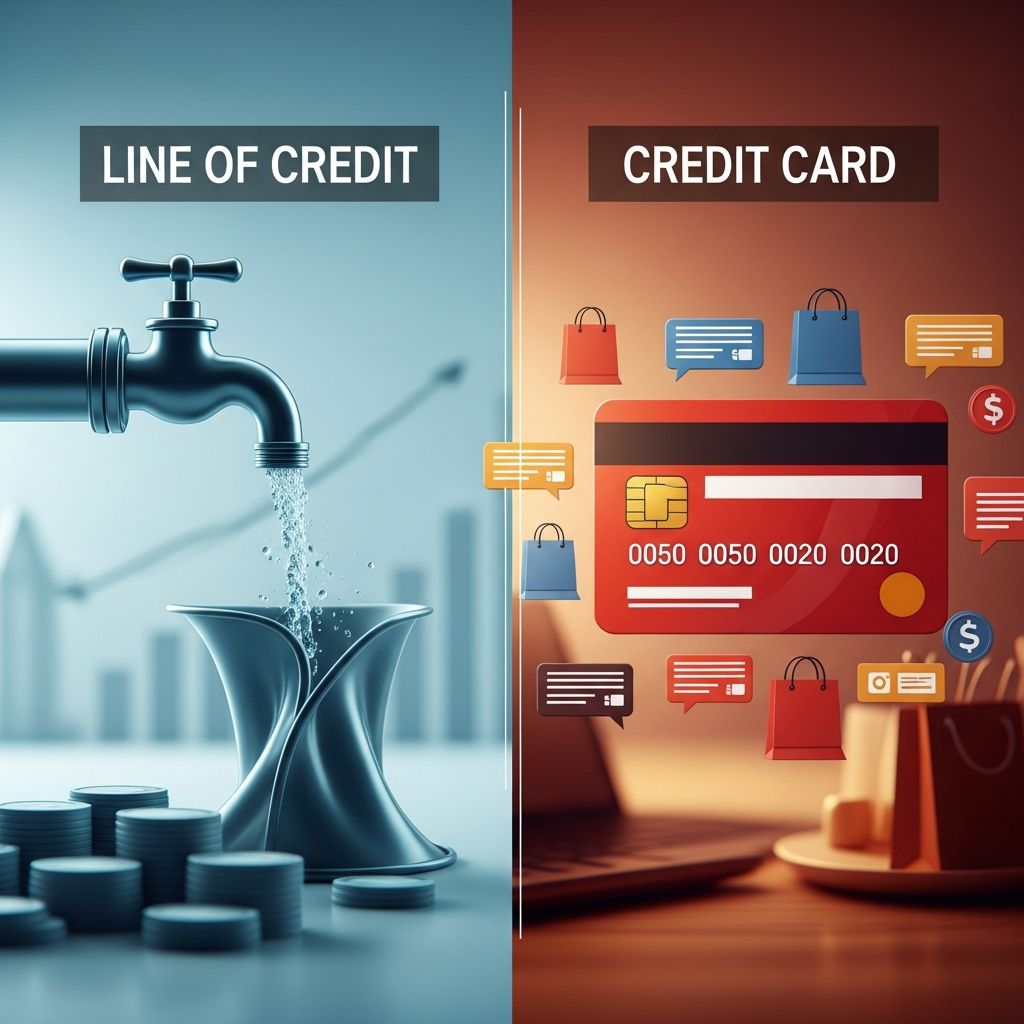
Personal lines of credit and credit cards both provide revolving credit, letting borrowers access funds up to a limit and repay over time. However, they differ significantly in access methods, costs, perks, and best applications, influencing which suits specific financial needs.
Understanding Revolving Credit Basics
Revolving credit allows repeated borrowing up to an approved limit without reapplying, as long as payments are current. This contrasts with installment loans, which disburse a fixed sum repaid in set installments. Both products fall under revolving credit but cater to distinct spending patterns.
Personal lines of credit function like a safety net for planned or unexpected large outlays, while credit cards excel in convenient, frequent transactions. Grasping these foundations helps in selecting the right tool to avoid unnecessary costs.
How Access to Funds Works
Accessing money varies between the two. With a personal line of credit, options often include writing checks, electronic transfers to bank accounts, or linked debit cards for purchases. This setup suits scenarios needing lump sums deposited directly.
Credit cards prioritize seamless spending: swipe, tap, insert at merchants, or use digital wallets online and in apps. They integrate effortlessly into daily commerce but charge fees for cash withdrawals.
| Feature | Personal Line of Credit | Credit Card |
|---|---|---|
| Primary Access Methods | Checks, transfers, debit card | Swipe/tap, online, digital wallet |
| Cash Access Fees | Typically none | Cash advance fees apply |
| Merchant Use | Limited convenience | Universal acceptance |
Interest Rates and Charging Timelines
Personal lines of credit generally feature lower annual percentage rates (APRs), often tied to a lender’s prime rate plus a margin, potentially as low as 10% for strong credit profiles. Interest accrues immediately upon drawing funds, with no grace period.
Credit cards carry higher APRs, averaging around 19% or more, but offer a grace period—typically 21-25 days—on purchases if the full balance is paid by the due date. Cash advances and balance transfers accrue interest right away.
- Lines of credit: Interest only on borrowed amount, variable rates common.
- Credit cards: Higher rates, grace on purchases, penalties for partial payments.
Secured lines (using collateral like home equity) can further reduce rates compared to unsecured cards.
Credit Limits and Availability
Credit lines often start at $5,000 and extend into six figures for qualified applicants, targeting those with good to excellent credit scores. Availability is narrower, mainly from banks for established customers.
Credit cards have broader access across issuers, with limits scaling by income and score. Even fair-credit applicants can qualify, though at reduced limits and higher rates.
Rewards, Perks, and Additional Fees
Credit cards shine with rewards: cash back, travel miles, points redeemable for gifts or statements. Many include purchase protection, extended warranties, and travel insurance.
Lines of credit lack rewards, focusing on cost efficiency. They may incur draw fees or annual charges, but skip cash advance penalties common on cards.
| Perk Type | Personal Line of Credit | Credit Card |
|---|---|---|
| Rewards Programs | None | Cash back, points, miles |
| Protections/Insurance | Limited | Travel, purchase, warranty |
| Common Fees | Annual, draw fees | Annual, late, cash advance |
Repayment Structures and Account Duration
Personal lines have a draw period (e.g., 5-10 years) for borrowing, followed by repayment. Minimum payments cover interest plus principal; prepayments allowed without penalty.
Credit cards require monthly minimums (interest + some principal), usable indefinitely if managed well. Missing payments triggers penalty APRs.
Impact on Credit Profile
Both contribute positively to credit history via payment records and utilization ratios (keep under 30% for optimal scores). New accounts temporarily dip scores, but on-time use builds length and mix.
Lines may require stronger initial credit; cards offer more forgiveness for average profiles. Monitor scores pre-application via free tools.
Ideal Scenarios for Each Option
When a Personal Line of Credit Fits Best
Opt for lines with irregular income needing bridge funds sans fees, major repairs (e.g., $2,000 plumbing), renovations, or weddings. Track debt separately at lower rates.
- Sporadic cash flow (e.g., freelancers awaiting payments).
- Large, variable costs like home projects.
- Cost-conscious borrowing without rewards need.
When Credit Cards Are Superior
Use cards for routine buys (groceries, gas, online shopping), travel perks, or short-term needs payable in full to leverage grace periods and rewards.
- Everyday spending with cash back.
- Merchant rewards and protections.
- Convenient, widespread acceptance.
Financial Considerations for Choosing
Assess borrowing amount, repayment timeline, rate tolerance, and perk value. For debt consolidation or big-ticket items, lines save on interest; cards suit reward maximizers.
Calculate total costs: A $10,000 balance at 12% on a line vs. 20% on a card yields substantial savings over time. Hybrid use—card for perks, line for carryover—optimizes both.
Frequently Asked Questions
What credit score is needed for a personal line of credit?
Typically 670+ FICO for best rates; lower scores may qualify at higher APRs or not at all.
Do personal lines of credit build credit?
Yes, via payment history and utilization, similar to cards.
Can I use a line of credit for cash advances without fees?
Usually yes, unlike cards which add 3-5% fees.
Are variable rates on lines risky?
They fluctuate with market primes; fixed-rate options rarer but available.
Which has higher limits generally?
Lines often cap higher, especially secured ones.
Steps to Apply and Manage Responsibly
1. Review credit report and score.
2. Compare offers from banks/issuers.
3. Calculate affordability.
4. Use only as needed, pay promptly.
5. Track utilization monthly.
Avoid maxing limits; diversify if possible for credit mix benefits.
References
- Personal Lines of Credit vs. Credit Cards — Citi. 2025-07-31. https://www.citi.com/personal-loans/learning-center/line-of-credit/personal-line-of-credit-vs-credit-card
- Personal Line of Credit vs. Credit Card: Which Is Better? — Experian. Accessed 2026. https://www.experian.com/blogs/ask-experian/personal-line-of-credit-vs-credit-card/
- Line of Credit vs Credit Card: What’s the Difference? — Michigan First Credit Union. Accessed 2026. https://michiganfirst.com/Education/MoneyWise-Blog/Credit-and-Debt/Line-of-Credit-vs-Credit-Card-What-s-the-Differenc
- Personal Loan vs. Credit Card: What’s the Difference? — TD Bank. Accessed 2026. https://www.td.com/us/en/personal-banking/learning/personal-loan-vs-credit-card
- How Does a Line of Credit Compare to a Credit Card? — NerdWallet. Accessed 2026. https://www.nerdwallet.com/ca/p/article/credit-cards/line-of-credit-vs-credit-card
Similar Articles








Read full bio of Sneha Tete