Limits On Multiple Home Equity Loans: What Lenders Allow
Discover the realities of securing more than one home equity loan, including lender rules, equity requirements, and financial risks involved.

Home equity loans allow homeowners to borrow against the value of their property, providing funds for renovations, debt consolidation, or major purchases. A common question arises: how many such loans can one secure? While no federal law caps the number, practical constraints from lenders, equity availability, and risk assessments dictate the possibilities. This guide delves into the mechanics, eligibility criteria, and strategic considerations for pursuing multiple home equity products.
Understanding Home Equity Borrowing Basics
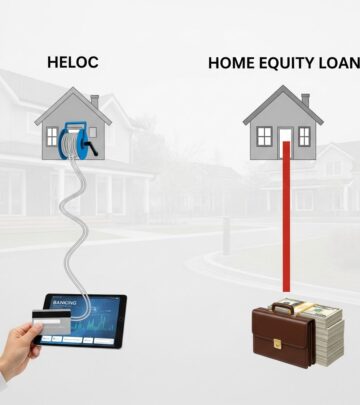
At its core, a home equity loan is a second mortgage that converts your property’s equity—the difference between its market value and outstanding mortgage balance—into cash. Lenders typically advance a lump sum repaid over a fixed term with interest. In contrast, a home equity line of credit (HELOC) functions like a credit card, offering revolving access up to a limit during a draw period.
Equity serves as collateral, making these loans secured and often featuring lower rates than unsecured options. However, each additional loan creates successive liens: the primary mortgage holds first position, followed by subsequent equity loans in order of origination. This hierarchy influences lender willingness, as junior liens face higher default risk.
Legal vs. Practical Limits on Loan Numbers
No statute prohibits multiple home equity loans or HELOCs, enabling theoretically unlimited borrowing if qualifications are met. Lenders, however, impose restrictions to mitigate exposure. Most decline second or third-position loans on the same property due to repayment priority concerns—first liens recover fully before juniors in foreclosure scenarios.
- Single Property Constraints: Rare for lenders to approve beyond one equity loan per home; Rocket Mortgage explicitly avoids piggyback arrangements.
- Multiple Properties: Possible to secure one loan per property, limited by ownership count and investor rules (e.g., max 10 financed homes).
- HELOC Specifics: No legal cap, but equity and lender policies limit multiples on one asset.
Shop diverse institutions, as policies vary; some accommodate juniors at elevated rates reflecting added risk.
Key Eligibility Factors for Additional Loans
Securing extras demands robust financials. Lenders scrutinize several metrics:
| Factor | Typical Requirement | Impact on Multiple Loans |
|---|---|---|
| Credit Score | 620–720+ | Higher scores needed for junior positions; 720+ for high property counts. |
| Loan-to-Value (LTV) Ratio | ≤80–90% | Total borrowing capped, leaving 10–20% equity buffer. |
| Debt-to-Income (DTI) Ratio | ≤43–50% | Includes all debts; extras strain affordability. |
| Income Stability | Verified via pay stubs/tax returns | Proves repayment capacity amid added payments. |
For a $400,000 home with $200,000 mortgage, available equity is $200,000. At 85% LTV, max total liens reach $340,000, leaving $60,000 cushion. Existing loans reduce room for newcomers.
Navigating Multiple Loans Across Properties
Owning several homes expands options. Each can support its equity loan, provided aggregate DTI remains viable. Investor limits apply: primary residences face fewer hurdles than rentals or seconds, where six+ financed properties demand elite credit.
Example: With three properties valued at $300,000 each (50% equity), one could tap ~$90,000 per via 80% LTV, totaling $270,000—subject to unified financial vetting. Diversifying across assets dilutes single-property lien risks.
Risks and Downsides of Stacking Loans
Appeal fades against pitfalls:
- Foreclosure Threat: All liens target the home; defaults jeopardize ownership regardless of payment history on seniors.
- Higher Costs: Junior loans incur premium rates/fees (e.g., 1–3% above firsts) due to subordination.
- Credit Strain: Added debt elevates DTI, complicating future borrowing; lates amplify damage.
- Equity Erosion: Overborrowing leaves scant buffer against value drops, triggering recourse.
Post-2008 caution lingers; lenders learned from cascades of junior defaults.
Alternatives to Multiple Equity Loans
Before pursuing multiples, consider streamlined paths:
- Refinance Primary Mortgage: Cash-out option consolidates into one lien at potentially better rates.
- HELOC Expansion: Increase existing line if equity permits, avoiding new liens.
- Loan Subordination: Renegotiate positions for fresh capital without stacking.
- Unsecured Borrowing: Personal loans for smaller needs, sans home risk—higher rates apply.
Compare via rate sheets; tools like LTV calculators aid planning.
Steps to Apply for Additional Home Equity
- Assess Equity: Order appraisal; calculate LTV post-current debts.
- Review Finances: Pull credit report; compute DTI.
- Research Lenders: Target those open to juniors or multi-property setups.
- Gather Docs: Income proof, property details, lien statements.
- Submit & Compare: Prequalify multiple offers sans hard pulls.
Timing matters—avoid simultaneous primary refinances, as some prohibit.
Current Market Insights for 2026
As of early 2026, jumbo HELOCs hit $1M+, with elites reaching $5M for qualified borrowers. National banks offer high-limit products, though multiples remain niche. Stable rates favor equity taps, but rising property counts signal tighter underwriting.
Frequently Asked Questions
Can I have two home equity loans on one house?
Possible but uncommon; requires ample equity and a junior-willing lender, often at higher costs.
What’s the max LTV for combined loans?
Typically 80–90%, preserving 10–20% equity.
Do multiple loans hurt my credit?
Not initially if paid timely; inquiries and DTI hikes pose indirect risks.
HELOCs vs. loans for multiples?
HELOCs offer flexibility; no legal limit, but same equity hurdles apply.
Investor property limits?
Up to 10 financed homes; 720+ score beyond six.
Strategic Tips for Success
Prioritize equity preservation—aim below max LTV. Boost approval odds with DTI under 43%, scores above 700. Consult advisors; model scenarios via online calculators. Multiple loans suit debt consolidation or phased projects but demand disciplined budgeting.
References
- How many home equity loans can I have? — Rocket Mortgage. 2024. https://www.rocketmortgage.com/learn/how-many-home-equity-loans-can-i-have
- How Many Home Equity Loans Can I Have? — Quicken Loans. 2024. https://www.quickenloans.com/learn/how-many-home-equity-loans-can-i-have
- Can you have two home equity loans on the same property? — Better.com. 2024. https://better.com/content/can-you-have-two-home-equity-loans-on-the-same-property
- Maximum Jumbo HELOC Limit: How Much Can You Borrow in 2026? — The Mortgage Reports. 2026-01-15. https://themortgagereports.com/126896/maximum-jumbo-heloc-borrowing-limit
- What is the Maximum Home Equity Loan Amount & Limit? — American Financing. 2025. https://www.americanfinancing.net/refi/maximum-home-equity-loan-amount
Similar Articles








Read full bio of medha deb