Limited Liability Company (LLC): Definition and Overview
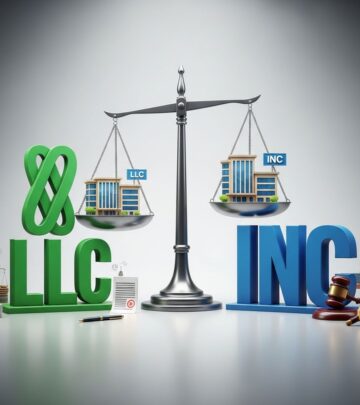
Understanding LLCs: Structure, benefits, and legal protection for business owners.

A Limited Liability Company (LLC) is a business structure that combines elements of partnership and corporate characteristics. It provides business owners, known as members, with limited personal liability protection while maintaining flexibility in management and taxation. The LLC has become one of the most popular business structures for small to medium-sized enterprises in the United States.
What Is a Limited Liability Company (LLC)?
A Limited Liability Company is a legal business entity formed under state law that protects the personal assets of its owners from business debts and liabilities. Members of an LLC are not personally responsible for the company’s obligations, meaning creditors cannot pursue members’ personal belongings or bank accounts to satisfy business debts. This liability protection is one of the primary reasons entrepreneurs choose the LLC structure over sole proprietorships or partnerships.
The LLC structure is governed by each state individually, so formation requirements, filing procedures, and regulations vary by jurisdiction. However, all states recognize the LLC as a legitimate business entity with standardized protections and operational frameworks.
Key Characteristics of an LLC
- Limited Liability Protection: Members are generally not personally liable for business debts or the negligence of other members.
- Pass-Through Taxation: By default, LLCs are taxed as sole proprietorships (single-member) or partnerships (multi-member), with profits passed through to members’ personal tax returns.
- Flexible Ownership: LLCs can have one or more members and allow flexibility in profit distribution among members.
- Simplified Management: LLCs offer operational flexibility with member-managed or manager-managed structures.
- Perpetual Existence: The LLC continues to exist independently of its members; if one member leaves, the entity persists.
How Does an LLC Work?
When you establish an LLC, you create a separate legal entity distinct from your personal identity. This separation is crucial for liability protection. Here’s how the process typically works:
Formation Process
To form an LLC, you must file Articles of Organization with your state’s Secretary of State office. This document includes basic information about the business, such as the company name, address, registered agent, and member names. Once accepted and filed, your LLC is officially recognized as a legal entity.
Operating Agreement
While not always legally required, an Operating Agreement is a critical document that outlines how the LLC will be managed, how profits and losses will be distributed, member roles and responsibilities, voting rights, and procedures for admitting new members or handling member departures. This agreement protects members and provides clarity during disputes.
Management Structure
LLCs can be structured in two ways:
- Member-Managed: All members participate in day-to-day business operations and decision-making.
- Manager-Managed: One or more designated managers handle operations, while other members act as passive investors.
Advantages of an LLC
Personal Liability Protection
The primary advantage of an LLC is that members’ personal assets remain protected from business liabilities. If the company faces a lawsuit or accumulates debt, creditors typically cannot pursue members’ personal savings, homes, or other assets (with exceptions for personal guarantees or fraudulent activity).
Favorable Tax Treatment
By default, LLCs are taxed as pass-through entities, meaning the business itself doesn’t pay income taxes. Instead, profits and losses pass through to members’ personal tax returns, avoiding the double taxation that corporations face. Single-member LLCs are treated like sole proprietorships, while multi-member LLCs are treated like partnerships for tax purposes.
Operational Flexibility
LLCs offer substantial flexibility in how they’re structured and operated. Members can customize profit-sharing arrangements, management responsibilities, and decision-making processes through the Operating Agreement, without the rigid formalities required for corporations.
Professional Credibility
Operating as an LLC enhances business credibility with customers, suppliers, and financial institutions. The formal structure signals that you’re running a legitimate, organized business entity.
Ease of Formation
LLCs are relatively easy and inexpensive to form compared to corporations. Formation costs typically range from $50 to $500, depending on the state, plus any professional assistance fees.
Disadvantages of an LLC
Self-Employment Taxes
Members of LLCs are generally required to pay self-employment taxes on their profits, which can be higher than corporate employee taxes. This is a significant ongoing expense that sole proprietors and partnership members also face.
Administrative Requirements
While simpler than corporations, LLCs still require ongoing compliance, including annual filings, maintaining an Operating Agreement, keeping records, and renewing licenses and permits. Failure to comply can result in penalties or loss of liability protection.
State-Specific Regulations
Since each state regulates LLCs differently, formation and operational requirements vary. This can complicate matters for businesses operating in multiple states and requires understanding various state tax laws.
Limited Funding Opportunities
LLCs may have more difficulty attracting venture capital or institutional investment compared to corporations, as investors often prefer corporate equity structures. Banks may also require personal guarantees from members for business loans.
LLC Taxation Options
LLCs offer flexibility in choosing how they’re taxed:
Default Taxation
Single-member LLCs are taxed as sole proprietorships, while multi-member LLCs are taxed as partnerships. Profits pass through to members’ individual tax returns.
S-Corporation Election
An LLC can elect to be taxed as an S-Corporation by filing Form 2553 with the IRS. This option can reduce self-employment taxes in some situations, as members pay themselves a reasonable salary and take remaining profits as distributions, which aren’t subject to self-employment tax.
C-Corporation Election
An LLC can also elect to be taxed as a C-Corporation, though this typically results in double taxation and is rarely advantageous for small businesses.
LLC vs. Other Business Structures
| Feature | LLC | Sole Proprietorship | Partnership | Corporation |
|---|---|---|---|---|
| Liability Protection | Yes | No | Limited (partners liable) | Yes |
| Formation Complexity | Moderate | Minimal | Minimal | High |
| Tax Treatment | Pass-through (default) | Pass-through | Pass-through | Double taxation |
| Administrative Burden | Moderate | Low | Low | High |
| Ownership Flexibility | Flexible | N/A (single owner) | Multiple owners | Shares easily transferable |
When Should You Choose an LLC?
An LLC is typically the best choice if:
- You want personal liability protection without the complexity of a corporation
- You operate a small to medium-sized business with moderate liability concerns
- You prefer flexibility in taxation options
- You want simplified management and operational structure
- You plan to reinvest profits rather than distribute them regularly
- You operate in multiple states (though multi-state operations require additional filings)
LLC Formation and Maintenance
Steps to Form an LLC
- Choose a business name that complies with state requirements
- Conduct a name availability search with your state’s Secretary of State
- File Articles of Organization with the appropriate state office
- Obtain an Employer Identification Number (EIN) from the IRS
- Create an Operating Agreement
- Obtain necessary licenses and permits
- Open a business bank account
Ongoing Compliance Requirements
Maintaining your LLC requires adhering to several ongoing requirements:
- Filing annual or biennial reports as required by your state
- Paying annual LLC fees or franchise taxes
- Maintaining accurate financial records
- Filing income tax returns (personal returns for pass-through taxation)
- Updating the Operating Agreement when membership changes occur
- Renewing business licenses and permits
Piercing the Corporate Veil
While LLC membership generally provides liability protection, there are circumstances where this protection can be lost. “Piercing the corporate veil” refers to situations where courts hold members personally liable despite the LLC structure. This typically occurs when:
- Members commingle personal and business finances
- The LLC fails to maintain proper documentation and records
- The LLC is formed or operated fraudulently
- The LLC is undercapitalized to handle foreseeable liabilities
- Members ignore LLC formalities and treat it as a personal entity
Frequently Asked Questions About LLCs
Q: How many members can an LLC have?
A: LLCs can have one or more members. A single-member LLC operates similarly to a sole proprietorship, while multi-member LLCs function more like partnerships, though with enhanced liability protection.
Q: Do I need an Operating Agreement?
A: While not always legally required, an Operating Agreement is highly recommended. It outlines member rights, responsibilities, profit distribution, and management structure, providing legal protection and clarity during disputes or member transitions.
Q: What is an Employer Identification Number (EIN)?
A: An EIN is a unique nine-digit number issued by the IRS that identifies your business for tax purposes. Even single-member LLCs typically need an EIN if they have employees or operate as a partnership for tax purposes.
Q: Can an LLC be converted to a corporation?
A: Yes, an LLC can be converted to a corporation through a formal process that involves dissolving the LLC and establishing a new corporate entity, or through a statutory conversion available in some states.
Q: Are LLC members considered employees?
A: Generally, LLC members are not considered employees. Members are owners of the business, though they may also work for the LLC and receive distributions or salary depending on the Operating Agreement.
Q: How much does it cost to form an LLC?
A: Formation costs vary by state but typically range from $50 to $500 for filing fees alone. Professional assistance from attorneys or formation services may add $200 to $2,000 or more to the total cost.
Q: What happens if an LLC member dies or leaves?
A: The Operating Agreement should specify procedures for member departure or death, such as buyout provisions or transfers of membership interests. Without clear provisions, state law determines how the situation is handled.
References
- Limited Liability Company (LLC) — Internal Revenue Service (IRS). Last updated 2025. https://www.irs.gov/businesses/small-businesses-self-employed/limited-liability-company-llc
- Choose a Business Structure — U.S. Small Business Administration (SBA). Last updated 2025. https://www.sba.gov/business-guide/launch/choose-business-structure
- State LLC Filing Requirements — National Association of Secretaries of State (NASS). 2024. https://www.nass.org/
- LLC Operating Agreements: Formation and Management — Cornell Law School, Legal Information Institute. Last updated 2024. https://www.law.cornell.edu/
- Tax Implications of LLC Election — Treasury Department, Financial Management Service. 2024. https://www.fiscal.treasury.gov/
Similar Articles








Read full bio of Sneha Tete