Liability vs Full Coverage Auto Insurance
Discover the differences between liability and full coverage car insurance to choose the best protection for your vehicle and finances.
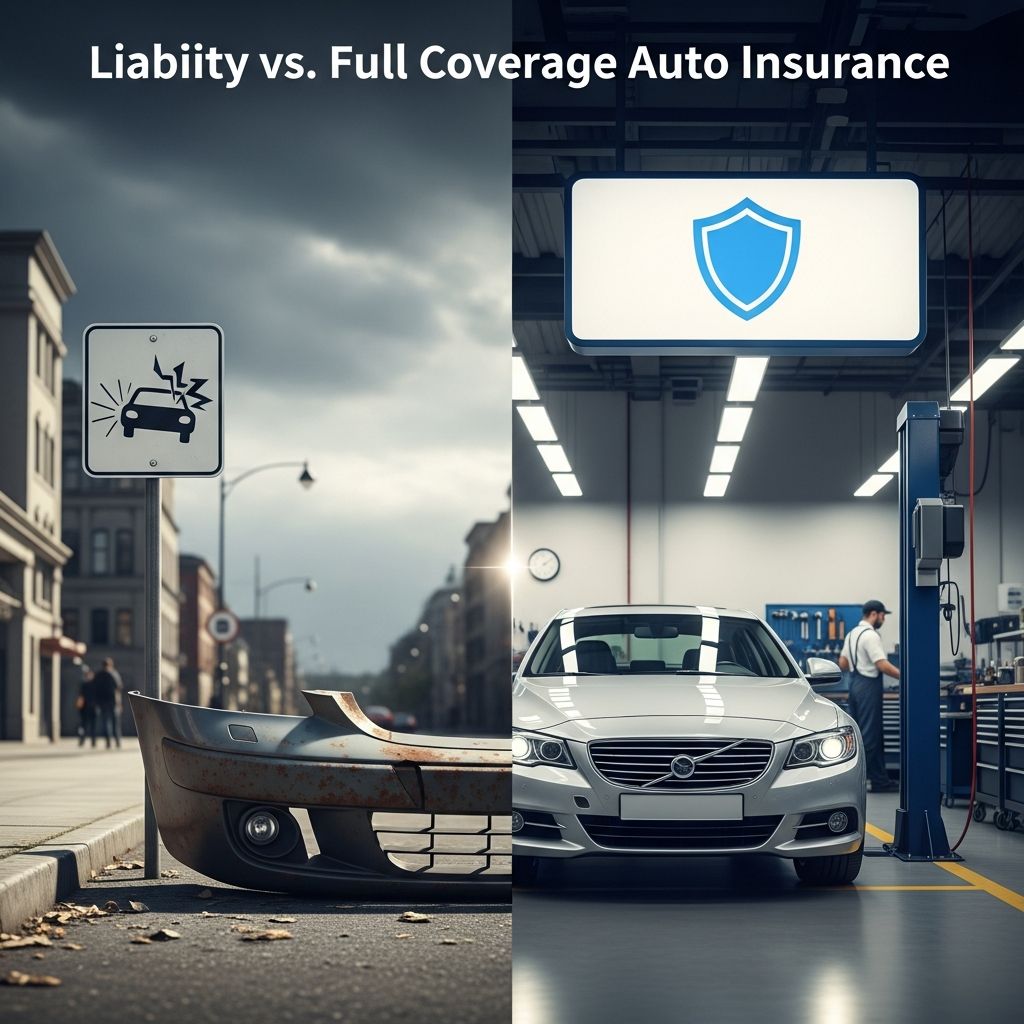
Choosing between liability and full coverage auto insurance involves balancing legal requirements, financial protection, and personal circumstances. Liability insurance meets minimum state mandates by covering damages you cause to others, while full coverage extends protection to your own vehicle through additional policies like collision and comprehensive. This guide breaks down the key differences, costs, and factors to consider for informed decision-making.
Understanding the Basics of Car Insurance Coverage
Car insurance policies consist of various components designed to protect drivers, passengers, and vehicles in different scenarios. At its core, every policy includes liability coverage, which is legally required in nearly all states to cover injuries or property damage inflicted on others in an at-fault accident. Beyond this, optional coverages create what is commonly called “full coverage,” providing broader safeguards against a wider array of risks.
Liability-only policies focus solely on third-party claims, leaving your vehicle unprotected if damaged. Full coverage, often required by lenders for financed or leased cars, adds layers like collision for crash-related repairs and comprehensive for non-collision incidents such as theft or weather damage.
Key Components of Liability Insurance
Liability insurance splits into two main parts: bodily injury liability and property damage liability. Bodily injury covers medical expenses, lost wages, and legal fees for others injured due to your fault, while property damage handles repairs to vehicles, structures, or other items you impact.
State minimums vary, but experts recommend higher limitssuch as 100/300/100 ($100,000 per person/$300,000 per accident for bodily injury, $100,000 for property damage)to avoid personal liability in serious crashes. For instance, if you cause an accident resulting in $50,000 in medical bills and your limit is $25,000, you pay the difference out-of-pocket.
- Bodily Injury Liability: Pays for injuries or death to others, including passengers in the other vehicle.
- Property Damage Liability: Covers repairs to another’s car, fence, or building.
This coverage does not extend to your own injuries or vehicle repairs, making it insufficient for comprehensive protection.
What Makes Up Full Coverage Auto Insurance?
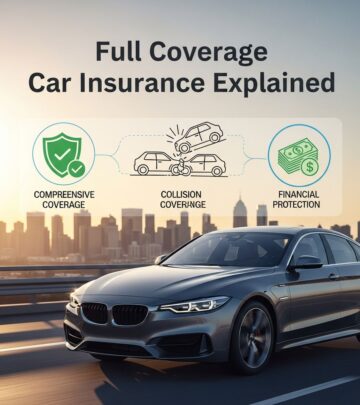
Full coverage typically bundles liability with collision, comprehensive, and often uninsured/underinsured motorist protections. Collision pays for your vehicle’s repairs after a crash, regardless of fault, minus your deductible. Comprehensive handles non-collision events like theft, vandalism, fire, hail, or animal collisions.
Additional common add-ons include:
- Uninsured/Underinsured Motorist (UM/UIM): Protects against drivers with inadequate or no insurance.
- Personal Injury Protection (PIP) or Medical Payments (MedPay): Covers your medical bills and lost wages, no-fault basis.
- Rental Reimbursement: Funds a temporary car while yours is repaired.
Lenders mandate collision and comprehensive for financed vehicles to ensure their investment is protected.
Comparing Coverage Types Side-by-Side
The table below highlights protections offered by liability vs. full coverage:
| Coverage Aspect | Liability Only | Full Coverage |
|---|---|---|
| Damage to others’ property/injuries | Yes (up to limits) | Yes (up to limits) |
| Your vehicle’s collision damage | No | Yes (collision) |
| Theft, vandalism, weather | No | Yes (comprehensive) |
| Your medical expenses | No (unless state-required PIP) | Yes (PIP/MedPay optional) |
| Uninsured driver incidents | No | Yes (UM/UIM) |
This comparison shows full coverage’s broader scope, ideal for newer or high-value cars.
Cost Differences: Liability vs. Full Coverage
Liability-only policies are cheaper, averaging $50-70 monthly for minimum coverage, depending on location, driving record, and vehicle. Full coverage costs 2-3 times morearound $150-200 monthlydue to added protections and higher risk exposure for insurers.
Factors influencing premiums include deductibles (higher means lower cost), vehicle value, age, credit score, and location. For example, comprehensive deductibles often range from $100-$1,000, directly impacting out-of-pocket expenses. Shopping quotes from multiple providers can save 20-30%.
State Requirements and Legal Mandates
Almost every U.S. state requires liability insurance, with minimums like 25/50/25 in many areas. No-fault states (e.g., Florida, Michigan) mandate PIP alongside liability. New Hampshire is the exception, allowing self-insurance via bond. Full coverage isn’t legally required but is standard for loans/leases.
Violating minimums leads to fines, license suspension, or SR-22 filings for high-risk drivers.
When to Choose Liability-Only Insurance
Opt for liability if you drive an older, low-value car (e.g., worth under $4,000), have a solid emergency fund, and prioritize affordability. It’s suitable for paid-off vehicles where repair costs exceed value—”totaling” an old car might not justify premiums.
Young drivers or urban dwellers with parking garages might also lean this way to keep costs low while meeting legal needs.
Benefits of Upgrading to Full Coverage
Full coverage shines for financed/leased cars, new vehicles, or high-theft areas. It prevents financial ruin from major accidents, theft, or disasters—common claims data shows comprehensive/collision account for 40% of payouts. Peace of mind comes from covering your asset fully.
For families or frequent travelers, add-ons like roadside assistance enhance utility.
Factors Influencing Your Insurance Decision
Assess vehicle value, loan status, driving habits, and budget:
- High-value car? Full coverage essential.
- Clean record? Lower rates possible.
- High-risk area? Comprehensive vital against theft/weather.
- Budget tight? Liability + higher savings account.
Use online calculators to estimate needs based on ZIP code and car details.
Common Add-On Coverages to Consider
Beyond basics:
- Gap Insurance: Covers loan balance exceeding car value post-total loss.
- New Car Replacement: Replaces with brand-new model.
- Roadside Assistance: Towing, flats, fuel delivery.
These customize policies without jumping to full coverage.
Frequently Asked Questions (FAQs)
What is the minimum car insurance I need?
Liability matching your state’s limits; check DMV for specifics.
Is full coverage worth it for an old car?
Often not, if annual premiums exceed 10% of vehicle value.
Does full coverage cover theft?
Yes, via comprehensive portion.
How much liability coverage should I get?
At least 100/300/100 for robust protection.
Can I drop full coverage after paying off my car?
Yes, but evaluate risks like repair costs vs. premiums.
Steps to Select and Purchase the Right Policy
1. Review state minimums.
2. Get quotes from 3+ insurers.
3. Adjust deductibles for balance.
4. Bundle with home insurance for discounts.
5. Reassess annually or after life changes.
Consult an agent for personalized advice.
References
- 7 Types of Car Insurance Coverage to Know — Mercury Insurance. 2023. https://www.mercuryinsurance.com/resources/basics-101/types-of-car-insurance-coverage.html
- 6 Types of Car Insurance Coverage — Allstate. 2024. https://www.allstate.com/resources/car-insurance/types-of-car-insurance-coverage
- Types of Car Insurance Coverages — Progressive. 2024. https://www.progressive.com/answers/types-of-car-insurance/
- What Are the Different Types of Car Insurance Coverage? — Bankrate. 2024. https://www.bankrate.com/insurance/car/coverage-types/
- Auto Insurance Coverage: 6 Types Explained — The Hartford. 2023. https://www.thehartford.com/aarp/car-insurance/coverage
- Types of Car Insurance Coverage — The Hartford (YouTube). 2023. https://www.youtube.com/watch?v=PEMjOijFLEk
- Auto insurance basics—understanding your coverage — Insurance Information Institute. 2024. https://www.iii.org/article/auto-insurance-basics-understanding-your-coverage
- Car Insurance Coverage Types — GEICO. 2024. https://www.geico.com/information/aboutinsurance/auto/
- Car Insurance Coverage Options Made for You — State Farm. 2024. https://www.statefarm.com/insurance/auto/coverage-options
Similar Articles








Read full bio of Sneha Tete