Leverage in Finance: Definition, Types, and Risks
Master financial leverage: amplify returns through borrowed capital while managing investment risks.

Understanding Financial Leverage: A Comprehensive Guide
Financial leverage, also known as gearing, represents one of the most powerful yet risky tools available to investors and businesses. At its core, leverage involves borrowing funds to amplify investment potential, using borrowed capital to increase the amount of money available for investment. Like a physical lever that magnifies force, financial leverage magnifies both gains and losses in investment portfolios. Understanding how leverage works is essential for any investor seeking to optimize returns while managing risk effectively.
The concept of leverage stems from physics, where a simple lever can multiply force output. In finance, this principle translates into using debt to increase the potential returns on equity investments. When investors employ leverage effectively, they can generate substantial profits. However, the same mechanism that amplifies gains can equally amplify losses, making leverage a double-edged sword that demands careful management and understanding.
What is Financial Leverage?
Financial leverage refers to the use of borrowed money to finance an investment or acquisition. When you use leverage, you’re essentially borrowing capital from a lender—typically a bank or financial institution—to invest in assets that you hope will generate returns exceeding the cost of the borrowed funds. The difference between the return on your investment and the interest rate you pay on the borrowed money represents your profit or loss.
The fundamental principle behind leverage is straightforward: if an investment returns more than the cost of borrowing, the investor profits. Conversely, if the investment returns less than the borrowing cost, the investor experiences a loss. This simple relationship underlies all leverage strategies across financial markets.
How Leverage Works in Finance
Leverage operates through several mechanisms across different financial markets and investment vehicles. Understanding these mechanisms helps investors make informed decisions about when and how to employ leverage.
The Basic Mechanism
Consider a simple example: an investor has $10,000 and wants to purchase stock worth $50,000. By using a 5:1 leverage ratio, the investor borrows $40,000 to complete the purchase. If the stock price increases to $60,000, the investor’s $10,000 investment has generated a $10,000 profit—a 100% return. Without leverage, the same stock price increase would have yielded only a 20% return on the $10,000 investment. This demonstrates how leverage magnifies returns on the investor’s equity.
Leverage in Different Investment Types
Leverage appears across various financial instruments and markets. Margin accounts allow stock investors to borrow from brokers to purchase additional securities. Futures contracts represent leveraged bets where investors control large positions with relatively small initial capital outlays. Options strategies employ leverage implicitly, allowing investors to control substantial assets with limited capital. Real estate investors frequently use leverage through mortgages, borrowing to purchase properties they expect will appreciate over time.
Types of Leverage
Financial professionals recognize several distinct types of leverage, each operating through different mechanisms and serving different purposes in business and investment contexts.
Accounting Leverage
Accounting leverage, also called financial leverage ratio, represents the most straightforward measure of leverage. It is calculated by dividing total assets by the difference between total assets and total liabilities. This ratio indicates how much of a company’s assets are financed through debt versus equity. A higher accounting leverage ratio suggests the company relies more heavily on borrowed funds to finance operations and assets.
Financial Leverage
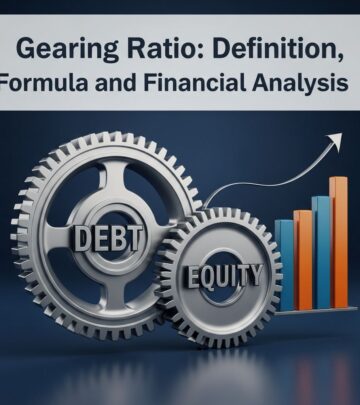
Financial leverage specifically measures the relationship between debt and equity financing. The financial leverage ratio equals total debt divided by shareholders’ equity. This metric reveals how much debt a company uses relative to equity. A company with high financial leverage relies substantially on debt financing, amplifying both potential returns and risks to equity holders. Financial institutions often maintain high leverage ratios; for example, before its collapse, Lehman Brothers maintained an accounting leverage ratio of 31.4 times, meaning assets were 31.4 times larger than shareholders’ equity.
Operating Leverage
Operating leverage results from a company’s cost structure—specifically, the proportion of fixed costs to variable costs. Companies with high fixed costs relative to variable costs exhibit greater operating leverage. When revenues increase, operating profits rise disproportionately because fixed costs remain constant. Conversely, revenue decreases produce amplified profit declines. Airlines, for instance, have high operating leverage due to substantial fixed aircraft and personnel costs. Manufacturing businesses with significant factory overhead similarly experience high operating leverage.
Banking and Regulatory Leverage
Regulatory frameworks, particularly Basel III banking standards, define leverage for financial institutions. Banks maintain leverage ratios comparing Tier 1 capital (core capital) to total exposure, including off-balance sheet items and derivative add-ons. Basel III requires banks to maintain leverage ratios exceeding 3%, ensuring financial institutions maintain adequate capital buffers against losses.
The Benefits of Leverage
When used judiciously, leverage offers several significant advantages to investors and businesses.
Amplified Returns
The primary benefit of leverage is the amplification of returns on invested capital. By controlling larger assets with relatively small equity investments, investors multiply gains when investments appreciate. This allows investors to achieve higher returns than would be possible through equity financing alone.
Efficient Capital Utilization
Leverage enables investors to deploy capital more efficiently. Rather than accumulating substantial sums before investing, leverage permits immediate investment with smaller initial capital. This proves particularly valuable in real estate, where leverage through mortgages allows investors to build property portfolios progressively.
Business Growth and Expansion
For companies, strategic leverage facilitates growth, modernization, and expansion. Borrowing to fund research and development, international expansion, or product line additions can generate additional trading profits that offset leverage risks. The extra diversification and operational improvements may substantially exceed the additional risks from increased leverage.
The Risks of Leverage
Despite its potential benefits, leverage introduces significant risks that investors must carefully manage.
Amplified Losses
Just as leverage magnifies gains, it equally amplifies losses. An investment decline that produces a modest percentage loss on equity becomes a substantial percentage loss when leverage is applied. In severe market downturns, leverage can transform temporary price declines into permanent capital destruction.
Margin Calls and Forced Liquidation
Leveraged investments subject investors to margin calls when asset values decline. Lenders require investors to deposit additional capital to maintain required margin ratios. If investors cannot meet margin calls, brokers forcibly liquidate positions at potentially unfavorable prices. This forced selling during market stress exacerbates losses and can result in rapid capital destruction.
Interest Rate and Refinancing Risk
Leverage introduces interest rate risk. If borrowing costs increase, investment returns must exceed higher interest rates to remain profitable. Additionally, short-term debt may require refinancing, potentially at higher rates, during periods of market stress when refinancing becomes difficult or expensive.
Liquidity Risk
During market crises, leverage risks intensify dramatically. As asset prices fall, leverage ratios increase relative to remaining equity value, multiplying losses. Simultaneously, market liquidity dries up, with few buyers available and widespread selling depressing prices further. This combination can produce rapid capital ruin, particularly when underlying debt is short-term and requires immediate repayment during market stress.
Counterparty Risk
Leveraged positions create counterparty risk—the risk that the lender or derivative counterparty becomes unable to fulfill obligations. During financial crises, lender failures can force immediate repayment or liquidation of positions at severely depressed valuations.
Leverage Across Different Assets
Real Estate Investing
Real estate represents the most common leveraged investment for individual investors. Mortgages allow buyers to purchase properties with 10-30% down payments while borrowing the remainder. Real estate leverage has historically produced positive results as properties appreciate and mortgages are repaid with inflation-adjusted dollars. However, real estate leverage introduced substantial risks during the 2008 financial crisis when property values declined below mortgage balances.
Equity Markets
Stock market leverage occurs through margin accounts, where brokers lend investors funds to purchase additional securities. Typical margin requirements range from 25-50%, meaning investors can leverage positions 2-4 times. Options and futures contracts provide implicit leverage, allowing investors to control substantial equity positions with minimal capital outlays.
Fixed Income and Derivatives
Bond investors and hedge funds employ leverage through short selling, repos (repurchase agreements), and derivatives. These mechanisms allow investors to amplify fixed income returns or hedge portfolio risks. The complexity of these strategies and the interconnected nature of derivatives markets can concentrate risk substantially.
Measuring Leverage: Key Ratios
Several metrics help investors and analysts assess leverage levels across investments and companies:
| Leverage Metric | Formula | Interpretation |
|---|---|---|
| Debt-to-Equity Ratio | Total Debt ÷ Shareholders’ Equity | Higher ratios indicate greater reliance on debt financing |
| Debt-to-Assets Ratio | Total Debt ÷ Total Assets | Indicates percentage of assets financed through debt |
| Equity Multiplier | Total Assets ÷ Shareholders’ Equity | Shows asset amplification through leverage |
| Interest Coverage Ratio | EBIT ÷ Interest Expense | Measures ability to service debt obligations |
Risk Management Strategies for Leverage
Position Sizing
Conservative investors employ strict position sizing rules, limiting leverage to appropriate percentages of total portfolio capital. This ensures that even significant losses in leveraged positions don’t devastate overall portfolio performance.
Stop-Loss Orders
Stop-loss orders automatically sell positions when prices decline to predetermined levels. These orders help limit losses and prevent margin call scenarios from developing.
Portfolio Diversification
Diversifying across uncorrelated asset classes reduces overall portfolio risk, even when individual positions employ leverage. This strategy ensures that losses in one area don’t cascade through the entire portfolio.
Hedging Strategies
Sophisticated investors employ hedging through options, futures, or short sales to offset leverage risks. Put options, for instance, provide downside protection while maintaining upside exposure.
Frequently Asked Questions (FAQs)
Q: What is the primary difference between accounting leverage and financial leverage?
A: Accounting leverage (total assets divided by net assets) measures overall asset financing, while financial leverage specifically measures debt-to-equity relationships. Accounting leverage captures total capital structure, whereas financial leverage focuses on debt financing relative to equity.
Q: Can leverage ever reduce investment risk?
A: While leverage always increases risk for a given asset, strategic leverage applied to lower-risk assets or diversified business operations can sometimes reduce overall investment risk compared to unlevered high-risk alternatives. However, this requires careful analysis and is not the general case.
Q: What leverage ratio is considered safe for individual investors?
A: Most financial advisors recommend conservative leverage for individual investors, typically maintaining debt-to-equity ratios below 1:1 for real estate and avoiding margin leverage exceeding 1.5-2:1 for stock portfolios. Risk tolerance, investment experience, and financial stability should guide these decisions.
Q: How does leverage affect compound returns over time?
A: Leverage amplifies compound returns, accelerating both wealth accumulation during bull markets and capital depletion during bear markets. Over extended periods, leverage’s risk amplification typically outweighs its return amplification for individual investors.
Q: What warning signs indicate excessive leverage?
A: Warning signs include debt-to-equity ratios above 2:1, interest coverage ratios below 2.5, consistent refinancing needs, and margin utilization above 50%. Investors should reduce leverage when these metrics deteriorate.
Leverage in Historical Context
The 2008 financial crisis provided a stark reminder of leverage’s dangers. Financial institutions maintained extreme leverage ratios, with total assets vastly exceeding shareholder capital. When real estate values declined and credit markets froze, forced liquidations of leveraged positions accelerated losses. The interconnectedness of leverage across global financial markets amplified systemic risk, ultimately requiring government intervention to prevent complete financial system collapse.
Conclusion
Leverage represents a powerful financial tool that amplifies investment returns and enables capital efficiency. However, this amplification operates symmetrically—gains and losses both increase proportionally. Successful leverage requires disciplined risk management, realistic expectations, and genuine understanding of underlying investments. Conservative application of leverage, appropriate diversification, and clear exit strategies transform leverage from a dangerous gamble into a valuable portfolio management tool. Investors must approach leverage with respect for its power and awareness of its risks, using it strategically rather than speculatively to build long-term wealth.
References
- Leverage (finance) — Wikipedia. Accessed 2025-11-29. https://en.wikipedia.org/wiki/Leverage_(finance)
- Basel III Leverage Ratio Framework — Basel Committee on Banking Supervision, Bank for International Settlements. 2014-01-15. https://www.bis.org/publ/bcbs270.pdf
- Financial Leverage and Investment Strategy — U.S. Securities and Exchange Commission (SEC). Accessed 2025-11-29. https://www.sec.gov/
- Margin Account Risk and Leverage Management — Financial Industry Regulatory Authority (FINRA). Accessed 2025-11-29. https://www.finra.org/
- Understanding Debt-to-Equity Ratios — Federal Reserve Education Resources. Accessed 2025-11-29. https://www.federalreserveducation.org/
Similar Articles








Read full bio of medha deb