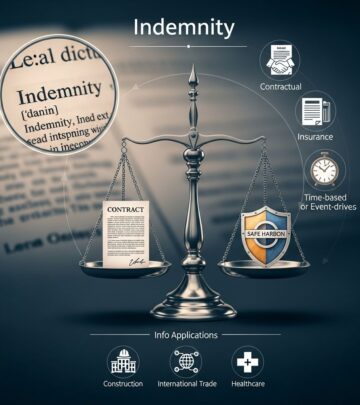
Letter of Indemnity: Definition, Uses & Examples
Understanding Letters of Indemnity: Protection against financial loss in business transactions.

What Is a Letter of Indemnity?
A letter of indemnity (LOI) is a legal contractual document designed to protect one or both parties in a transaction from financial losses if the other party fails to meet contractual obligations. The letter serves as a formal guarantee, typically issued by a third party such as a bank or insurance company, that compensation will be provided for any losses or damages resulting from non-compliance with agreed-upon terms. In essence, the LOI creates a safety net that holds one or both parties harmless against specified risks and liabilities.
The document is commonly referred to as a bond of indemnity or indemnity bond and is frequently encountered in international trade, maritime shipping, corporate mergers, and financial transactions. By establishing clear financial protections and obligations, the LOI helps facilitate business transactions that might otherwise be hindered by uncertainty or risk exposure.
Purpose and Benefits of a Letter of Indemnity
The primary purpose of a letter of indemnity is to ensure that all parties involved in a contract comply with stated requirements and maintain their commitments to avoid losses during transactions. The core function is to eliminate or mitigate losses that occur due to someone else’s failure to perform their contractual duties. Several key purposes distinguish the LOI as an essential business tool:
Protection Against Financial Loss
The most fundamental benefit of an LOI is that it guarantees one or both parties protection from financial losses if the other party breaches its obligations. This protection applies regardless of the nature of the breach, whether it involves non-delivery of goods, failure to meet payment terms, or other contractual violations.
Building Trust and Confidence
By involving a neutral third party—typically a reputable bank or insurance company—an LOI helps establish trust between contracting parties. The presence of a credible financial institution willing to assume liability creates confidence that any losses will be compensated, making parties more willing to engage in transactions that might otherwise seem risky.
Reducing Liability Risks
The LOI transfers liability responsibility from the contracting parties to the third-party guarantor, thereby significantly reducing the risk exposure for both parties. This risk mitigation allows businesses to focus on transaction execution rather than worry about potential losses.
Facilitating Shipping and Trade Processes
In maritime commerce, LOIs are used to accelerate customs clearance, handle specialized equipment, and facilitate transshipment of cargo between vessels. These applications streamline logistics operations and minimize supply chain disruptions that could delay deliveries or increase costs.
Key Components of a Letter of Indemnity
A properly drafted letter of indemnity must include several essential components to be legally enforceable and effective. Understanding these required elements helps ensure the document provides adequate protection for all parties involved:
Identification of Parties
The LOI must clearly identify all parties participating in the transaction, including the shipper, consignee, carrier, and any other relevant participants. Additionally, the document must specify the names, addresses, and affiliations of the third-party guarantor (bank or insurance company) providing the indemnification.
Details of the Shipment or Transaction
A comprehensive description of the cargo, goods, or subject matter of the transaction is essential. This section should include the quantity, specific characteristics, and any special handling requirements for the items involved. The more detailed this description, the clearer the scope of protection provided by the indemnity.
Reason for Issuance
The LOI must explicitly state the reasons for issuance, such as the need to release cargo without a bill of lading, handle specialized equipment, accommodate changes in the port of discharge, or other specific circumstances that necessitate the indemnification.
Indemnity Clause
This is the heart of the document, outlining the specific responsibilities of each party and the indemnification provided. The indemnity clause specifies the conditions under which the carrier or other party is exempt from liability and details the scope of compensation that will be provided in case of breach.
Terms and Conditions
The LOI must include explicit terms and conditions governing the agreement, including specific actions or requirements each party must fulfill. This section clarifies the limitations of indemnification, exclusions from coverage, and any conditions that must be met for compensation to be provided.
Signatures and Dates
All parties involved must sign the LOI to authenticate the document and demonstrate their agreement to its terms. The date of issuance should be clearly stated, and it is advisable to have professional representatives such as bankers or insurance carriers sign rather than just witnesses, particularly when dealing with high-value assets.
Common Uses of Letters of Indemnity in Business
Letters of indemnity serve multiple practical functions across various business sectors. Understanding these applications helps illustrate why LOIs have become standard practice in international trade and finance.
Facilitating Clean Bills of Lading
One of the most common uses of LOIs in maritime commerce is to enable the issuance of clean bills of lading when standard procedures cannot be followed. A shipper may lack certain required documentation or be unable to comply with conventional shipping procedures, yet still needs the bill of lading to proceed. An LOI from a reputable third party allows the carrier to issue a clean bill of lading while protecting themselves from liability for any documentation discrepancies.
Managing Specialized Equipment
Carriers are frequently asked to transport specialized equipment or unique cargo types that require particular handling procedures. In these situations, an LOI guarantees that the carrier is absolved from liability in case of mishandling or damage to the specialized cargo or equipment, provided the carrier has followed the agreed-upon procedures.
Accelerating Customs Clearance
Letters of indemnity are often employed to expedite customs processes, which can significantly reduce delays in the supply chain. When customs documentation is incomplete or when expedited processing is needed, an LOI can facilitate faster clearance while protecting all parties from the risks associated with accelerated procedures.
Facilitating Transshipment Operations
When cargo must be transferred from one vessel to another during transit, an LOI can simplify the transshipment process, streamline logistics operations, and minimize disruptions to the supply chain. This use is particularly valuable in complex international shipments involving multiple carriers or routes.
Risk Protection in Corporate Transactions
Beyond shipping, LOIs are used in corporate mergers, acquisitions, and other financial transactions to protect parties from losses due to non-performance or breach of contract. Companies use LOIs to secure themselves against contract breaches and ensure compensation is provided for damages or non-performance.
Letter of Indemnity vs. Bank Guarantee
While letters of indemnity and bank guarantees are both financial protection mechanisms, they differ in important ways that affect how they function and when each is appropriate to use:
| Feature | Letter of Indemnity | Bank Guarantee |
|---|---|---|
| Primary Obligation | Creates a primary obligation; insurer must compensate for losses independently | Secondary obligation; guarantor only pays if borrower defaults |
| Liability Assumption | Insurer assumes liability for losses or damages directly | Bank guarantees client’s performance to another party |
| Scope | Covers specific losses or damages from contractual breaches | Guarantees performance of specific client obligations |
| Compensation | Direct compensation for losses incurred | Payment only if client fails to perform |
How to Draft and Fill a Letter of Indemnity
Creating an effective LOI requires attention to detail and inclusion of all necessary elements. Here are the essential steps and information required when drafting a letter of indemnity:
Essential Information to Include
Any letter of indemnity must contain the following key details to be valid and enforceable:
- The full names and complete addresses of both parties involved in the transaction
- The name and institutional affiliation of the third-party guarantor (bank or insurance company)
- A detailed and comprehensive description of the items being shipped or the subject matter of the transaction
- Clear identification of the date on which the contract was executed
- Authenticated signatures of all parties involved in the agreement
- Explicit statement of the risks covered and the scope of liability assumed
- Specific obligations and conditions that must be met by each party
- Clear statement of the compensation amount or method for calculating compensation
Legal Language and Enforceability
The LOI should be drafted using precise legal language that clearly outlines all terms and conditions. This formal language ensures that the document will be enforceable in case of disputes and can withstand legal scrutiny. Professional legal review is recommended, particularly for high-value transactions where the stakes are significant.
Legal Implications and Risks
While letters of indemnity provide valuable protection, parties should be aware of potential legal implications and risks associated with their use:
Enforceability Considerations
The enforceability of an LOI depends on jurisdiction and the specific terms included in the document. Some jurisdictions may have limitations on certain types of indemnification, and international LOIs may face complications when disputes arise across borders. It is essential to ensure that the LOI complies with applicable laws and regulations in all relevant jurisdictions.
Scope Limitations
Letters of indemnity typically apply only to the specific risks and losses outlined in the document. Claims outside the defined scope may not be covered, leaving parties unprotected. Carefully defining the scope of indemnification is crucial to avoid disputes over what is and is not covered.
Third-Party Risk
The effectiveness of an LOI depends on the financial stability and reliability of the third-party guarantor. If the bank or insurance company becomes insolvent or unable to pay, the indemnified party may find themselves without recourse. It is therefore important to select a guarantor with strong financial credentials and a reputation for honoring such obligations.
Frequently Asked Questions
What is a letter of indemnity bond?
A letter of indemnity bond is a financial guarantee that protects against potential losses or damages if contractual obligations are not met. It involves a third party—typically a bank or insurer—ensuring that compensation will be provided for any incurred losses resulting from non-performance by one of the parties to the transaction.
Why is a letter of indemnity required?
An LOI is required when one party needs protection from potential losses due to the other party’s failure to meet contractual obligations, or when standard procedures cannot be followed but the transaction still needs to proceed. It is particularly common in shipping when a clean bill of lading is needed despite documentation discrepancies.
What is letter of indemnity insurance?
Letter of indemnity insurance is a specialized insurance policy that protects against financial losses if contract terms are not fulfilled. The insurer guarantees compensation for any losses incurred due to non-performance, breach of contract, or other specified risks covered under the policy terms.
Who signs a letter of indemnity?
All LOIs must be signed by representatives of the parties involved to authenticate the document. When dealing with costly assets or high-value transactions, it is preferable to have professional representatives such as bankers, insurance carrier representatives, or other qualified professionals sign the document rather than just witnesses.
Who typically issues a letter of indemnity?
Letters of indemnity are typically issued by third-party financial institutions such as banks or insurance companies. These institutions agree to provide financial compensation to one of the parties if the other party fails to meet its obligations under the contract.
How long is a letter of indemnity valid?
The validity period of an LOI is determined by the terms specified in the document itself. Some letters of indemnity expire after a specific period, while others may remain in effect indefinitely until the underlying transaction is completed or resolved. The specific terms and conditions should clearly outline the duration of the indemnification.
References
- What is a Letter of Indemnity? — Windward. 2025. https://windward.ai/glossary/what-is-a-letter-of-indemnity/
- What is Letter of Indemnity? Meaning, Sample, Importance & More — Drip Capital. 2025. https://www.dripcapital.com/en-us/resources/blog/letter-of-indemnity
- Indemnification – Definition, How it Works, Importance — Corporate Finance Institute. 2025. https://corporatefinanceinstitute.com/resources/accounting/indemnification/
- Letter of Indemnity (LOI): Meaning, Format, Example, & Working — Amazon Seller Central India. 2025. https://sell.amazon.in/grow-your-business/amazon-global-selling/blogs/letter-of-indemnity
- What is an LOI? (Letter of Indemnity Explained) — Modal Trans. 2025. https://modaltrans.com/blog/letter-of-indemnity-meaning-uses-legal-implications
Similar Articles








Read full bio of Sneha Tete