Length of Credit: What It Means and How It Affects 15% of Score
Discover how the length of your credit history impacts 15% of your FICO score and learn strategies to build and maintain a strong credit profile.

The length of your credit history is a crucial factor in determining your credit score, accounting for 15% of your FICO score. This component reflects how long you have been using credit and provides lenders with insight into your long-term financial responsibility.
What Is the Length of Credit History?
Your
length of credit history
refers to the age of your credit accounts, including both the oldest account and the average age across all accounts. Credit scoring models like FICO and VantageScore consider two primary metrics:- Age of your oldest account: The date you opened your first credit account, such as a credit card or loan.
- Average age of all accounts: Calculated by dividing the total age of all accounts by the number of accounts.
For example, if you have three credit cards opened 10 years, 5 years, and 2 years ago, the average age would be (10 + 5 + 2) / 3 = 5.67 years. A longer history generally signals stability to lenders.
Closed accounts that are in good standing continue to contribute positively to this factor. However, accounts closed due to delinquency may harm your score even after closure.
Why Does Length of Credit History Matter?
The length of credit history makes up
15% of your FICO score
, the most widely used model by lenders. Here’s why it holds such weight:- Demonstrates experience: A long history shows you have managed credit responsibly over time, reducing perceived risk.
- Stability indicator: New users of credit are seen as higher risk compared to seasoned borrowers with proven track records.
- Balances other factors: Even with perfect payments, a short history can limit your score potential.
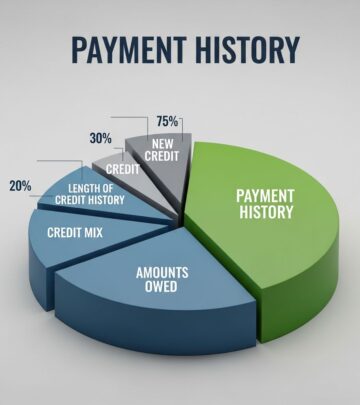
| FICO Score Factor | Weight |
|---|---|
| Payment History | 35% |
| Credit Utilization | 30% |
| Length of Credit History | 15% |
| New Credit | 10% |
| Credit Mix | 10% |
As shown, length of credit ranks third, behind only payment history and utilization. Lenders use it to assess long-term behavior, especially for big loans like mortgages where average histories are 10-15 years or more.
How Is Length of Credit History Calculated?
Credit bureaus—Equifax, Experian, and TransUnion—update your credit report monthly. The calculation includes:
- Open accounts: All active revolving (credit cards) and installment (loans) accounts.
- Closed accounts: Positive closed accounts age positively; negative ones age off after 7 years.
- Authorized user accounts: May add to history if reported, but use cautiously as primary user’s behavior affects you.
Key tip: The exact formula is proprietary, but maintaining older accounts open preserves your average age. Opening many new accounts lowers it quickly.
Ideal Length of Credit History for a Good Score
There is no magic number, but data shows patterns:
- Excellent scores (800+): Often 20+ years average age.
- Good scores (670-739): Typically 7-10 years.
- Short histories (<3 years): Struggle to exceed 700, even with perfect habits.
Bankrate notes that good credit (670+) benefits from longer histories, enabling lower rates on loans. Aim for under 30% utilization alongside building age.
How Does Length of Credit Affect Your Credit Score?
A longer history boosts your score by proving reliability. Conversely:
- Short history: Caps potential; new credit users score lower initially.
- Closing old accounts: Raises average age denominator, shortening it and dropping score 20-50 points.
- Negative aging: Delinquencies stay 7 years, but time heals as they age off.
Experian data indicates length explains score differences among responsible users. For instance, someone with 2 years history at 30% utilization scores lower than a 15-year veteran at same utilization.
Does Closing Old Credit Cards Hurt Your Score?
Yes, often significantly. Closing an old card:
- Shortens average age: Removes positive history.
- Increases utilization: Lowers total limits if balances elsewhere.
- Reduces credit mix: If it was your only card type.
Recommendation: Keep old cards open with minimal use. Pay to zero monthly to avoid fees. Only close if annual fees outweigh benefits or security risks.
5 Ways to Improve or Build Length of Credit History
Building takes time—no shortcuts—but these strategies help:
- Become an authorized user: On a family member’s old, well-managed card. Ensures positive history without liability (confirm reporting).
- Open accounts strategically: Start with secured cards or credit-builder loans. Limit to 1-2 per year.
- Keep old accounts active: Make small purchases quarterly and pay off.
- Use credit-builder products: Loans where payments build savings and history simultaneously.
- Pay on time always: Pairs with age for maximum impact (35% factor).
Track progress free via AnnualCreditReport.com or services like Credit Karma.
Length of Credit History vs. Other Factors
| Factor | Weight | Quick Fix Possible? | Long-term Build? |
|---|---|---|---|
| Payment History | 35% | No | Yes |
| Utilization | 30% | Yes | Moderate |
| Length of History | 15% | No | Yes |
| New Credit | 10% | Yes | No |
| Credit Mix | 10% | Moderate | Yes |
Length requires patience but compounds benefits. Focus here after mastering payments and utilization.
Common Myths About Length of Credit History
- Myth: Close unused cards. Reality: Hurts age and utilization.
- Myth: Shortcuts exist. Reality: Time is the only builder; avoid scams.
- Myth: Doesn’t matter if payments perfect. Reality: Caps score ceiling.
Frequently Asked Questions (FAQs)
Does length of credit history affect mortgage approval?
Yes, heavily. Lenders prefer 10+ years for best rates; short histories may require larger down payments.
How long until negative marks fall off?
Most delinquencies and public records drop after
7 years
.Should I keep my first credit card forever?
If in good standing, yes—to preserve your oldest account age.
Can authorized user status build history fast?
It can add years instantly if the primary account is old and positive, but risks exist if they mismanage.
What’s more important: length or utilization?
Utilization (30%) impacts faster, but both are vital. Keep utilization <10% while aging accounts.
Final Tips for Optimizing Length of Credit
Patience pays: Consistent habits over 5-10 years yield excellent scores. Monitor reports annually, dispute errors, and avoid unnecessary applications. A strong length of credit opens doors to lower rates, higher limits, and financial freedom.
References
- FICO Score Factors — The Penny Hoarder. 2023. https://www.thepennyhoarder.com/credit/credit-scores/credit-utilization/
- Credit Scores Archives — The Penny Hoarder. 2024. https://www.thepennyhoarder.com/credit/credit-scores/
- Why Is Good Credit So Important? — Bankrate. 2024-01-12. https://www.bankrate.com/credit-cards/advice/why-is-good-credit-so-important/
- Credit Scores 101 — The Penny Hoarder Academy. 2023. https://www.thepennyhoarder.com/academy/credit-scores-101/
- Length of Credit: What It Means — The Penny Hoarder. 2024. https://www.thepennyhoarder.com/credit/credit-scores/length-of-credit/
Similar Articles








Read full bio of Sneha Tete