VantageScore 3.0: 6 Key Scoring Factors Lenders Use
Discover which financial institutions rely on VantageScore 3.0 for credit decisions and how it impacts your borrowing opportunities.

VantageScore 3.0 serves as a widely adopted credit scoring model that helps various financial entities evaluate borrower risk with greater inclusivity and precision. Developed collaboratively by the major credit bureaus, this model expands access to credit scores for millions who might otherwise lack one, influencing decisions across multiple lending sectors.
Core Features of VantageScore 3.0
This scoring system operates on a 300-850 scale, aligning with familiar ranges while incorporating advanced analytics for enhanced prediction. It analyzes granular data from all three national credit bureaus, delivering a 25% improvement in predictive accuracy for prime and near-prime borrowers compared to prior versions.
Key strengths include scoring individuals with thin credit files—those with just one month of history on an account updated in the last 24 months—potentially covering 30-35 million previously unscorable consumers.
Scoring Factors Breakdown
VantageScore 3.0 weighs six primary factors, prioritizing payment reliability while considering broader credit behaviors:
- Payment History (40%): Tracks on-time payments as the dominant indicator of reliability.
- Depth of Credit (21%): Evaluates age and variety of accounts for established history.
- Credit Utilization (20%): Measures debt relative to available limits.
- Balances (11%): Assesses outstanding amounts across accounts.
- Recent Credit (5%): Monitors new inquiries and account openings.
- Available Credit (3%): Gauges unused borrowing capacity.
Unlike some competitors, it ignores paid collections and softens the impact of certain medical debts or small balances under $100, fostering a more forgiving approach.
Major Banks Embracing VantageScore 3.0
Prominent banks integrate this model for credit card approvals, personal loans, and ongoing account management due to its consistency and broad applicability. Institutions like Chase leverage VantageScore 3.0 to generate scores that reflect a comprehensive view of creditworthiness, aiding in decisions for consumers with emerging credit profiles.
These banks value the model’s ability to standardize evaluations across bureaus, reducing discrepancies that can arise from varying data sets. For customers, this means scores checked via bank portals often stem from VantageScore 3.0, providing actionable insights tailored to their lending criteria.
Benefits for Banking Customers
- Access for thin-file users, enabling earlier qualification for products.
- Consistent scoring that minimizes surprises during applications.
- Focus on total history rather than recent snapshots alone.
Credit Unions and Community Lenders
Credit unions frequently adopt VantageScore 3.0 for its member-focused design, which supports underserved populations. Organizations such as Mid Oregon Credit Union highlight its utility in predicting repayment likelihood for loans and lines of credit, promoting financial inclusion within local communities.[10]
These institutions appreciate the model’s simplified reason codes, which streamline underwriting and provide clear feedback to applicants. By scoring more individuals, credit unions can extend services to those building credit histories, aligning with their cooperative ethos.[10]
Alternative and Online Lenders
Fintech platforms and online lenders prioritize VantageScore 3.0 for its speed and inclusivity in digital underwriting. Companies like FinLocker use it to deliver real-time scores ranging from 300 to 850, helping users qualify for unsecured loans or buy-now-pay-later options without traditional barriers.
This model’s handling of alternative data and short histories suits non-traditional borrowers, such as gig workers or recent graduates. Online providers benefit from its predictive lift, approving creditworthy applicants overlooked by stricter models.
Comparison of Lender Types
| Lender Type | Primary Use Cases | VantageScore 3.0 Advantage |
|---|---|---|
| Major Banks | Credit cards, personal loans | Consistent bureau alignment |
| Credit Unions | Auto loans, membership services | Inclusivity for thin files[10] |
| Online Lenders | Unsecured loans, fintech products | Quick scoring for new users |
| Landlords/Property Managers | Rental applications | Reliable risk assessment |
Landlords and Property Management Firms
In the rental sector, VantageScore 3.0 equips landlords with robust tools for tenant screening via services like CIC Reports. It outperforms other models by scoring previously unscorable applicants, ensuring confident leasing decisions across industries.
Property managers value its accuracy in analyzing full credit histories, including those with limited data, which reduces vacancy risks and supports diverse applicant pools.
Auto and Mortgage Financiers
While less emphasized in some sources, auto lenders and select mortgage providers incorporate VantageScore 3.0 for preliminary assessments, especially for subprime or rebuilding borrowers. Its 25% predictive edge helps balance risk in vehicle financing and home equity products.
Mortgage originators may use it alongside FICO for hybrid evaluations, appreciating the model’s leniency on paid collections during affordability checks.
VantageScore 3.0 vs. Other Models
Compared to FICO 8 or 9, VantageScore 3.0 requires less history (one month vs. six) and ignores paid collections entirely. It emphasizes payment history at 40%, slightly higher than some FICO variants, while deprioritizing available credit.
Versus VantageScore 4.0, the 3.0 version includes public records like liens but lacks trended data and machine learning refinements found in the newer iteration.
Score Range Interpretation
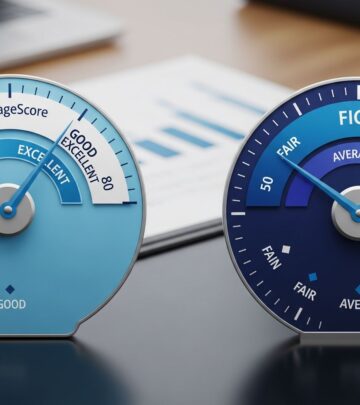
- 781-850 (Super Prime): Lowest risk, best rates.
- 661-780 (Prime): Strong profiles.
- 601-660 (Near Prime): Moderate risk.
- 500-600 (Subprime): Higher scrutiny.
- 300-499 (Deep Subprime): Limited options.
Strategies to Optimize Your VantageScore 3.0
To appeal to VantageScore 3.0 users, prioritize on-time payments, keep utilization under 30%, and avoid excessive new credit. Regularly review reports from all bureaus for inaccuracies, as consistency across them bolsters your score.
- Pay bills promptly to maintain the 40% factor.
- Reduce balances without closing old accounts.
- Limit applications to preserve recent credit influence.
- Build history gradually for depth.
Common Questions About VantageScore 3.0 Lenders
Which banks use VantageScore 3.0?
Banks like Chase employ it for credit evaluations, offering scores via their platforms.
Does VantageScore 3.0 help with rentals?
Yes, landlords use it for reliable tenant screening, scoring thin-file applicants effectively.
How does it differ from FICO?
It scores more people with shorter histories and ignores paid collections.
Can I improve my score quickly?
Focus on payments and utilization for noticeable gains within months.
Is VantageScore 4.0 replacing 3.0?
Many lenders still use 3.0, though 4.0 introduces advanced features.
Future Trends in Credit Scoring Adoption
As lending digitizes, VantageScore 3.0’s legacy persists through its foundational inclusivity, paving the way for models like 4.0. Lenders continue adopting it for balanced risk assessment, especially amid rising demand for accessible credit.
Consumers benefit from multiple score views, empowering proactive financial management across bank apps, credit monitoring services, and lender portals.
References
- VantageScore 3.0 — VantageScore Solutions, LLC. 2026. https://vantagescore.com/insights/vantagescore-3
- What is the VantageScore 3.0 Credit Scoring Model? — Credit Karma. Accessed 2026. https://www.creditkarma.com/credit/i/vantagescore-30
- Understanding VantageScore® 3.0 — Chase Bank. Accessed 2026. https://www.chase.com/personal/credit-cards/education/credit-score/understanding-vantagescore-3-0
- VantageScore 3.0 — CIC Reports. Accessed 2026. https://www.cicreports.com/vantagescore/
- What Is a VantageScore® 3.0 Credit Score? — Embers.org. Accessed 2026. https://www.embers.org/articles/what-is-a-vantagescore-30-credit-score-blog-post
- Understanding VantageScore ® Ranges — Equifax. Accessed 2026. https://www.equifax.com/personal/education/credit/score/articles/-/learn/vantagescore-ranges/
Similar Articles








Read full bio of medha deb