Lender Credits Explained
Discover how lender credits can reduce your closing costs and make home buying easier, but weigh the long-term interest rate trade-offs carefully.
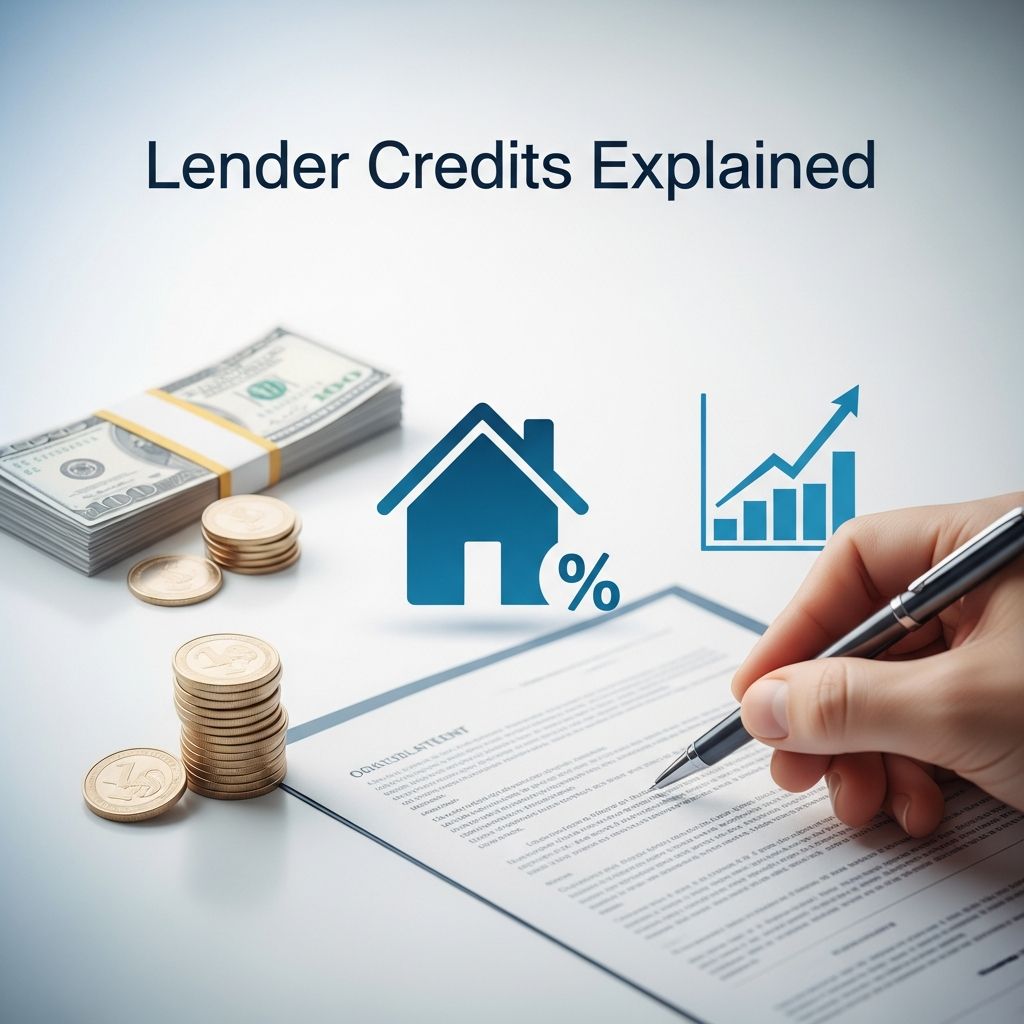
Lender credits provide homebuyers with financial relief at closing by having the mortgage provider cover portions of the associated fees, in exchange for accepting a modestly elevated interest rate on the loan. This mechanism allows individuals to preserve cash reserves for other priorities, such as a larger down payment or immediate home improvements.
Defining Lender Credits in Mortgage Transactions
In the realm of home financing, lender credits function as a strategic offset against the various expenses incurred during loan finalization. These costs, often totaling between 2% and 5% of the property’s value, encompass services like appraisals, title searches, and origination charges. Rather than paying these out-of-pocket, the lender applies a credit that diminishes the net amount due at settlement. The counterpart to this concession is an adjustment upward in the loan’s annual percentage rate (APR), which incrementally raises periodic payments and cumulative interest over the loan’s duration.
This arrangement is not a gift but a calculated exchange. For instance, on a $350,000 mortgage, a single credit point—typically equivalent to 1% of the principal—might yield $3,500 toward fees while nudging the rate higher by about 0.25%. Borrowers must evaluate this based on their financial horizon and liquidity needs.
The Operational Mechanics of Lender Credits
Lender credits materialize on key disclosure documents, such as the Loan Estimate and Closing Disclosure, appearing as a negative value under the lender credits section. This notation clearly signals the reduction in cash required at the table. The lender calibrates the credit quantum relative to the rate bump; greater credits correlate with proportionally larger rate increases.
Eligible expenses strictly limited to non-principal reductions, including:
- Appraisal and inspection charges
- Title insurance and escrow services
- Loan origination and processing fees
- Prepaid items like taxes and insurance
These cannot redirect toward down payments or debt consolidation, preserving the loan-to-value ratio. Lenders determine maximum credits based on loan size, borrower credit profile, property characteristics, and internal guidelines.
Advantages of Opting for Lender Credits
Opting for lender credits delivers immediate fiscal breathing room, particularly beneficial for those with constrained savings. Primary upsides include:
- Cash preservation: Redirect funds from closing to bolster down payments, potentially sidestepping private mortgage insurance (PMI) on conventional loans.
- Enhanced affordability: Eases entry into homeownership without liquidating emergency reserves or retirement accounts.
- Strategic flexibility: Ideal for short-term owners planning to sell or refinance soon, minimizing exposure to elevated rates.
- Tax implications: Higher interest may amplify deductible expenses, though consulting a tax professional is advised.
For example, if closing costs tally $9,000 and $6,000 in credits are secured, only $3,000 is paid upfront, freeing capital for property enhancements or reserves.
Potential Drawbacks and Long-Term Costs
While upfront savings allure, the enduring price tag warrants scrutiny. The heightened rate escalates monthly outlays and total interest paid, potentially eroding savings if the loan persists beyond a few years.
| Scenario | Upfront Savings | Monthly Payment Increase | Breakeven Period |
|---|---|---|---|
| No Credits (Base Rate 6%) | $0 | $1,800 | N/A |
| With Credits (Rate 6.25%) | $5,000 | $1,850 (+$50) | ~8-10 years |
Note: Hypothetical for a $300,000 30-year fixed loan; actuals vary by lender and market.
- Higher lifetime costs if residing long-term
- Reduced equity buildup pace due to amplified interest
- Less appeal in falling rate environments, complicating refinancing
Contrasting Lender Credits with Discount Points
Lender credits invert the logic of discount points, also termed mortgage points. The latter demand upfront payment—again, roughly 1% per point—to secure a reduced rate, favoring extended loan tenures.
| Feature | Lender Credits | Discount Points |
|---|---|---|
| Cash Flow Impact | Reduces upfront costs | Increases upfront costs |
| Rate Effect | Higher rate | Lower rate |
| Best For | Short-term plans, low cash | Long-term ownership, ample cash |
| Breakeven | Quick if moving soon | Longer, via interest savings |
Choosing hinges on anticipated tenure: credits suit transients; points benefit permanents.
Strategic Scenarios for Utilizing Lender Credits
Assess fit via personalized calculus:
- Cash-strapped buyers: Preserve liquidity for down payments or repairs.
- Refinance candidates: Accelerate breakeven by slashing upfront outlays.
- Market movers: If relocating within 5-7 years, credits often prevail.
- Reserve maintainers: Comply with lender cash reserve mandates without depletion.
Run projections using online calculators to pinpoint breakeven—where cumulative interest extras equal initial savings.
Navigating Lender Variations and Disclosures
Not all providers extend credits identically; some unlink them from rates or cap amounts. Scrutinize the Loan Estimate’s Section J for precise credit delineation and rate linkage. Shop multiple quotes, as par rates and credit yields fluctuate with market dynamics and borrower attributes like FICO scores.
Frequently Asked Questions
Can lender credits fund my down payment?
No, they apply solely to closing costs, not principal reductions.
How much do lender credits raise my rate?
Typically 0.25% per point, but varies by lender and loan specifics.
Are lender credits tax-deductible?
The resulting higher interest may be, subject to IRS rules; points are often immediately deductible.
Do all mortgages qualify for credits?
Most conventional, FHA, VA loans do, contingent on lender policy and borrower profile.
What’s the impact on PMI?
Indirect: saved cash can boost down payment, possibly eliminating PMI.
Final Decision Framework
Integrate lender credits into a broader affordability analysis, factoring tenure, cash flow, and rate outlook. Consult a mortgage advisor for tailored Loan Estimates contrasting scenarios. This empowers informed choices aligning with your homeownership trajectory.
References
- What Is a Lender Credit? — CrossCountry Mortgage. 2023. https://crosscountrymortgage.com/mortgage/resources/what-is-lender-credit/
- What are lender credits? – Rocket Mortgage — Rocket Mortgage. 2023. https://www.rocketmortgage.com/learn/what-are-lender-credits-used-for-when-buying-a-house
- Lender Credits: What Are They And How Do They Work? — Bankrate. 2024-03-15. https://www.bankrate.com/mortgages/lender-credits/
- What Are Discount Points and Lender Credits? — Capital Bank. 2023. https://capitalbankmd.com/home-loans-101/what-are-discount-points-and-lender-credits/
- What Are Lender Credits? — Zillow. 2024. https://www.zillow.com/learn/what-are-lender-credits/
- Lender Credit, Explained — Chase. 2023. https://www.chase.com/personal/mortgage/education/buying-a-home/lender-credit
- How should I use lender credits and points — Consumer Financial Protection Bureau (CFPB). 2024-01-10. https://www.consumerfinance.gov/ask-cfpb/how-should-i-use-lender-credits-and-points-also-called-discount-points-en-136/
Similar Articles








Read full bio of Sneha Tete