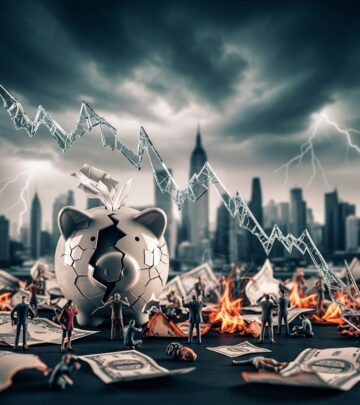
Lehman Brothers Collapse: The 2008 Financial Crisis
Understanding the largest bankruptcy in U.S. history and its global impact on financial markets.
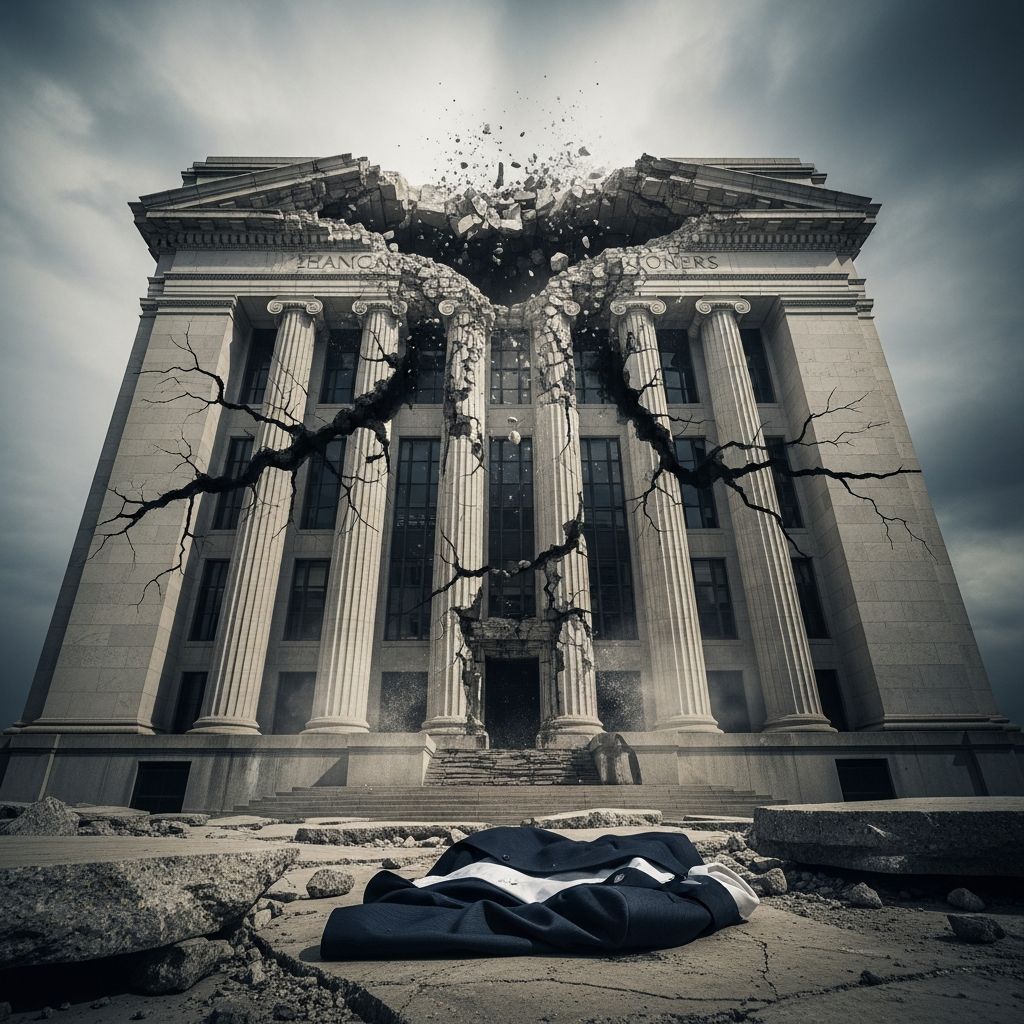
The Lehman Brothers Collapse: Understanding the Largest Bankruptcy in U.S. History
The collapse of Lehman Brothers on September 15, 2008, marked a pivotal moment in financial history and remains the largest bankruptcy in United States history. Founded in 1850, Lehman Brothers had weathered over 150 years of economic turmoil, including the Great Depression and two World Wars, establishing itself as the fourth-largest investment bank in the United States. However, the firm’s involvement in risky mortgage-backed securities and excessive leverage proved to be its undoing, ultimately triggering one of the most severe financial crises since the Great Depression.
When Lehman Brothers filed for Chapter 11 bankruptcy protection, it revealed staggering debts of $619 billion against $639 billion in assets, demonstrating an unprecedented debt ratio for a top-tier financial institution. This monumental failure shocked global financial markets, erased approximately $10 trillion in stock market value worldwide, and set off a chain reaction of economic consequences that would reshape the financial landscape for years to come.
The Road to Collapse: How Lehman Brothers Got Here
The Housing Bubble and Mortgage-Backed Securities
The primary factor behind Lehman Brothers’ collapse was its heavy involvement in risky and unsustainable mortgage-backed securities (MBS) tied to the subprime housing market. During the early 2000s, investing in mortgage-backed securities and collateralized debt obligations (CDOs) was standard practice throughout the financial industry. Lehman Brothers, like many other financial institutions, built a massive portfolio of these investments, believing the housing market would continue its perpetual upward trajectory.
However, when the U.S. housing bubble began to burst, the value of these securities deteriorated rapidly. As subprime mortgages underlying these securities began to default at alarming rates, investor confidence in Lehman Brothers plummeted. The firm’s highly leveraged structure made it particularly vulnerable to these market declines. By 2008, Lehman had assets of $680 billion supported by only $22.5 billion of firm capital, meaning its risky commercial real estate holdings were thirty times greater than its capital base. A mere three- to five-percent decline in real estate values would have been sufficient to wipe out all capital reserves.
Early Warning Signs and Strategic Missteps
The warning signs of Lehman’s distress began appearing well before September 2008. In August 2007, the firm closed its subprime lender, BNC Mortgage, eliminating 1,200 positions across 23 locations and taking a $25-million after-tax charge as a result. This action signaled management’s recognition that the subprime mortgage market was deteriorating.
Throughout 2007 and into 2008, Lehman Brothers’ financial condition continued to deteriorate. In the second fiscal quarter of 2008, the company reported losses of $2.8 billion and attempted to raise $6 billion in additional capital by offering new shares to investors. Despite these efforts, Lehman stock lost 73% of its value in the first half of 2008 alone as the credit market continued to tighten. By August 2008, the company announced plans to lay off 6% of its workforce—approximately 1,500 employees—just ahead of its third-quarter reporting deadline.
The Final Days: September 2008
Mounting Losses and Desperate Measures
The final chapter of Lehman Brothers’ history unfolded rapidly during September 2008. On September 10, the company posted a quarterly loss of $3.93 billion and announced a write-down of $5.6 billion from its investments in subprime loans. Both the company’s president and chief executive officer resigned in the face of mounting losses. The stock price continued its free fall, losing roughly half its value as investor concerns about the bank’s security intensified.
On September 11, 2008, JPMorgan Chase, which cleared Lehman’s trades, made a devastating decision: it stopped providing the more than $100 billion that Lehman borrowed daily through the interbank lending market. This action essentially cut off Lehman’s ability to fund its operations and signaled the beginning of the end.
Failed Bailout Negotiations
In the days following September 10, Lehman Brothers desperately searched for another bank willing to purchase it or merge with it. The U.S. government also explored ways to help the company remain solvent. Federal Reserve officials summoned several banks to negotiate potential financing for Lehman’s reorganization, but these discussions ultimately failed. Unlike Bear Stearns, which had received government backing for its purchase by JPMorgan Chase earlier in 2008, the government decided not to provide direct financial assistance to Lehman Brothers.
On September 22, 2008, a revised proposal was put before the bankruptcy court for the sale of Lehman Brothers’ brokerage operations. Barclays Bank agreed to acquire the core business of Lehman for $1.3666 billion, primarily consisting of Lehman’s $960 million Midtown Manhattan office skyscraper at 745 Seventh Avenue. Manhattan bankruptcy judge James Peck, after a seven-hour hearing, approved the transaction, stating that “Lehman Brothers became a victim, in effect the only true icon to fall in a tsunami that has befallen the credit markets.”
The Scale of the Catastrophe
Employee Impact and Client Assets
At the time of its collapse, Lehman Brothers employed nearly 26,000 people worldwide across multiple offices and subsidiaries. The bankruptcy resulted in the unemployment of approximately 25,000 of these employees, creating immediate hardship for thousands of workers and their families. Beyond its direct employees, the firm held at least $40 billion in direct client assets, including substantial holdings for major hedge funds that were suddenly frozen when the company entered bankruptcy.
For hedge funds and other institutional investors that had parked their assets at Lehman Brothers, the collapse proved particularly devastating. When administrators took charge of the London business and the U.S. holding company filed for bankruptcy, positions held by hedge funds at Lehman were frozen. These organizations were forced to de-lever and sit on large cash balances, inhibiting their chances at further growth and creating additional market dislocation.
Stock Market Devastation
The immediate market reaction to Lehman’s bankruptcy was severe and far-reaching. The bankruptcy triggered a 4.5% one-day drop in the Dow Jones Industrial Average on September 15, 2008, which was then the largest decline since the terrorist attacks of September 11, 2001. The Dow Jones Industrial Average also lost approximately 500 points, marking the lowest point since 9/11. Global stock markets collectively lost $10 trillion in value following the Lehman Brothers bankruptcy, representing an unprecedented destruction of wealth.
The Global Financial Contagion
Credit Market Freeze and Banking System Crisis
The collapse of Lehman Brothers triggered a severe liquidity crisis throughout the global banking system. Banks immediately halted lending to each other and to businesses, effectively freezing credit markets. The interbank lending market, which is essential for the daily functioning of the financial system, tightened dramatically as banks became reluctant to lend to any counterparty whose financial stability was uncertain.
Money market mutual funds, a key source of credit in the financial system, saw mass withdrawal demands as investors rushed to avoid losses. This further strained the financial system and threatened numerous other banks with imminent failure. The panic that Lehman’s collapse unleashed shook confidence in the government’s ability to manage the crisis and prompted a general financial panic throughout the world.
Government and Federal Reserve Response
In response to the catastrophic fallout from Lehman’s collapse, the U.S. government initiated a $700 billion bailout plan known as the Troubled Asset Relief Program (TARP) to stabilize the economy and prevent further failures of major financial institutions deemed “too big to fail.” On September 16, 2008, just one day after Lehman’s collapse, the Federal Reserve Bank of New York lent $85 billion to American International Group (AIC), a global insurance company whose assets failed to cover its mounting credit default swap contracts.
The Great Recession: Long-Term Economic Impact
The collapse of Lehman Brothers and the subsequent crumbling of the financial system, which had been built on short-term investing strategies and a failure of sound investment practices, triggered the greatest economic downturn in the United States since the crash of 1929. The recession that followed was characterized by massive job losses, home foreclosures, and widespread financial devastation for millions of Americans.
The $737 billion decline in collateral outstanding in the securities lending market following Lehman’s collapse further exacerbated systemic risk and contributed to the severity and duration of the Great Recession. Businesses couldn’t access credit to fund operations or expansion, consumers faced unemployment and declining home values, and the global economy contracted as international trade and investment declined.
Key Lessons from the Lehman Brothers Collapse
Structural Vulnerabilities and Risk Management
The collapse of Lehman Brothers revealed critical failures in risk management and corporate governance. The firm’s failure to mitigate its high degree of leverage, despite clear warning signs of deteriorating market conditions throughout 2007, demonstrated a dangerous disconnect between risk management practices and actual market realities. The decision to maintain and even increase risky investments during a period of obvious housing market stress was a catastrophic strategic error.
Systemic Risk and Interconnectedness
Lehman’s failure exposed the profound interconnectedness of modern financial institutions. The firm’s collapse didn’t merely affect Lehman itself; it triggered cascading failures throughout the financial system as counterparties, clients, and investors worldwide suffered losses. The interbank lending market freeze that followed demonstrated how the failure of one major institution could paralyze the entire financial system.
Regulatory and Policy Implications
The Lehman Brothers collapse prompted significant regulatory reforms, including the Dodd-Frank Act and international regulatory frameworks designed to prevent similar crises. Regulators and policymakers recognized that certain financial institutions were truly “too big to fail” and that the government bore responsibility for preventing their collapse through appropriate oversight and intervention.
Frequently Asked Questions
Q: Why did the government bail out AIG but not Lehman Brothers?
A: The government’s decision to bail out AIG but not Lehman Brothers was based on different assessments of systemic risk. AIG was deemed more systemically critical due to its role in credit default swaps and insurance products held throughout the financial system. However, many economists and observers have criticized this decision, suggesting that a bailout of Lehman might have prevented the more severe crisis that followed.
Q: How much money did investors lose in the Lehman Brothers collapse?
A: Investors lost approximately $10 trillion in global stock market value in the immediate aftermath of Lehman’s collapse. Additionally, individual investors who held Lehman stock, bonds, or had assets parked at the firm suffered direct losses, while indirect losses rippled through the economy via job losses, home value declines, and pension fund deterioration.
Q: Could the Lehman Brothers collapse have been prevented?
A: While the broader housing market collapse was likely inevitable given the bubble conditions, better risk management at Lehman and more aggressive regulatory oversight of the financial system might have prevented or mitigated the firm’s failure. The excessive leverage, concentration in mortgage-backed securities, and failure to reduce risk exposure as warning signs emerged were controllable factors.
Q: What happened to Lehman Brothers’ business after bankruptcy?
A: Barclays Bank acquired the brokerage business of Lehman Brothers for $1.3666 billion, including its Midtown Manhattan office building. The remainder of the company’s assets were liquidated over several years through bankruptcy proceedings, with creditors recovering only a fraction of their claims.
Q: How did the Lehman Brothers collapse affect the global economy?
A: The collapse froze credit markets worldwide, leading to a severe recession that affected every major economy. International trade declined, unemployment rose globally, and stock markets worldwide experienced substantial declines. The crisis demonstrated how interconnected the global financial system had become.
References
- Collapse of Lehman Brothers — EBSCO Research Starters. 2024. https://www.ebsco.com/research-starters/economics/collapse-lehman-brothers
- Unraveling the Lehman Brothers: Catalyst of the 2008 Financial Crisis and Global Ramifications — University of Michigan Journal of Economics. 2024-01-29. https://sites.lsa.umich.edu/mje/2024/01/29/unraveling-the-lehman-brothers-catalyst-of-the-2008-financial-crisis-and-global-ramifications/
- Bankruptcy of Lehman Brothers — Wikipedia. Accessed 2025. https://en.wikipedia.org/wiki/Bankruptcy_of_Lehman_Brothers
- Global Impact of the Collapse — Baker Library, Harvard Business School. https://www.library.hbs.edu/special-collections-and-archives/exhibits/lehman/global-impact-of-the-collapse
- Great Recession — Baker Library, Harvard Business School. https://www.library.hbs.edu/special-collections-and-archives/exhibits/lehman/global-impact-of-the-collapse
Similar Articles








Read full bio of medha deb