Ledger Balance: Definition, Calculation & Examples
Complete guide to understanding ledger balances, how they work, and why they matter for your finances.

What Is a Ledger Balance?
A ledger balance is the amount of money in your bank account at the end of a business day, representing the official recorded amount that reflects all fully cleared transactions up to that point. This fundamental banking concept serves as a critical reference point for individuals and businesses seeking to maintain accurate financial records and make informed monetary decisions.
The ledger balance, sometimes referred to as the current balance or opening balance, remains constant throughout each business day and is updated only after all transactions have been processed by your financial institution. Unlike other account balances that fluctuate in real-time, the ledger balance provides a stable, verified snapshot of your account’s financial state based on completed transactions only.
How Ledger Balance Works
Understanding how ledger balance functions requires examining the daily cycle of banking operations. When you begin your business day, your ledger balance represents the closing balance from the previous day—all transactions that cleared have been recorded and settled. This amount remains your ledger balance throughout the day, regardless of any pending transactions you may initiate.
Let’s walk through a practical example. Suppose you start your day with a ledger balance of $10,000 in your business account. During the day, you make several transactions: you withdraw $500 in cash, deposit a check for $1,200, and authorize a debit card purchase for $300. However, only the cash withdrawal clears immediately. The check deposit and debit card purchase are still pending. Your ledger balance at the end of the day will still reflect $9,500 (the $10,000 opening balance minus the $500 cleared withdrawal), because pending transactions are not included in this calculation.
At the end of each business day, your bank processes all completed transactions and updates your ledger balance accordingly. The next morning, this updated balance becomes your new opening ledger balance. This systematic process ensures that the ledger balance always represents verified, fully processed funds in your account.
Ledger Balance vs. Available Balance
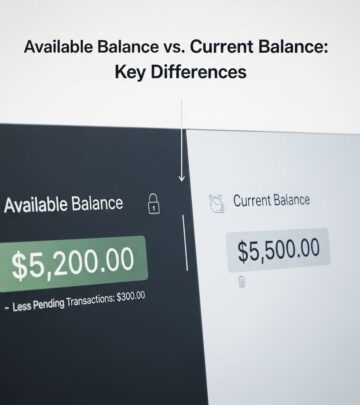
One of the most important distinctions in banking is understanding the difference between ledger balance and available balance. Many account holders confuse these terms, leading to overdrafts and unexpected fees. While related, these two balances serve different purposes and tell different financial stories.
Key Differences
| Feature | Ledger Balance | Available Balance |
|---|---|---|
| What It Includes | Only fully cleared transactions | Cleared transactions plus pending activity |
| Updates | Once daily at end of business day | Updates throughout the day in real-time |
| Pending Deposits | Not included | Included |
| Pending Withdrawals | Not included | Included |
| Holds on Account | Not reflected | Reflected in calculation |
| Purpose | Accurate record-keeping and planning | Real-time spending authority |
Your available balance represents the funds you can actually access for immediate use. It includes all cleared transactions from your ledger balance, plus or minus any pending deposits or withdrawals that your bank has authorized. For instance, if your ledger balance shows $5,000 and you’ve just authorized a $500 payment that hasn’t cleared yet, your available balance might display $4,500. This real-time figure provides a more current picture of your accessible funds.
The available balance accounts for various factors including pending mobile deposits, debit card authorizations, outstanding checks, and merchant holds on your account. This makes it a more dynamic measure of your true spending capacity, though it can sometimes be less reliable because pending transactions may ultimately fail to process.
What Ledger Balance Includes and Excludes
Precision is essential when calculating and understanding your ledger balance. Your ledger balance reflects only transactions that have been fully processed and settled by your financial institution. This includes:
- Cleared deposits from checks or transfers
- Posted ACH payments and automated transactions
- Processed withdrawals and cash withdrawals
- Cleared wire transfers
Conversely, your ledger balance does not include pending transactions, even if they appear on your account statement. These exclusions are critical to understand:
- Pending mobile deposits awaiting processing
- Debit card authorizations not yet settled
- Checks deposited but not yet cleared
- Transactions initiated after the daily cutoff time
- Pending ACH transfers or wire instructions
- Merchant holds or blocks on your account
How to Calculate Your Ledger Balance
Calculating your ledger balance is straightforward when you understand the basic formula. To determine your ledger balance, use this equation:
Ledger Balance = Opening Balance + Cleared Credits – Cleared Debits
Breaking this down further: start with your opening balance (the previous day’s closing ledger balance), add all deposits that have fully cleared, then subtract all withdrawals that have been fully processed.
Practical Calculation Example
Imagine you begin your business day with an opening balance of $15,000. During the day, the following transactions occur:
- A customer deposit of $3,000 clears
- A vendor payment check for $2,000 clears
- You authorize a $500 online purchase (still pending)
- You deposit a check for $1,500 (still processing)
Using the formula: $15,000 + $3,000 (cleared deposits) – $2,000 (cleared debits) = $16,000. This is your ledger balance at the end of the day. The $500 online purchase and $1,500 check deposit do not factor into this calculation because they remain pending.
Why Ledger Balance Matters for Bookkeeping
Bookkeeping is the systematic process of recording financial transactions and maintaining accurate records of a company’s financial position. The ledger balance plays an indispensable role in this process, serving as a cornerstone for accurate financial management.
When bookkeepers maintain your financial records, they rely heavily on ledger balances to reconcile accounts and ensure the books match reality. By comparing your recorded transactions against your bank’s ledger balance, bookkeepers can identify discrepancies, investigate missing items, and correct errors before they compound into larger problems.
The ledger balance also enables accurate financial reporting. It helps accountants and bookkeepers track the flow of funds through your business, generate precise balance sheet statements, and ensure compliance with accounting principles. Without accurate ledger balance information, financial reports would be unreliable and potentially misleading.
Furthermore, understanding your ledger balance helps prevent costly overdrafts. By knowing exactly what funds have actually cleared, you can make informed decisions about major purchases or payments without risk of insufficient funds.
Ledger Balance and Bank Requirements
Many financial institutions use your ledger balance as the basis for determining whether you’ve maintained minimum balance requirements. Banks often assess maintenance fees, interest earnings, and service charges based on your daily or average ledger balance throughout the month.
If your bank requires a minimum balance to avoid fees, the ledger balance is typically what they examine. Falling below this threshold—even temporarily due to pending transactions—could result in monthly fees. Understanding this distinction prevents unnecessary expenses and helps you maintain the required balance using cleared funds only.
Ledger Balance for Financial Planning
For accurate financial planning and forecasting, the ledger balance provides the most reliable foundation. While the available balance tells you what you can spend today, the ledger balance tells you what you actually have in verified, settled funds. This distinction is crucial for businesses with seasonal revenue patterns or freelancers with irregular income.
By regularly monitoring your ledger balance, you can make informed decisions about large expenditures, loan applications, and business investments. Lenders and creditors often request your ledger balance history when evaluating creditworthiness, as it demonstrates your actual cash position without inflating the picture with pending transactions.
Tracking and Managing Your Ledger Balance
Effective financial management requires regular attention to your ledger balance. Best practices for tracking include:
- Reviewing your ledger balance daily or weekly to ensure accuracy
- Comparing it to your bookkeeping records and reconciling only cleared transactions
- Maintaining detailed records of all deposits and withdrawals
- Investigating discrepancies between your records and the bank’s statements
- Using accounting software to automate reconciliation processes
- Keeping separate tracking for pending versus cleared items
Modern accounting platforms like QuickBooks, FreshBooks, and specialized bookkeeping software can automatically reconcile your ledger balance with your bank records, saving time and reducing errors. These tools categorize transactions and flag discrepancies for investigation.
Common Misconceptions About Ledger Balance
Several misconceptions can lead to financial mismanagement. First, many assume that ledger balance and available balance are identical. They are not, and treating them as such can result in overdrafts. Second, some believe that the ledger balance updates in real-time like the available balance. It does not—it updates only once daily at the end of business hours. Third, some account holders think that transactions made online immediately affect the ledger balance, when in reality they remain pending until the bank processes and settles them.
Frequently Asked Questions
Q: Is ledger balance the same as what appears on my bank statement?
A: Yes, typically the ledger balance matches what you see on your bank statement. Most bank statements display the ledger balance at the close of each business day and at the beginning of the next day.
Q: Can I use my ledger balance to make spending decisions?
A: For immediate spending decisions, use your available balance instead. The ledger balance is better suited for planning and forecasting purposes. However, reconciling both balances gives you the most complete picture of your financial position.
Q: Why does my available balance differ from my ledger balance?
A: The difference indicates pending transactions. Your available balance includes pending deposits and subtracts pending withdrawals, while your ledger balance includes only settled transactions. This gap typically closes within one to three business days.
Q: What is average ledger balance?
A: Average ledger balance is calculated by adding your daily ledger balances over a specific period and dividing by the number of days. Some banks use this figure to determine fees, interest rates, or qualification for special accounts.
Q: How often does the ledger balance update?
A: The ledger balance updates once daily at the end of each business day, typically after midnight or early morning. It remains static throughout the business day regardless of pending transactions.
Q: What should I do if my ledger balance doesn’t match my records?
A: Investigate the discrepancy by comparing your recorded transactions against your bank statement. Look for timing differences, duplicate entries, or errors. Contact your bank if you suspect unauthorized transactions or processing errors.
References
- What Does Ledger Balance Mean? — Taxfyle. 2023-10-20. https://www.taxfyle.com/blog/ledger-balance-mean
- What is a Ledger Balance? Definition & Examples — 1-800Accountant. https://1800accountant.com/blog/what-is-a-ledger-balance
- The Difference Between Available and Ledger Balance — GoCardless. https://gocardless.com/guides/posts/the-difference-between-available-and-ledger-balance/
- What is a Ledger Balance? — Modern Treasury. https://www.moderntreasury.com/learn/what-is-a-ledger-balance
- Understanding Ledger Balance vs Available Balance — Bunker. https://bunkertech.io/blog/ledger-balance-vs-available-balance
Similar Articles








Read full bio of Sneha Tete