Should You Leave Your 401(k) With Your Old Employer?
Explore your 401(k) options after leaving a job and determine if staying put is right for you.

Should You Leave Your 401(k) With Your Old Employer When You Retire?
When you leave a job, one of the most important financial decisions you’ll face is what to do with your 401(k). If your account balance exceeds $7,000, you typically have several options: keep the money with your former employer, roll it over to a new employer’s plan, transfer it to an Individual Retirement Account (IRA), or cash it out entirely. Each option has distinct advantages and disadvantages, and the right choice depends on your personal financial situation, investment preferences, and retirement goals.
Many people don’t realize that leaving a 401(k) with a former employer is often a viable option. While it may not be the best choice for everyone, understanding this option and comparing it to alternatives is essential for optimizing your retirement savings.
Understanding Your 401(k) Options After Leaving Your Job
When you separate from an employer, your 401(k) balance is subject to specific rules that determine your rights and options. The key factor is your vested balance—the portion of employer contributions and your own contributions that legally belong to you.
Balance Thresholds and Your Options
Your available options depend on your account balance. If your 401(k) contains less than $1,000, your former employer can cash out your account or automatically roll it into an IRA. If your vested balance falls between $1,000 and $7,000, employers may automatically roll the funds into an IRA on your behalf. However, if you have $7,000 or more vested, you generally retain full control over your account and can choose among four primary options.
Option 1: Keep Your 401(k) With Your Former Employer
One legitimate choice is to leave your money in your former employer’s 401(k) plan. This option is available if your plan sponsor permits it, and it often goes overlooked despite offering several meaningful advantages.
Advantages of Leaving Your 401(k) in Place
- Tax-deferred growth continues: Your money can continue to grow on a tax-deferred basis, allowing compound interest to work in your favor without annual tax obligations on earnings.
- Penalty-free withdrawals at 55: If you left your job at age 55 or older, federal law permits you to withdraw funds from this plan without the standard 10% early withdrawal penalty that applies to IRAs. This is commonly called the “Rule of 55.”
- Lower-cost investment options: Many employer plans offer institutionally priced investments or unique options not available to individual IRA investors, often with lower expense ratios.
- Creditor protection: Federal law provides broad protection against creditors for funds held in employer-sponsored retirement plans, offering stronger legal safeguards than IRAs in some jurisdictions.
- Loan options: In some cases, you may retain access to plan loans or hardship withdrawals, depending on the plan’s rules for former employees.
Disadvantages of Leaving Your 401(k) in Place
- No additional contributions: Once you leave your employer, you cannot add more money to the account, which limits your ability to maximize tax-advantaged retirement savings.
- Limited withdrawal flexibility: The plan may restrict how you access your money. For example, you might be unable to take partial withdrawals and instead must withdraw the entire balance.
- Limited investment options: Your investment choices are restricted to whatever options the plan offers, which may not align with your evolving financial strategy.
- Required Minimum Distributions: If you were born before 1960, you must begin taking required minimum distributions (RMDs) at age 73. Those born in 1960 or later face RMDs at age 75. These mandatory withdrawals can have tax implications.
- Plan changes: Your former employer could modify the plan’s terms, investment lineup, or fee structure, potentially disadvantaging you.
- Account monitoring: You must actively monitor your account to ensure it remains invested appropriately and that you’re aware of any plan modifications.
Option 2: Roll Over to Your New Employer’s Plan
If your new employer’s retirement plan accepts rollovers, you can consolidate your old 401(k) into it. This approach simplifies account management by keeping all your workplace retirement savings in one location.
Benefits of Consolidating Into a New Plan
- Centralized management of all workplace retirement accounts
- Potential access to the same penalty-free withdrawal rule at age 55 from the new employer’s plan
- Possible employer matching contributions if you remain eligible
- Continued tax-deferred growth potential
- Simplified recordkeeping and beneficiary management
Considerations and Limitations
- Your new employer must allow rollovers—not all plans accept them
- Investment options are limited to those in the new plan
- The new plan’s fees and features may differ from your old plan
- RMD rules apply once you reach the applicable age for your birth year
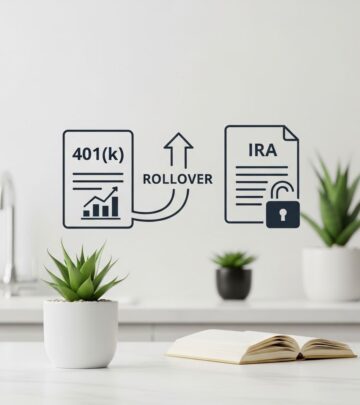
Option 3: Roll Over to an Individual Retirement Account (IRA)
Opening a traditional or Roth IRA and rolling over your 401(k) provides maximum flexibility and control over your retirement savings. This is often considered the most versatile option for many retirees.
Advantages of an IRA Rollover
- Broader investment options: IRAs typically offer thousands of investment choices, from stocks and bonds to mutual funds and exchange-traded funds, allowing you to build a customized portfolio.
- Lower fees: Many IRA providers offer competitive fees and expense ratios, potentially reducing your investment costs significantly.
- Continued contributions: If you have earned income, you can continue contributing to your traditional or Roth IRA, helping you maximize retirement savings.
- Consolidation: You can roll over multiple old 401(k)s and 403(b)s from various employers into a single IRA, simplifying management.
- Roth conversion opportunity: A traditional IRA rollover provides an opportunity to convert to a Roth IRA if your tax situation permits.
Potential Drawbacks
- The Rule of 55 does not apply to IRAs—early withdrawals before age 59½ are subject to a 10% penalty (with limited exceptions)
- IRAs offer less creditor protection than employer plans in some states
- RMDs apply at the same ages as employer plans (age 73 or 75 depending on birth year)
Option 4: Cash Out Your 401(k)
While you can take a lump-sum distribution and cash out your 401(k), financial experts generally advise against this option. Cashing out results in immediate income taxes on the full amount, and if you’re under age 59½, a 10% early withdrawal penalty applies. This approach significantly depletes your retirement savings and is typically the least advantageous choice.
When Leaving Your 401(k) With Your Former Employer Makes Sense
Leaving your 401(k) in place may be the optimal choice under specific circumstances:
- Exceptional investment options: Your former employer’s plan offers superior investment choices or lower-cost institutional funds not easily accessible through other means.
- Lower fees: The plan charges significantly lower fees and expense ratios than alternatives available to you.
- Age 55 or older: You left your job at 55 or later and anticipate needing funds before age 59½, making the Rule of 55 penalty exemption valuable.
- Stable plan: The plan is well-managed, financially stable, and has a strong track record with low turnover in plan administration.
- Simplicity: You prefer not to manage multiple accounts and the consolidation options available to you are unappealing.
Key Factors to Consider When Making Your Decision
Fee Comparison
Compare the expense ratios, administrative fees, and other charges across all available options. Even small differences in fees compound significantly over decades of retirement, affecting your long-term wealth accumulation.
Investment Options
Evaluate whether the investment menu in each option aligns with your asset allocation strategy and risk tolerance. Greater choice often leads to better outcomes, though simpler portfolios may be preferable for some investors.
Withdrawal Flexibility
Consider how easily you can access your money and whether your anticipated withdrawal needs align with each plan’s distribution rules.
Tax Implications
Analyze the tax consequences of each option, including potential RMD obligations, early withdrawal penalties, and conversion opportunities.
Account Management Burden
Assess how much oversight each option requires and whether you’re comfortable monitoring your investments and plan changes.
Important Considerations for Retirees
If you’re retiring and leaving your job, the decision about your 401(k) takes on added urgency. You’ll need to ensure that you have adequate access to funds for living expenses while optimizing tax efficiency. Some retirees benefit from keeping a 401(k) with a former employer to maintain access to the Rule of 55 withdrawal option, while others prefer the flexibility of an IRA. Your decision should integrate with your overall retirement income strategy, including Social Security timing, pension income, and other assets.
Frequently Asked Questions
Q: Can I leave my 401(k) with my former employer indefinitely?
A: Yes, if the plan allows it, you can typically leave your 401(k) with your former employer for as long as you want, though you must comply with RMD rules once you reach the applicable age.
Q: What is the Rule of 55, and how does it apply to my 401(k)?
A: The Rule of 55 permits penalty-free withdrawals from a 401(k) if you separated from your employer at age 55 or older. This rule does not apply to IRAs, making it a significant advantage of keeping your 401(k) in place if you need early access to funds.
Q: Can I roll over my 401(k) to an IRA multiple times?
A: Yes, you can perform multiple rollovers from different employers’ plans to a single IRA, though there are rules governing the frequency of Roth conversion rollovers specifically.
Q: What happens if my former employer discontinues their 401(k) plan?
A: If an employer terminates their plan, participants are typically notified and given options to roll over their funds to another plan or IRA before a deadline.
Q: Should I consolidate multiple old 401(k)s?
A: Consolidating can simplify management and may reduce fees, but compare the features and investment options of each plan before consolidating, as the plan you’re consolidating into may have less favorable terms.
Q: What fees should I watch out for in a 401(k)?
A: Monitor expense ratios on investments, administrative fees, investment advisory fees, and any other charges imposed by the plan. These fees directly reduce your returns and should factor into your decision.
Q: How do Required Minimum Distributions affect my 401(k) strategy?
A: RMDs are mandatory withdrawals that begin at age 73 (or 75 for those born in 1960 or later) based on your account balance and life expectancy. Both 401(k)s and IRAs are subject to RMD rules, but some employer plans allow RMD deferral if you’re still working.
Q: Is a direct rollover better than an indirect rollover?
A: Direct rollovers (trustee-to-trustee transfers) are generally preferable because they avoid the 20% mandatory withholding that applies to indirect rollovers, where you receive the funds directly.
Making Your Final Decision
The choice to leave your 401(k) with your former employer, roll it to a new plan, transfer it to an IRA, or cash it out is deeply personal and should be based on a thorough analysis of your specific circumstances. Consulting with a financial advisor can help you evaluate your options in light of your overall financial plan, tax situation, and retirement goals. By understanding the pros and cons of each option and carefully comparing fees, investment options, and accessibility features, you can make a decision that best positions you for a financially secure retirement.
References
- How to roll over a 401(k): What to do with an old 401(k) — Fidelity Investments. 2025. https://www.fidelity.com/viewpoints/retirement/what-to-do-with-an-old-401k
- What happens to a 401(k) when you quit a job? — Fidelity Investments. 2025. https://www.fidelity.com/learning-center/smart-money/what-happens-to-your-401k-when-you-leave-a-job
- What to Do With Your Old 401(k) — John Hancock. 2024. https://www.johnhancock.com/ideas-insights/what-to-do-with-old-401k.html
- Rollover IRA: What to do with an old 401(k) — Fidelity Investments. 2025. https://www.fidelity.com/retirement-ira/401k-rollover-options
- Old 401K Plans: Best Options for Rollover & Consolidation — Landmark Credit Union. 2024. https://www.landmarkcu.com/invest/investment-articles/old-401k-plans-best-options-for-rollover-consolidation/
- What to do with a former employer’s retirement plan — Voya Investments. 2024. https://www.voya.com/individuals/learn/what-to-do-with-a-former-employer%E2%80%99s-retirement-plan
- 3 times when leaving your 401(k) with a former employer may be smart — MassMutual. 2024. https://blog.massmutual.com/retiring-investing/no-roll-401k
Similar Articles








Read full bio of medha deb