Complete Guide to Leather Seat Repair and Maintenance
Master the art of restoring and maintaining luxury leather car seats
Leather car seats represent a significant investment in vehicle comfort and aesthetics. Unlike standard fabric upholstery, leather requires specialized care to maintain its appearance, texture, and structural integrity. Whether you’re dealing with minor scuffs, persistent stains, or general wear and tear, understanding how to properly repair and maintain your leather seats can save you thousands in costly professional restoration services while keeping your vehicle’s interior looking showroom-fresh for years to come.
Understanding Leather Degradation and Common Issues
Leather deterioration occurs through multiple pathways, each requiring different intervention strategies. Environmental exposure represents one of the primary culprits—ultraviolet radiation breaks down leather fibers, causing discoloration and weakening the material’s structural bonds. Simultaneously, temperature fluctuations cause leather to expand and contract, creating stress that eventually manifests as cracks and splits.
Body chemistry poses another significant threat to leather seat integrity. Sweat contains salts and acids that corrode leather when accumulated over time. Sunscreen, lotion, and other personal care products transfer onto seats during regular use, leaving residue that attracts dirt and promotes deterioration. Additionally, moisture intrusion from spills and humid environments can trigger mold and mildew growth within leather fibers, causing permanent damage and unpleasant odors.
Common leather seat problems include:
- Surface scratches and scuffs from daily wear and sharp objects
- Stubborn stains from food, beverages, and unknown substances
- Cracking and peeling in high-stress areas like armrests and bolsters
- Discoloration from sun exposure and dye transfer from clothing
- Sticky or tacky surfaces from product buildup
- Loss of suppleness and flexibility from dehydration
Pre-Repair Assessment and Preparation
Before attempting any repair work, conduct a thorough inspection of your leather seats. Examine the damage closely under proper lighting to determine whether issues are surface-level or penetrate deeper into the leather structure. Minor scratches that haven’t broken through the protective finish require different treatment than deep gouges exposing raw leather beneath.
Test any cleaning or repair product on a hidden section of leather first—perhaps inside a seam or on the underside of a seat cushion. This precaution prevents accidental damage to visible areas if a product proves incompatible with your specific leather type or finish. Different leather treatments respond differently to various cleaning agents, and compatibility testing eliminates costly mistakes.
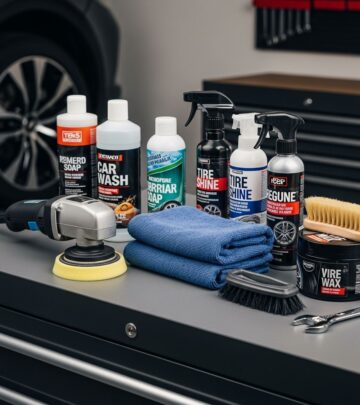
Prepare your vehicle by parking in a well-ventilated area, ideally with shade to prevent premature drying of cleaning products. Gather all necessary supplies before beginning work, including microfiber cloths, appropriate cleaning solutions, conditioning products, and specialized repair tools. Having everything accessible streamlines the repair process and reduces the likelihood of leaving leather partially treated, which can cause uneven results.
Comprehensive Cleaning as the Foundation
Effective leather repair begins with meticulous cleaning. Dirt, dust, and debris accumulate in leather pores and seams, preventing proper treatment absorption and creating a gritty surface that causes additional damage. Start by vacuuming all leather surfaces with the upholstery attachment, paying special attention to seams, piping, and crevices where particles hide.
After vacuuming, spray leather cleaner onto a microfiber cloth rather than directly onto the leather—this prevents over-saturation and allows better control over moisture application. Work the cleaner in small circular motions using a soft-bristled brush for stubborn soiling, then wipe residue away with a clean, damp cloth. Remove all cleaner traces, as residual product creates a sticky surface and interferes with conditioning absorption.
For extremely dirty seats or those with ground-in grime, repeat the cleaning process, working in small sections and ensuring thorough product removal between passes. Never soak leather with excessive moisture, as penetrating water weakens fibers and can cause permanent staining or mold growth.
Addressing Specific Damage Types
Minor Scratches and Surface Scuffs
Light scratches affecting only the protective coating can often be minimized with proper conditioning. Apply a quality leather conditioner, which softens the leather and allows fibers to relax, sometimes making shallow scratches less noticeable. For slightly deeper scratches that haven’t exposed bare leather, specialty leather repair creams containing matching pigments can fill and conceal the damage while providing protective coating.
Deeper Cuts and Gouges
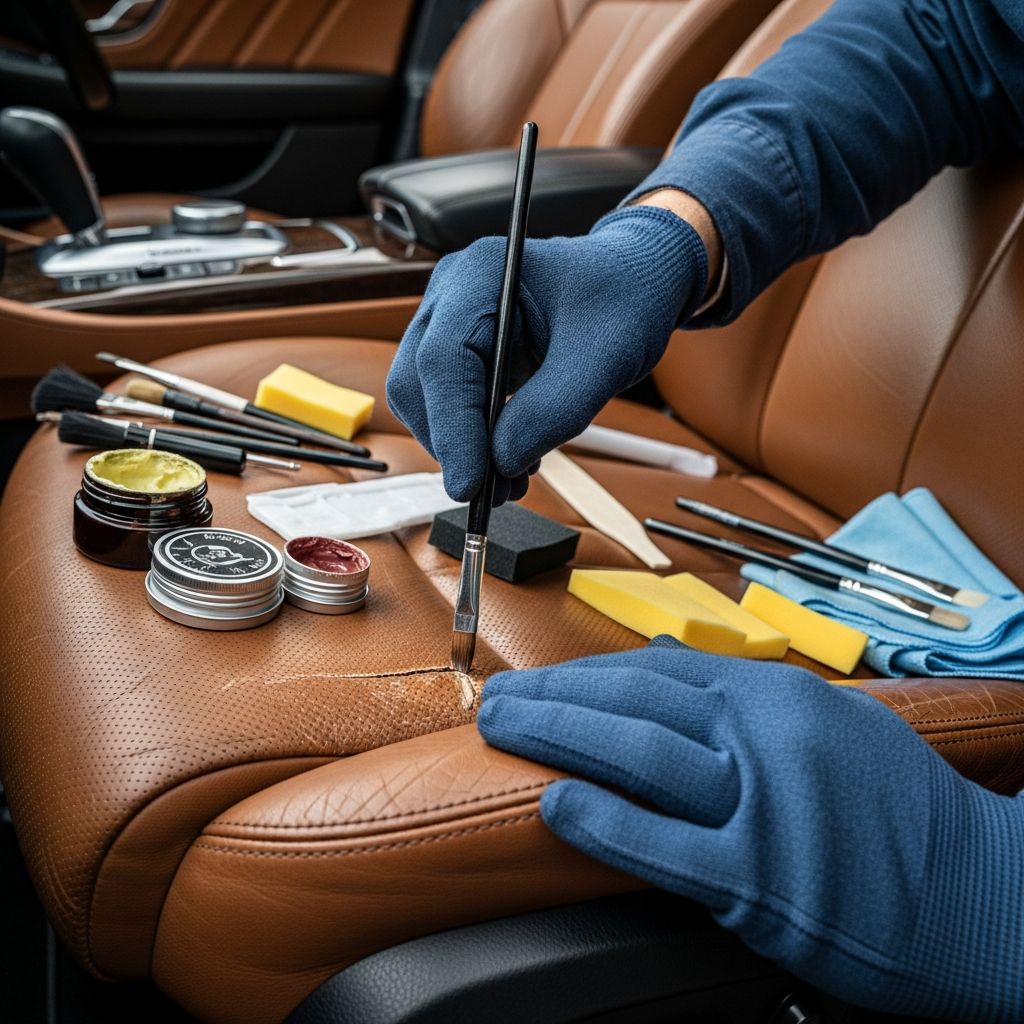
More severe damage requires leather filler products specifically formulated for automotive applications. These compounds fill gouges and splits, creating a stable base for color matching. Apply filler slightly overstuffed, then allow complete curing before sanding smooth with fine-grit sandpaper. Follow with leather repair cream in your seat color to restore appearance.
Stain Removal Strategies
Different stain types require tailored approaches. Food and beverage stains often respond to gentle cleaning with leather-specific cleaners, while dye transfer from clothing may require specialized stain removers. For stubborn marks, create a paste using leather cleaner and let it sit briefly before wiping away. Never use household cleaners, bleach, or harsh chemicals, which damage leather permanently.
Professional-Grade Conditioning Techniques
Conditioning represents the most critical maintenance step for long-term leather preservation. Quality conditioners restore moisture that evaporates through environmental exposure and use, preventing the brittleness and cracking associated with dehydrated leather. Beyond hydration, premium conditioners provide UV protection and create barriers against stains and spills.
Apply conditioner using a microfiber applicator pad in consistent, overlapping patterns—typically crosshatch motions ensure even distribution. Use minimal product quantity; too much conditioner leaves a greasy surface, while insufficient application leaves some areas unprotected. Work the conditioner into leather by gentle massage, allowing it to absorb fully before sitting or using the seats.
Let conditioning products cure completely before exposing seats to use. Most manufacturers recommend 24 hours of curing time to ensure proper bonding and maximum protective benefit. During this period, keep windows open for ventilation and avoid parking in direct sunlight, which can cause uneven drying.
Protective Sealants and Long-Term Safeguarding
After conditioning, applying a leather sealant creates an additional protective layer that repels moisture, prevents color transfer from clothing, and simplifies ongoing maintenance. Sealants work synergistically with conditioners—the conditioning hydrates leather while the sealant protects against future contamination.
Sealants come in spray and cream formulations. Spray applications cover large areas quickly with consistent coverage, while cream sealants allow more precise control in smaller sections. Whichever type you choose, apply thin, even coats rather than heavy single applications. Multiple thin layers provide superior protection compared to oversaturated single applications.
Maintenance Schedule Framework
| Maintenance Task | Recommended Frequency | Purpose |
|---|---|---|
| Light Vacuuming and Dusting | Every 2-4 weeks | Prevent dirt accumulation and grinding damage |
| Detailed Cleaning and Conditioning | Every 2-3 months | Restore moisture and prevent cracking |
| Deep Cleaning with Brushing | Every 6 months | Remove stubborn stains and revitalize texture |
| Protective Sealant Reapplication | Every 12 months | Maintain barrier protection against contaminants |
| Professional Assessment | Annually or as needed | Identify damage requiring specialized repair |
Seasonal Considerations and Environmental Adaptation
Climate and seasonal changes significantly impact leather condition. During summer months when UV exposure intensifies, increase conditioning frequency and prioritize UV-protective products. Summer heat accelerates leather drying and fading, making more frequent preventive maintenance essential.
Winter presents different challenges—cold temperatures make leather stiff and less flexible, while heated cabins create dry conditions that exacerbate cracking. Increase conditioning frequency during winter months and ensure proper ventilation to prevent moisture accumulation inside the vehicle, which encourages mold growth.
In humid climates, moisture management becomes paramount. After cleaning, ensure leather dries completely before closing car doors, and periodically run air conditioning to remove excess humidity from the interior. Conversely, arid climates demand more frequent conditioning to counteract accelerated moisture loss.
Preventive Measures for Daily Use
Beyond scheduled maintenance, daily habits significantly influence leather longevity. Use sunshades when parking to minimize UV exposure and heat buildup, which accelerates degradation. Consider protective seat covers for daily commuting vehicles, reserving leather exposure for less frequent use while preserving appearance for special occasions.
Minimize eating and drinking inside the vehicle, as spills represent major contamination sources. When spills occur, blot immediately rather than rubbing, which drives liquids deeper into leather pores. Keep leather wipes in your vehicle for quick response to fresh spills before they set.
Wear breathable clothing to reduce excessive sweat accumulation on seats, and apply sunscreen before entering the vehicle to prevent product transfer. These simple habits reduce the burden on your maintenance schedule and preserve leather condition more effectively than reactive deep cleaning.
When Professional Repair Becomes Necessary
Some damage exceeds DIY repair capabilities. Large tears, severe burns, or extensive peeling require professional restoration involving leather dyeing, bonding compounds, and specialized equipment. Attempting complex repairs without proper training risks permanent damage and complete loss of functionality.
Professional leather repair specialists employ color-matching technology, professional-grade bonding agents, and techniques developed through years of specialized training. For damage affecting safety, comfort, or structural integrity, professional assessment and repair justify the investment and protect your vehicle’s value.
Frequently Asked Questions
How can I tell if my leather seats are genuine or synthetic?
Genuine leather has natural grain patterns that vary across the seat, while synthetic alternatives display uniform patterns. Genuine leather develops a patina over time, while synthetics remain unchanging. Test inconspicuous areas with water—genuine leather absorbs moisture, while synthetics bead up on the surface.
Can I use household cleaners on leather seats?
No—household cleaners contain harsh chemicals that strip protective coatings and damage leather fibers. Always use products specifically formulated for automotive leather to ensure compatibility and prevent irreversible damage.
What’s the difference between leather conditioner and leather sealant?
Conditioners hydrate leather and restore suppleness by penetrating fibers, while sealants create protective surface barriers that repel contaminants. Both serve essential functions—conditioners address internal leather health while sealants provide external protection.
How long do leather repairs typically last?
Quality repairs completed with appropriate products and techniques can last 3-5 years or longer, depending on damage severity and seat usage. Preventive maintenance extends repair longevity by protecting against further degradation.
Is it worth repairing damaged leather seats, or should I replace them?
For minor to moderate damage, repair is cost-effective and preserves vehicle value. Replacement makes sense only for extensive, unrepairable damage affecting multiple seats or compromising structural integrity.
References
- How to Clean & Protect Leather Car Seats – Work Stuff — Work Stuff. 2025. https://work-stuff.com/how-to-take-care-of-leather-car-seats-a-complete-detailing-guide/
- How to Clean Leather Car Seats Like a Pro — Parks Lincoln. 2025. https://www.parkslincoln.com/blog/2025/april/1/how-to-clean-leather-car-seats-like-a-pro.htm
- How to Clean Leather Car Seats – ULTIMATE 2024 GUIDE — Auto Glanz. 2024. https://auto-glanz.co.uk/blogs/news/how-to-clean-leather-car-seats
- How to Clean and Protect Leather Car Seats — Chemical Guys. 2025. https://www.chemicalguys.com/blogs/interior-how-tos/how-to-clean-and-protect-leather-car-seats
Similar Articles








Read full bio of Sneha Tete