Leasehold Improvements: Guide For Tenants And Landlords
Unlock the essentials of leasehold improvements: definitions, funding options, accounting rules, tax strategies, and key considerations for tenants and landlords.

Leasehold improvements represent a critical aspect of commercial leasing, enabling tenants to customize rented spaces for optimal business operations while navigating complex financial and legal considerations. These modifications enhance property usability without tenants owning the underlying real estate.
Defining Leasehold Improvements and Their Scope
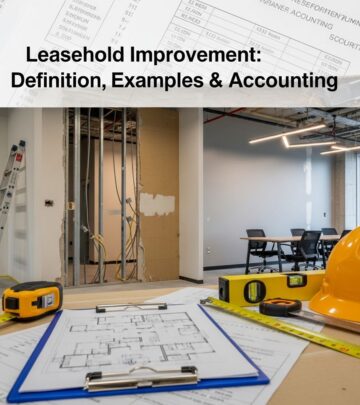
At their core, leasehold improvements involve structural or cosmetic alterations to the interior of a leased building, tailored specifically to meet a tenant’s operational requirements. Examples include installing partition walls, upgrading lighting systems, laying new flooring, or adding specialized fixtures. These changes transform generic spaces into functional environments suited for retail, office, or industrial use.
Not every modification qualifies. Exterior alterations, landscaping on the grounds, or upgrades benefiting multiple tenants—such as shared HVAC systems—fall outside this category. Routine repairs, maintenance of common areas, or replacements that merely restore original conditions also do not count as improvements. Assessors and accountants emphasize that only interior, tenant-specific enhancements secured to the property qualify, distinguishing them from assessable additions or unsecured personal property.
Key Distinctions: Leasehold vs. Building Improvements
| Aspect | Leasehold Improvements | Building Improvements |
|---|---|---|
| Scope | Interior, tenant-specific | Exterior, structural, multi-tenant benefit |
| Ownership | Reverts to landlord at lease end | Typically landlord-owned from start |
| Examples | Partitions, carpeting, lighting | Roof replacement, parking lots |
| Funding | TIA, rent credits, tenant-paid | Landlord capital expenditure |
This table highlights fundamental differences, aiding tenants and landlords in proper classification to avoid disputes or misaccounting.
Financing Leasehold Improvements: Who Bears the Cost?
Determining payment responsibility hinges on lease negotiations. Landlords often fund improvements to attract quality tenants, using structured incentives. Tenants may cover costs for custom needs they cannot remove at lease end, accepting that enhancements become landlord property upon expiration.
Landlords employ several mechanisms:
- Tenant Improvement Allowance (TIA): A fixed sum per square foot provided directly to the tenant, who manages the project. This offers tenants control over design and contractors.
- Build-Out Allowance: Similar to TIA but emphasizes construction scope, often with landlord oversight to ensure quality.
- Rent Discounts or Abatements: Reduced rent for an initial period offsets tenant-funded work, preserving cash flow.
- Turnkey Builds: Landlord handles design, permitting, and construction end-to-end, delivering a ready-to-occupy space based on tenant specs.
In tenant-funded scenarios, businesses weigh upfront costs against long-term benefits like improved productivity. Lease terms should specify removal rights for trade fixtures versus permanent fixtures.
Accounting Treatment Under Modern Standards
Financial reporting for leasehold improvements follows FASB’s ASC 842, treating them as fixed assets if they yield future economic benefits beyond one year. Capitalize direct costs like materials, labor, and engineering fees, subject to materiality thresholds.
Amortization occurs straight-line over the shorter of the asset’s useful life or remaining lease term, unless ownership transfers or purchase options are certain—then use full useful life. Changes in lease terms prompt prospective adjustments as accounting estimate changes per ASC 250.
Impairment testing under ASC 360 applies if indicators like early termination or damage arise. If carrying value exceeds recoverable amount, recognize losses immediately.
Lessees record these as right-of-use assets initially, but tenant-paid improvements are separate balance sheet items amortized independently.
Tax Implications and Depreciation Strategies
For tax purposes, the IRS requires capitalizing leasehold improvements as depreciable assets. Post-TCJA, Qualified Improvement Property (QIP)—interior enhancements to nonresidential buildings—depreciates over 15 years straight-line, unifying treatment with similar assets.
Bonus depreciation allowed 100% immediate expensing for QIP placed in service from 2018-2022, with phase-outs thereafter. Retroactive claims remain possible for prior years. Shorter lives (5-15 years) apply to segregated components like lighting or flooring via cost segregation studies.
- Cost Segregation: Breaks down improvements into personal property (5-7 years) vs. real property (15-39 years), accelerating deductions.
- Qualified vs. Non-Qualified: Ensure improvements post-lease commencement qualify for QIP; pre-existing do not.
State rules vary; California’s assessors monitor tenant additions for property tax rolls.
Practical Strategies for Tenants and Landlords
For Tenants: Negotiate TIAs upfront, document all specs in exhibits, and conduct cost segregation for tax optimization. Plan for amortization alignment with lease renewals.
For Landlords: Use turnkey for control, cap allowances, and require as-built drawings. Improvements boost property value but trigger reassessments.
Common pitfalls include underestimating permitting delays or contractor disputes. Engage architects early and build contingencies into budgets.
Risks and Best Practices in Implementation
Projects can overrun budgets by 20-30% without planning. Risks include impairment from subleasing or bankruptcies, where unamortized costs become losses.
Best practices:
- Secure landlord approval in writing.
- Use licensed contractors compliant with codes.
- Track costs meticulously for capitalization.
- Review insurance for construction coverage.
- Plan exit strategies for removable vs. permanent items.
Frequently Asked Questions
What exactly counts as a leasehold improvement?
Interior modifications like walls, flooring, and fixtures made for tenant use; excludes exteriors, repairs, or multi-tenant upgrades.
How long do you depreciate leasehold improvements for tax?
Typically 15 years for QIP, or shorter via segregation; accounting uses shorter of lease term or useful life.
Who owns leasehold improvements at lease end?
They revert to the landlord unless the lease specifies tenant removal rights for certain items.
Can tenants claim bonus depreciation?
Yes, for eligible QIP owned by the taxpayer and placed in service timely.
Are leasehold improvements amortized or depreciated?
Amortized for accounting (tied to lease), depreciated for tax over recovery periods.
Navigating Lease Renewals and Terminations
Renewals may extend amortization periods prospectively. Terminations trigger impairment tests and potential write-offs. Savvy lessees negotiate renewal options early to protect investments.
In subleases, original lessee retains amortization obligations unless novated.
References
- Accounting for Leasehold Improvements and Lease Incentives Under New Rules — Becker. 2023-10-01. https://www.becker.com/blog/accounting/accounting-for-leasehold-improvements-and-lease-incentives-under-new-rules
- Leasehold Improvements: What They Are and How They Work — Tango Analytics. 2024-01-15. https://tangoanalytics.com/blog/leasehold-improvements/
- Leasehold Improvements Depreciation & Its Tax Benefits — CSSI Services. 2023-05-20. https://cssiservices.com/leasehold-improvements-tax-benefits/
- Leasehold Improvements — California State Board of Equalization. 2022-07-12. https://boe.ca.gov/Assessors/pdf/leasehold_general.pdf
- Leasehold Improvements | Definition + Examples — Wall Street Prep. 2024-03-10. https://www.wallstreetprep.com/knowledge/leasehold-improvements/
- A Guide to Understanding Leasehold Improvements — Hubler. 2023-11-05. https://www.hubler.ai/blog-posts/leasehold-improvements
Similar Articles








Read full bio of Sneha Tete