Leaseback: Definition, How It Works & Benefits
Understanding sale-and-leaseback transactions and their role in modern corporate finance.
What is a Leaseback?
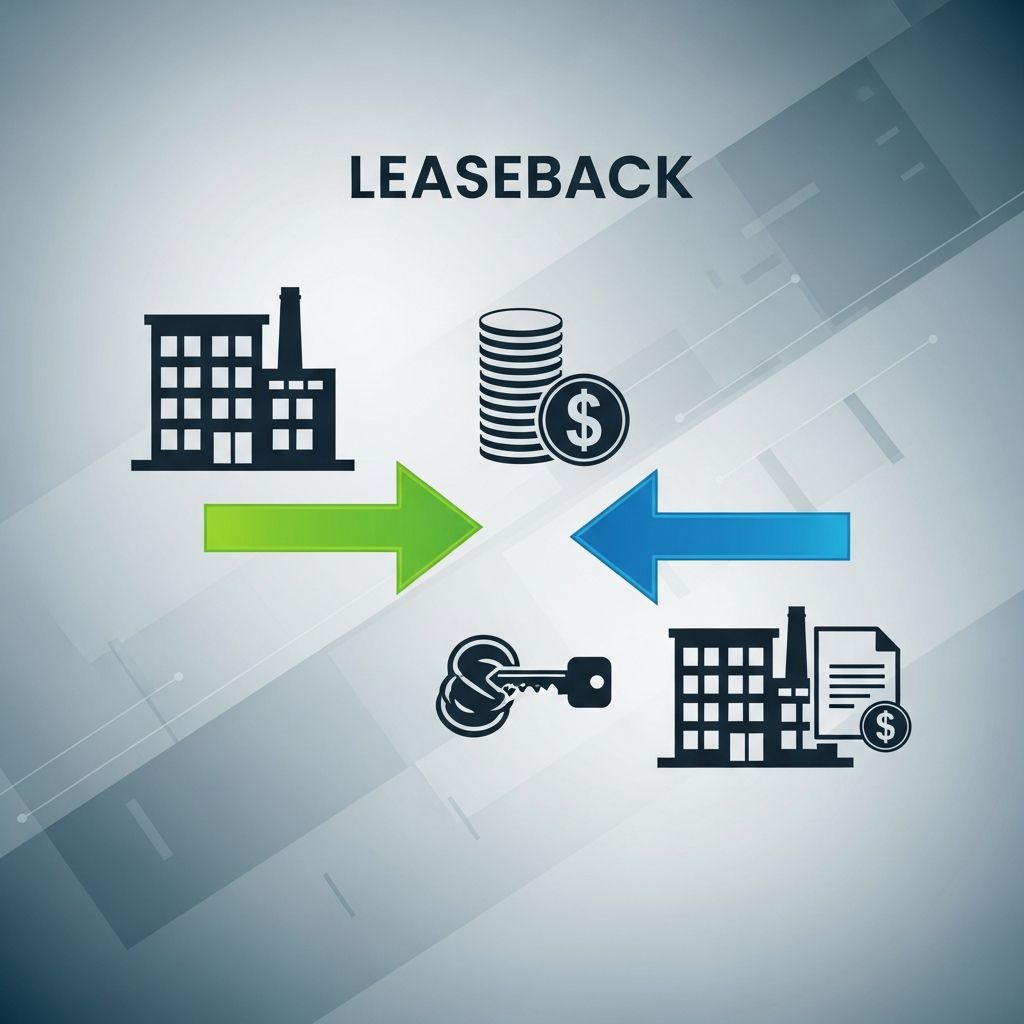
A leaseback, short for “sale-and-leaseback,” is a financial transaction in which one party sells an asset to another party and then immediately leases it back from the new owner. This arrangement allows the original owner to unlock capital tied up in the asset while retaining the right to continue using it. The structure effectively transforms ownership into a long-term lease agreement, with the seller becoming the tenant and the buyer becoming the landlord.
Leasebacks are commonly employed with fixed assets, particularly real estate properties, as well as durable and capital goods such as airplanes, trains, and manufacturing equipment. The transaction is structured so that the lessee continues to operate the property or asset as if they still owned it, but without the burden of ownership. Instead, they make regular rental or lease payments to the new owner in exchange for the right to use the asset throughout the lease term.
How Does a Leaseback Work?
The mechanics of a leaseback transaction involve several key steps that occur simultaneously or in rapid succession. Understanding this process is essential for both parties considering such an arrangement.
The Transaction Process
First, the owner of an asset decides to sell that asset to a willing buyer. The buyer is typically an institutional investor, a real estate investment trust (REIT), or another financial entity seeking a long-term investment with stable returns. The owner and buyer negotiate the terms of both the purchase agreement and the lease agreement before closing.
At the time of closing, two critical agreements are executed: the asset is sold at fair market value, and simultaneously, the original owner enters into a long-term lease agreement to occupy or operate that same asset. The seller receives a lump sum payment for the sale, while the buyer takes on ownership of the property. The economic terms of the lease are typically structured to resemble a secured loan, with lease payments structured to provide the buyer with a fair return on their investment.
Key Economic Principles
The lease payments are calculated based on several factors: the purchase price of the property, the buyer’s financing costs, the lessee’s credit rating, and a market-based rate of return. Each lease payment typically includes an implied financing cost component, making the arrangement economically similar to obtaining a secured loan. The lessee often retains the right to purchase the leased asset back at the end of the lease term, typically at a predetermined price or at fair market value.
Reasons for Entering Leaseback Agreements
Businesses and property owners pursue leaseback arrangements for various strategic and financial reasons. These motivations differ between the seller-lessee and the buyer-lessor.
Benefits for the Seller-Lessee
Accessing capital represents the primary motivation for most sale-and-leaseback transactions. When a company sells a property to an outside investor, it receives 100% of the property’s value in cash. This is significantly more capital than traditional financing methods would provide, as conventional loans are typically limited to a loan-to-value ratio or debt-coverage-ratio, usually ranging from 75% to 85% of the property value.
The capital raised through a leaseback can be deployed for multiple business purposes. Companies use these proceeds to finance expansion of existing operations, purchase new plant and equipment, invest in new business opportunities, or pay down existing debt. By converting a fixed asset into liquid capital, businesses gain flexibility in their financial strategy.
Additionally, leaseback arrangements offer tax advantages for the seller-lessee. When structured properly, the seller-lessee can immediately expense lease payments as legitimate business deductions on annual tax returns. This contrasts with traditional property ownership, where depreciation and amortization deductions occur over many years. Furthermore, sellers can reduce their business income tax liability caused by appreciation in the value of their corporate real estate assets, particularly regarding land value increases.
The arrangement also helps limit risks associated with owning real estate. Property markets experience cyclical variations that can negatively impact asset values. By converting to a leaseback structure, companies transfer real estate market risk to the buyer-lessor while focusing resources on their core business operations.
Benefits for the Buyer-Lessor
From the investor-lessor’s perspective, sale-and-leaseback transactions provide distinct advantages. The investor receives a fair return on their investment in the form of stable, predictable rent payments during the lease term. Since the lessee is typically a company with investment-grade credit, the income stream is relatively secure and reliable.
The buyer-lessor obtains a long-term, fully-leased property with a guaranteed income stream, creating a stable investment vehicle. Many leaseback arrangements are structured as “triple net” or “bondable” leases, where the lessee assumes all operating responsibilities and expenses, allowing the lessor to receive clean, predictable returns without operational burdens.
For income-tax purposes, the investor-lessor can take depreciation deductions on the investment property, allowing for the recovery of the cost of the investment through tax benefits. Additionally, the lessor can invest in real estate with a tenant already familiar with the property, reducing occupancy risk and operational uncertainty. Leasebacks also provide the lessor with more effective remedies in case of tenant default; the lessor can terminate the lease and recover the property significantly faster than a mortgagee would through a traditional foreclosure process.
Sale-Leaseback in Commercial Real Estate
Commercial real estate represents the most common application for sale-and-leaseback arrangements. These transactions typically involve corporations or business entities selling their operating properties to institutional investors or REITs and leasing them back under long-term agreements.
Commercial Applications
In the commercial real estate sector, sale-leaseback transactions enable companies to unlock value from their real estate holdings without disrupting business operations. Master-planned community developers, for example, frequently sell model homes to buyers before the community is fully developed, leasing them back for periods of up to two years. This strategy allows developers to demonstrate the quality and appeal of properties while maintaining operational control.
The terms of commercial leasebacks are carefully structured to reflect market conditions and the specific characteristics of the property. Lease terms and rental rates are based on the new investor-landlord’s financing costs, the lessee’s creditworthiness, and market rates of return on the initial cash investment. The flexibility of commercial leaseback structures allows for customization based on the parties’ specific needs and circumstances.
Triple Net Lease Structure
Many commercial leasebacks are structured as triple net (NNN) leases, where the lessee pays base rent plus three categories of expenses: property taxes, insurance, and maintenance and repairs. This structure passes through ownership responsibilities to the tenant, creating a clean investment for the lessor. The stability of triple net leases makes them particularly attractive to institutional investors seeking predictable, long-term income streams with minimal operational involvement.
Leaseback Versus Traditional Leasing
While leasebacks and traditional leases may appear similar on the surface, important distinctions separate these two arrangements.
In a standard lease, there is no transfer of ownership; the tenant never owned the property prior to the lease. Even in build-to-suit lease arrangements, the landlord retains ownership and constructs the improvements. The tenant’s interest is limited to the right to use and occupy the space under the lease terms, typically at fair market rent rates.
In contrast, a sale-leaseback involves a transfer of ownership followed by the original owner leasing the property back. The tenant previously owned the property, making them intimately familiar with it. Crucially, the rent calculation in a leaseback is based on the purchase price of the property plus interest or a capitalization rate applied to that price, rather than market rent rates. This fundamental difference reflects the financing nature of the transaction.
Special Considerations and Documentation
Leaseback transactions require careful documentation to protect both parties and address potential legal complications. Sale-leaseback agreements typically include provisions whereby the lessee grants a security interest, or lien, in the leased assets to the lessor. This precaution protects the lessor in the event that the arrangement is subsequently recharacterized as a secured loan by courts during a bankruptcy or restructuring proceeding.
Should such recharacterization occur, the lessee would be deemed to have retained ownership of the assets, and the lessor would be treated as a secured lender rather than a property owner. This scenario demonstrates why comprehensive, well-drafted documentation is essential for both parties to protect their interests and clarify the nature of the transaction.
Leaseback Arrangements in Different Contexts
Leaseback arrangements serve different purposes across various industries and property types. Beyond traditional commercial real estate, leasebacks are utilized for specialized assets and in specific market contexts.
In the REIT industry, sale-and-leaseback transactions are particularly common. REITs frequently acquire properties through leaseback arrangements with established, credit-worthy tenants, creating diversified portfolios of income-producing properties. These arrangements align well with REIT investment strategies, which focus on generating stable, long-term returns from real estate assets.
In some jurisdictions and development contexts, leaseback schemes may offer additional tax incentives. For instance, certain new build property programs provide value-added tax refunds to purchasers, effectively reducing the cost of acquiring properties through leaseback arrangements. In these cases, the owner-lessor receives a freehold property, becomes the legal owner, and leases it back to the developer or management company, often enjoying index-linked rental income that increases annually based on construction costs or inflation measures.
Financial Impact and Valuation
The financial metrics associated with leaseback transactions vary based on market conditions, property characteristics, and the creditworthiness of the involved parties. Typical returns for lessors range from 4% to 6% annually, depending on the specific development and property type. These returns often compare favorably to traditional fixed-rate mortgage alternatives, making leasebacks attractive for both operators seeking capital and investors seeking returns.
Leaseback returns are frequently index-linked, meaning rental income increases annually based on construction costs, inflation indices, or other specified measures. This feature provides lessors with inflation protection and growing returns over the lease term, while allowing lessees to anticipate cost increases based on predictable economic factors.
Frequently Asked Questions
Q: What is the main difference between a sale-leaseback and a traditional loan?
A: In a sale-leaseback, the seller receives 100% of the asset’s value in cash and retains operational use through a lease agreement. Traditional loans typically provide only 75-85% loan-to-value financing. Additionally, leaseback payments can be immediately expensed as business deductions, whereas loan interest is deducted over the loan term.
Q: Can a lessee purchase the property back after the lease ends?
A: In many leaseback arrangements, the lessee has the option to repurchase the property at the end of the lease term, typically at a predetermined price or fair market value. However, this depends on the specific terms negotiated in the lease agreement.
Q: Who typically buys properties in a sale-leaseback transaction?
A: Buyers are typically institutional investors, real estate investment trusts (REITs), insurance companies, or other financial entities seeking stable, long-term income streams from credit-worthy tenants.
Q: How are lease payments calculated in a sale-leaseback?
A: Lease payments are calculated based on the purchase price of the property, the buyer’s financing costs, the lessee’s credit rating, and market-based rates of return. The structure ensures the lessor receives a fair return while the lessee’s payments remain economically reasonable.
Q: What happens if the lessee defaults on lease payments?
A: The lessor typically has stronger remedies than a traditional mortgagee, including the ability to terminate the lease and recover the property faster than through a foreclosure process. The specific remedies depend on the lease agreement terms.
Q: Are there tax advantages to leaseback arrangements?
A: Yes, lessees can immediately deduct all lease payments as business expenses, and lessors can claim depreciation deductions on the property. These tax benefits make leasebacks attractive to both parties compared to traditional financing or ownership.
References
- Leaseback — Wikipedia. 2025. https://en.wikipedia.org/wiki/Leaseback
- Sale-Leasebacks: A Tool for the Times — Cleary Gottlieb Steen & Hamilton LLP. 2024-05-21. https://www.clearygottlieb.com/news-and-insights/publication-listing/sale-leasebacks-a-tool-for-the-times
- Sale-Leaseback Offers Compelling Alternative — Kirkland & Ellis LLP. 2002-11. https://www.kirkland.com/publications/article/2002/11/saleleaseback-offers-compelling-alternative
- Sale-Leaseback Transactions Explained — Frost Brown Todd LLC. 2025. https://frostbrowntodd.com/breaking-down-sale-leaseback-transactions/
- Sale-Leaseback Transactions: Solutions to Liquidity and Returns — Appalachian Scholastica. 2025. https://appalachian.scholasticahq.com/article/67904-sale-leaseback-transactions-solutions-to-liquidity-and-returns
Similar Articles








Read full bio of Sneha Tete