Lease vs Rent Agreements: Key Differences Explained
Understand the critical differences between leases and rental agreements for informed housing decisions.
Understanding Lease vs. Rental Agreements
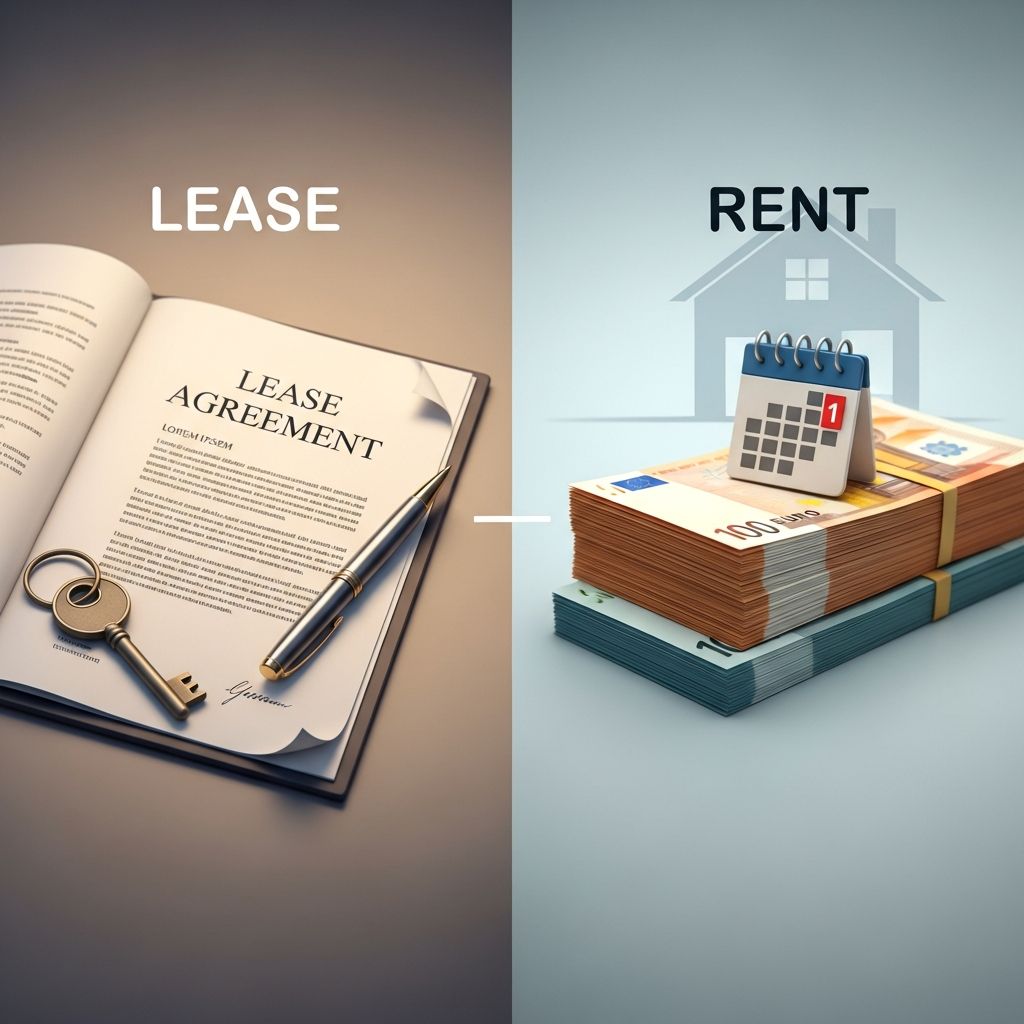
When it comes to housing arrangements, two primary contract types dominate the residential rental market: lease agreements and rental agreements. While these terms are often used interchangeably in casual conversation, they represent distinct contractual arrangements with significant implications for both landlords and tenants. Understanding the fundamental differences between these agreements is essential for making informed decisions about your housing situation, protecting your rights, and ensuring financial stability.
The distinction between leases and rental agreements primarily centers on contract duration, flexibility, renewal terms, and the level of stability each provides. Though they share similarities as legally binding contracts that outline the rights and responsibilities of both parties, their practical applications and consequences differ substantially. Whether you’re a first-time renter, a landlord seeking to rent property, or someone considering a change in housing arrangements, comprehending these differences will empower you to select the agreement type that best aligns with your circumstances and preferences.
What is a Lease Agreement?
A lease agreement represents a formal, long-term contract between a landlord and a tenant that typically extends for a period of six months to one year or longer. The lease is a binding legal document that specifies all terms and conditions governing the rental of a property, including the monthly rent amount, lease duration, security deposit requirements, maintenance responsibilities, pet policies, and other important stipulations.
One of the defining characteristics of a lease agreement is its fixed nature. Once both parties sign the document, the terms become locked in for the entire lease period. The monthly rent amount cannot be increased during the lease term, and neither party can unilaterally change other contract terms without executing a formal lease amendment. This stability extends to both the landlord and the tenant—the landlord cannot evict a tenant arbitrarily, and the tenant cannot leave the property without facing potential legal consequences and financial penalties.
Lease agreements are typically more formal and comprehensive than their rental counterparts. They often include detailed specifications regarding property maintenance, restrictions on subleasing, allowable business activities, pet policies, utility payment responsibilities, and procedures for addressing lease violations. The lease document serves as a comprehensive legal framework protecting both parties’ interests throughout the rental period.
What is a Rental Agreement?
A rental agreement, also commonly referred to as a month-to-month rental agreement, is a shorter-term contract that typically lasts for 30 days and automatically renews each month unless either party provides proper notice of termination. Unlike leases, rental agreements offer significantly greater flexibility for both landlords and tenants, as the terms can be modified at the end of each rental period.
Rental agreements generally contain the same fundamental stipulations as leases, including rent amount, security deposit requirements, tenant and landlord responsibilities, and basic property use rules. However, these terms are considerably more flexible. At the end of each month, either the landlord or tenant can propose modifications to rental rates, lease conditions, or other agreement terms. This flexibility makes rental agreements particularly useful in markets with high tenant turnover, seasonal demand fluctuations, or volatile rental markets.
The month-to-month structure provides both parties with an exit strategy. A landlord can request that a tenant vacate the property by providing appropriate notice—typically 30 days—without violating the agreement. Similarly, a tenant can terminate the arrangement on short notice, making rental agreements ideal for individuals in transitional life circumstances or those uncertain about their long-term housing needs.
Key Differences Between Leases and Rental Agreements
Duration and Contract Length
The most apparent distinction between leases and rental agreements is their duration. Lease agreements typically run for six months to one year, with 12-month leases being the most common. Some landlords offer longer lease terms of 18 months or even multiple years. Conversely, rental agreements usually operate on a month-to-month basis, with terms renewing automatically each month unless one party provides notice of termination.
Flexibility and Terms Modification
Lease agreements offer minimal flexibility once signed. The rent amount is fixed for the entire lease term, and other conditions remain constant unless both parties formally agree to modify them through a lease amendment. This rigid structure provides predictability but limits adaptability. Rental agreements, by contrast, are highly flexible. At each monthly renewal, either party can propose changes to rent, lease conditions, or other terms. This flexibility allows landlords to adjust rental rates in response to market changes and permits tenants to renegotiate terms or terminate arrangements relatively easily.
Renewal and Termination Processes
When a lease term expires, the agreement concludes entirely unless both parties execute a new lease. The landlord is under no obligation to renew the existing lease and may choose to modify terms, increase rent significantly, or decline to renew altogether. This transition point presents both opportunities and risks for tenants who may face substantial rent increases if market conditions have shifted favorably for landlords. For rental agreements, the renewal process is automatic—the agreement simply continues month-to-month unless either party provides proper termination notice, typically 30 days in advance.
Stability and Predictability
Leases provide superior stability and predictability. Tenants benefit from rent amounts locked in for the entire lease period, protecting them from unexpected increases even if market rents surge. This arrangement allows for accurate budgeting and financial planning. Landlords enjoy guaranteed rental income for an extended period and reduced tenant turnover costs. Rental agreements offer less stability, as rent can increase with proper notice and tenants may transition frequently, requiring landlords to repeatedly market properties and process new tenants.
Advantages and Disadvantages of Lease Agreements
Advantages for Landlords
Lease agreements offer landlords several significant advantages. Perhaps most importantly, they provide the stability of guaranteed, long-term income. When a landlord secures a reliable tenant through a lease, they gain confidence in consistent rental income for an extended period. This predictability simplifies financial planning and reduces the operational costs associated with frequent tenant turnover, marketing, and property turnovers. Additionally, formal lease agreements establish clear expectations and consequences, giving landlords documented recourse if tenants violate terms.
Advantages for Tenants
For tenants, lease agreements provide substantial security and protection. Most importantly, leases lock in the rental amount and lease length, preventing landlords from raising rent even if property values or market rents increase significantly. This protection is invaluable in markets experiencing rapid appreciation or high inflation. Leases also provide security against sudden eviction—landlords cannot remove tenants arbitrarily and must follow legal procedures. For individuals seeking stability and the ability to plan their housing budget with certainty, leases offer peace of mind.
Disadvantages of Lease Agreements
Despite their advantages, lease agreements present certain drawbacks. Tenants face limited flexibility and cannot easily exit if circumstances change. Breaking a lease typically involves penalties, potential lawsuits, and damage to credit scores. This rigidity can be problematic for individuals facing job relocations, family changes, or other significant life transitions. For landlords, finding replacement tenants after a lease ends requires time and resources, and they cannot quickly adjust rental rates in rapidly appreciating markets without waiting for lease expiration.
Advantages and Disadvantages of Rental Agreements
Advantages for Landlords
Rental agreements provide landlords with remarkable flexibility and market responsiveness. In rapidly appreciating markets, landlords can increase rental rates monthly as property values rise, ensuring their income remains competitive. Rental agreements also benefit landlords managing properties that might not appeal to long-term renters—furnished units, properties in transitional areas, or seasonal rental locations. Additionally, the shorter commitment allows landlords to quickly exit unsatisfactory tenant situations with proper notice, reducing exposure to problematic occupants.
Advantages for Tenants
Rental agreements are ideal for tenants in transition or those uncertain about their long-term housing needs. The month-to-month structure permits relatively easy exit with proper notice, making these agreements suitable for individuals anticipating job changes, temporary relocations, or those testing a new neighborhood. Tenants maintain flexibility to pursue better opportunities or adjust their housing situation with minimal penalty. This flexibility appeals to young professionals, students, and others whose circumstances may change frequently.
Disadvantages of Rental Agreements
The primary disadvantage of rental agreements is their lack of stability and security. Tenants enjoy no protection against rent increases—landlords can raise rental rates monthly with appropriate notice. This uncertainty complicates budgeting and long-term financial planning. Additionally, tenants face the possibility of eviction with relatively short notice. For individuals seeking housing stability and predictable costs, rental agreements can feel precarious and stressful. The constant potential for change may create housing insecurity that affects overall quality of life and financial planning.
Cost Implications: Upfront and Ongoing Expenses
Understanding the financial dimensions of each agreement type is crucial for making informed decisions. Lease agreements typically involve significantly higher upfront costs. Landlords usually require substantial security deposits—often two to three months’ rent—from lease tenants. This substantial deposit protects the landlord’s interests in a longer-term arrangement and provides security against property damage or lease violations. However, this higher upfront cost can strain tenants’ finances during move-in.
Conversely, rental agreements typically require more modest security deposits, usually equivalent to one month’s rent. This lower upfront requirement makes month-to-month rentals more accessible for individuals with limited savings. However, ongoing monthly costs may be higher with rental agreements. Since landlords can increase rent monthly (with proper notice), tenants in tight rental markets may experience regular increases that eventually exceed lease rates. Over extended periods, this flexibility can result in substantially higher total rental costs for tenants in appreciating markets.
Legal Framework and Enforceability
Both lease and rental agreements are legally binding contracts governed by state and local landlord-tenant laws. There is no fundamental legal distinction between them—both establish binding obligations for landlords and tenants. However, the enforceability mechanisms differ slightly. Lease violations typically carry more severe consequences, as breaking a lease often results in lawsuits, additional fees, and credit score damage. Rental agreement violations are simpler to address, with either party able to terminate with notice.
The formal nature of lease agreements means they should be carefully drafted to include all essential terms and comply with local regulations. Poorly drafted leases may be unenforceable or subject to judicial modification. Rental agreements, while also legally binding, are generally simpler documents. Both should be in writing to prevent disputes and ensure enforceability.
Choosing Between a Lease and a Rental Agreement
Best for Lease Agreements
Tenants should choose lease agreements if they:
– Plan to remain in a location for an extended period- Desire budgeting certainty with locked-in rental rates- Seek strong legal protections against eviction- Prefer stability and predictability in housing costs- Are in areas with rapidly appreciating rent markets where rates are likely to increase
Landlords should choose lease agreements if they:
– Seek stable, predictable rental income- Prefer reduced tenant turnover and associated costs- Have reliable, desirable properties in competitive markets- Want to establish long-term relationships with tenants
Best for Rental Agreements
Tenants should choose rental agreements if they:
– Anticipate changes in their housing needs or employment- Are testing a new neighborhood or city- Require flexibility due to uncertain circumstances- Prefer lower upfront costs- Are in temporary work or transitional life situations
Landlords should choose rental agreements if they:
– Want flexibility to adjust rental rates with market conditions- Own properties that may experience seasonal demand- Prefer shorter tenant commitments- Operate in rapidly appreciating rental markets- Have properties that attract transient populations
State and Local Variations
It’s important to recognize that lease and rental agreement regulations vary significantly across states and municipalities. Some jurisdictions impose strict notice requirements for rent increases in month-to-month agreements, limiting landlords’ ability to raise rates rapidly. Others have rent control ordinances that limit lease renewal increases. Additionally, eviction procedures, security deposit limits, and tenant protections differ substantially by location. Before signing either agreement type, both parties should research local landlord-tenant laws to understand their specific rights and obligations.
Frequently Asked Questions
Q: Can a lease be converted to a month-to-month rental agreement?
A: Yes, when a lease term expires, landlords commonly allow it to convert to a month-to-month rental agreement if both parties agree. This typically occurs automatically unless the lease specifies otherwise. However, the conversion may include different terms than the original lease.
Q: What happens if I break a lease agreement early?
A: Breaking a lease typically involves financial penalties and potential legal consequences. You may be liable for remaining rent through the lease end date, face additional fees specified in the lease, and experience negative credit reporting. Some leases include early termination clauses that specify allowable exit conditions.
Q: Can landlords increase rent during a lease term?
A: No, lease agreements typically prohibit rent increases during the lease term. The rental amount is fixed for the entire lease period. Landlords can only increase rent when the lease renews or expires, unless the lease includes specific provisions allowing increases (such as annual cost-of-living adjustments).
Q: How much notice is required to terminate a rental agreement?
A: Most jurisdictions require 30 days’ notice to terminate a month-to-month rental agreement. However, this varies by state and locality. Some areas require 14 days, while others mandate 60 days. Always check your local laws and your specific rental agreement for the required notice period.
Q: Is a written agreement always necessary?
A: While not always legally required, written agreements significantly benefit both parties by documenting terms, preventing disputes, and establishing clear expectations. Written agreements provide legal protection and evidence of agreed-upon terms, making them highly advisable despite not being mandatory in all jurisdictions.
Q: Can I negotiate lease terms before signing?
A: Yes, lease terms are often negotiable before signing. Landlords may be willing to modify terms regarding pet policies, maintenance responsibilities, lease length, or other provisions. Rental agreements are similarly negotiable, though landlords typically have more flexibility in adjusting terms at renewal.
Conclusion
The choice between a lease and a rental agreement depends on individual circumstances, market conditions, and personal preferences regarding stability and flexibility. Lease agreements offer landlords stable income and tenants rent certainty and eviction protection, making them ideal for long-term stability. Rental agreements provide flexibility for both parties but sacrifice security and predictability. Regardless of which agreement type you choose, ensuring it’s properly drafted, in writing, and compliant with local laws protects both landlords and tenants. By understanding these distinctions and your local legal framework, you can make informed decisions that align with your housing needs and financial situation.
References
- Lease Agreement Vs. Rental Agreement — LegalNature. Accessed November 2025. https://www.legalnature.com/guides/lease-agreement-vs-rental-agreement
- What is the Difference Between Lease vs. Rent? — Legal Templates. Accessed November 2025. https://legaltemplates.net/resources/real-estate/lease-vs-rent/
- Lease vs Rent: Understanding Your Options for Better Decisions — Streamline Management. Accessed November 2025. https://streamlinemanagement.com/blog/lease-vs-rent-understanding-your-options-for-better-decisions
- What Is the Difference Between Leasing and Renting? — Experian. Accessed November 2025. https://www.experian.com/blogs/ask-experian/difference-between-leasing-and-renting/
- Lease versus Rent: A Detailed Comparison of Differences and Similarities — Run Sensible. Accessed November 2025. https://www.runsensible.com/blog/lease-versus-rent-a-detailed-comparison-of-differences-and-similarities/
- What’s the Difference Between Lease and Rent? — Bungalow. 2025. https://bungalow.com/articles/the-subtle-difference-between-leasing-and-renting
Similar Articles








Read full bio of medha deb