Lead Time: Definition, Calculation, and Reduction
Master lead time management: Learn how to calculate, optimize, and reduce delays in your operations.
What Is Lead Time?
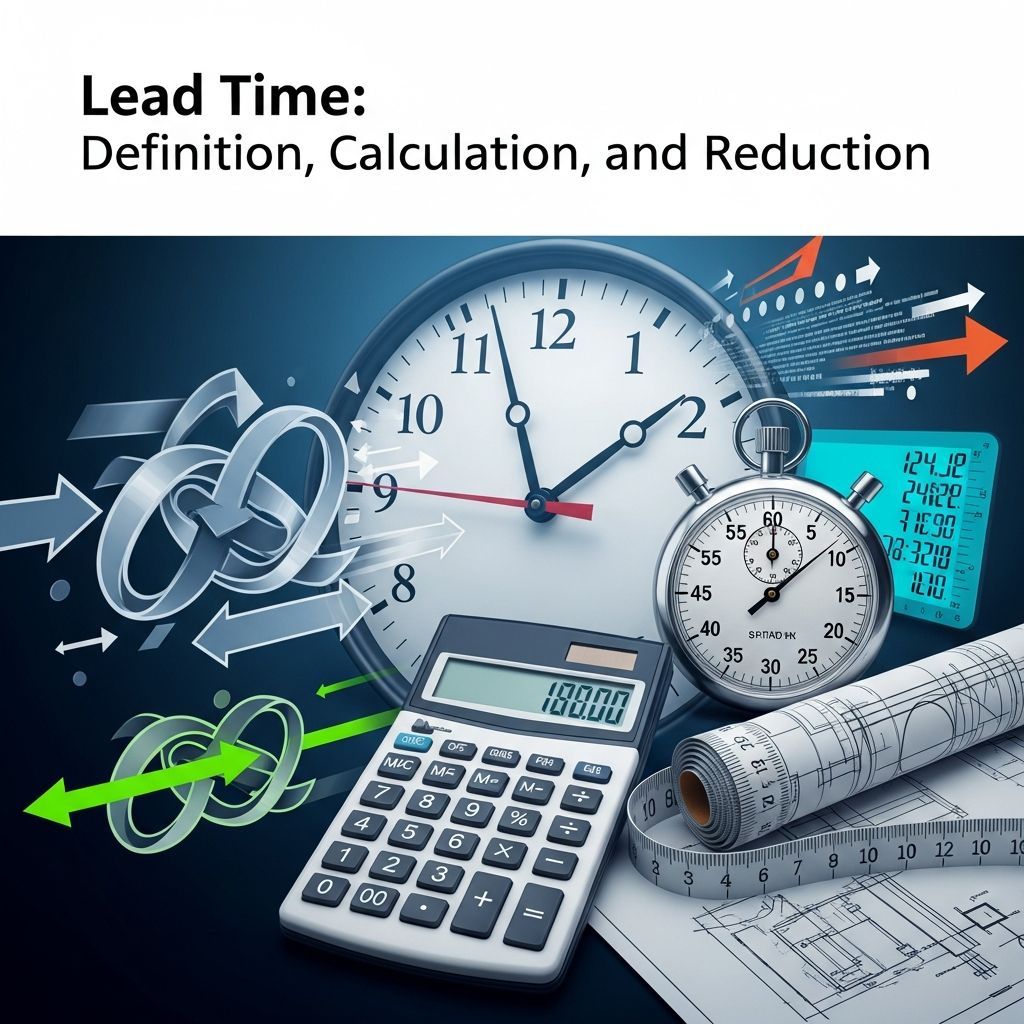
Lead time is the elapsed time that passes from the initiation of a process until its completion. In business and supply chain management, lead time represents a critical metric that measures how long it takes to fulfill an order, complete a production cycle, or deliver a service from the moment a request is made. This measurement applies across various industries and operational contexts, including manufacturing, retail, logistics, and project management.
The concept of lead time is fundamental to business operations because it directly impacts customer satisfaction, inventory management, and overall operational efficiency. Whether you’re running a manufacturing facility, managing a retail operation, or overseeing a software development project, understanding and optimizing lead time can significantly enhance your competitive advantage.
Lead time encompasses all the stages required to transform a customer request into a delivered product or service. This includes everything from procurement and production to quality assurance, packaging, and final delivery. For example, a highly customized product, such as bespoke furniture or artwork, may have an extended lead time due to its unique, customer-centric requirements. In contrast, standardized products, such as office supplies or basic electronics, may have shorter lead times due to established production processes and efficient inventory management systems.
Understanding Lead Time Components
Lead time consists of multiple interconnected components that collectively determine the total duration of a process. Understanding each component helps organizations identify bottlenecks and opportunities for improvement.
Pre-Processing Lead Time
Pre-processing lead time refers to the time spent preparing materials, resources, and plans before actual work begins. This includes activities such as order preparation, setup procedures, and resource allocation. During this phase, organizations gather necessary information, verify order details, and ensure all prerequisites are in place to begin the main production or service delivery phase.
Processing Lead Time
Processing lead time is the actual time actively spent on production, service execution, or task completion. This is when the core work happens—whether it’s manufacturing a product, providing a service, or executing a project. This component typically represents the longest portion of lead time and is where most value-added activities occur.
Post-Processing Lead Time
Post-processing lead time encompasses the time required after work is completed, including quality inspection, packaging, testing, and final approvals. This phase ensures that the finished product or service meets quality standards before delivery. In manufacturing, this might include inspection time and put-away time in inventory.
Shipping and Delivery Time
Shipping and delivery time refers to the duration required to transport the final product to the customer or end user. This component varies significantly based on geographical distance, shipping method selected, and logistics provider efficiency.
How to Calculate Lead Time
Calculating lead time follows a straightforward mathematical approach, though the implementation can become complex depending on your industry and specific operational requirements.
Basic Lead Time Formula
The most common and fundamental lead time calculation uses this simple formula:
Lead Time = Order Delivery Date − Order Request Date
For example, if a customer places an order on January 1st and receives the product on January 15th, the lead time is 14 calendar days. However, this simple calculation often requires adjustment for business days, holidays, and different time zones.
Component-Based Calculation
In more complex operational environments, lead time is calculated by breaking down the process into its individual components:
Lead Time = Pre-Processing Time + Processing Time + Post-Processing Time
For manufacturing contexts, this expands to:
Lead Time for Manufacturing = Procurement Time + Manufacturing Time + Shipping Time
For retail operations, the formula simplifies to:
Lead Time for Retail = Procurement Time + Shipping Time
Inventory Management Calculation
When dealing with inventory replenishment and stock management, lead time incorporates supply delay and reordering delay:
Lead Time = Supply Delay + Reordering Delay
Supply delay represents the time from placing an order with a supplier to receiving the goods. Reordering delay is the time it takes to identify the need for replenishment and prepare the reorder.
Types of Lead Time
Different industries and operational contexts define lead time categories based on their specific needs and workflows.
Customer Lead Time
Customer lead time is the total duration between when a customer places an order and when the product or service is delivered. This includes all internal processing, manufacturing, packaging, and shipping steps up to the point of delivery. Customer lead time directly affects customer satisfaction and is often a key performance indicator in service-level agreements.
Material Lead Time
Material lead time refers to the time it takes to acquire all necessary raw materials from external suppliers. This measurement starts from the moment a purchase order is submitted to a vendor and ends when materials are received and ready for use. Efficient material lead time management requires strong supplier relationships and accurate demand forecasting.
Production Lead Time
Production lead time covers the period required to complete the production process once all materials are available. It begins when manufacturing is scheduled and continues until finished products are ready for shipment. This type of lead time excludes supplier delays and focuses purely on internal manufacturing efficiency.
Cumulative Lead Time
Cumulative lead time represents the total time from material procurement to final delivery, encompassing all other lead time types. This comprehensive measurement assumes no materials are on hand at the start and reflects the entire production and supply cycle, providing the most complete picture of operational efficiency. Understanding cumulative lead time helps organizations identify which components contribute most significantly to overall delays.
Factors Affecting Lead Time
Multiple factors influence how long lead times extend in business operations. Recognizing these factors helps organizations develop targeted improvement strategies.
Inventory Management
Insufficient stock or poor inventory management causes delays while waiting for replenishment. A 2024 Deloitte report shows that the average lead time for production materials was 79 days in April 2024, reflecting an improvement from the peak of 100 days in July 2022, but remaining above pre-pandemic levels of approximately 65 days in 2019. This demonstrates how persistent material availability delays continue to affect production efficiency despite ongoing recovery efforts.
Supplier Relationships
The quality and reliability of supplier relationships directly impact material lead time. Organizations with strong supplier partnerships typically experience more predictable and shorter lead times due to priority ordering, favorable payment terms, and better communication.
Production Complexity
The complexity of manufacturing processes significantly affects lead time. Products requiring specialized equipment, skilled labor, or multiple production stages typically have longer lead times than standardized items with streamlined manufacturing processes.
Quality Standards
Rigorous quality assurance and testing requirements extend post-processing lead time. While necessary for ensuring product quality and regulatory compliance, these measures can contribute substantially to overall lead time duration.
Logistics and Geography
Geographical distance, shipping method selection, and logistics provider capabilities significantly impact delivery lead time. International shipments naturally require longer lead times than domestic deliveries.
Strategies for Reducing Lead Time
Organizations can implement numerous strategies to minimize lead times and improve operational efficiency.
Optimize Supply Chain Management
Streamlining supply chain processes by eliminating unnecessary steps, consolidating suppliers, and implementing just-in-time inventory systems can significantly reduce material lead times. Advanced supply chain visibility tools help identify and address bottlenecks quickly.
Improve Supplier Relationships
Developing strong partnerships with suppliers through collaborative forecasting, long-term contracts, and mutual performance incentives can lead to faster, more reliable material delivery.
Automate Processes
Implementing automation in manufacturing, order processing, and quality inspection phases can substantially reduce processing lead time while improving consistency and accuracy.
Streamline Production Workflows
Analyzing production processes to eliminate waste, reduce queue times, and optimize resource allocation directly decreases production lead time. Lean manufacturing principles and continuous improvement methodologies prove particularly effective.
Enhance Resource Planning
Accurate demand forecasting and strategic resource allocation prevent bottlenecks that extend lead times. Investment in enterprise resource planning (ERP) systems enables better visibility and coordination across operations.
Implement Parallel Processing
Where feasible, executing multiple process steps simultaneously rather than sequentially can substantially reduce total lead time without sacrificing quality.
Lead Time in Different Industries
Manufacturing
In manufacturing, lead time encompasses procurement, production setup, actual manufacturing, quality inspection, and shipping. The complexity of products and availability of raw materials significantly impact manufacturing lead times.
Retail and E-commerce
Retail lead time primarily consists of inventory procurement time and shipping time. E-commerce operations have reduced lead times through warehouse optimization and expedited shipping options.
Software Development
According to project management standards, lead time in software development refers to the time between a customer request and actual delivery of the software solution. Smaller lead times indicate more effective processes and more productive development teams.
Construction and Project Management
Construction and project lead times include design phases, permit acquisition, material procurement, labor scheduling, and execution time. These typically represent the longest lead times across industries due to their inherent complexity.
Frequently Asked Questions
Q: Why is lead time important in business?
A: Lead time is crucial because it directly impacts customer satisfaction, inventory costs, cash flow, and competitive positioning. Accurate lead time tracking enables better planning, resource allocation, and realistic expectation-setting with stakeholders, while also avoiding costly delays.
Q: How does lead time differ from cycle time?
A: Lead time measures the total duration from order placement to delivery, while cycle time measures only the time actively spent on production or service delivery. Lead time includes wait times, while cycle time focuses on value-added activities.
Q: Can lead time be zero?
A: Practically speaking, lead time cannot be zero because some time is always required for order processing, fulfillment, and delivery. However, organizations can minimize lead time through efficient processes and pre-positioning inventory.
Q: How can technology reduce lead time?
A: Technology reduces lead time through automation, improved visibility, better forecasting, streamlined communication, and optimized workflow management. ERP systems, artificial intelligence, and real-time tracking enable significant lead time reductions.
Q: What is an acceptable lead time?
A: Acceptable lead time varies significantly by industry, product complexity, and customer expectations. What matters most is consistency, predictability, and continuous improvement toward shorter timelines.
References
- What Is Lead Time? Definition, Examples, and How to Reduce It — Atlassian. 2025. https://www.atlassian.com/work-management/project-management/lead-time
- Lead Times For Most Products And Order Delivery — Dominion Lighting. 2025. https://dominionlighting.com/what-is-the-lead-time-for-most-of-your-products-from-order-to-delivery/
- Lead Time — Wikipedia. 2025. https://en.wikipedia.org/wiki/Lead_time
- What is Lead Time? (Definition, Examples, and Why it Matters) — Wrike. 2025. https://www.wrike.com/blog/what-is-lead-time/
- Lead Time: Definition, Examples, and Formula — DCL Logistics. 2025. https://dclcorp.com/blog/inventory/lead-time/
Similar Articles








Read full bio of Sneha Tete