Law of Supply: Economics Fundamentals Explained
Understanding how price influences producer willingness to supply goods and services in markets.
Law of Supply: A Fundamental Economic Principle
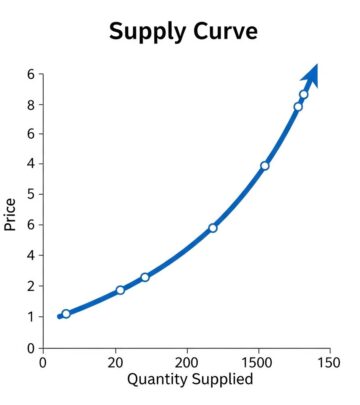
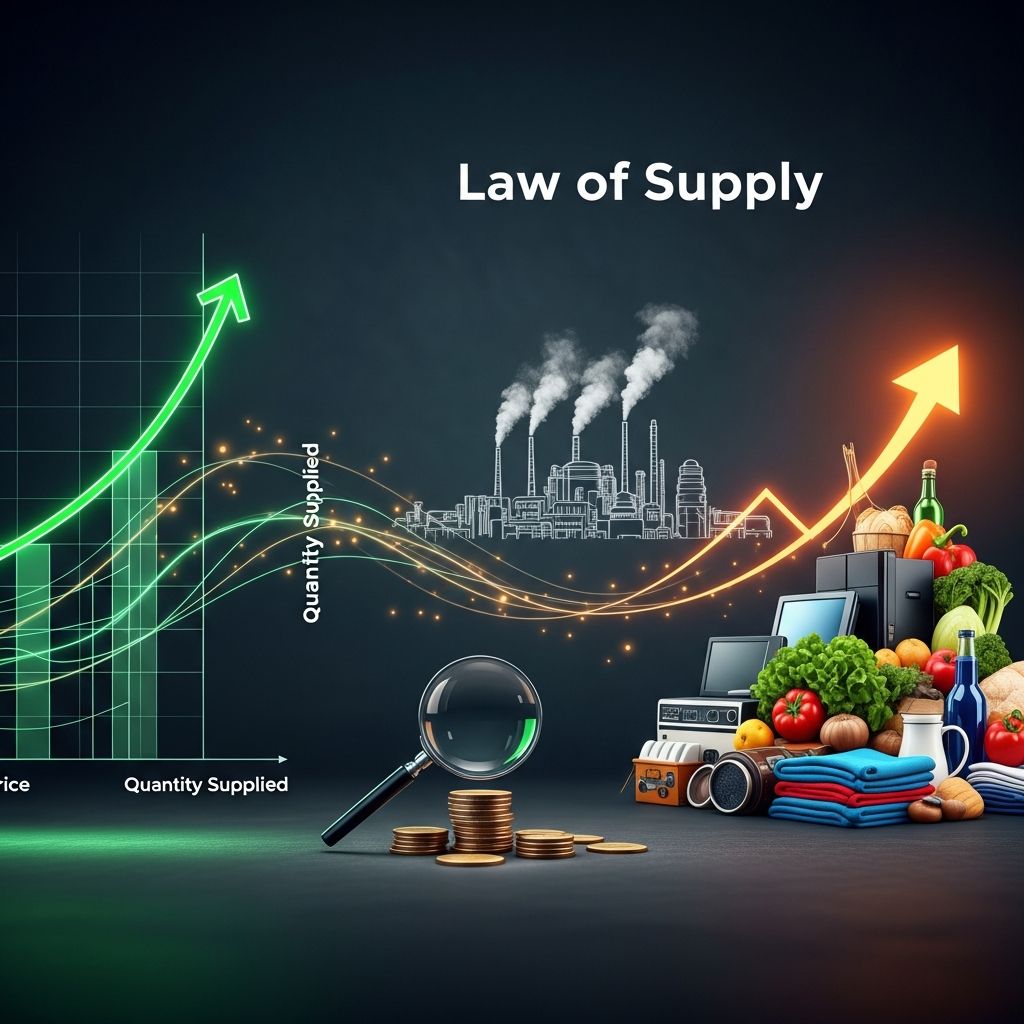
The law of supply is one of the cornerstone concepts in economic theory, representing a fundamental relationship between price and the quantity of goods or services that producers are willing to offer to the market. This principle establishes that, all else being equal, as the price of a product increases, suppliers have greater incentive to produce and sell more of that product. Conversely, when prices decline, producers reduce their output because profit margins diminish. This direct relationship between price and quantity supplied creates the characteristic upward slope of the supply curve that economists use to visualize and analyze market behavior.
Understanding the law of supply is essential for anyone seeking to comprehend how markets function, from individual consumers to policymakers and business leaders. It works in tandem with the law of demand to establish equilibrium prices in markets, ultimately determining which goods are produced, in what quantities, and at what prices they are sold.
Defining the Law of Supply
At its core, the law of supply states that there is a positive relationship between the price of a good and the quantity supplied of that good. When the price of a product rises, manufacturers and producers become motivated to increase production because higher prices translate into greater potential profits per unit sold. This incentive structure encourages suppliers to allocate more resources toward producing that particular good.
The law operates under the assumption that production costs remain relatively stable, and that rational producers seek to maximize profit. If a producer can earn more revenue by selling additional units at higher prices, they will typically make the investments necessary to increase production capacity and output. This response reflects basic economic rationality: producers allocate scarce resources toward the most profitable opportunities.
Conversely, when prices fall, the reverse occurs. As profit margins shrink, producers have less incentive to maintain high production levels. If prices drop below the cost of production, manufacturers may halt production entirely to avoid incurring losses. This self-adjusting mechanism in markets helps ensure that resources are allocated efficiently across the economy.
The Relationship Between Price and Quantity Supplied
The direct relationship between price and quantity supplied forms the basis for the upward-sloping supply curve used in economic analysis. This curve visually represents how suppliers respond to different price levels in the market. Understanding this relationship requires examining why producers respond to price changes in this particular manner.
When prices increase, several factors make higher production levels attractive to suppliers. First, higher revenue per unit allows producers to cover their production costs more comfortably and generate greater profit margins. Second, the opportunity cost of not producing increases—if a competitor captures market share by offering more supply at higher prices, a producer who maintains lower output may lose customers. Third, suppliers may have previously decided against producing at lower prices because the margins were insufficient, but higher prices can make expansion economically viable.
This price-quantity relationship exists across virtually all markets and product categories. Whether examining agricultural products, manufactured goods, services, or labor markets, the fundamental principle remains consistent: suppliers increase quantity offered when prices rise and decrease it when prices fall.
Supply and Demand: Working Together in Markets
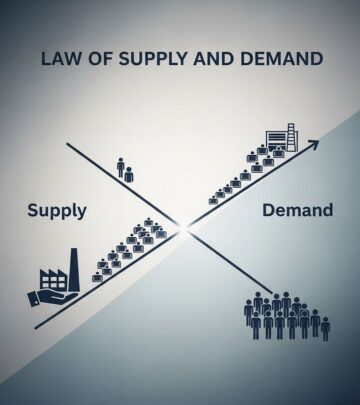
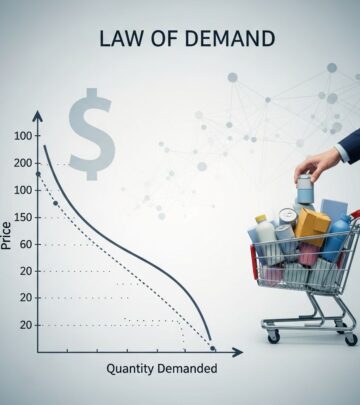
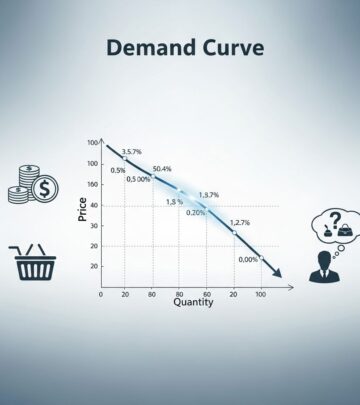
The law of supply cannot be understood in isolation; it operates in conjunction with the law of demand to determine actual market prices and quantities. While the law of supply describes producer behavior, the law of demand describes consumer behavior—specifically, that consumers demand less of a good as its price increases and more as its price decreases.
These two forces interact dynamically. When quantity demanded exceeds quantity supplied, there is a shortage, which puts upward pressure on prices. As prices rise, producers increase quantity supplied while consumers decrease quantity demanded, gradually moving toward equilibrium. Conversely, when quantity supplied exceeds quantity demanded, there is a surplus, which puts downward pressure on prices. As prices fall, producers decrease quantity supplied while consumers increase quantity demanded until equilibrium is restored.
This self-correcting mechanism ensures that markets tend toward balance over time, with the quantity supplied eventually matching the quantity demanded at an equilibrium price.
Non-Price Determinants of Supply
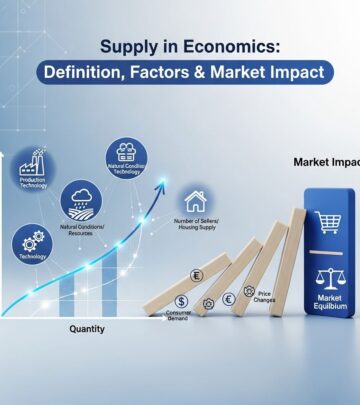
While price is the primary driver of supply decisions, numerous other factors can shift the entire supply curve, changing the quantity supplied at every price level. Understanding these non-price determinants is crucial for predicting how supply may change in response to broader economic and environmental conditions.
Production Costs
Changes in production costs directly affect a producer’s willingness to supply goods. If the cost of labor, raw materials, or other inputs decreases, producers can manufacture more units profitably at existing prices. This shifts the supply curve to the right, increasing supply at every price point. Conversely, rising production costs shift the supply curve to the left, decreasing supply. For example, if wages fall due to economic conditions, manufacturers can produce more goods for the same price, increasing quantity supplied.
Government Policy and Intervention
Government actions significantly influence supply decisions. Subsidies reduce the effective cost of production for suppliers, encouraging increased output by making production more profitable. Taxes and regulations increase production costs, discouraging supply expansion. Trade policies, licensing requirements, and environmental regulations also shape how much suppliers are willing to produce at given price levels.
Number of Suppliers
When more suppliers enter a market, total supply increases. Conversely, when suppliers exit the market, supply contracts. This factor becomes particularly important in analyzing industry dynamics and competitive conditions. New entrants to an industry increase overall market supply, while business closures reduce it.
Technology and Productivity
Technological improvements increase production efficiency, allowing suppliers to produce more with fewer resources. Innovations that enhance productivity effectively reduce production costs, shifting supply curves rightward. Advanced manufacturing techniques, automation, and improved processes all increase the supply of goods at existing price levels.
Environmental Factors
For agricultural and natural resource-based products, weather and environmental conditions significantly affect supply. A favorable growing season increases crop supply, while droughts, floods, or other adverse conditions reduce it. These factors are beyond producer control but substantially impact actual quantities supplied to markets.
Real-World Examples of Supply Dynamics
The Video Game Market
Consider the release of a highly anticipated video game console or popular title. Upon initial release, supply is limited as manufacturers ramp up production. Simultaneously, demand is extremely high from eager consumers willing to pay premium prices. This shortage situation creates upward pressure on prices, and some retailers may charge above manufacturer-suggested prices. However, as weeks and months pass, manufacturers increase production to meet demand. Gradually, supply increases while initial demand softens (as early adopters have already purchased). Producers may lower prices to attract additional customers and clear inventory, illustrating how supply and demand interact to establish market prices.
Labor Markets
The law of supply applies to labor markets as well. A job position paying $20 per hour attracts more qualified applicants than an identical position paying $15 per hour. Workers, like suppliers of goods, respond to price incentives by allocating their labor toward better-paying opportunities. Employers willing to pay higher wages can attract more workers and increase the quantity of labor supplied to their business.
Financial Markets
In lending markets, higher interest rates attract more lenders willing to supply capital while simultaneously deterring borrowers from demanding it. Conversely, lower interest rates discourage lending supply while encouraging borrowing demand. This price mechanism in capital markets ensures that the quantity of funds supplied eventually matches the quantity demanded.
Equilibrium: Where Supply Meets Demand
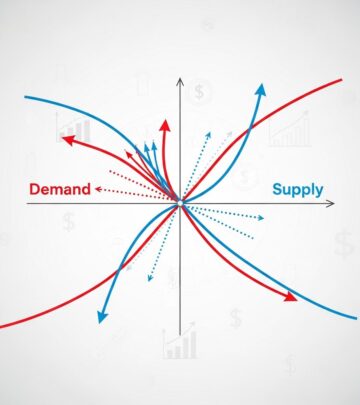
The optimal point of production occurs where the supply curve and demand curve intersect, a point economists call equilibrium. At this point, the quantity supplied exactly equals the quantity demanded at a particular price—the equilibrium price. Markets naturally gravitate toward this point because both surpluses and shortages create pressure to adjust prices.
When operating at equilibrium, markets achieve efficiency in resource allocation. Neither shortage nor surplus exists, prices are stable, and both producers and consumers face no immediate incentive to change their behavior. This equilibrium point represents a natural resting point for markets, though real-world disruptions constantly shift the supply and demand curves, creating disequilibrium that markets then work to resolve.
Limitations and Complexities in Real Markets
While the law of supply provides valuable insight into market behavior, real-world supply decisions involve considerably more complexity than the simple upward-sloping supply curve suggests. Several factors and complications limit the application of this fundamental principle.
First, not all products follow the standard law of supply. Some heterodox economists argue that for mass-produced goods, the supply curve may slope downward in certain ranges—as production increases, unit costs fall due to economies of scale, potentially driving down prices. This creates situations where lower prices might actually accompany higher quantities supplied, contrary to the traditional law.
Second, suppliers face real constraints including limited production capacity, input availability, and capital resources. They cannot instantly increase production in response to price increases; expansion requires time and investment. Supply decisions made today reflect expectations about future prices, creating lag effects and potential oversupply or undersupply situations.
Third, numerous factors beyond pure price considerations influence supply decisions: competitive dynamics, product differentiation strategies, brand loyalty, long-term contracts, and strategic business considerations all play roles. Additionally, broader economic conditions, consumer preferences, technological disruption, and geopolitical events all affect actual supply outcomes in ways not captured by simple price-quantity relationships.
Applying Supply Principles to Business Strategy
Understanding the law of supply provides practical guidance for business strategy and decision-making. Producers must carefully balance the desire to increase production in response to rising prices against the constraints of production capacity, input availability, and working capital. Successfully navigating these decisions requires anticipating future demand, monitoring competitor behavior, and understanding how production costs may evolve.
Businesses also recognize that they cannot simply raise prices indefinitely to maximize production. Market demand constrains how high prices can rise before customers switch to substitutes or reduce consumption. The interplay between supply and demand determines sustainable price and quantity combinations that maximize profit without losing market share to competitors.
Frequently Asked Questions
What is the law of supply in simple terms?
The law of supply states that as the price of a product increases, producers are willing to supply more of that product to the market. Conversely, when prices fall, suppliers reduce the quantity they offer for sale.
How does the law of supply differ from the law of demand?
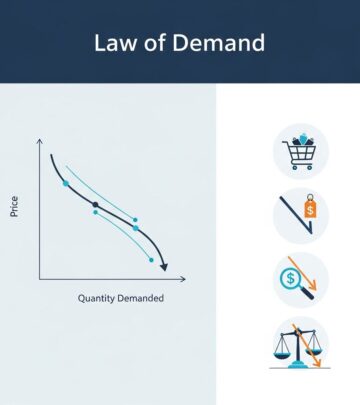
The law of supply describes a direct relationship between price and quantity supplied—higher prices encourage more supply. The law of demand describes an inverse relationship between price and quantity demanded—higher prices discourage more demand. These two forces interact to establish market equilibrium.
Why do producers increase supply when prices rise?
Producers increase supply when prices rise because higher prices generate greater profit margins per unit. This financial incentive encourages producers to allocate more resources toward manufacturing and selling that product.
What factors besides price affect supply?
Non-price factors affecting supply include production costs, the number of suppliers in the market, government policies and subsidies, technological improvements, and environmental conditions. These factors can shift the entire supply curve, changing the quantity supplied at every price level.
What is equilibrium in supply and demand?
Equilibrium occurs where the supply curve and demand curve intersect, meaning the quantity supplied exactly equals the quantity demanded at a specific price. At this equilibrium point, markets operate efficiently with no inherent pressure for prices to change.
Does the law of supply always hold true?
While the law of supply generally holds true for most markets, some exceptions exist. In certain cases involving mass-produced goods and economies of scale, the relationship may become more complex. Additionally, real-world factors like production constraints, market expectations, and strategic considerations can complicate the simple price-supply relationship.
References
- Law of Supply — Wikipedia. Accessed November 2025. https://en.wikipedia.org/wiki/Law_of_supply
- Law of Supply — EBSCO Research Starters Economics. https://www.ebsco.com/research-starters/economics/law-supply
- The Law of Supply: A Study of Supply and Demand — Educational Resource. http://astudyofsupplyanddemand.weebly.com/the-law-of-supply.html
Similar Articles








Read full bio of medha deb