Law of Diminishing Utility: Definition and Examples
Understanding how consumer satisfaction decreases with each additional unit consumed.

The Law of Diminishing Utility is a fundamental principle in economics that describes the relationship between consumption levels and consumer satisfaction. This economic concept is essential for understanding how individuals make purchasing decisions, how businesses price products, and how markets function overall. The law states that as a consumer continues to consume more units of a good or service, the additional satisfaction gained from each successive unit decreases progressively.
Understanding this principle is crucial for economists, business strategists, policymakers, and anyone interested in comprehending consumer behavior and market dynamics. The law of diminishing utility helps explain why consumers are willing to pay less for additional units of a product after their initial consumption, and why demand curves slope downward in economic models.
What Is Diminishing Marginal Utility?
Diminishing marginal utility refers to the decline in the additional satisfaction or benefit that a consumer receives from consuming one additional unit of a good or service. Marginal utility is specifically defined as the change in total utility that results from consuming one additional unit of a commodity. It represents the incremental increase in satisfaction or happiness gained from the consumption of that extra unit.
To illustrate this concept more clearly, consider the relationship between total utility and marginal utility. Total utility is the aggregate satisfaction gained from consuming all units of a good, while marginal utility is the satisfaction gained from consuming just one additional unit. As consumption increases, total utility continues to rise, but at a decreasing rate—this is where the concept of diminishing marginal utility becomes evident.
The mathematical relationship can be expressed as: Marginal Utility (MU) of the nth unit equals Total Utility (TU) at n units minus Total Utility at (n-1) units. This formula demonstrates that marginal utility measures the incremental change in satisfaction level.
Understanding the Core Principle
The fundamental premise of the Law of Diminishing Utility is straightforward yet powerful: the more of something you consume, the less satisfaction you get from each additional unit. This principle applies across virtually all goods and services, though certain thresholds may exist before it takes effect.
Consider a practical everyday example: imagine you are extremely thirsty on a hot day. The first glass of water provides tremendous satisfaction and utility. Your thirst is quenched partially, but the need remains urgent. The second glass of water still provides significant satisfaction, but noticeably less than the first because your initial thirst has been partially satisfied. By the third or fourth glass, your satisfaction level has diminished considerably. Eventually, additional glasses of water may provide no utility at all, and consuming even more might become unpleasant.
This pattern of decreasing satisfaction with each additional unit is not limited to beverages. It applies to food, entertainment, consumer goods, and virtually every commodity in an economy. The principle reveals a fundamental truth about human nature and consumer preferences: satiation is inevitable.
The Buffet Scenario: A Practical Illustration
One of the most intuitive ways to understand diminishing marginal utility is through the classic buffet restaurant example. Imagine John enters a buffet restaurant feeling extremely hungry. He loads his plate with food and begins eating. The first plate of food provides John with exceptional satisfaction because his hunger level is at its peak. The satisfaction gained is directly proportional to the intensity of his hunger.
After finishing the first plate, John returns for a second plate. While this plate still provides satisfaction, the utility gained is noticeably less than the first plate because his hunger has been partially satisfied. His appetite has diminished. The third plate provides even less satisfaction, and by the fourth or fifth plate, John may find that additional food provides minimal or even negative utility—he might feel uncomfortably full.
Each plate of food consumed reduces John’s hunger level, resulting in progressively less satisfaction from subsequent plates. This real-world example perfectly demonstrates how marginal utility declines with increased consumption, making the abstract economic principle tangible and relatable.
Key Assumptions of the Law
The Law of Diminishing Marginal Utility operates under specific conditions and assumptions that economists recognize as foundational to its validity:
Cardinal Measurement of Utility: The law assumes that utility can be measured and quantified numerically. Consumers can express their satisfaction using numerical values, allowing economists to analyze and compare utility levels.
Monetary Measurement: The assumption that utility can be expressed in monetary terms enables economic analysis and comparison across different goods and services.
Reasonable Quantity Consumption: The law applies when commodities are consumed in reasonable quantities. For example, comparing satisfaction from glasses of juice rather than individual drops or sips. The unit of measurement matters significantly in observing this principle.
Continuous Consumption Pattern: The law assumes consumption is a continuous process rather than sporadic consumption separated by long time intervals. For instance, consuming one cup of milk in the morning and another in the evening may yield different utility levels.
Constant Quality: The law assumes that the quality of the commodity remains consistent across all units consumed. If the quality changes between units, the pattern of diminishing utility may not hold as expected.
Constant Marginal Utility of Money: The law assumes that the marginal utility of money remains constant throughout the consumption process, even though technically consumers have less purchasing power after each expenditure.
Real-World Examples
Diminishing marginal utility manifests in numerous everyday situations. Consider a consumer purchasing apples at a farmer’s market. The first apple, when the consumer has none, provides significant satisfaction and utility. The consumer might pay a premium price for that first apple. The second apple adds less utility, so the consumer might accept a lower per-unit price. By the tenth apple, the marginal utility is substantially lower, and the consumer would only purchase additional apples at a significantly reduced price.
Another example involves clothing purchases. A person with no winter coats desperately needs one and will pay a high price for their first coat. A second coat provides additional utility but less than the first. By the fifth or sixth coat, additional coats provide minimal utility—most people would not purchase more coats at any reasonable price point.
Technology devices offer another illustration. A consumer’s first smartphone provides enormous utility and satisfaction. A second device might be useful as a backup. A third device provides minimal additional utility and might never be purchased unless the price drops dramatically. This pattern explains consumer purchasing behavior and pricing strategies across industries.
Mathematical Representation
In economic analysis, the Law of Diminishing Marginal Utility is mathematically represented through utility functions and calculus. Economists assume continuous utility functions under neoclassical microeconomic theory, allowing them to use derivatives to analyze marginal changes.
The utility function is characterized as upward sloping but concave, meaning total utility increases with consumption but at a decreasing rate. The slope of this curve at any point represents the marginal utility at that consumption level. Using calculus, the marginal utility from the xth unit of consumption is the derivative of the total utility function, representing the instantaneous rate of change in satisfaction.
This mathematical framework enables economists to predict consumer behavior, optimize pricing strategies, and understand market equilibrium conditions with greater precision than purely qualitative analysis alone.
Connection to the Law of Demand
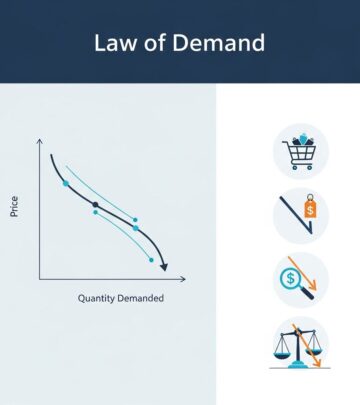
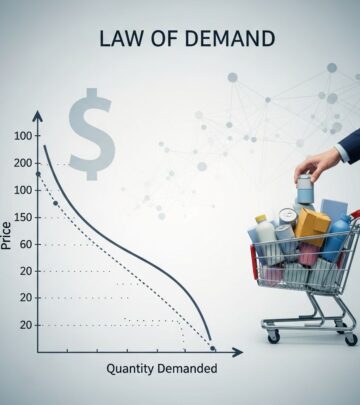
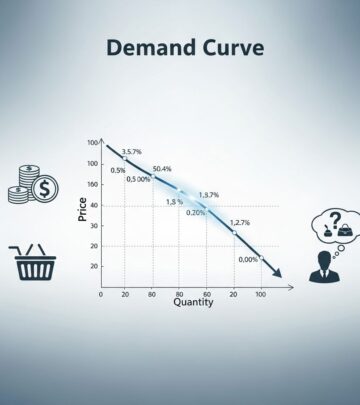
The Law of Diminishing Marginal Utility provides the theoretical foundation for the Law of Demand, one of economics’ most fundamental principles. The downward-sloping demand curve that economists observe across virtually all markets is directly explained by diminishing marginal utility.
As the price of a good decreases, consumers are willing to purchase additional units because the lower price better reflects the diminishing satisfaction from each additional unit. Conversely, as prices increase, consumers reduce quantity demanded because they won’t pay higher prices for units with lower marginal utility. This inverse relationship between price and quantity demanded—the essence of the Law of Demand—emerges directly from the principle of diminishing marginal utility.
Point of Satiety
An important concept related to diminishing marginal utility is the point of satiety, which represents the consumption level at which marginal utility becomes zero. At this point, consuming additional units provides no additional satisfaction whatsoever.
Using the apple example mentioned earlier, suppose a consumer experiences the following marginal utility pattern: consuming the first apple provides 25 units of utility, the second provides 17 units, the third provides 12 units, the fourth provides 8 units, and the fifth apple provides zero utility. The fifth apple represents the point of satiety—the consumer has consumed enough apples that additional apples provide no additional satisfaction.
Beyond the point of satiety, marginal utility becomes negative, meaning additional consumption actually reduces total satisfaction or creates discomfort. If the consumer is forced to eat a sixth apple after reaching satiety, the negative marginal utility reflects the discomfort, waste, or storage problems created by excess consumption.
Business and Pricing Implications
Understanding diminishing marginal utility has profound implications for business strategy and pricing decisions. Retailers and manufacturers recognize that consumers’ willingness to pay decreases with each additional unit purchased. Consequently, businesses employ various strategies to account for this principle:
Bundle Pricing: Companies bundle multiple products together at discounted rates, recognizing that consumers’ marginal utility per item decreases with quantity.
Volume Discounts: Bulk purchase discounts reflect the principle that consumers require lower per-unit prices to justify consuming additional units with lower marginal utility.
Tiered Pricing: Subscription services and utility companies often implement tiered pricing structures where the per-unit price decreases at higher consumption levels.
Product Differentiation: Companies develop product variations to maintain higher marginal utility across different consumer segments, rather than relying on a single standardized product.
Limitations and Exceptions
While the Law of Diminishing Marginal Utility holds true in most circumstances, certain exceptions and limitations deserve recognition. Some goods may initially show increasing marginal utility before declining. For instance, golf clubs provide increasing utility as you accumulate a more complete set, until you reach a point of sufficient variety, after which additional clubs provide diminishing utility.
Certain luxury goods, collectibles, or status symbols might behave differently due to psychological factors and social signaling effects that complicate pure utility analysis. Additionally, preferences, tastes, and circumstances can change, affecting how the principle applies in specific situations.
Frequently Asked Questions
What is the difference between total utility and marginal utility?
Total utility represents the cumulative satisfaction gained from consuming all units of a good, while marginal utility measures the additional satisfaction from consuming one more unit. Total utility typically increases with consumption, but marginal utility decreases as more units are consumed.
How does diminishing marginal utility explain why we don’t buy infinite quantities at any price?
As marginal utility declines with each additional unit, consumers require progressively lower prices to justify additional purchases. Eventually, marginal utility becomes so low or negative that no reasonable price would induce purchase of additional units, creating a natural limit to consumption.
Does the law of diminishing utility apply to all goods and services?
The law generally applies across most goods and services, though exceptions exist. Certain items with strong psychological, social, or collectible value might not follow the principle perfectly, and there may be initial thresholds before the law takes effect.
Why is understanding diminishing marginal utility important for consumers?
Understanding this principle helps consumers make more rational purchasing decisions by recognizing that additional units provide less satisfaction, potentially preventing wasteful spending and promoting more efficient allocation of limited budgets.
How do businesses use the concept of diminishing marginal utility in their operations?
Businesses apply this principle through pricing strategies, discount structures, bundling, and product differentiation. Understanding that consumers’ willingness to pay declines with quantity allows companies to optimize revenue and customer satisfaction simultaneously.
References
- Law of Diminishing Marginal Utility — Corporate Finance Institute. 2025. https://corporatefinanceinstitute.com/resources/economics/law-of-diminishing-marginal-utility/
- Diminishing Marginal Utility — Harper College Economics Department. 2025. http://www2.harpercollege.edu/mhealy/eco212i/lectures/5es/Eco416.html
- Law of Diminishing Marginal Utility (DMU): Meaning, Assumptions, Example — GeeksforGeeks. 2025. https://www.geeksforgeeks.org/microeconomics/law-of-diminishing-marginal-utility-dmu-meaning-assumptions-example/
- Law of Diminishing Marginal Utility — Fiveable AP Microeconomics. 2025. https://fiveable.me/key-terms/ap-micro/law-of-diminishing-marginal-utility
- Law of Diminishing Marginal Utility: Theory of Consumer Behavior — ECOHOLICS Economics Platform. August 23, 2023. https://www.youtube.com/watch?v=1J0Q1Od-9JA
Similar Articles








Read full bio of medha deb