Law of Demand: Understanding Price and Consumer Behavior
Master the fundamental economic principle that drives consumer behavior and market dynamics.

Understanding the Law of Demand
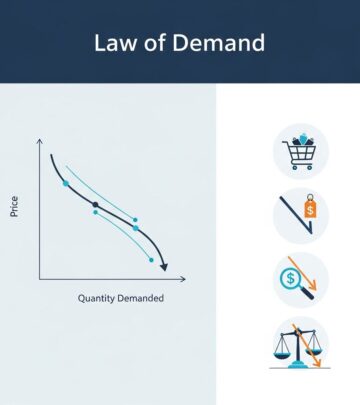
The law of demand is one of the most fundamental principles in economics, serving as a cornerstone for understanding how markets function and how consumers behave. At its core, the law of demand establishes a straightforward yet powerful relationship: as the price of a product or service increases, the quantity demanded by consumers decreases. Conversely, when prices fall, demand typically rises. This inverse relationship between price and quantity demanded is not merely a theoretical construct but rather a practical reality observed across virtually every market, from consumer goods to financial services.
This principle reflects a basic truth about consumer behavior. When consumers face higher prices, they naturally become more selective with their purchasing decisions. They may choose to buy less of that particular item, seek alternative products, or postpone their purchases entirely. On the other hand, when prices decrease, the same product becomes more accessible and attractive, encouraging consumers to increase their purchases. Understanding this relationship is essential for businesses, policymakers, and economists seeking to comprehend how markets operate and respond to changing conditions.
The Core Principle: Price and Quantity Demanded
The law of demand operates on a simple premise: price is the primary factor that determines the quantity of a product consumers are willing to buy. While other variables certainly influence purchasing decisions, the law of demand isolates price as the key driver of quantity demanded. This means that if all other factors remain constant—a condition economists refer to as “ceteris paribus”—a change in price will directly result in a change in the quantity demanded.
To illustrate this concept, consider the smartphone market. When a new flagship phone is released at a premium price point, only consumers with substantial disposable income and high brand loyalty tend to purchase it. The quantity demanded is relatively low at this high price point. However, as the phone model ages and prices drop—either through manufacturer discounts or competitive pressure—a broader segment of consumers becomes willing to purchase it. The quantity demanded increases significantly as the price decreases.
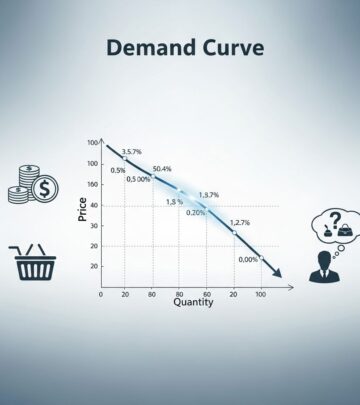
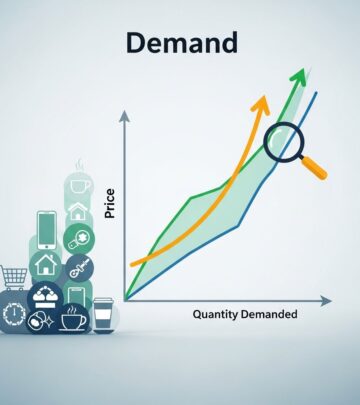
This relationship is so consistent and predictable that economists can create demand curves, which graphically represent the inverse relationship between price and quantity demanded. These curves are fundamental tools in economic analysis and help businesses and policymakers make informed decisions about pricing strategies and market positioning.
How Supply and Demand Interact
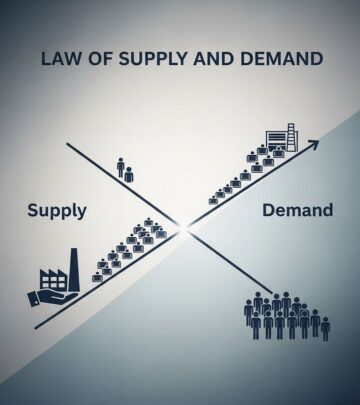
The law of demand cannot be fully understood in isolation; it works in concert with the law of supply to determine market prices and quantities. When the supply of a product increases while demand remains constant, prices typically decrease. This price reduction, following the law of demand, encourages consumers to purchase more of the product. Conversely, if supply decreases while demand stays the same, prices rise, and consumers reduce their purchases in response.
The interaction between supply and demand creates a dynamic equilibrium process. In many markets, prices fluctuate until they reach a point where the quantity supplied equals the quantity demanded. At this equilibrium price, there are no shortages or surpluses—the market clears. Understanding this interplay is crucial for predicting how markets will respond to various shocks, such as changes in production costs, shifts in consumer preferences, or external disruptions.
Market Equilibrium and Price Discovery
Market equilibrium represents a state where supply and demand balance out, resulting in a stable price where neither shortages nor surpluses exist. This equilibrium is not static; it constantly shifts in response to changes in market conditions. When demand exceeds supply at a given price, a shortage occurs, putting upward pressure on prices. Conversely, when supply exceeds demand, a surplus develops, pushing prices downward. Through this price adjustment mechanism, markets naturally gravitate toward equilibrium.
Real-World Application: The Smartphone Launch Cycle
A practical example that clearly demonstrates the law of demand is the typical lifecycle of a new smartphone product. When manufacturers introduce a new flagship model, they often limit initial supply while marketing heavily to create anticipation. During this launch phase, demand is exceptionally high because the product is new, features the latest technology, and may be in short supply. Manufacturers capitalize on this situation by setting premium prices, knowing that early adopters and enthusiastic consumers are willing to pay top dollar for immediate access to the latest innovation.
As months pass and more units enter the market, supply increases to meet demand. The novelty wears off, and the most eager consumers have already made their purchases. According to the law of demand, as supply increases and becomes more abundant, prices must decrease to encourage additional consumer purchases from the broader market. This price reduction opens the product to a new segment of price-sensitive consumers who were unwilling to pay the initial premium but find the lower price point attractive.
Eventually, demand may stabilize or even decline as the product matures in the market and consumers begin anticipating the next generation. At this stage, manufacturers must decide whether to cut production to maintain higher prices or further reduce prices to stimulate additional sales and clear remaining inventory. This cycle continues until the market reaches a new equilibrium, where the manufacturer can sustain profitability while meeting the evolved demand from consumers.
Factors Beyond Price Affecting Demand
While the law of demand emphasizes the relationship between price and quantity demanded, the real world is considerably more complex. Several factors beyond price significantly influence consumer demand and can cause the entire demand curve to shift. Recognizing these factors is essential for accurately predicting market behavior and understanding why the law of demand may appear to break down in certain situations.
Consumer Preferences and Tastes
Consumer preferences represent one of the most powerful forces affecting demand. Even if prices remain constant, a shift in consumer tastes can dramatically alter the quantity demanded. For example, increased health consciousness among consumers has reduced demand for certain foods high in trans fats while increasing demand for organic and plant-based alternatives. These preference shifts occur independently of price changes and represent fundamental changes in what consumers want to buy.
Income and Economic Conditions
The overall health of the economy and individual consumer income levels profoundly influence purchasing behavior. During economic expansions when consumers feel confident about their employment prospects and have rising incomes, they are more willing to spend on discretionary items, increasing demand across many product categories. Conversely, during recessions or periods of economic uncertainty, consumers tighten their budgets, reducing demand even if prices fall. This income effect is particularly pronounced for luxury goods and services.
Availability of Substitutes
The existence of substitute products also affects demand. When multiple options are available at similar price points, consumers have greater flexibility in their purchasing decisions. If one product’s price increases significantly while substitutes remain cheaper, consumers will likely switch to alternatives, reducing demand for the higher-priced item. This consideration is particularly important in competitive markets with many similar offerings.
Market Structure and Competition
The competitive landscape influences how strictly the law of demand applies. In perfectly competitive markets with many sellers, price competition is intense, and the law of demand typically holds strongly. In less competitive markets dominated by few firms, companies may have more pricing power, and demand may be less sensitive to price changes. Additionally, brand loyalty, switching costs, and product differentiation can all modify the relationship between price and quantity demanded.
Producer Perspective: Balancing Demand and Profit
From the producer’s standpoint, the law of demand creates both opportunities and challenges. Producers must balance two competing objectives: maximizing revenue and maintaining profitability. A lower price increases the quantity demanded and total units sold, but it reduces the profit margin per unit. Finding the optimal price point requires understanding the elasticity of demand—how sensitive consumers are to price changes for a particular product.
Producers often use various strategies to navigate this tension. Some invest in product differentiation and brand building to reduce price sensitivity among consumers. Others employ dynamic pricing strategies, adjusting prices based on real-time demand signals. Premium brands may intentionally maintain high prices to preserve brand prestige and profitability, accepting lower sales volume. Meanwhile, discount retailers focus on volume sales with lower margins, relying on the law of demand to drive sales through aggressive pricing.
Limitations and Exceptions to the Law of Demand
While the law of demand is broadly applicable, certain situations exist where it may not hold perfectly or where exceptions occur. Inferior goods—products for which demand increases as prices rise because consumers interpret higher prices as indicators of quality—represent one exception. Additionally, Giffen goods, where demand increases despite price increases due to income effects overwhelming substitution effects, exist in theoretical discussions, though real-world examples remain debated.
Furthermore, in markets characterized by severe information asymmetries, psychological factors, or behavioral anomalies, consumers may not respond to price changes in predictable ways. Luxury goods, status symbols, and products with strong psychological components sometimes exhibit different demand patterns. Additionally, short-term disruptions, such as panic buying during crises, can temporarily override normal demand patterns.
Practical Implications for Business and Policy
Understanding the law of demand has profound practical implications. Businesses use demand analysis to optimize pricing strategies, forecast sales, and plan production levels. Retailers examine demand elasticity to determine whether price promotions will increase total revenue or simply erode margins. Policymakers use demand principles to predict how taxes, subsidies, or price controls will affect market outcomes and consumer welfare.
For effective decision-making, businesses and policymakers must look beyond the simple law of demand and consider the full spectrum of factors influencing consumer behavior. Market research, consumer surveys, and historical data analysis help identify price elasticity and other determinants of demand. This deeper understanding enables more sophisticated strategies that account for the nuanced reality of markets, where price is important but far from the only consideration driving consumer purchasing decisions.
Frequently Asked Questions
Q: What is the primary difference between the law of demand and demand elasticity?
A: The law of demand establishes the directional relationship between price and quantity demanded—as price increases, quantity demanded decreases. Demand elasticity measures the sensitivity or responsiveness of quantity demanded to price changes. Some products have elastic demand (highly responsive to price changes), while others have inelastic demand (less responsive to price changes). Both concepts are related but distinct.
Q: Can the law of demand ever be violated in real markets?
A: While the law of demand holds true in most practical situations, rare exceptions exist. These include certain luxury goods where higher prices signal quality and prestige, and Giffen goods where income effects dominate. Additionally, temporary disruptions like panic buying or irrational exuberance can create short-term exceptions. However, these exceptions are uncommon compared to the broad applicability of the law of demand.
Q: How do businesses use the law of demand in pricing decisions?
A: Businesses analyze demand curves specific to their products to understand how quantity demanded changes at different price points. They calculate demand elasticity to determine whether lowering prices will increase total revenue (elastic demand) or decrease it (inelastic demand). This information guides pricing strategy, promotional decisions, and production planning to maximize profitability.
Q: Why do some products maintain high prices despite lower demand?
A: Producers may maintain higher prices for strategic reasons, including protecting brand prestige, maximizing per-unit profit margins, or signaling quality to consumers. Some markets have relatively inelastic demand, meaning quantity demanded doesn’t decrease substantially with price increases. Additionally, switching costs, brand loyalty, and lack of close substitutes can allow firms to maintain premium pricing.
Q: How does consumer income affect the law of demand?
A: Consumer income influences the overall demand for products but doesn’t violate the law of demand itself. When incomes rise, the entire demand curve shifts outward, meaning consumers demand more at every price point. This shift reflects changing circumstances, not a violation of the law of demand. The law still maintains that at any given demand curve, higher prices lead to lower quantities demanded.
References
- Law of Supply and Demand — EBSCO Research Starters Economics. Accessed November 2025. https://www.ebsco.com/research-starters/economics/law-demand
- Introduction to Supply and Demand — Investopedia. January 30, 2014. https://www.investopedia.com/articles/economics/11/intro-supply-demand.asp
- Supply and Demand: Theory — Roger A. Arnold, Macroeconomics. Cengage Learning, 2011.
Similar Articles








Read full bio of medha deb