Law of Demand: Definition, Explained & Examples
Master the law of demand: inverse price-quantity relationship with real-world examples.
Understanding the Law of Demand
The law of demand is one of the most fundamental principles in economics, forming the foundation of how markets function and how consumers make purchasing decisions. At its core, the law of demand describes an inverse relationship between the price of a good or service and the quantity that consumers are willing to buy. In simpler terms, when prices go up, people tend to buy less; when prices go down, people tend to buy more. This simple yet powerful principle influences everything from grocery store pricing to real estate markets and helps explain consumer behavior across all economic sectors.
What Is the Law of Demand?
The law of demand states that, all else being equal, as the price of a good or service increases, the quantity demanded by consumers decreases. Conversely, as the price decreases, the quantity demanded increases. This inverse relationship holds true across virtually all types of goods and services, though some exceptions exist under specific circumstances.
The law of demand operates under the principle of ceteris paribus, a Latin phrase meaning “all else being equal.” This means that other factors influencing demand—such as consumer income, preferences, availability of substitutes, and expectations about future prices—remain constant while we observe the relationship between price and quantity demanded.
Key Components of the Law of Demand
Understanding the law of demand requires recognizing several important distinctions:
Demand vs. Quantity Demanded: Demand refers to the entire relationship between price and the amount consumers are willing to purchase across all price levels. Quantity demanded, by contrast, refers to the specific amount consumers want to buy at a particular price point. A change in price causes a movement along the demand curve (change in quantity demanded), while changes in other factors shift the entire demand curve (change in demand).
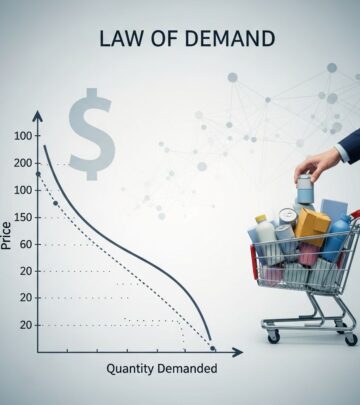
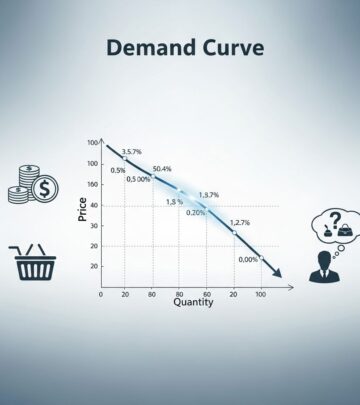
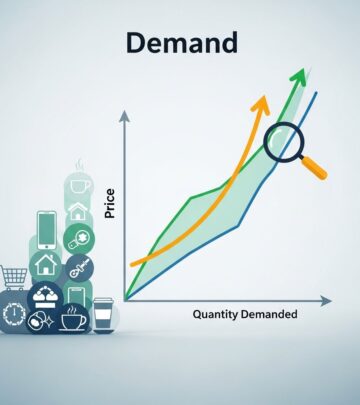
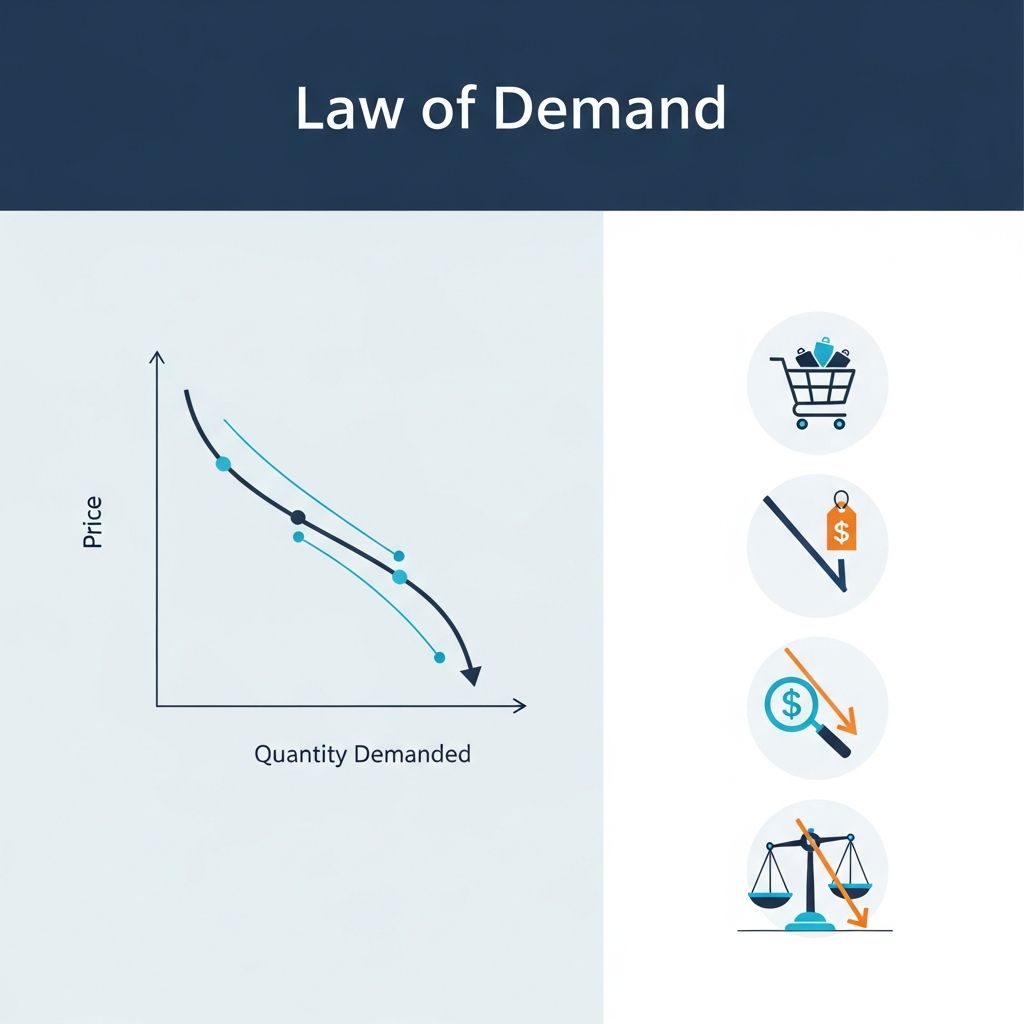
The Demand Curve: Economists represent the law of demand visually through a demand curve—a graph showing the relationship between price and quantity demanded. The demand curve slopes downward from left to right, with price on the vertical axis and quantity demanded on the horizontal axis. This downward slope graphically represents the inverse relationship between price and quantity demanded.
Why the Law of Demand Works
The law of demand operates through several economic mechanisms that explain consumer behavior:
The Income Effect
When prices fall, consumers effectively have more purchasing power with the same amount of money. A dollar can buy more goods when prices drop, allowing consumers to purchase greater quantities. Conversely, rising prices reduce purchasing power, forcing consumers to buy less. This income effect demonstrates how price changes affect what consumers can afford.
The Substitution Effect
When the price of one good increases relative to other similar products, consumers tend to switch their purchases to cheaper alternatives. For example, if the price of beef rises significantly while chicken prices remain stable, consumers may substitute chicken for beef in their meals. The substitution effect shows how consumers respond to relative price changes by shifting their consumption patterns toward more affordable options.
Price Expectations
Consumer expectations about future prices influence current purchasing decisions. If consumers anticipate prices will rise in the future, they may increase their current purchases to avoid paying higher prices later. Conversely, if they expect prices to fall, they might delay purchases. These expectations create temporary shifts in quantity demanded even before actual price changes occur.
Mathematical Representation
Economists express the law of demand mathematically through demand functions. The basic demand function shows how quantity demanded depends on multiple variables:
Quantity Demanded = f(Price, Income, Prices of Related Goods, Consumer Preferences)
This functional relationship indicates that the quantity consumers demand depends not only on the product’s price but also on their income levels, the prices of substitute or complementary goods, and their tastes and preferences. The negative relationship between price and quantity demanded remains the central feature of this function.
Real-World Examples of the Law of Demand
Retail and Consumer Goods
Consider a retail store selling smartphones. When a new model enters the market at a premium price of $1,200, only early adopters and affluent consumers purchase it. As the price drops to $800, more middle-income consumers enter the market. When the price falls to $400, budget-conscious shoppers and those who couldn’t previously afford smartphones now become buyers. This progression illustrates how quantity demanded increases as price decreases.
Food and Beverages
The price of pizza clearly demonstrates the law of demand. When a pizzeria charges $20 per pizza, it serves a limited customer base. When the price drops to $12, existing customers order more frequently, and new customers who couldn’t afford pizza at the higher price now make purchases. The total quantity of pizza demanded increases significantly at the lower price point.
Essential Goods and Necessities
Even for essential items like salt, cooking oil, and medicines, the law of demand generally holds. However, demand for these necessities proves relatively inelastic—meaning quantity demanded doesn’t change dramatically even when prices fluctuate. People continue buying salt at $2 per container even if they previously bought it at $1, because these items are essential for daily living and have no viable substitutes. Yet if prices became prohibitively high, even necessary goods would see reduced quantity demanded.
Airline Tickets and Travel
Airline pricing demonstrates the law of demand through dynamic pricing strategies. When airlines offer promotional fares of $150 for cross-country flights, bookings surge and planes fill quickly. When standard fares reach $400, fewer people book flights, and some delay travel or choose alternative transportation. This inverse relationship between price and ticket sales illustrates the law of demand in the travel industry.
The Law of Demand and Market Equilibrium
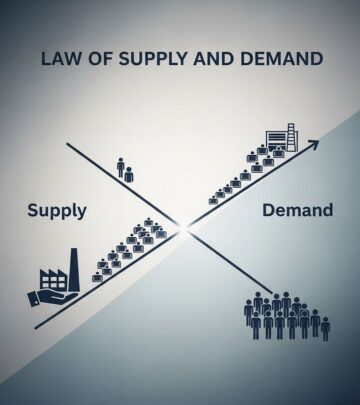
The law of demand works in conjunction with the law of supply to determine market equilibrium—the price at which quantity supplied equals quantity demanded. When a product’s price is too high, quantity demanded falls below quantity supplied, creating excess inventory that pushes prices down. When price is too low, quantity demanded exceeds quantity supplied, creating shortages that drive prices up. Eventually, the market settles at an equilibrium price where supply and demand balance.
This interaction between supply and demand determines the efficient allocation of resources in an economy. The market price signals producers about how much to supply and signals consumers about how much they can afford to buy, creating a self-regulating system that matches production with consumer needs.
Exceptions and Special Cases
While the law of demand applies to nearly all goods and services, certain exceptions exist:
Giffen Goods: These rare items show an upward-sloping demand curve, meaning quantity demanded increases when price rises. Giffen goods are inferior goods where the income effect outweighs the substitution effect, though true examples are difficult to identify in modern economies.
Veblen Goods: Luxury and prestige goods sometimes show higher demand at higher prices because consumers associate high prices with quality and status. Designer handbags or luxury watches might sell better at premium prices than at discounts, though this reflects psychological factors rather than violation of the law of demand.
Addictive Goods: Consumers dependent on certain products might maintain purchasing levels despite price increases, temporarily defying the law of demand. However, even addiction eventually responds to sufficiently large price increases.
Factors That Shift the Demand Curve
Beyond price changes, several factors shift the entire demand curve, indicating changes in demand rather than changes in quantity demanded:
– Consumer income changes- Shifts in consumer preferences and tastes- Changes in prices of related goods (substitutes and complements)- Consumer expectations about future prices and income- Changes in the number of buyers in the market- Advertising and marketing campaigns- Seasonal factors and trends
The Law of Diminishing Marginal Utility
The law of demand connects closely with the principle of diminishing marginal utility, which explains why consumers demand less as prices remain constant and consumption increases. Marginal utility refers to the additional satisfaction a consumer receives from consuming one more unit of a good. As consumers consume more units, the satisfaction derived from each additional unit decreases.
If consumers purchase more pizza slices at a meal, the first slice provides significant satisfaction, the second slice somewhat less, and by the fifth slice, the additional utility becomes minimal. This principle explains why consumers are willing to pay more for the first unit of a good but less for subsequent units. When prices fall, the lower cost aligns better with the diminishing utility consumers receive, encouraging them to purchase additional units.
Practical Applications and Market Insights
Pricing Strategy
Businesses use the law of demand to optimize pricing strategies. By understanding how quantity demanded responds to price changes, companies can set prices that maximize revenue and profit. Penetration pricing (setting low prices to gain market share) and premium pricing (high prices for luxury positioning) both reflect understanding of the law of demand.
Economic Policy
Governments apply the law of demand when implementing taxes and subsidies. Higher taxes on cigarettes and alcohol increase their prices and reduce quantity demanded, achieving public health objectives. Subsidies that lower prices for essential goods increase quantity demanded, improving accessibility.
Market Analysis
Economists and analysts use the law of demand to forecast how markets will respond to various scenarios. Price elasticity of demand—measuring how responsive quantity demanded is to price changes—helps predict revenue impacts of price adjustments.
Frequently Asked Questions
Q: What is the law of demand in simple terms?
A: The law of demand states that when prices go up, people buy less of a product, and when prices go down, people buy more. It’s an inverse relationship between price and the amount consumers purchase.
Q: Why does the demand curve slope downward?
A: The demand curve slopes downward because of the inverse relationship between price and quantity demanded. As price increases (moving up the vertical axis), quantity demanded decreases (moving left on the horizontal axis), creating a downward slope from left to right.
Q: How does the law of demand differ from the law of supply?
A: The law of demand describes consumer behavior (lower prices increase quantity demanded), while the law of supply describes producer behavior (higher prices increase quantity supplied). Together, they determine market equilibrium prices.
Q: Are there products that don’t follow the law of demand?
A: Most products follow the law of demand, but rare exceptions include Giffen goods (where quantity demanded increases with price), Veblen goods (luxury items associated with status), and some addictive substances where consumption is less price-sensitive.
Q: What does ceteris paribus mean in the context of the law of demand?
A: Ceteris paribus means “all else being equal.” When applying the law of demand, we assume that factors other than price (like income, preferences, and availability of substitutes) remain constant while observing the relationship between price and quantity demanded.
Q: How do businesses use the law of demand?
A: Businesses use the law of demand to set optimal prices, forecast sales at different price points, develop pricing strategies, manage inventory, and maximize profits. Understanding price elasticity helps them predict revenue impacts of pricing changes.
Q: What is elastic vs. inelastic demand?
A: Elastic demand means quantity demanded is very responsive to price changes (percentage change in quantity demanded exceeds percentage change in price). Inelastic demand means quantity demanded changes very little despite price changes, as with essential goods like medicines.
References
- Law of demand — Wikipedia. Accessed 2025-11-29. https://en.wikipedia.org/wiki/Law_of-demand
- Law of Demand – Definition, Graph, Uses, Exceptions — Corporate Finance Institute. Accessed 2025-11-29. https://corporatefinanceinstitute.com/resources/economics/law-of-demand/
- Law of demand | Research Starters – EBSCO — EBSCO. Accessed 2025-11-29. https://www.ebsco.com/research-starters/economics/law-demand
- Law of Demand — GeeksforGeeks. Updated 2025-10-28. https://www.geeksforgeeks.org/microeconomics/law-of-demand/
- The Law of Supply and Demand Explained — NetSuite. Accessed 2025-11-29. https://www.netsuite.com/portal/resource/articles/erp/law-of-supply-demand.shtml
- Law of demand (article) — Khan Academy. Accessed 2025-11-29. https://www.khanacademy.org/economics-finance-domain/microeconomics/supply-demand-equilibrium/demand-curve-tutorial/a/law-of-demand
Similar Articles








Read full bio of medha deb