Late vs Missed Payments: Credit Impact Guide
Discover how late payments differ from missed ones, their effects on credit scores, fees, and strategies to protect your financial health effectively.
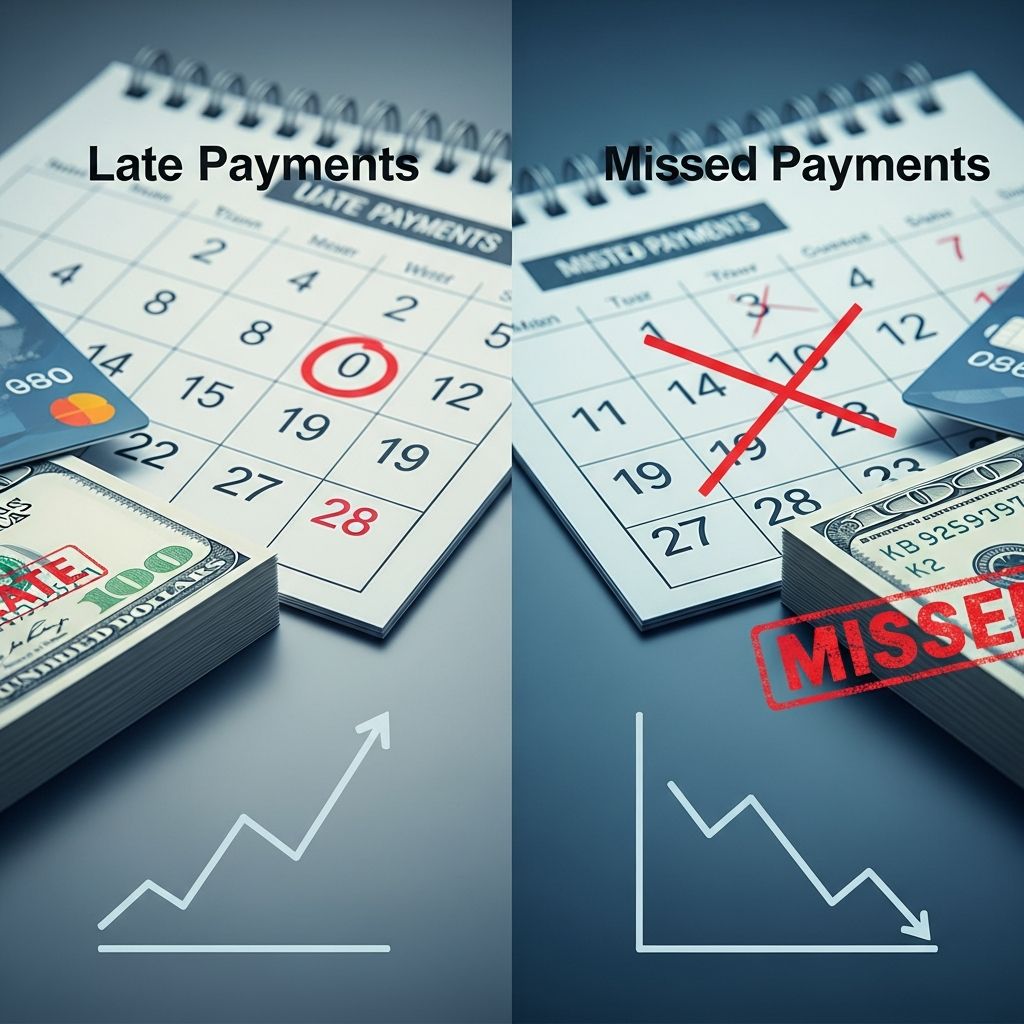
Understanding the distinction between a late payment and a missed payment is essential for maintaining a strong credit profile. A late payment occurs shortly after the due date, often within the billing cycle, while a missed payment extends beyond that period, leading to severe repercussions.
Defining Payment Delinquencies in Credit Terms
Payment delinquencies fall into categories based on timing. Creditors classify payments as late when made after the due date but before a specific threshold, typically under 30 days. This initial delay might trigger fees but rarely affects credit reports immediately. In contrast, a missed payment signifies no payment by the end of the billing cycle, usually 30 days or more past due, prompting formal reporting to credit bureaus.
These definitions stem from standard practices by major bureaus like Equifax, Experian, and TransUnion. Lenders monitor due dates precisely, often until 11:59 PM on the specified day. Grace periods, if offered, provide a buffer of 1 to 15 days before penalties apply, but the payment remains late from day one.
Financial Penalties: Fees and Rate Changes
Late payments commonly incur flat fees ranging from $25 to $50, depending on the creditor and whether it’s a repeat offense. For instance, credit card issuers can charge higher fees for subsequent lates within six months. Penalty APRs may activate, increasing interest on balances significantly.
Missed payments escalate penalties. Beyond fees, accounts face restrictions, higher ongoing rates, or collections. Auto loans might risk repossession after prolonged misses, while credit cards could limit usage.
| Aspect | Late Payment (Under 30 Days) | Missed Payment (30+ Days) |
|---|---|---|
| Typical Fee | $25-$40 | $30-$50 + ongoing charges |
| Interest Impact | Possible penalty APR | Higher sustained APR |
| Account Status | Usually active | Restrictions or closure risk |
Credit Bureau Reporting Timelines
Creditors report delinquencies monthly. Late payments under 30 days past due seldom appear on reports, as bureaus require the 30-day mark for notation. Once reported as 30 days late, it categorizes as a missed payment, visible across Equifax, Experian, and TransUnion files.
Escalation occurs at 60, 90, and 120 days, amplifying damage. These notations persist up to seven years from the original delinquency date, though impact diminishes over time.
- 0-29 days: Fee possible, no report.
- 30-59 days: Reported as first delinquency.
- 60+ days: Severe notations, potential default.
Quantifying Damage to Your Credit Score
Payment history comprises 35% of FICO scores. A single 30-day miss can drop scores by 50-100 points, worse for higher starting scores (e.g., 660-740 range loses up to 90 points). Multiple incidents compound harm, affecting loan approvals, rates, and terms.
Recovery varies: paying promptly halts further decline, but rebuilding takes months of on-time payments. Higher initial scores suffer more proportionally due to algorithms penalizing top-tier profiles harshly.
Long-Term Repercussions on Financial Health
Beyond scores, missed payments invite collections, legal actions, or charge-offs after 180 days. These intensify scrutiny from future lenders, raising borrowing costs. Rental applications, utilities, and employment checks may flag histories too.
Late payments, if habitual, evolve into misses, snowballing debt via compounded interest and fees. Proactive management prevents this cycle.
Grace Periods and Lender Variations
Not all accounts offer grace periods equally. Credit cards might extend 21-25 days post-statement, while mortgages or utilities vary. Always review terms: some forgive first offenses, others penalize immediately.
Missed payments override grace, as no payment occurs. Contacting lenders early can yield extensions, preventing reports.
Prevention Tactics for Timely Payments
- Autopay Setup: Enroll for minimums to avoid misses; adjust for full payments.
- Calendar Alerts: Multiple reminders before due dates.
- Budget Tracking: Prioritize bills in cash flow plans.
- Bank Drafts: Direct debits reduce human error.
Apps from banks or third parties sync due dates, flagging risks early.
Addressing Existing Late or Missed Payments
If late under 30 days, pay immediately to avert reporting. For misses, negotiate goodwill adjustments with creditors, especially first-timers with solid histories. Dispute errors via annualcreditreport.com checks.
Rebuild via secured cards, on-time habits, and low utilization. Scores rebound within 6-12 months typically.
Real-World Examples of Payment Scenarios
Scenario 1: Credit card due 15th, paid 20th. Late fee applies, no credit hit if under 30 days total.
Scenario 2: Auto loan due 1st, unpaid until 35th. Reported as 30 days late, score drops, repo risk rises.
Scenario 3: Utility bill due 10th, paid 45th. Collections begin, credit dinged for seven years.
Frequently Asked Questions
What if I pay late but within grace period?
It’s still late; fees may apply despite grace, but credit avoids impact under 30 days.
Can one missed payment ruin my credit forever?
No, it stays seven years but fades; consistent good behavior recovers it.
Do all lenders report after 30 days?
Most do to bureaus, per FCRA guidelines.
How to remove a late payment notation?
Request goodwill deletion or dispute inaccuracies; accurate ones stay.
What’s worse for scores: late or high utilization?
Missed payments hurt more acutely than utilization.
Building Resilience Against Payment Pitfalls
Financial stability demands vigilance. Emergency funds covering 3-6 months expenses buffer surprises. Debt consolidation or refinancing high-rate debts eases outflows. Regular credit monitoring via free weekly reports spots issues early.
In summary, distinguishing late from missed payments empowers better decisions. Act swiftly on lates, communicate on misses, and automate where possible to safeguard scores.
References
- Late vs Missed Payment: What’s the Real Credit Score Impact? — The Credit People. 2023. https://www.thecreditpeople.com/credit/late-payment-vs-missed-payment-what-is-the-real-difference
- How Does a Late Payment Affect Your Credit? — NerdWallet. 2024-01-15. https://www.nerdwallet.com/finance/learn/late-bill-payment-reported
- Financial Tip Friday – Missed vs Late Payments — Thrive Credit Union. 2023-05-12. https://www.thrivecu.org/thinkthrive-blog/financial-tip-friday-missed-vs-late-payments
- Pay Late or Miss a Payment? — Premier Community Bank. 2024. https://www.premiercommunity.com/pay-late-or-miss-a-payment.html
- Missed a payment? Let’s talk! — Exeter Finance. 2023. https://www.exeterfinance.com/resources/missed-a-payment-lets-talk
- Late Credit Card Payments: What to Know — Capital One. 2024-02-01. https://www.capitalone.com/learn-grow/money-management/late-credit-card-payments/
Similar Articles








Read full bio of medha deb