Duration of Late Mortgage Payment Credit Impact
Discover how long a single late mortgage payment lingers on your credit report and practical steps to minimize long-term financial damage.
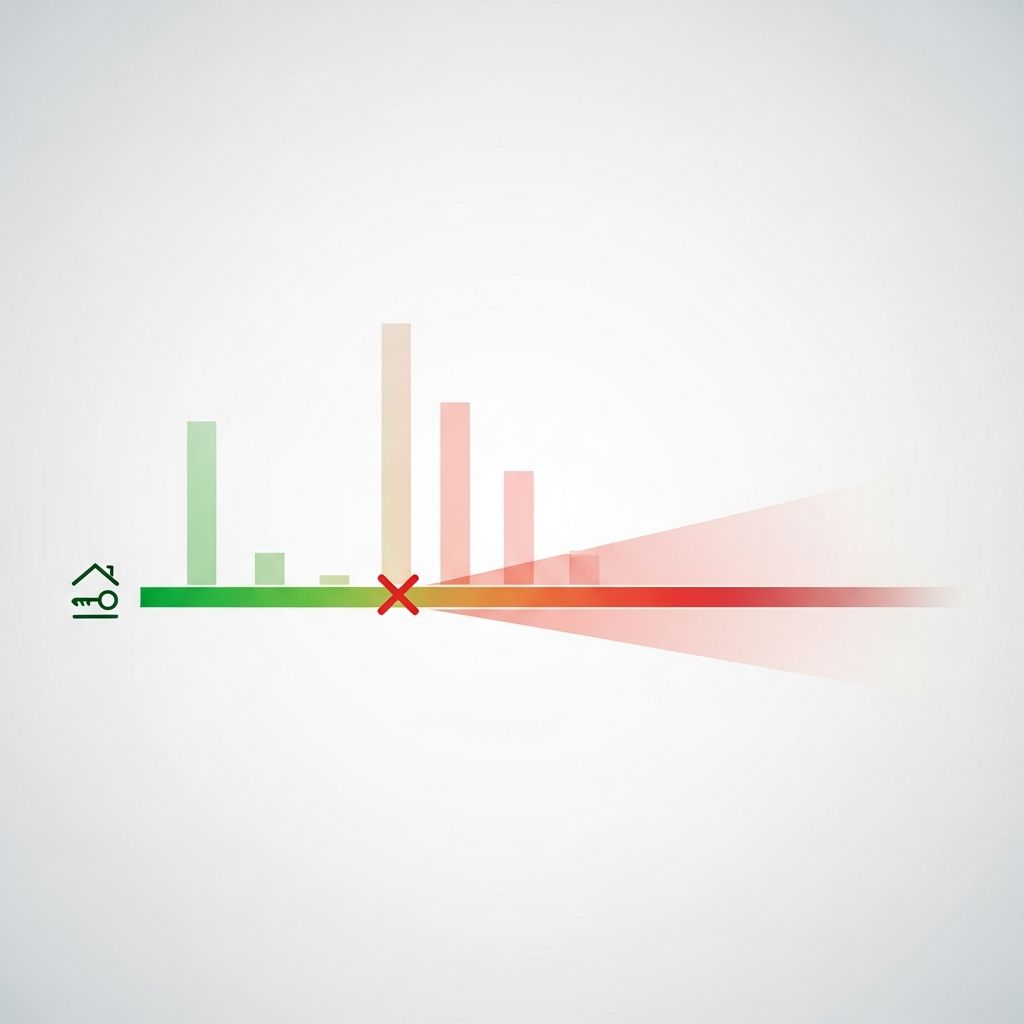
A single late mortgage payment reported to credit bureaus remains visible on your credit reports for up to seven years from the date of delinquency, continuously influencing your credit score during that period. This mark begins affecting your score once it hits 30 days past due, with potential drops of 50-100 points or more depending on your prior credit profile.
Understanding Credit Reporting Timelines for Delinquent Mortgage Payments
Mortgage servicers typically do not report payments as late to the major credit bureaus—Equifax, Experian, and TransUnion—until they reach 30 days past the due date. Even if your loan agreement includes a grace period, often 15 days, crossing the 30-day threshold triggers the report, which appears on your credit file within one to two months.
Prior to 30 days, you may incur late fees from your lender as early as one day past due, but no credit score damage occurs if payment is made before the reporting cutoff. Payments are categorized in 30-day increments: 30, 60, 90 days late, each escalating the negative impact on your score and prompting lender actions like collection calls or fees.
- 0-29 days late: No credit report entry; only internal lender penalties.
- 30-59 days late: First report to bureaus; score drop of 50+ points average.
- 60-89 days late: Increased severity; further score decline and lender warnings.
- 90+ days late: High risk of default proceedings; profound score damage.
After 120 days of delinquency, lenders may start foreclosure processes, adding a separate severe negative item to your credit history.
Quantifying the Credit Score Damage from Mortgage Delinquencies
The extent of score reduction varies by factors like your starting credit score, length of credit history, and delinquency duration. Those with excellent credit (above 760) suffer the largest relative drops—a single 30-day late can subtract 90-110 points—while poorer profiles see smaller absolute declines but face compounded issues.
| Delinquency Level | Average FICO Score Drop | Additional Consequences |
|---|---|---|
| 30 days | 50-100 points | Late fees, bureau reporting |
| 60 days | 100+ points | Escalated collections |
| 90 days | 150+ points | Default risk, higher rates |
| Foreclosure | 200-300 points | 7-year mark, home loss |
Multiple consecutive lates amplify damage exponentially, as payment history comprises 35% of FICO scores. A history of on-time payments elsewhere can mitigate but not eliminate the hit.
The Seven-Year Clock: When Does the Negative Mark Expire?
Under the Fair Credit Reporting Act (FCRA), derogatory items like late mortgage payments must be removed after seven years from the original delinquency date—the first day the account became 30 days past due. Repayment does not erase or shorten this period; the record persists regardless.
While present, the item’s weight diminishes over time if you maintain perfect payment behavior afterward. Recent lates (within 2 years) carry heaviest lender scrutiny, but after 3-5 years with flawless history, impacts on approvals lessen. No action is needed for automatic removal at year seven.
Rebuilding Credit After a Mortgage Payment Miss
Score recovery initiates immediately upon resuming on-time payments, though full rebound may take 6-24 months based on overall profile. Key influencers include total accounts, utilization, and new positive history.
Proven Recovery Tactics:
- Enroll in autopay to ensure timely future payments.
- Monitor all three credit reports weekly via AnnualCreditReport.com for errors; dispute inaccuracies promptly.
- Lower credit utilization below 30% on revolving accounts.
- Add positive tradelines like secured cards if needed.
- Request goodwill adjustments from your servicer, though success is rare for mortgages.
Average recovery: 50-point gain within 6 months of consistent on-time payments post-delinquency. Avoid new hard inquiries during rebuild.
Implications for Future Borrowing and Mortgage Qualification
Recent late mortgage payments signal high risk to underwriters, often resulting in denials or subprime rates adding 1-2% to mortgage APRs—equating to $30,000+ extra over 30 years. Conventional loans demand 12+ months of flawless payments post-late; FHA/VA may approve sooner with explanations.
Even aged lates (3+ years old) can elevate rates by 0.5%. Renters or auto lenders similarly penalize, though less severely than mortgage providers.
Preventing Future Late Payments on Your Mortgage
Proactive measures safeguard your score:
- Autopay Setup: Most servicers offer free autopay from checking/savings, debiting on due date.
- Calendar Alerts: Set reminders 5-10 days early.
- Budget Buffers: Maintain 1-2 months’ payments in reserve.
- Forbearance Options: Contact servicer early for hardship plans before 30 days.
- Refinance Check: If rates drop, consider but ensure perfect history first.
Timely payments build the strongest score component—prioritize them.
Frequently Asked Questions About Late Mortgage Payments
Can a late payment be removed before seven years?
Rarely, via successful disputes for errors or rare goodwill letters, but not standard for verified lates.
Does paying off the late balance erase it from reports?
No, the delinquency notation remains for seven years post-first miss.
How soon after a late can I apply for another mortgage?
12-24 months of perfect payments typically required for best odds.
Will one late ruin my credit forever?
No, impacts fade with time and positive habits; full recovery possible.
Do all bureaus show the late identically?
Usually, but check all three as reporting varies slightly.
Long-Term Financial Planning Post-Delinquency
Beyond scores, late mortgages strain budgets via fees (often $50+ per instance) and stress lender relationships. Use this as a pivot to holistic finance: track expenses via apps, build emergency funds covering 6 months’ housing, and diversify income. Long-term, consistent perfection outshines one slip—lenders value recent history most.
Consult HUD-approved counselors for personalized rebuild plans if multiple issues exist. Persistence yields results; many rebound stronger.
References
- How Long Does a Late Mortgage Payment Stay on Your Credit Report — The Credit People. 2023. https://www.thecreditpeople.com/credit/how-long-does-a-late-mortgage-payment-stay-on-your-credit-report
- How Long Does a Late Mortgage Payment Affect Your Credit? — Experian. 2024-01-15. https://www.experian.com/blogs/ask-experian/how-long-does-a-late-mortgage-payment-affect-your-credit/
- The Impact of a Late Mortgage Payment — Sammamish Mortgage. 2023-06-10. https://www.sammamishmortgage.com/impact-of-a-late-mortgage-payment/
- What You Need To Know About Late Mortgage Payments — LendingTree. 2024. https://www.lendingtree.com/home/mortgage/late-mortgage-payment/
- The Impact of Mortgage Payment History on Credit Score — HAR.com. 2023. https://www.har.com/ri/3343/the-impact-of-mortgage-payment-history-on-credit-score
- Can You Remove Late Payments from Your Credit Reports? — Equifax. 2024-03-20. https://www.equifax.com/personal/education/credit/report/articles/-/learn/remove-late-payments-credit-report/
- How mortgage payments impact your credit score — Milliman. 2022-11-01. https://www.milliman.com/en/insight/how-mortgage-payments-impact-your-credit-score
Similar Articles








Read full bio of medha deb