Large Check Deposits: Processing and Holds
Discover the step-by-step process banks follow for large check deposits, including federal hold rules and tips to access funds faster.
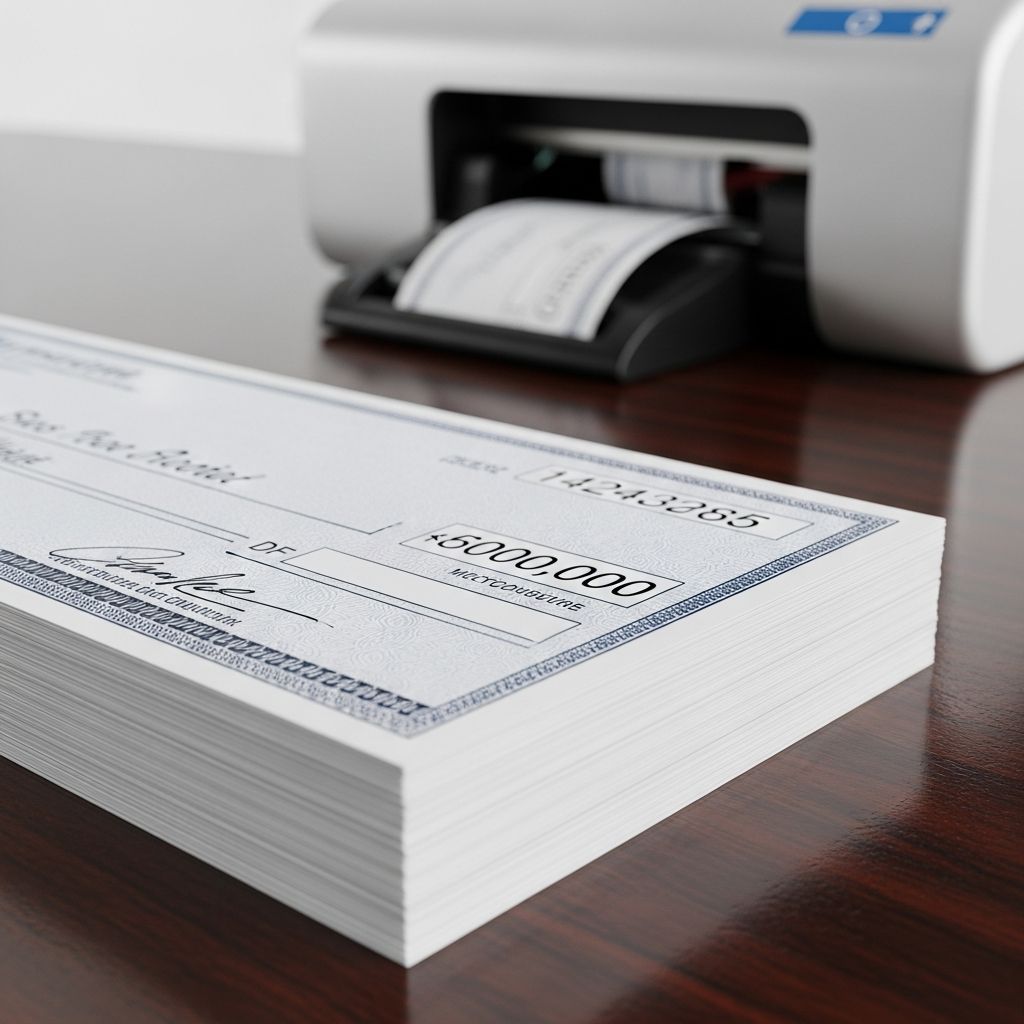
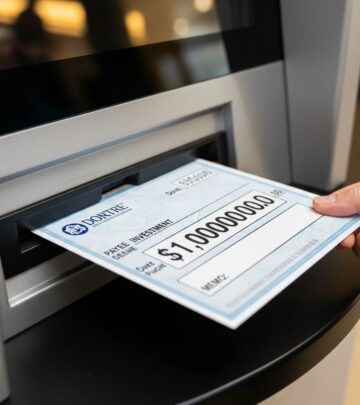
When you deposit a sizable check, such as one exceeding $5,525, banks apply specific federal rules to determine when funds become available. These guidelines, outlined in Regulation CC, balance customer access with risk management during check clearing.
Understanding Federal Funds Availability Policies
Banks must follow strict timelines for making deposited funds accessible. For checks over certain thresholds, institutions can impose extended holds to verify legitimacy and collect payment from the issuing bank.
- The first $225 is typically available the next business day for most check deposits.
- Amounts up to $5,525 may take up to two business days if it’s a local check.
- Portions exceeding $5,525 can be held for up to seven business days under standard rules.
Cash deposits made in person or electronic transfers like ACH and wires generally clear faster, often by the next business day. Review your account agreement for your bank’s specific cutoff times and policies.
Step-by-Step: How Banks Process Your Large Check
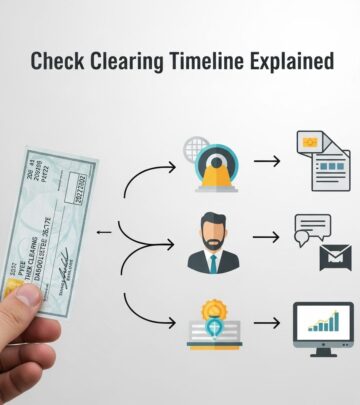
Depositing a large check triggers a multi-step verification process. Your bank captures the check details, forwards it for clearance, and monitors for issues before releasing funds.
- Initial Deposit Receipt: At a teller window, ATM, or via mobile app, the bank records the check and credits a provisional balance.
- Image Capture and Transmission: Banks scan the check or use an electronic image, sending it to the payer’s bank directly or via a clearinghouse.
- Clearance Verification: The issuing bank confirms sufficient funds, which can take 1-5 business days for large amounts.
- Fund Release: Once cleared, funds post to your account per availability schedules.
For mobile deposits, endorse the check, photograph front and back, and submit via app. Confirmations arrive via email, but holds apply similarly.
Why Banks Place Holds on Large Deposits
Holds protect against fraud, bounced checks, or uncollectible funds. Regulation CC allows exceptions for deposits over $5,525 (updated from prior $5,225 thresholds in recent adjustments).
| Deposit Type | Standard Availability | Possible Extended Hold |
|---|---|---|
| Cash (in-person) | Next business day | Rare |
| Check < $225 | Next business day | None |
| Local Check up to $5,525 | 2 business days | Up to 5 days |
| Non-local/large check > $5,525 | 7 business days | Reasonable extension if justified |
| Government/Cashier’s Check (in-person) | Next business day | Exceptions possible |
New accounts under 30 days old or those with recent overdrafts face stricter holds. ATMs from other institutions may delay funds further, with notice required.
Large Cash or Check Deposits: IRS Reporting Rules
Deposits over $10,000 in cash or equivalent trigger Currency Transaction Reports (CTRs) under the Bank Secrecy Act. This applies to single transactions or structured patterns to evade reporting.
Banks review on a case-by-case basis: personal vs. business checks, account history, and transaction patterns influence scrutiny. Legitimate large deposits, like bonuses or sales proceeds, face no penalties but may involve verification calls.
Factors That Can Extend Hold Times
Beyond size, several triggers prompt longer holds:
- Suspected Fraud or Uncollectibility: Irregular check sources or payer issues.
- Account History: Frequent overdrafts in the past six months.
- Deposit Method: Non-proprietary ATMs or mobile apps for oversized checks.
- Emergencies: Outages or disasters allow reasonable delays.
- Large Aggregate Deposits: Total checks over $6,725 in one day qualify for exceptions.
Banks must notify you of holds exceeding standard times, often via mail for ATM deposits.
Types of Checks and Their Clearing Speeds
Not all checks clear equally. Prioritize these for faster access:
- Cashier’s, certified, or teller checks deposited in person: Next day.
- Government checks (U.S. Treasury, state/local): Next day if in person.
- On-us checks (same bank): Immediate or next day.
- Personal or out-of-state checks: Longer verification needed.
Avoid mobile deposits for foreign checks, third-party endorsements, or non-standard sizes, as they may be rejected.
Strategies to Access Large Deposit Funds Quickly
Minimize delays with these practices:
- Deposit in person at your bank’s teller during business hours.
- Use government or cashier’s checks when possible.
- Maintain a strong account history to avoid exception holds.
- Ask about provisional credit for urgent needs—some banks offer it.
- For businesses, provide documentation like invoices for large payments.
Communicate with your banker upfront about expected large deposits to build trust and expedite processing.
Common Pitfalls and How to Avoid Them
Many face surprises from unchecked policies. Always:
- Verify cutoff times (e.g., 2 PM for same-day processing).
- Endorse mobile checks correctly: “For Mobile Deposit Only” plus date and signature.
- Track payroll ACH deposits, which often post on payday or next day.
- Don’t structure deposits to dodge $10,000 reporting—it’s illegal.
If funds bounce post-access, you’ll owe the amount plus fees.
FAQ: Large Check Deposits
Q: How long for a $10,000 check?
A: First $225 next day, up to $5,525 in 2 days, remainder up to 7 days. Banks report to IRS but no hold solely for that.
Q: Does mobile deposit change hold times?
A: Processed like teller deposits, but limits apply (e.g., no third-party checks). Holds same as paper.
Q: What if I need funds urgently?
A: Request expedited clearance or use wire transfers for instant access.
Q: New account—expect longer holds?
A: Yes, first 30 days often limited to $225 next day.
Q: ATM deposit holds?
A: Banks must notify if held beyond next day; up to 7 days possible.
Bank Policies in Practice
Major banks like Wells Fargo aim for first business day availability but apply exceptions. Bank of America notes processing variations by deposit type and size. Always check your institution’s disclosure under Regulation CC.
Staying informed empowers better financial decisions, reducing stress from unexpected delays.
References
- I made a large deposit. When will the funds be available? — HelpWithMyBank.gov (CFPB). 2025-06. https://www.helpwithmybank.gov/help-topics/bank-accounts/funds-availability/funds-availability-large-deposit.html
- How do banks process deposits? When are funds available? — Consumer Financial Protection Bureau (via YouTube/Better Money Habits). Accessed 2026. https://www.youtube.com/watch?v=Go1cw3BsytA
- How long can a bank or credit union hold funds I deposited? — Consumer Financial Protection Bureau. Accessed 2026. https://www.consumerfinance.gov/ask-cfpb/how-long-can-a-bank-or-credit-union-hold-funds-i-deposited-en-1023/
- IRS Rules for Cash Deposit 2026: How Much Cash Can You Deposit? — MyBankTracker. Accessed 2026. https://www.mybanktracker.com/checking/faq/rules-deposit-10000-cash-check-271595
- Funds Availability Rules Explained: Regulation CC — Webster First. Accessed 2026. https://www.websterfirst.com/blog/funds-availability-rules-explained-regulation-cc/
- How to Deposit Checks Online Using the Mobile Banking App — Bank of America. 2026-01. https://info.bankofamerica.com/en/digital-banking/mobile-check-deposit
- Deposit Questions – Wells Fargo — Wells Fargo. Accessed 2026. https://www.wellsfargo.com/help/checking-savings/deposits-faqs/
Similar Articles








Read full bio of medha deb