Labor Definition, Types, and Economic Impact
Understanding labor's role in production, employment types, and economic growth.
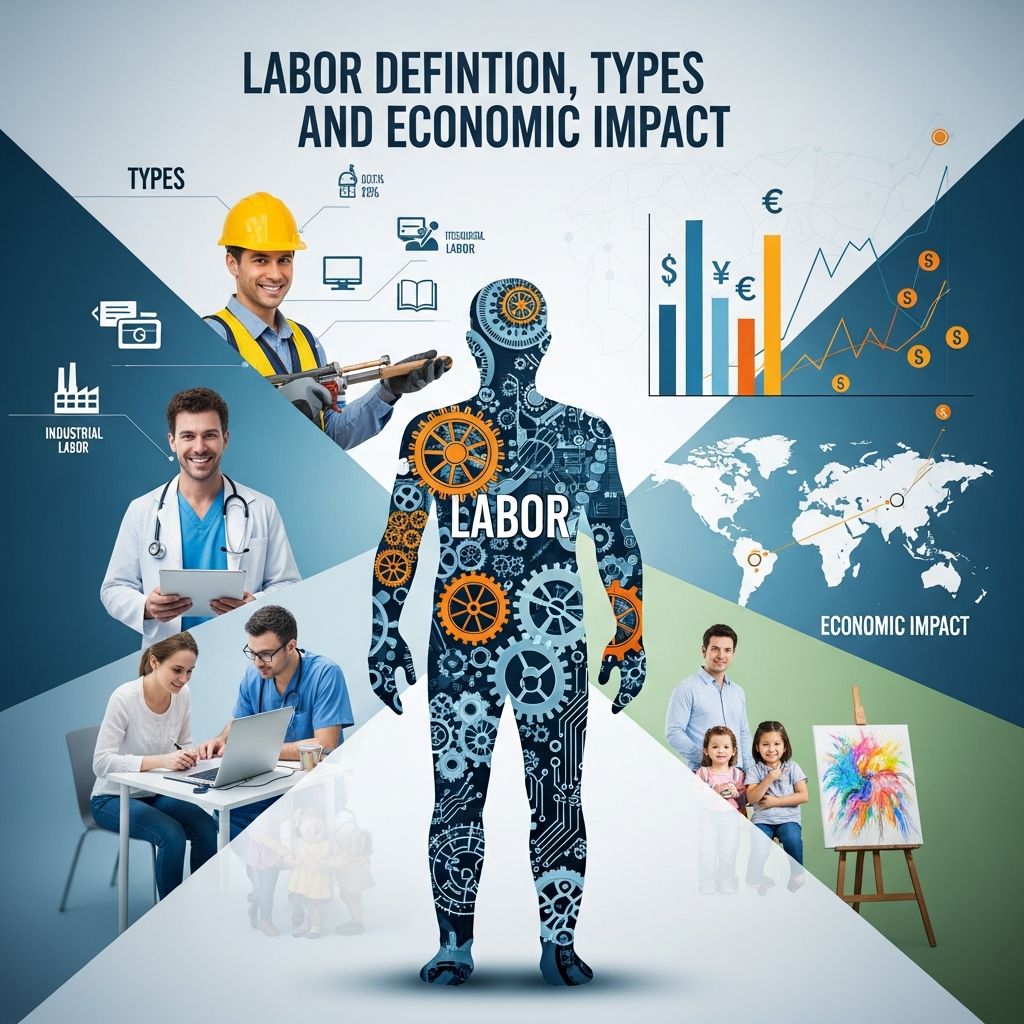
Understanding Labor: Definition, Types, and Economic Impact
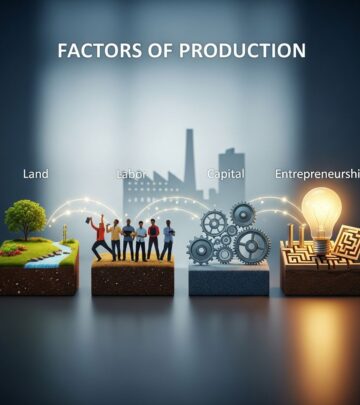
Labor represents one of the most fundamental components of economic production, serving as the human effort—both physical and mental—that creates goods and services within an economy. Alongside land, capital, and entrepreneurship, labor forms the foundation of all productive activity. The concept extends beyond simple manual work to encompass the diverse skills, knowledge, and time that workers contribute to generating economic value. Understanding labor’s definition, its various forms, and its profound effects on economic health is essential for policymakers, business leaders, and individuals navigating the modern workforce.
What Is Labor in Economics?
In economic terms, labor refers to any valuable service rendered by a human agent in the production of wealth, excluding the accumulation and provision of capital or assumption of business risks. It constitutes the general body of wage earners and encompasses far more than simple toil or physical exertion. Labor includes the application of physical energies, but it also incorporates skill, self-direction, and specialized knowledge that workers bring to their tasks.
The labor force, as defined by statistical agencies, includes all people age 16 and older who are classified as either employed or unemployed and actively seeking work. This definition encompasses employees, employers, and self-employed individuals who participate in the market economy. The quality and quantity of labor that individuals supply directly influence an economy’s level of production and its potential for growth.
Core Features of Labor
Labor possesses several distinctive characteristics that differentiate it from other factors of production:
Human Effort and Skill
Labor fundamentally involves the physical and mental exertion of individuals across various economic activities. This encompasses both manual work and intellectual contributions. The diversity of human effort ranges from unskilled construction workers to highly specialized medical professionals, each contributing distinct forms of value to the economy.
Productivity and Enhancement
The productivity of labor is significantly influenced by education, training, skills, and experience. Workers with higher levels of training and specialization tend to generate greater economic output. This relationship underscores the importance of continuous learning and skill development in maintaining workforce competitiveness.
Wage Compensation
In market economies, labor is compensated through wages or salaries determined by the intersection of supply and demand. The amount of compensation depends on skill level, market demand for specific capabilities, and prevailing economic conditions. This wage structure provides workers with income to purchase goods and services while giving businesses a mechanism to allocate labor resources efficiently.
Mobility and Adaptability
Labor demonstrates mobility, meaning workers can move between geographical locations or economic sectors in response to changing demand for skills or economic conditions. This flexibility allows labor markets to adjust to shifting economic realities, though imperfect information and other barriers can limit complete mobility.
Perishability
A unique characteristic of labor is its perishable nature—a day’s labor lost cannot be recovered. This distinguishes labor from capital or inventory, which can be stored for future use. Workers cannot stockpile their time, making the timing of labor deployment critical.
Division of Labor
Modern economies benefit from specialized division of labor, where the production process breaks into specialized tasks handled by different individuals or groups. This specialization increases efficiency and productivity, allowing workers to develop deep expertise in specific areas.
Types of Labor in the Modern Economy
The contemporary labor market encompasses numerous employment categories, each characterized by distinct skill requirements, working conditions, and compensation patterns:
Unskilled Labor
Unskilled labor requires minimal training or specialized expertise. Workers in this category perform basic tasks in construction, agriculture, retail, or other entry-level positions. While these roles may appear simple, they form essential components of the economy and provide entry points for workers beginning their careers.
Skilled Labor
Skilled labor encompasses workers who have acquired specialized training and expertise through formal education or apprenticeships. This category includes carpenters, electricians, plumbers, and technicians who command higher wages due to their specialized knowledge. These workers typically complete training programs and often require certifications to practice their trades.
Professional Labor
Professionals possess advanced degrees and specialized knowledge in fields such as medicine, law, engineering, or academia. These highly educated workers typically command premium compensation due to their extensive education requirements and the critical nature of their contributions. Professional roles often involve significant decision-making authority and responsibility.
White-Collar Labor
White-collar workers are employed in professional, managerial, or administrative roles, typically in office-based environments. This category includes accountants, managers, analysts, and administrative assistants who contribute to organizational functioning through professional and clerical work rather than manual labor.
Blue-Collar Labor
Blue-collar workers engage in manual or industrial work related to manufacturing, construction, maintenance, or other production activities. These roles typically involve hands-on work and may require physical strength, though many modern blue-collar positions increasingly incorporate technological components.
Temporary and Contract Labor
This flexible category includes individuals hired for specific periods or tasks on a contractual basis. Organizations utilize temporary labor to meet fluctuating demand, manage project-specific needs, or reduce long-term employment commitments. This arrangement benefits both employers seeking flexibility and workers pursuing varied experiences.
Informal Labor
Informal labor comprises work not regulated or protected by formal labor laws, including self-employed individuals, day laborers, and workers in informal sectors. This category often operates outside tax systems and social safety nets, though it provides employment opportunities and income for millions globally.
Intellectual and Knowledge Workers
These workers contribute primarily through intellectual capabilities and specialized knowledge rather than physical effort. Information technology professionals, researchers, designers, and consultants fall into this rapidly expanding category that has grown significantly with technological advancement.
Labor’s Impact on the Economy
Labor exerts profound influences across all economic dimensions, from individual prosperity to national growth:
Production and GDP
The quantity and quality of available labor directly determine an economy’s productive capacity and gross domestic product. Nations with well-educated, healthy, and motivated workforces typically achieve higher levels of economic output. Conversely, labor shortages or skill mismatches can constrain economic growth potential.
Employment and Income Distribution
Labor markets determine employment levels and income distribution throughout society. Wage structures influence consumption patterns, savings rates, and wealth accumulation. Unemployment—whether frictional, structural, or cyclical—affects both individual well-being and broader economic stability.
Labor Market Dynamics
Labor economics encompasses the study of labor forces as production elements, analyzing all factors affecting workers throughout their careers. This includes education, compensation, working conditions, discrimination, mobility, and retirement considerations. Understanding these dynamics helps policymakers develop effective labor market policies.
Wage Determination
Wages in labor markets result from the interaction between what businesses will pay for work and what workers demand for their efforts. This price-setting mechanism allocates labor across the economy while providing workers with income. Factors like skill scarcity, demand volatility, and bargaining power influence wage outcomes.
Economic Resilience and Crisis Response
Labor economics helps governments and organizations understand and address problems caused by economic shocks such as recessions or pandemics. During crises, labor market analysis informs policy responses designed to minimize unemployment and maintain economic functionality.
Labor Market Structure and Function
| Labor Category | Primary Characteristics | Typical Compensation |
|---|---|---|
| Unskilled | Minimal training, entry-level tasks | Lower wages, often hourly |
| Skilled | Specialized training, technical expertise | Moderate to high wages |
| Professional | Advanced degrees, decision-making authority | High salaries, benefits |
| White-Collar | Office-based, administrative/managerial | Moderate to high salaries |
| Blue-Collar | Manual/industrial, production-focused | Variable, often hourly rates |
| Temporary/Contract | Fixed-term, project-specific | Varies, often hourly or per-project |
The Labor Force and Economic Participation
The civilian labor force comprises all individuals age 16 and older classified as either employed or actively seeking employment. The labor force participation rate measures the percentage of working-age population either employed or seeking work, serving as a key economic indicator. This rate varies across demographics, influenced by factors including education, family status, health, and economic conditions.
Workers trade unpaid leisure time for compensated work, enabling them to purchase goods and services while providing businesses with the human resources necessary for production. This fundamental exchange between workers and employers structures modern economies and determines living standards.
Challenges in Modern Labor Markets
Skills Mismatch
Rapid technological change creates gaps between skills workers possess and those employers demand. Education systems struggle to keep pace with evolving workplace requirements, leaving some workers unable to access available opportunities.
Unemployment Types
Economists recognize three primary unemployment types affecting economies. Frictional unemployment results from normal labor market transitions as workers move between jobs. Structural unemployment stems from mismatches between worker skills and job requirements or geographical location. Cyclical unemployment arises from broader economic downturns and reduced aggregate demand.
Labor Market Mobility
While labor demonstrates potential for mobility, imperfect information, geographic constraints, and credential requirements limit workers’ ability to transition freely between positions and regions. Barriers to mobility can perpetuate unemployment and underutilization of human capital.
Frequently Asked Questions
Q: How does labor contribute to economic growth?
A: Labor directly drives economic growth by producing goods and services, generating income, enabling consumption, and driving innovation. Increases in labor quantity and quality expand productive capacity, while improved worker skills and education enhance productivity levels.
Q: What factors determine wage levels in labor markets?
A: Wages reflect the balance between labor supply and demand, influenced by worker skills and education, job market demand for specific occupations, geographic location, experience, and overall economic conditions. Specialized skills command higher compensation than readily available capabilities.
Q: How has technology changed labor markets?
A: Technology has eliminated certain job categories while creating new opportunities, shifted demand toward higher-skilled workers, enabled remote work arrangements, and increased productivity requirements. Workers must continuously adapt skills to remain competitive in evolving markets.
Q: Why is labor force participation rate important?
A: The labor force participation rate indicates economic health, workforce engagement levels, and productive capacity. Changes signal demographic shifts, retirement trends, or reduced employment opportunities. Higher participation rates typically correlate with stronger economic growth.
Q: What distinguishes skilled from unskilled labor?
A: Unskilled labor requires minimal training and involves basic tasks, while skilled labor demands specialized expertise acquired through formal education or apprenticeships. Skilled workers typically earn higher compensation due to scarcity value and specialized capabilities.
Q: How do labor markets function across different economies?
A: Labor markets operate through worker-employer interactions, bounded geographically or globally, with mobility patterns reflecting job availability and economic conditions. International labor markets enable cross-border employment and migration of skilled workers.
References
- Labor, the Economy and Monetary Policy — Federal Reserve Bank of Dallas. 2024. https://www.dallasfed.org/educate/everyday/labor
- What is labor economics? — Institute of Labor Economics (IZA). 2024. https://wol.iza.org/key-topics/what-is-labor-economics
- Concepts and Definitions (CPS) — U.S. Bureau of Labor Statistics. 2024. https://www.bls.gov/cps/definitions.htm
- Labour — Britannica Money. 2024. https://www.britannica.com/money/labor-in-economics
- Features and Types of Labour — Ecolaw. February 22, 2024. https://ecolaw.in/labor-meaning-features-and-types/
Similar Articles








Read full bio of medha deb