Keynesian Economics: Theory, Definition & Policy
Understand Keynesian economics: how aggregate demand drives economic policy and stabilizes growth.

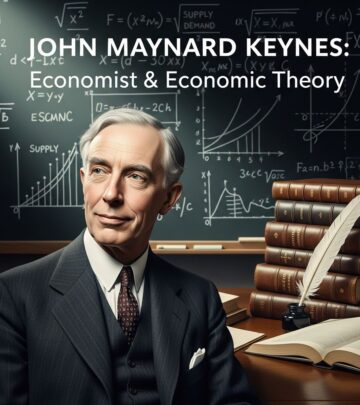
Keynesian economics represents one of the most influential schools of economic thought in modern history. Developed by British economist John Maynard Keynes during the Great Depression, this economic framework fundamentally challenges classical economic assumptions and provides a compelling explanation for why recessions and depressions occur. The theory also offers practical policy solutions for mitigating the damaging effects of economic downturns. Understanding Keynesian economics is essential for comprehending modern monetary and fiscal policy, making it relevant for policymakers, investors, and anyone seeking to grasp how contemporary economies function.
What Is Keynesian Economics?
Keynesian economics is an economic school of thought built on the premise that aggregate demand serves as the primary driver of a nation’s economic activity and employment levels. At its core, Keynesian theory posits that government intervention is necessary to help economies emerge from recessions and achieve stability and full employment. This represents a radical departure from classical economic theory, which emphasized that markets naturally self-correct and reach equilibrium without government involvement.
The theory emerged from Keynes’s groundbreaking work, “The General Theory of Employment, Interest and Money,” published in 1936. Keynes argued that investment, which responds to variations in the interest rate and expectations about the future, is the dynamic factor determining the level of economic activity. He also maintained that deliberate government action could foster full employment, challenging the prevailing belief that unemployment would naturally resolve itself through wage flexibility.
Core Principles of Keynesian Economics
Keynesian economics rests on several foundational principles that distinguish it from other economic schools of thought.
Aggregate Demand as Economic Driver
The cornerstone of Keynesian theory is the concept of aggregate demand, which refers to total spending for all goods and services in an economy. This includes consumer spending, investment, government spending, and net exports. According to Keynesian theory, as aggregate demand increases, employment, income, and economic output should also increase proportionally. Conversely, insufficient demand can lead to recessions and high unemployment, making aggregate demand the primary variable to monitor and manage during economic fluctuations.
Sticky Wages and Prices
A crucial aspect of Keynesian analysis is the recognition that wages and prices do not adjust instantly to economic changes. Known as “sticky” wages and prices, this concept explains why unemployment persists during downturns rather than naturally resolving through wage reductions. The coordination argument suggests that downward wage and price flexibility requires perfect information about the level of lower compensation acceptable to other laborers and market participants, which rarely exists in real economies. This stickiness means that businesses will not employ workers to produce goods that cannot be sold, regardless of wage levels.
The Multiplier Effect
Keynes’s view of saving and investment represented his most important departure from classical outlook, illustrated through the “Keynesian cross” devised by Paul Samuelson. Changes in aggregate demand, whether anticipated or unanticipated, have their greatest short-run effect on real output and employment, not on prices. This principle underlies the multiplier effect, whereby government spending or tax cuts generate additional economic activity beyond the initial expenditure.
Keynesian Economics vs. Classical Economics
The distinction between Keynesian and classical economics fundamentally shapes modern economic policy. Keynes begins his analysis by rejecting the classical theory of employment, which encapsulates the principle that “supply creates its own demand.” This classical view suggested that markets naturally equilibrate at full employment.
Keynes rejected the classical notion that unemployment results from excessive wages. Instead, he proposed that unemployment arises whenever entrepreneurs’ incentive to invest fails to keep pace with society’s propensity to save. The levels of saving and investment are necessarily equal, with income held down to a level where the desire to save equals the incentive to invest. This fundamental disagreement led Keynes to advocate for government intervention to bridge the gap between saving and investment during economic downturns.
Keynesians believe that what is true about the short run cannot necessarily be inferred from what must happen in the long run, adopting the famous principle: “In the long run, we are all dead.” This perspective emphasizes immediate policy responses rather than waiting for theoretical long-term adjustments.
Key Components of Keynesian Theory
Several interconnected components work together in Keynesian economic analysis:
Aggregate Demand and Supply Relationship
In Keynesian models, aggregate demand is more likely than aggregate supply to be the primary cause of short-run economic events like recessions. The theory maintains that businesses will not produce goods without sufficient demand to sell them, making aggregate demand the key policy variable. As demand fluctuates, output and employment follow, rather than prices adjusting to clear markets as classical theory suggests.
Interest Rates and Investment
Money supply, saving, and investment combine to determine the level of income. The ruling interest rate is determined through the liquidity preference function, while the rate of interest determines the level of investment through the schedule of the marginal efficiency of capital. This framework explains how central bank monetary policy influences the broader economy.
The Principle of Effective Demand
The principle of effective demand asserts that aggregate demand must equal total income in equilibrium. This principle differs markedly from classical assumptions and forms the basis for understanding how demand deficiencies create unemployment and underutilization of economic resources.
Keynesian Policy Prescriptions
Keynesian economics directly informs government policy responses to economic conditions. Keynesians argue that aggregate demand is volatile and unstable, and that consequently, a market economy often experiences inefficient macroeconomic outcomes, including recessions when demand is too low and inflation when demand is too high.
Fiscal Policy During Recessions
During economic downturns, Keynesian theory advocates aggressive fiscal expansion. Governments should lower income tax rates on individuals and businesses, providing the private sector with additional financial capital to invest in projects and drive the economy forward. Simultaneously, governments should increase spending on social programs to stimulate the job market with skilled labor. The expectation is that increased government spending and reduced taxation will boost aggregate demand, leading to higher employment and output.
Keynesians acknowledge that in Keynes’s theory, there must be significant slack in the labor market before fiscal expansion is justified. This distinction recognizes that fiscal stimulus becomes increasingly ineffective as economies approach full capacity.
Monetary Policy Coordination
Fiscal policy actions taken by the government and monetary policy actions taken by the central bank can work together to help stabilize economic output, inflation, and unemployment over the business cycle. During recessions, central banks reduce interest rates to encourage borrowing and investment, while governments simultaneously increase spending and reduce taxes.
Counter-Cyclical Demand Management
During times of prosperity, Keynesian theory argues that central banks should increase interest rates to generate more income from borrowers, controlling the magnitude of economic booms. Governments may introduce new taxes or offer proportionately smaller tax breaks to reduce consumer spending. Central and commercial banks accumulate cash reserves to prepare for future recessions. This counter-cyclical approach aims to smooth economic fluctuations rather than allowing boom-bust cycles to proceed unchecked.
Criticism and Limitations
Keynesians’ belief in aggressive government action to stabilize the economy is based on value judgments and on the beliefs that macroeconomic fluctuations significantly reduce economic well-being and that government is knowledgeable and capable enough to improve on the free market. Not all economists accept these assumptions. Critics argue that government intervention can create inefficiencies, that policymakers lack sufficient information to time interventions effectively, and that political considerations often override economic logic in policy implementation.
Keynesians recognize that fiscal policy can have unintended consequences. Adding to profits and incomes during boom cycles through tax cuts, and removing income and profits from the economy through spending cuts during downturns, tends to exacerbate the negative effects of the business cycle. This effect is especially pronounced when government controls a large fraction of the economy.
International Dimensions of Keynesian Economics
Keynes extended his economic framework to international trade and finance. He proposed a system not founded on free trade liberalization but rather on regulating international trade to eliminate trade imbalances. Nations with surpluses would face powerful incentives to eliminate them, automatically clearing other nations’ deficits. Keynes proposed a global bank that would issue its own currency—the bancor—which would be exchangeable with national currencies at fixed rates and serve as the unit of account between nations for measuring trade deficits or surpluses.
Keynesian Economics in Practice
Keynesian principles have substantially influenced economic policy throughout the modern era. Government stimulus packages during recessions, counter-cyclical monetary policy, and the coordination between fiscal and monetary authorities all reflect Keynesian thinking. The theory provides a framework for understanding why governments intervene during economic downturns and offers guidance on the magnitude and type of intervention most likely to prove effective.
Keynes’s emphasis on aggregate demand and the importance of government action fundamentally transformed how economists and policymakers approach economic management. His work established that unemployment can persist at equilibrium levels and that market mechanisms alone may not restore full employment, providing theoretical justification for the modern welfare state and active economic management.
Frequently Asked Questions About Keynesian Economics
Q: Why did Keynes reject classical economics?
A: Keynes rejected classical economics because it failed to explain persistent unemployment during the Great Depression. He argued that markets do not automatically clear through wage adjustments and that aggregate demand, not supply, determines output and employment in the short run. His theory provided a framework for understanding why economies could remain in equilibrium with widespread unemployment.
Q: What is the difference between Keynesian and classical economics?
A: Classical economics assumes markets self-correct and that “supply creates its own demand,” while Keynesian economics emphasizes that aggregate demand drives economic activity and that markets may not self-correct. Classical theory relies on wage and price flexibility, while Keynesian theory acknowledges sticky wages and prices. Keynesians advocate government intervention during downturns, while classical economists favor minimal intervention.
Q: How do Keynesians explain unemployment?
A: Keynesians attribute unemployment to insufficient aggregate demand for goods and services. When businesses cannot sell their products, they will not hire workers regardless of wage levels. This “demand-side” explanation contrasts with classical theory, which blamed unemployment on excessive wages. Keynesian policy therefore focuses on increasing aggregate demand through government spending and tax cuts.
Q: What is the multiplier effect in Keynesian economics?
A: The multiplier effect describes how initial government spending or tax cuts generate additional economic activity beyond the direct expenditure. When government spends money, recipients spend a portion of it, which creates income for others who spend again, creating successive rounds of spending. This multiplication of the initial stimulus generates economic activity larger than the initial intervention.
Q: Why do Keynesians believe in government intervention?
A: Keynesians believe government intervention is necessary because markets do not automatically reach full employment equilibrium. Sticky wages and prices prevent the self-correction mechanisms that classical theory assumes. Government spending and monetary policy can offset insufficient private demand, restoring full employment more quickly than waiting for market adjustments.
Q: What is the “In the long run, we are all dead” principle?
A: This famous Keynes quote emphasizes that while classical theory may be correct about long-run equilibrium, the short run is what matters for real people experiencing unemployment and hardship. Keynesians therefore focus on short-run stabilization policies rather than assuming markets will eventually self-correct. This principle highlights the practical orientation of Keynesian economics toward immediate human welfare.
Q: How do interest rates affect the economy in Keynesian theory?
A: In Keynesian theory, the central bank’s control of interest rates influences investment decisions through the schedule of marginal efficiency of capital. Lower interest rates encourage borrowing and investment, increasing aggregate demand and employment. Higher interest rates discourage investment, reducing demand and inflation. The coordination of monetary policy with fiscal policy amplifies these effects.
Q: What is the coordination argument in Keynesian economics?
A: The coordination argument states that downward wage and price flexibility requires perfect information about the level of lower compensation acceptable to other laborers and market participants. In reality, workers and businesses lack perfect information about equilibrium wage levels, making downward wage adjustments extremely difficult to coordinate. This explains why wages remain sticky and unemployment persists.
References
- Keynesian Economics — Wikipedia. Accessed November 2025. https://en.wikipedia.org/wiki/Keynesian_economics
- The Building Blocks of Keynesian Analysis — Khan Academy. Accessed November 2025. https://www.khanacademy.org/economics-finance-domain/macroeconomics
- Keynesian Economic Theory: Definition and Components — Corporate Finance Institute. Accessed November 2025. https://corporatefinanceinstitute.com/resources/economics/keynesian-economic-theory/
- Keynesian Economics Definition and Principles — Blue Mountain Eagle. July 22, 2023. https://bluemountaineagle.com/2023/07/22/what-is-keynesian-economics-definition-principles/
- Keynesian Economics — Econlib. Accessed November 2025. https://www.econlib.org/library/Enc/KeynesianEconomics.html
- Keynesian Economics: Definition, Theory, Examples & Facts — Britannica Money. Accessed November 2025. https://www.britannica.com/money/Keynesian-economics
Similar Articles








Read full bio of Sneha Tete