Keynesian Economics: Definition, Theory, and Policy
Understanding Keynesian economics: How aggregate demand shapes economic policy and growth.

What Is Keynesian Economics?
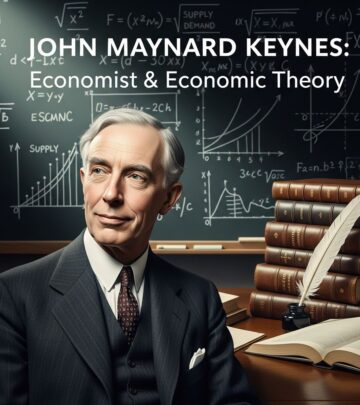
Keynesian economics represents a school of macroeconomic thought named after British economist John Maynard Keynes (1883–1946), who developed this influential theory during the 1930s and 1940s. The theory fundamentally challenges classical economic assumptions and provides a framework for understanding how economies function in the real world, particularly during periods of recession and unemployment. At its core, Keynesian economics posits that aggregate demand—the total spending in an economy—strongly influences economic output, employment levels, and inflation rates. Unlike classical economists who believed markets naturally self-correct, Keynesians argue that aggregate demand often falls short of the economy’s productive capacity, leading to sustained unemployment and economic inefficiency.
Keynesian theory emerged as a response to the Great Depression, when traditional economic policies failed to restore full employment. Keynes observed that the economy could remain in a state of equilibrium with high unemployment, contradicting classical theory which suggested unemployment would automatically adjust through wage reductions. This revolutionary insight transformed economic policy and remains central to modern macroeconomic debates.
Core Principles of Keynesian Economics
Keynesian economics rests on several fundamental principles that distinguish it from other economic schools of thought. Understanding these principles is essential for grasping how policymakers apply Keynesian theory to address economic challenges.
Aggregate Demand Drives Economic Output
The most fundamental principle of Keynesian economics is that aggregate demand determines the level of economic output and employment. When businesses and consumers spend money, they create demand for goods and services, which stimulates production and job creation. Conversely, when spending declines, businesses reduce production and lay off workers, leading to recession. This emphasis on demand-side factors represents a sharp departure from classical economics, which focused on supply-side factors and assumed markets always reach optimal equilibrium.
Market Failures and Economic Instability
Keynesians recognize that free markets do not always produce efficient outcomes. Private sector decisions can lead to adverse macroeconomic results, such as insufficient consumer spending during recessions. Prices and wages exhibit downward rigidity, meaning they don’t fall quickly enough to restore full employment when demand drops. This stickiness creates prolonged unemployment and underutilization of resources, justifying government intervention to stabilize the economy.
The Multiplier Effect
A crucial insight of Keynesian theory is the multiplier effect, which demonstrates that changes in spending have magnified impacts on overall economic output. When government increases spending by one dollar, the total output increases by more than one dollar because the initial spending creates income for workers and businesses, who then spend a portion of that income, creating additional demand and income. This cascading effect amplifies the impact of fiscal policy interventions.
Key Differences from Classical Economics
Classical economics, which dominated economic thought before Keynes, assumed that markets naturally gravitate toward full employment and that government intervention was unnecessary and counterproductive. Keynesians challenged this view on several fundamental grounds:
| Aspect | Classical Economics | Keynesian Economics |
|---|---|---|
| Market Equilibrium | Markets self-correct to full employment | Markets can remain stuck with high unemployment |
| Unemployment Causes | Excessive wages force businesses to hire less | Insufficient aggregate demand creates joblessness |
| Price Flexibility | Prices adjust quickly to clear markets | Prices are sticky and adjust slowly |
| Government Role | Minimal intervention needed; markets work best | Active intervention stabilizes economy |
| Fiscal Policy | Crowding out negates spending effects | Multiplier effects amplify spending impacts |
Keynes’s Economic Model
Keynes developed a comprehensive economic model explaining how money supply, interest rates, saving, and investment interact to determine overall income and employment levels. In this model, the money supply influences interest rates through the liquidity preference function, which reflects people’s desire to hold cash versus interest-bearing assets. Interest rates, in turn, determine the level of investment through the marginal efficiency of capital—businesses invest in projects expected to yield returns exceeding the borrowing cost.
When central banks reduce interest rates through monetary policy, investments that were previously uneconomical become profitable. Lower borrowing costs also make consumer purchases financed through debt—such as homes, automobiles, and appliances—more affordable, stimulating consumption and economic activity. Conversely, raising interest rates dampens investment and borrowing, helping cool an overheated economy.
Government Policy Tools: Fiscal and Monetary Policy
Keynesian economists advocate using two primary policy instruments to stabilize the economy and promote full employment: fiscal policy and monetary policy.
Fiscal Policy: Government Spending and Taxation
Fiscal policy involves government decisions about taxation and spending levels. During recessions, Keynesians recommend expansionary fiscal policy—either reducing taxes, increasing government spending, or both—to boost aggregate demand and restore employment. When unemployment is high and factories operate below capacity, government can step in as a purchaser of goods and services, creating jobs and stimulating private sector activity.
Government spending increases aggregate demand directly and triggers multiplier effects as workers and suppliers spend their incomes. Infrastructure projects prove particularly effective because they employ labor-intensive activities while building productive assets that benefit the economy long-term. Tax cuts similarly stimulate demand by leaving more money in consumers’ and businesses’ hands.
During economic booms, Keynesians recommend contractionary fiscal policy—raising taxes and cutting spending—to prevent inflation and excessive asset price bubbles. This countercyclical approach aims to smooth business cycles rather than let them swing between extremes.
Monetary Policy: Interest Rates and Money Supply
Central banks implement monetary policy through their control of interest rates and money supply. Expansionary monetary policy—lowering interest rates and increasing money availability—encourages borrowing and investment, stimulating economic activity during downturns. Conversely, contractionary monetary policy raises interest rates to reduce inflation during periods of excessive demand.
However, Keynesians acknowledge that monetary policy has limitations. During severe recessions, interest rates may fall to near-zero levels—the “zero lower bound”—while businesses remain pessimistic about future profits and decline to invest regardless of cheap credit. This situation, called a “liquidity trap,” occurs when increases in money supply fail to lower interest rates further or stimulate investment. In such circumstances, fiscal policy becomes the primary tool for reviving the economy.
Three Principal Metrics for Government Monitoring
According to Keynesian theory, governments should closely monitor three key economic indicators when formulating policy: interest rates, tax rates, and social programs.
Interest Rates
Interest rates represent the cost of borrowing money and play a crucial role in economic activity. During boom cycles, central banks should increase rates to reduce inflation and prevent excessive investment bubbles. During recessions, lowering rates encourages borrowing and investment, helping the economy recover.
Tax Rates
Taxation serves multiple purposes in Keynesian policy. During prosperous times, higher tax rates reduce aggregate demand, preventing inflation and overheating. During recessions, lower tax rates leave more income available for consumer spending and business investment, stimulating the economy. Additionally, progressive taxation can address income inequality concerns.
Social Programs
Social spending on education, job training, and welfare supports economic stabilization. During booms, reduced social spending proves appropriate as employment is high. During recessions, increased social spending addresses unemployment and provides skills training, helping workers transition to new jobs as the economy restructures. This countercyclical social policy reduces human suffering while supporting aggregate demand.
The Multiplier Effect in Action
The multiplier effect represents one of Keynesian economics’ most powerful insights. When government increases spending on infrastructure, education, or defense, the initial expenditure creates income for workers and suppliers. These recipients spend a portion of their income on consumption, creating additional income for other workers and businesses. This second round of spending generates more income, and the process continues, with each round being progressively smaller.
The multiplier’s size depends on the “marginal propensity to consume”—the fraction of additional income that households spend rather than save. In strong multiplier scenarios, government spending of one billion dollars might increase total economic output by one and a half billion dollars or more. This amplification explains why Keynesians view government spending during recessions as economically efficient, as it generates far more economic activity than the initial outlay.
Criticisms and Contemporary Debates
While Keynesian economics has profoundly influenced modern policy, it faces significant criticisms. Monetarists argue that fiscal policy proves ineffective because government borrowing crowds out private investment, negating the stimulative effects. Supply-side economists contend that tax cuts provide greater stimulus than government spending because they preserve market incentives. New Classical economists question whether people can be systematically surprised by demand management, arguing that rational expectations would nullify policy effectiveness.
Additionally, critics worry that Keynesian policies may inflate government debt and budgets, creating long-term economic problems. The lag between recognizing recessions and implementing fiscal stimulus may mean the economy recovers before policies take effect, potentially causing the economy to overshoot and experience inflation.
Frequently Asked Questions
Q: What is the fundamental assumption of Keynesian economics?
A: The fundamental assumption is that aggregate demand—total spending in the economy—strongly influences economic output and employment. Unlike classical economics, Keynesians believe markets don’t automatically self-correct to full employment and require government intervention during downturns.
Q: How does Keynesian economics explain unemployment?
A: Keynes explained unemployment as resulting from insufficient aggregate demand rather than excessive wages. When total spending falls short of what businesses need to employ everyone willing to work, unemployment persists until demand recovers or government intervenes.
Q: What is the multiplier effect?
A: The multiplier effect describes how initial spending creates cascading rounds of additional income and spending throughout the economy. When government spends money, recipients spend portions of their income, creating more income for others, amplifying the total economic impact.
Q: Why might monetary policy fail during severe recessions?
A: During liquidity traps, interest rates fall to near-zero while businesses remain pessimistic and refuse to invest. Further monetary stimulus cannot lower rates further or encourage borrowing, making fiscal policy more effective.
Q: How do Keynesians view government debt?
A: Keynesians generally accept government debt accumulation during recessions as necessary and beneficial, since the economic stimulus outweighs debt concerns. They argue that once recovery occurs, higher tax revenue naturally reduces debt-to-GDP ratios.
Q: What role did John Maynard Keynes play in international economics?
A: Keynes was instrumental in creating the International Monetary Fund (IMF) and World Bank following World War II, institutions designed to promote international economic cooperation and prevent future global economic crises.
References
- Keynesian Economics — Wikipedia. Accessed November 2025. https://en.wikipedia.org/wiki/Keynesian_economics
- Keynesian Economic Theory: Definition, Components — Corporate Finance Institute. Accessed November 2025. https://corporatefinanceinstitute.com/resources/economics/keynesian-economic-theory/
- What Is Keynesian Economics? Back to Basics — International Monetary Fund. 2014. https://www.imf.org/external/pubs/ft/fandd/2014/09/basics.htm
Similar Articles








Read full bio of Sneha Tete