Credit Score: 5 Key Factors That Shape Your Rating
Unlock the secrets to a stronger credit profile by mastering the top influences on your score and actionable steps to improve it today.
Your credit score is a vital number that lenders use to gauge your financial reliability. Ranging typically from 300 to 850, a higher score opens doors to favorable loan terms, lower interest rates, and better financial opportunities. Understanding what drives this score empowers you to take control of your financial future.
Understanding Credit Scores and Their Importance
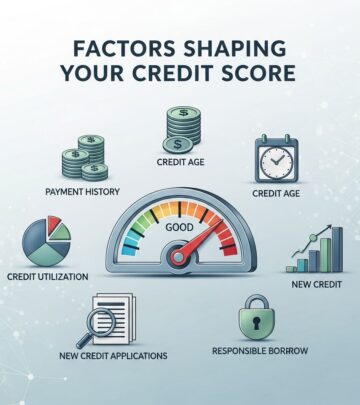
Credit scores, such as FICO and VantageScore, are calculated from data in your credit report provided by bureaus like Equifax, Experian, and TransUnion. These scores predict your likelihood of repaying debt on time. FICO, the most widely used model, bases its calculation on five key categories, each with specific weights that can vary slightly by individual profile.
A strong score not only affects borrowing costs but also influences renting apartments, job applications, and insurance premiums. For instance, scores above 740 often qualify for prime rates, while those below 600 may face higher costs or denials.
The Top Influencer: Payment History
Payment history carries the heaviest weight at approximately 35% in FICO scores and up to 40% in VantageScore models. This factor tracks whether you pay bills on time across all accounts, including credit cards, loans, and mortgages.
- On-time payments build a positive track record, signaling reliability to lenders.
- Late payments, even by 30 days, can drop your score significantly—potentially 100-150 points—and remain on your report for up to seven years.
- Severe issues like collections, foreclosures, or bankruptcies have lasting impacts, though their effect diminishes over time.
To strengthen this area, set up autopay for at least the minimum due and monitor statements closely. If you’ve missed payments, prioritize catching up and consider goodwill letters to creditors for removal of minor lates.
Managing Debt Levels: Amounts Owed
Accounting for 30% of your FICO score, amounts owed evaluate your total debt and credit utilization ratio—the percentage of available credit you’re using. Lenders prefer ratios under 30%, ideally below 10%.
| Utilization Range | Impact on Score |
|---|---|
| 0-10% | Excellent (boosts score) |
| 10-30% | Good (acceptable) |
| 30-50% | Fair (potential drag) |
| Over 50% | Poor (hurts score significantly) |
High balances, even if paid on time, can signal risk. Pay down revolving debt aggressively and request credit limit increases on well-managed accounts to lower utilization without new spending.
Building a Solid Foundation: Length of Credit History
This factor, weighted at 15%, measures the age of your accounts, including the oldest account, average age, and time since recent activity. Longer histories demonstrate sustained responsibility.
- Average U.S. credit history is about 7-10 years; newer profiles may score lower initially.
- Closing old accounts shortens history and raises utilization, so retain them if fees are low.
- Recent inactivity on accounts can also weigh negatively.
Become an authorized user on a trusted family member’s long-standing card or keep paid-off accounts open to extend your history organically.
Diversifying Your Portfolio: Credit Mix
Representing 10% of FICO scores, credit mix assesses the variety of account types you manage, such as revolving (credit cards) and installment (auto loans, mortgages). A balanced mix shows versatility in handling different debts.
Don’t open accounts solely for mix; apply only when needed. For example, a mortgage alongside credit cards can positively influence this category without overextending.
Avoiding Red Flags: New Credit Inquiries
New credit makes up the final 10%, covering recent applications and hard inquiries. Multiple inquiries in a short period suggest financial distress.
- Hard inquiries from applications drop scores 5-10 points temporarily (up to 12 months).
- Rate shopping for mortgages or autos counts as one inquiry for 14-45 days.
- Too many new accounts dilute history length.
Space out applications and use prequalification tools for soft checks that don’t affect scores.
Less Obvious Influences on Your Score
Beyond the core five, other elements play roles. Rent and utilities typically don’t report unless delinquent or via services like Experian Boost, which can add positive payment data.
Public records like liens or judgments impact scores until resolved. Authorized user status transfers another’s history—choose wisely to avoid negatives.
Strategies to Elevate Your Credit Score
Improving your score requires consistent effort across factors:
- Pay everything on time: Use reminders or apps.
- Reduce utilization: Target high-balance cards first.
- Preserve history: Avoid closing old accounts.
- Limit new credit: Apply sparingly.
- Diversify thoughtfully: Build mix naturally.
Monitor free weekly reports at AnnualCreditReport.com and dispute errors promptly. Tools like secured cards help those with thin files.
FICO vs. VantageScore: Key Differences
| Factor | FICO Weight | VantageScore Weight |
|---|---|---|
| Payment History | 35% | 40% |
| Amounts Owed | 30% | 20% (utilization) |
| Length of History | 15% | 21% (age/type) |
| New Credit | 10% | 5% |
| Credit Mix | 10% | Included in age/type |
Both prioritize payments and debt, but VantageScore emphasizes history more.
Frequently Asked Questions
What is a good credit score?
Scores 670-739 are good; 740+ excellent. Ranges vary slightly by model.
How long do late payments affect my score?
Up to 7 years, but impact fades over time.
Does checking my own score hurt it?
No, soft inquiries don’t count.
Can I improve my score in 30 days?
Yes, via utilization drops or disputes, but sustained habits yield lasting gains.
Do student loans help or hurt?
On-time payments help; high balances hurt utilization indirectly.
Long-Term Habits for Credit Excellence
Maintaining a top-tier score demands discipline. Review reports quarterly, budget to avoid debt, and educate yourself on financial products. Over time, these practices compound into financial freedom.
References
- The 5 Factors that Make Up Your Credit Score — Freddie Mac. 2023. https://myhome.freddiemac.com/blog/financial-education/credit-score-factors
- Factors That Affect Your Credit Score — Regions Bank. 2024-01-15. https://www.regions.com/insights/personal/article/credit-score-meaning-the-factors-that-affect-your-credit-score
- What Factors Affect Your Credit Scores? — NerdWallet. 2025-10-20. https://www.nerdwallet.com/finance/learn/what-makes-up-credit-score
- Factors That Influence Your Credit Score — Nebraska Bank. 2024. https://www.ne.bank/factors-that-influence-your-credit-score
- What is a Credit Score? Factors, Types & More — Intuit. 2025-05-12. https://www.intuit.com/blog/innovative-thinking/what-is-credit-score/
- How are FICO Scores Calculated? — myFICO. 2025. https://www.myfico.com/credit-education/whats-in-your-credit-score
- What Affects Your Credit Scores? — Experian. 2025-11-01. https://www.experian.com/blogs/ask-experian/credit-education/score-basics/what-affects-your-credit-scores/
Similar Articles








Read full bio of medha deb