Key Credit Score: Which One Lenders Value Most
Discover the primary credit scores used by lenders, their differences, and strategies to monitor and improve your financial profile effectively.

Credit scores serve as numerical summaries of your credit history, guiding lenders in assessing risk when you apply for loans, credit cards, or mortgages. The most influential score depends on the lender and credit type, with FICO remaining the dominant model used by 90% of top lenders.
Understanding the Credit Scoring Landscape
Credit scores typically fall between 300 and 850, where higher numbers signal lower risk and better terms. Lenders evaluate your score alongside income and debt to determine eligibility and interest rates.
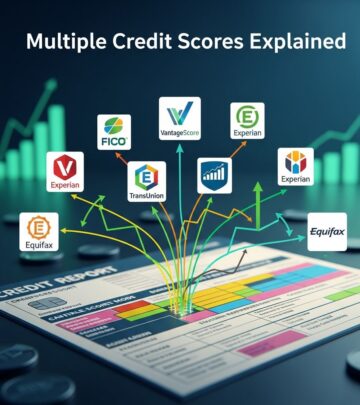
Two primary models dominate: FICO, developed by Fair Isaac Corporation, and VantageScore, created jointly by Equifax, Experian, and TransUnion. While both predict repayment likelihood, subtle differences in algorithms lead to varying scores.
Major Credit Score Models Explained
FICO Scores: The Industry Standard
FICO Scores power most lending decisions due to their long-standing reliability. Base versions like FICO Score 8 predict general credit behavior across products like personal loans and student debt.
Key factors include payment history (35%), amounts owed (30%), credit history length (15%), new credit (10%), and credit mix (10%).
VantageScore: A Collaborative Alternative
VantageScore offers a competitor model with similar 300-850 ranges but emphasizes utilization and balances more heavily. It’s gaining traction for its ability to score thinner files.
Recent versions adjust ranges slightly, such as Super Prime at 781-850.
Score Ranges and What They Mean
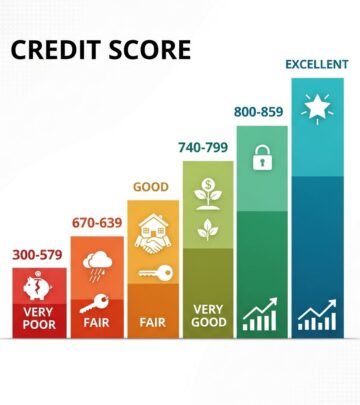
Ranges categorize risk levels, influencing approval odds and rates. Here’s a comparison:
| Category | FICO Range | VantageScore Range | Implications |
|---|---|---|---|
| Exceptional/Excellent | 800-850 | 781-850 | Best rates, easy approvals |
| Very Good | 740-799 | 661-780 | Strong terms, low risk |
| Good | 670-739 | N/A (overlaps) | Acceptable to most lenders |
| Fair | 580-669 | 601-660 | Higher rates, limited options |
| Poor | 300-579 | 300-600 | High risk, denials common |
Scores above 740 often qualify for prime rates, while below 580 face subprime challenges.
Industry-Specific Scores: Tailored Assessments
Beyond base models, specialized FICO variants refine predictions for sectors. Auto lenders favor FICO Auto Scores (250-900 range), weighing recent auto history.
Credit card issuers use FICO Bankcard Scores, prioritizing revolving debt patterns. Mortgage providers stick to base FICO like Score 2 or 5.
- Auto Loans: FICO Auto Score emphasizes vehicle payment trends.
- Credit Cards: FICO Bankcard Score focuses on utilization.
- Mortgages: Older base FICO versions for stability.
Lenders select models suiting their portfolios, so your general FICO may differ from a product-specific one.
Why Scores Vary Across Models and Bureaus
Multiple scores arise from diverse data sources (Equifax, Experian, TransUnion) and model tweaks. A strong FICO often correlates with solid VantageScore, but gaps occur due to weighting.
Industry versions expand ranges to 250-900 for granularity.
Which Score Do Lenders Check First?
For most consumer credit, FICO Score 8 or 9 is paramount, used by banks for broad applications.
Check the lender’s preference: Mortgages lean FICO, autos use specialized, cards vary. Free services from bureaus provide VantageScore, while myFICO offers comprehensive FICO views.
Steps to Access Your Key Credit Scores
- Review free weekly reports at AnnualCreditReport.com for data accuracy.
- Use bank apps or Credit Karma for VantageScore snapshots.
- Subscribe to myFICO for all FICO versions and simulations.
- Monitor via Experian or Equifax portals for bureau-specific scores.
Regular checks reveal discrepancies, allowing disputes.
Improving Your Most Important Credit Score
Enhance scores by targeting universal factors:
- Pay on time (35% impact).
- Keep utilization under 30%.
- Retain old accounts for history length.
- Limit new applications.
- Diversify credit types responsibly.
Positive changes reflect in 1-2 months.
Common Myths About Credit Scores
- Myth: One score rules all. Fact: Lenders pick per need.
- Myth: Higher range always better. Fact: 740+ unlocks optimal terms.
- Myth: VantageScore irrelevant. Fact: Used by some for approvals.
Frequently Asked Questions
What is the single most important credit score?
No universal “most important,” but FICO Score 8 is widely used for general lending.
Does checking my score hurt it?
Soft inquiries don’t; hard ones for applications do temporarily.
How often should I check scores?
Monthly via free tools, weekly reports yearly.
Can I have different scores from each bureau?
Yes, due to reporting variances.
What’s considered a strong score for mortgages?
740+ for best rates using base FICO.
Navigating Credit Scores for Financial Success
Understanding model nuances empowers better borrowing. Prioritize FICO for broad use, supplement with VantageScore, and tailor checks to goals. Consistent habits build lasting profiles.
For personalized loans, inquire lender models upfront. Tools like score simulators predict improvements.
References
- Types of Credit Scores — Marine Credit Union. 2024. https://www.marinecu.com/learning-hub/types-of-credit-scores/
- What are the Different Ranges of Credit Scores? — Equifax. 2025-03-15. https://www.equifax.com/personal/education/credit/score/articles/-/learn/credit-score-ranges/
- Why Are There Different Types of Credit Scores? — Bankrate. 2025-02-20. https://www.bankrate.com/personal-finance/credit/different-types-of-credit-scores/
- What Are the Different Credit Score Ranges? — Experian. 2024-11-10. https://www.experian.com/blogs/ask-experian/infographic-what-are-the-different-scoring-ranges/
- FICO Score Types: Why Multiple Versions Matter — myFICO. 2025-01-05. https://www.myfico.com/credit-education/credit-scores/fico-score-versions
- Credit Scores — MyCreditUnion.gov (NCUA). 2024. https://mycreditunion.gov/manage-your-money/credit/credit-scores
- Understanding Credit Scores — Wells Fargo. 2025. https://www.wellsfargo.com/goals-credit/smarter-credit/credit-101/why-so-many-credit-scores/
- Credit Scores — FTC Consumer Advice. 2024-09-01. https://consumer.ftc.gov/credit-scores
Similar Articles








Read full bio of Sneha Tete