Just-in-Time (JIT): Definition, System, and Examples
Understanding JIT: A lean manufacturing strategy that minimizes inventory and maximizes operational efficiency.
What Is Just-in-Time (JIT)?
Just-in-Time (JIT) is a production and inventory management strategy in which a company purchases raw materials and manufactures products only as needed to satisfy actual customer demand. Rather than stockpiling inventory in warehouses, JIT systems deliver goods as close as possible to the moment they are required, whether for retail shelves, manufacturing assembly lines, or end consumers.
The core philosophy of JIT centers on producing exactly what is needed, when it is needed, and in the amount needed. This approach originated in Japan during the early 1970s, primarily through Toyota’s development of the Toyota Production System (TPS). The system was built on two foundational concepts: “jidoka” (automation with a human touch, where equipment stops immediately when problems occur to prevent defective products) and the JIT concept, in which each production process generates only what the next process requires in continuous flow.
In modern business environments, JIT has evolved into a comprehensive management philosophy that extends beyond manufacturing to retail, construction, and service industries. Companies like Walmart, Target, and major automotive manufacturers have successfully implemented JIT principles to reduce holding costs, minimize waste, and improve cash flow.
How Just-in-Time Works
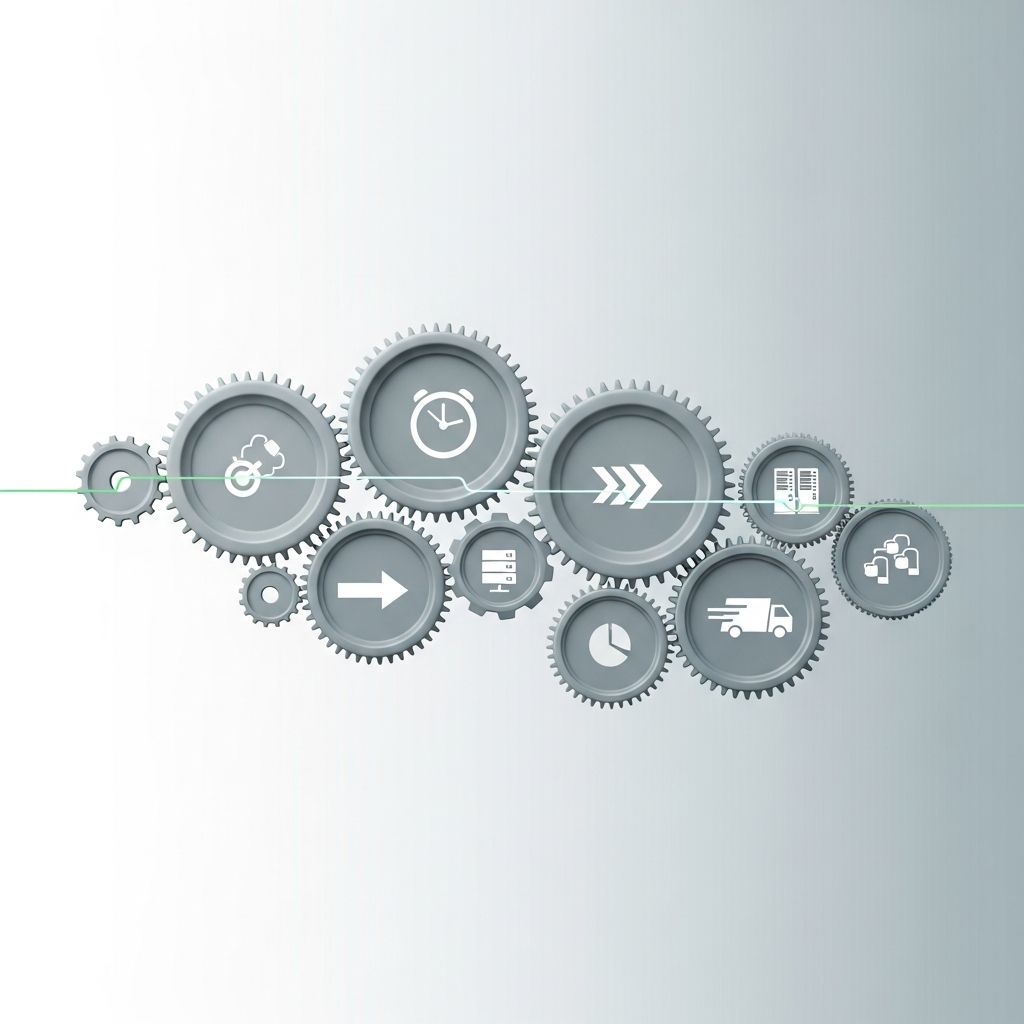
JIT operates on a demand-pull system rather than a supply-push model. Instead of forecasting demand and producing inventory speculatively, JIT systems respond to actual customer orders. The process typically involves several interconnected components:
Demand Monitoring and Kanban Signals
Effective JIT systems rely on constant and precise monitoring of demand through electronic inventory systems and Kanban signals. Kanban, a Japanese term meaning “sign” or “billboard,” is a visual signaling method used between various points in the production line. When inventory reaches a predetermined level, a Kanban signal alerts the production team that the next batch of parts or products is needed. This pull-based system ensures materials arrive exactly when required, preventing both overproduction and stockouts.
Supplier Relationships and Logistics
JIT success depends heavily on strong relationships with reliable suppliers who can deliver materials on schedule and with consistent quality. Companies implementing JIT typically work with fewer suppliers than traditional inventory systems require, establishing long-term partnerships built on trust and mutual commitment. Logistics and transportation coordination become critical functions, ensuring materials move smoothly from suppliers to production facilities to distribution centers with minimal delay.
Production Scheduling
JIT production scheduling is highly responsive and flexible. Rather than manufacturing in large batches, production occurs in smaller quantities aligned with actual demand. Setup times are reduced through continuous process improvement, allowing quick transitions between different products without significant productivity losses. This approach enables manufacturers to respond rapidly to market changes and customer preferences.
Key Principles of Just-in-Time
The JIT philosophy rests on several fundamental principles that guide implementation and operations:
- Waste Elimination: JIT systematically identifies and removes all forms of waste, including excess inventory, overproduction, unnecessary transportation, waiting time, and defects. The goal is achieving maximum efficiency with minimum resource consumption.
- Continuous Improvement (Kaizen): Organizations commit to ongoing process refinement, constantly seeking ways to reduce defects, decrease lead times, and enhance quality. This iterative approach drives incremental but sustained improvements over time.
- Quality at the Source: Problems are addressed immediately at their origin rather than discovered during inspection phases. Equipment stops automatically when defects occur, preventing defective products from moving forward.
- Workplace Organization (5S): Maintaining clean, organized workspaces and proper material placement supports efficiency and safety. The 5S methodology—Sort, Set in order, Shine, Standardize, and Sustain—creates a structured environment conducive to JIT operations.
- Setup Time Reduction: Minimizing the time required to change equipment from producing one product to another enables flexible, rapid production scheduling and reduces production costs.
- Level Production: Production rates are smoothed and balanced across the manufacturing process to avoid fluctuations that create bottlenecks or excess inventory.
Advantages of Just-in-Time Manufacturing
When properly implemented, JIT systems deliver substantial benefits across multiple operational dimensions:
Reduced Inventory Costs
By maintaining inventory at minimal levels or near-zero, companies dramatically reduce storage expenses, warehouse space requirements, and the capital tied up in unsold products. This frees up significant cash for other business investments and operational needs.
Enhanced Productivity and Efficiency
JIT eliminates wasted motions, unnecessary handling, and production delays. Streamlined workflows and focused production sequences increase output per unit of input, improving overall operational efficiency.
Improved Quality
The emphasis on defect prevention and immediate problem resolution results in higher product quality and reduced waste from rework or scrap. Suppliers are also motivated to maintain strict quality standards to meet JIT requirements.
Faster Response to Market Changes
JIT systems enable rapid adjustments to production schedules based on changing customer demand. Companies can quickly introduce new products or modify existing ones without managing excess obsolete inventory.
Reduced Waste
By producing only what is needed, JIT minimizes material waste, energy consumption, and disposal costs. This efficiency also supports sustainability objectives.
Improved Cash Flow
Lower inventory levels mean less capital is locked in inventory, improving working capital and cash flow positions. This financial flexibility can fund growth initiatives or strengthen balance sheets.
Disadvantages and Challenges of JIT
Despite its significant advantages, JIT implementation presents substantial challenges that organizations must carefully manage:
Supply Chain Vulnerability
JIT systems are highly dependent on supplier reliability and logistics efficiency. Any disruption—whether from supplier failures, transportation delays, natural disasters, or geopolitical events—can halt production. The COVID-19 pandemic and semiconductor shortages demonstrated how external shocks can severely impact JIT-dependent operations.
Demand Forecasting Errors
Overestimating demand results in excess inventory and profit reduction through markdowns and storage costs. Underestimating demand leads to stockouts, lost sales, and potentially missed market opportunities. For manufacturers, demand underestimation is particularly problematic because insufficient materials halt production, preventing delivery of promised products.
Higher Transportation Costs
Frequent, smaller deliveries may result in higher per-unit transportation costs compared to consolidated shipments. This can offset some inventory savings, particularly for geographically dispersed operations.
Complexity and Coordination Requirements
JIT demands sophisticated inventory management systems, precise coordination across multiple suppliers and production facilities, and exceptional operational discipline. Implementation requires significant investment in technology infrastructure and personnel training.
Quality Control Challenges
With minimal inventory buffers, defective materials create immediate production disruptions. Quality standards must be extremely high, and corrective action systems must be highly responsive.
Inflexibility with Significant Demand Swings
Extreme seasonal fluctuations or unexpected demand spikes can overwhelm JIT systems designed for stable, predictable demand patterns.
Real-World JIT Implementation Examples
Retail: Walmart and Target
Major retailers employ JIT principles extensively to minimize inventory while serving high customer volumes. Walmart and Target time seasonal inventory arrivals to coincide with demand peaks. As seasons conclude and demand drops, shelves are cleared to make room for the next season’s offerings. This approach reduces storage costs, minimizes markdowns, and improves inventory turnover rates.
Automotive Manufacturing: Toyota
Toyota pioneered modern JIT systems and continues as an industry leader in JIT implementation. The company’s suppliers deliver parts in precise sequences, with vehicles assembled to specific customer orders. This reduces inventory throughout the supply chain while enabling significant customization.
Electronics and Consumer Products
Major electronics manufacturers have adopted JIT principles, particularly for components subject to rapid technological obsolescence. Custom-built products, like computers and smartphones, are often not manufactured until customer orders are received, with components delivered just before assembly.
Construction Industry
Construction presents a tailor-made environment for JIT implementation, given the industry’s exposure to sudden changes and project rescopes. Tool room managers can dynamically respond to change orders and equipment transfers without excessive hoarding or increased downtime. Success requires technology adoption for real-time visibility and dynamic management approaches.
Grocery and Perishables
Grocery retailers implement JIT for perishable goods to minimize spoilage. Stockboys rotate inventory, placing newer deliveries behind older goods to ensure products are sold before expiration. This practice maintains product freshness and reduces waste.
JIT Technology and Systems
Modern JIT implementation relies heavily on advanced technology platforms:
- Electronic Inventory Management Systems: Real-time tracking systems monitor inventory levels across multiple locations, triggering automatic reorder signals when thresholds are reached.
- Enterprise Resource Planning (ERP) Systems: Integrated platforms coordinate demand forecasting, production scheduling, supplier communications, and logistics across the organization.
- Data Analytics and Predictive Tools: Advanced analytics improve demand forecasting accuracy and identify optimization opportunities within production processes.
- Supply Chain Visibility Platforms: Real-time tracking of materials and products through the supply chain enables rapid response to disruptions.
- Automated Production Equipment: Smart manufacturing equipment can adjust production schedules automatically based on inventory signals and demand data.
JIT in Different Industries
Manufacturing
Manufacturing remains JIT’s primary application domain. Industries including automotive, electronics, pharmaceuticals, and consumer goods have successfully implemented JIT to reduce costs and improve competitiveness.
Retail and Distribution
Retailers use JIT principles through vendor-managed inventory (VMI) agreements and rapid replenishment systems. Major retailers maintain detailed demand forecasts and coordinate closely with suppliers for frequent deliveries.
Healthcare and Pharmaceuticals
Healthcare providers implement JIT for medical supplies and medications, reducing storage requirements in hospitals and clinics while ensuring critical materials remain available.
Food and Beverage
Food manufacturers and distributors rely on JIT for perishable goods management, coordinating production and delivery with consumption patterns to minimize spoilage.
Construction
Construction companies implement JIT for materials delivery, coordinating suppliers to deliver materials exactly when needed on job sites, reducing on-site storage requirements and project carrying costs.
Implementing JIT: Best Practices and Considerations
Successful JIT implementation requires careful planning and execution:
- Start with Demand Analysis: Thoroughly analyze historical demand patterns, identify variability, and establish reliable forecasting mechanisms before implementation.
- Strengthen Supplier Relationships: Develop partnerships with reliable, quality-focused suppliers capable of meeting JIT requirements. Establish long-term agreements with clear performance metrics.
- Invest in Technology: Implement robust inventory management and communication systems enabling real-time visibility and rapid information sharing.
- Develop Contingency Plans: Create backup supplier relationships and safety stock protocols for critical materials to mitigate supply chain disruption risks.
- Train Personnel: Ensure staff understands JIT principles and possesses skills required for effective system operation and continuous improvement.
- Start Small: Pilot JIT in specific product lines or facilities before enterprise-wide rollout. Learn from initial experiences and refine approaches.
- Monitor Key Metrics: Track inventory turnover rates, carrying costs, production efficiency, quality metrics, and cash flow to assess implementation success.
Frequently Asked Questions
Q: What is the primary goal of Just-in-Time manufacturing?
A: The primary goal of JIT is to minimize inventory costs while maintaining production efficiency and meeting customer demand exactly. JIT achieves this through producing only what is needed, when needed, and in the quantities required, thereby eliminating waste and reducing working capital requirements.
Q: How does JIT differ from traditional inventory management?
A: Traditional inventory management uses a push system, forecasting demand and producing inventory in advance. JIT uses a pull system, producing only when customer demand is confirmed. Traditional systems maintain safety stock buffers; JIT minimizes inventory, relying on precise demand signals and reliable suppliers.
Q: What is Kanban in the context of JIT?
A: Kanban is a visual signaling system used in JIT to communicate production needs between different stages of the manufacturing process. When inventory reaches a predetermined level, a Kanban signal (physical card or electronic notification) alerts the production team that the next batch is needed, triggering production or supplier delivery.
Q: What are the main risks of implementing JIT?
A: Primary risks include supply chain disruption vulnerability, demand forecasting errors, quality control challenges, and coordination complexity. Organizations must develop contingency plans, maintain strong supplier relationships, and invest in robust technology systems to mitigate these risks.
Q: Can small businesses implement JIT effectively?
A: Yes, but smaller businesses may require modification of traditional JIT approaches. They should start with specific product lines, develop close relationships with reliable suppliers, and utilize affordable inventory management technology. The principles remain valuable, though implementation scale and complexity may differ from large enterprises.
Q: How does JIT impact cash flow?
A: JIT improves cash flow by reducing capital tied up in inventory. Lower inventory levels mean companies have more available cash and credit for other business investments or operational needs, strengthening overall financial flexibility and working capital positions.
Q: Is JIT suitable for all product types?
A: JIT works best for products with relatively predictable demand, reasonable lead times, and quality stability. It is less suitable for products with highly erratic demand patterns, very short shelf lives requiring quick rotation, or items requiring long lead times from suppliers. Organizations should evaluate product characteristics before JIT implementation.
References
- Just-in-Time Manufacturing (JIT) Definition — Arena Solutions. Accessed 2025-11-29. https://www.arenasolutions.com/resources/glossary/just-in-time-manufacturing/
- What Is Just-in-Time Inventory? Examples and System Meaning — ONE-KEY Resources, Milwaukee Tool. Accessed 2025-11-29. https://onekeyresources.milwaukeetool.com/en/what-is-just-in-time-inventory
- Just-in-Time (JIT) Definition — Investopedia. Accessed 2025-11-29. https://www.investopedia.com/terms/j/jit.asp
- Toyota Production System — Toyota Official Website. Accessed 2025-11-29. https://www.toyota.com/
- Just-In-Time (JIT) Manufacturing: Definitions and Concepts — Institute for Manufacturing, University of Cambridge. Accessed 2025-11-29. https://www.ifm.eng.cam.ac.uk/
Similar Articles








Read full bio of Sneha Tete