Junk Bonds: High-Yield Debt Securities Explained
Understanding junk bonds: risks, rewards, and investment strategies for high-yield debt.
What Are Junk Bonds?
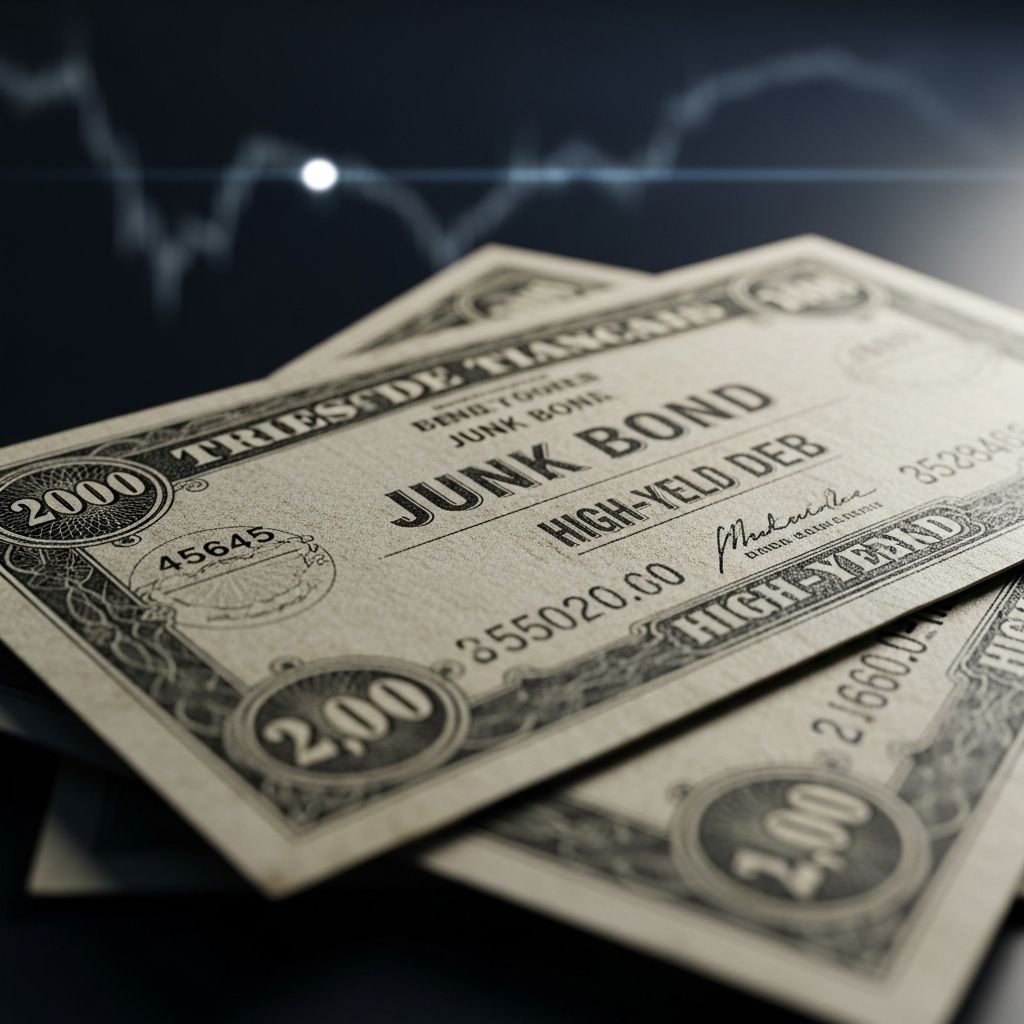
Junk bonds, also known as high-yield bonds or speculative-grade bonds, are debt securities issued by companies with lower credit ratings. These bonds carry a significantly higher risk of default compared to investment-grade bonds, but they compensate investors with substantially higher yields. Junk bonds are typically issued by companies that are either newly established, financially unstable, or undergoing significant organizational changes. The term “junk” reflects the elevated risk profile associated with these securities, but for investors with appropriate risk tolerance, they can offer attractive opportunities for portfolio diversification and income generation.
The distinction between junk bonds and investment-grade bonds is primarily based on credit ratings assigned by major rating agencies such as Moody’s, Standard & Poor’s, and Fitch. Bonds rated below BBB- by Standard & Poor’s or below Baa3 by Moody’s are classified as junk bonds. This classification indicates that the issuing company has a higher probability of defaulting on its debt obligations.
Understanding Credit Ratings and Classification
Credit ratings play a crucial role in determining whether a bond is classified as junk or investment-grade. These ratings assess the creditworthiness of the bond issuer and the likelihood of repaying principal and interest on time.
Investment-Grade Ratings
- AAA to AA: Highest quality bonds with minimal default risk
- A to BBB: Upper and lower-medium quality bonds with manageable default risk
Speculative-Grade Ratings (Junk Bonds)
- BB to B: High-yield bonds with significant default risk
- CCC to C: Highly speculative bonds with very high default probability
- D: Bonds in default or near-default status
Rating agencies continuously monitor the financial health of bond issuers and may upgrade or downgrade ratings based on changes in the company’s financial condition, market performance, and industry dynamics. A downgrade from investment-grade to junk status, often referred to as a “fallen angel,” can significantly impact bond prices and investor sentiment.
Key Characteristics of Junk Bonds
Understanding the fundamental characteristics of junk bonds is essential for investors considering these securities.
Higher Yield Potential
The most prominent feature of junk bonds is their significantly higher yield compared to investment-grade bonds. While investment-grade bonds might yield 2-4%, junk bonds typically offer yields of 6-12% or higher, depending on market conditions and the specific issuer’s risk profile. This yield differential compensates investors for accepting the elevated risk of default.
Greater Default Risk
Companies issuing junk bonds often have weaker balance sheets, higher debt levels relative to equity, and less predictable cash flows. Economic downturns, industry disruptions, or management missteps can quickly deteriorate an issuer’s financial condition, potentially leading to default. Historical default rates for junk bonds average around 3-5% annually during normal economic periods but can spike to 10-15% or higher during recessions.
Price Volatility
Junk bond prices tend to be more volatile than investment-grade bonds. Market sentiment, changes in interest rates, and shifts in the credit outlook for specific issuers can cause significant price fluctuations. During market stress or economic uncertainty, junk bonds often experience sharp declines in value as investors flee to safer assets.
Liquidity Considerations
While the junk bond market has grown substantially, individual junk bonds may have lower liquidity than highly-traded investment-grade bonds. This means it can be more challenging to buy or sell large positions without affecting market prices, particularly for bonds issued by smaller or less-known companies.
Why Companies Issue Junk Bonds
Various companies resort to issuing junk bonds for different strategic reasons. Understanding the issuer’s motivation can provide insights into the bond’s risk profile.
- Funding Growth: Rapidly expanding companies with limited credit history or access to traditional financing use junk bonds to fund expansion, acquisitions, or research and development.
- Leveraged Buyouts: Private equity firms use junk bonds to finance leveraged buyouts, with the expectation that operational improvements will enhance the company’s cash flow and enable debt repayment.
- Refinancing Existing Debt: Companies with deteriorating credit quality may issue new junk bonds to refinance maturing debt or fund operations, a situation that signals increasing financial stress.
- Dividend Payments and Shareholder Returns: Some companies issue junk bonds to finance dividends or share buybacks, prioritizing shareholder returns over debt reduction.
- Industry Transitions: Established companies undergoing significant industry disruptions may temporarily access the junk bond market during restructuring periods.
Risks Associated with Junk Bonds
Investing in junk bonds involves multiple layers of risk that investors must carefully consider.
Default Risk
The primary risk is that the issuing company may be unable to pay interest or principal when due. Unlike investment-grade bonds where default is relatively rare, junk bond issuers face a meaningful probability of default, especially during economic downturns.
Economic Cycle Sensitivity
Junk bonds are highly sensitive to economic cycles. During recessions, corporate earnings decline, credit spreads widen, and default rates increase. This cyclical pattern means junk bond returns are often negative precisely when investors might need portfolio stability.
Liquidity Risk
During market stress, liquidity in the junk bond market can evaporate quickly. Investors unable to sell their positions may face significant losses or be forced to hold distressed securities to maturity.
Interest Rate Risk
Like all bonds, junk bonds decline in value when interest rates rise. The longer the bond’s maturity, the greater the potential price decline from rising rates.
Call Risk
Many junk bonds include call provisions allowing issuers to redeem bonds before maturity. Issuers typically exercise this option when interest rates decline and they can refinance at lower rates, depriving investors of expected future income.
Potential Returns and Investment Benefits
Despite elevated risks, junk bonds offer potential benefits that attract income-focused investors.
High Yield Potential
The substantial yield differential provides regular income that can significantly enhance portfolio returns, particularly in low-interest-rate environments where investment-grade yields are compressed.
Diversification Benefits
Junk bonds don’t move in perfect correlation with other asset classes. Their price movements are driven more by credit fundamentals and company-specific factors than broad market trends, potentially providing diversification benefits.
Value Opportunities
Market dislocations sometimes create opportunities to purchase quality junk bonds at distressed prices. Investors who can withstand volatility may accumulate positions that eventually recover as companies improve financially.
Equity-Like Upside
As companies recover financially, their credit spreads compress and bond prices appreciate. Distressed recoveries can generate returns exceeding the coupon income.
The Junk Bond Market Structure
The modern junk bond market is a significant component of global capital markets.
Market Size and Growth
The global high-yield bond market exceeds $1.5 trillion in outstanding debt, with the U.S. market representing the largest segment. The market has grown substantially since its emergence in the 1980s, becoming an essential financing source for companies across various industries.
Key Market Participants
- Hedge Funds: Pursue active trading strategies and distressed opportunities
- Mutual Funds and ETFs: Provide passive and active exposure to high-yield bonds
- Insurance Companies: Seek yield enhancement for long-term liabilities
- Pension Funds: Allocate portions of portfolios to high-yield for return enhancement
- Retail Investors: Access the market through funds rather than individual bond purchases
Investing in Junk Bonds: Practical Considerations
Direct Bond Purchases
Sophisticated investors with substantial capital may purchase individual junk bonds. This approach requires significant credit analysis capabilities, market access, and diversification across multiple issuers to manage idiosyncratic risk.
Mutual Funds
High-yield bond mutual funds pool investor capital to build diversified portfolios managed by professional credit analysts. Funds offer liquidity, diversification, and professional management but include fees that reduce returns.
Exchange-Traded Funds (ETFs)
High-yield ETFs provide similar benefits to mutual funds with the additional advantage of intra-day trading and typically lower expense ratios. Popular examples track broad high-yield indices or focus on specific sectors.
Credit Analysis
Before investing, evaluate the issuer’s financial statements, debt levels, cash flow generation, competitive position, and industry dynamics. Understanding what could go wrong is crucial for junk bond investors.
Junk Bonds vs. Investment-Grade Bonds
| Characteristic | Investment-Grade Bonds | Junk Bonds |
|---|---|---|
| Credit Rating | BBB- and above | BB and below |
| Yield | 2-4% | 6-12%+ |
| Default Risk | Very Low | Significant |
| Price Volatility | Low to Moderate | High |
| Liquidity | High | Moderate to Low |
| Best For | Conservative, Income-focused | Aggressive, Yield-seeking |
Historical Context and Market Cycles
The junk bond market has experienced significant cycles reflecting broader economic trends. During the 1980s, junk bonds financed the leveraged buyout boom. The 1990s saw recovery and growth. The 2008 financial crisis triggered widespread defaults and massive value destruction. The subsequent recovery and years of low interest rates drove significant capital flows into high-yield bonds. The COVID-19 pandemic in 2020 created another market stress event, though coordinated policy responses limited damage. Understanding these historical patterns can inform investment timing and risk management decisions.
Frequently Asked Questions
Q: Are junk bonds suitable for conservative investors?
A: No. Junk bonds are generally inappropriate for conservative investors due to their high default risk and volatility. Conservative portfolios should focus on investment-grade bonds and other stable income sources.
Q: Can junk bonds become investment-grade?
A: Yes. When a company’s financial condition improves significantly, rating agencies may upgrade the bond to investment-grade status. This can result in substantial price appreciation as the bond attracts a broader investor base.
Q: What’s the relationship between interest rates and junk bond prices?
A: Junk bond prices decline when interest rates rise, similar to all bonds. However, junk bonds also respond to changes in credit spreads—the yield difference between junk and investment-grade bonds. Widening spreads (indicating increased risk perception) reduce junk bond prices regardless of overall rate movements.
Q: How should I diversify within junk bonds?
A: Diversify across different industries, company sizes, bond maturities, and issuers. Using a high-yield bond fund or ETF automatically provides broad diversification that individual investors would struggle to achieve.
Q: What happens to junk bonds if a company files for bankruptcy?
A: Junk bond holders become unsecured creditors in bankruptcy proceedings. They typically recover only pennies on the dollar, sometimes receiving equity in the reorganized company instead of cash. Senior debt holders are paid before unsecured junk bondholders.
References
- High-Yield Bond Market Overview — Securities Industry and Financial Markets Association (SIFMA). 2024. https://www.sifma.org/resources/research/market-data/
- Corporate Bond Rating Methodology — Standard & Poor’s Global Ratings. 2024. https://www.spglobal.com/ratings/en/research/articles/
- Default and Recovery Rates, 1920-2023 — Moody’s Investors Service. 2024. https://www.moodys.com/research/moody
- Fixed Income Analysis — CFA Institute. 2023. https://www.cfainstitute.org/
- Understanding Bond Liquidity and Market Microstructure — Federal Reserve Bank of New York. 2023. https://www.newyorkfed.org/research
Similar Articles








Read full bio of Sneha Tete