Understanding Jumbo Mortgages: Qualification and Lending Standards
Explore the unique requirements and considerations for securing a jumbo mortgage loan.

When purchasing a high-value property, many homebuyers encounter financing options that fall outside traditional lending parameters. A jumbo mortgage represents a specialized lending category designed for borrowers seeking larger loan amounts than those established by government-sponsored enterprises. These loans present unique opportunities and challenges that require careful financial preparation and understanding of stricter qualification benchmarks.
What Defines a Jumbo Mortgage in Today’s Market
A jumbo mortgage is fundamentally a loan that surpasses the maximum threshold established by the Federal Housing Finance Agency (FHFA) for conventional conforming loans. As of 2026, these limits typically stand at $832,750 for single-family residential properties, though these thresholds can vary based on geographic location and property characteristics[10]. When a borrower seeks financing exceeding these amounts, they enter the jumbo loan territory, which operates under distinctly different regulatory frameworks and lending practices compared to conventional mortgages.
The distinction between jumbo and conforming loans carries significant implications for both lenders and borrowers. While conforming loans can be purchased by Fannie Mae and Freddie Mac, jumbo loans remain held by private lenders who assume greater financial risk. This fundamental difference in risk exposure drives the more stringent qualification criteria that characterize jumbo lending.
Credit Score Requirements for Jumbo Borrowers
Financial institutions approaching jumbo mortgage applications implement substantially higher credit score thresholds than those required for standard mortgages. Most lenders establish minimum FICO score requirements ranging from 700 to 760, with many major institutions such as U.S. Bank requiring scores of 740 or higher. This contrasts sharply with conforming mortgage standards, where credit scores of 620 may be acceptable.
The elevated credit score expectations reflect the lender’s assessment of borrower reliability and payment history. A strong credit profile demonstrates that you have consistently managed debt obligations and maintained responsible financial habits over an extended period. Some specialized programs, such as VA jumbo loans available to active military and veterans, may accommodate credit scores in the mid-to-low 600s range, representing a notable exception to standard lending practices.
Debt-to-Income Ratio Considerations
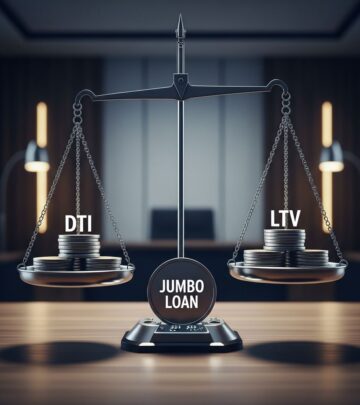
Lenders evaluate your capacity to service jumbo mortgage debt through the debt-to-income (DTI) ratio metric, which measures the percentage of gross monthly income dedicated to debt obligations. For jumbo mortgages, acceptable DTI ratios typically cap at 43 percent, though qualifying for more favorable interest rates and terms may require ratios below 36 percent. This represents a meaningful departure from conforming loan standards, where DTI ratios as high as 50 percent may be acceptable on some products.
The emphasis on maintaining a low DTI ratio stems from lender concerns about payment sustainability during periods of financial stress. By requiring borrowers to maintain substantial monthly income relative to their debt obligations, lenders seek assurance that mortgage payments can be prioritized even if economic circumstances deteriorate.
Substantial Down Payment Obligations
Down payment requirements for jumbo mortgages establish another significant barrier to entry that distinguishes these loans from conventional financing options. While conforming loans may require down payments of 3 to 5 percent, jumbo mortgages typically demand 10 to 20 percent of the purchase price, with many lenders preferring the higher end of this range. For a one-million-dollar property purchase, this translates to down payments of $100,000 to $200,000 or more.
The substantial down payment requirement serves multiple purposes within the lender’s risk management framework. A larger equity position creates immediate financial commitment from the borrower and reduces the lender’s exposure to property depreciation or default scenarios. Additionally, demonstrating capacity to accumulate such substantial sums provides evidence of financial discipline and asset management capability.
Cash Reserves and Liquidity Requirements
Beyond the down payment itself, jumbo mortgage lenders require evidence of substantial liquid assets maintained in reserve. Typical reserve requirements range from six to twelve months of mortgage payments, representing a meaningful sum for high-value properties. For a borrower financing a one-million-dollar jumbo mortgage at prevailing rates, this translates to cash reserves of $40,000 to $80,000 or more, maintained independently of down payment and closing cost reserves.
These reserve requirements address lender concerns about payment interruption due to income disruption, unemployment, or financial emergency. By requiring substantial liquid assets, lenders ensure borrowers possess a financial buffer sufficient to maintain payments during periods when employment income may be temporarily unavailable.
Property Appraisal and Valuation Standards
The appraisal process for jumbo mortgages frequently involves complexities absent from standard mortgage underwriting. High-value properties often possess unique characteristics, specialized amenities, or architectural features that lack comparable recent sales in the immediate geographic area. This reality creates appraisal challenges that may necessitate dual appraisals rather than the single appraisal required for conforming loans.
Dual appraisals provide lenders with multiple professional opinions regarding property valuation, reducing uncertainty when comparable properties are limited or market data is sparse. While this requirement increases appraisal costs, it reflects the heightened due diligence standards applied to higher-value transactions.
Manual Underwriting and Individualized Assessment
Jumbo mortgage applications undergo manual underwriting processes where experienced loan underwriters personally review comprehensive financial documentation and conduct individualized assessments. Unlike conforming mortgages that often rely on automated underwriting systems, jumbo underwriting acknowledges the complexity and customization required for larger, riskier transactions.
This personalized review process allows underwriters to evaluate complex financial situations, evaluate compensating factors, and make nuanced decisions regarding loan approval. A borrower with an exceptional credit score might offset a slightly elevated DTI ratio, or substantial cash reserves might compensate for moderate credit profile concerns.
Interest Rates and Loan Costs
Historically, jumbo mortgages carried interest rate premiums reflecting their elevated risk profiles relative to conforming loans. Contemporary lending environments have substantially altered this dynamic, with current jumbo mortgage average annual percentage rates frequently competitive with or occasionally lower than conforming loan rates. This shift reflects improved market conditions, increased competition among jumbo lenders, and enhanced credit quality among jumbo borrowers.
Despite potentially favorable interest rate environments, the larger loan amounts involved mean that even small percentage-rate differences translate to substantial annual interest expense variations. Borrowers should carefully evaluate rate quotes from multiple lenders, as rate shopping can yield meaningful savings across the loan’s thirty-year lifespan.
Comparing Jumbo and Conforming Loan Standards
| Qualification Factor | Conforming Loans | Jumbo Loans |
|---|---|---|
| Loan Amount Limit | Up to $832,750 | Above $832,750 |
| Minimum Credit Score | 620 | 700-760 |
| Maximum DTI Ratio | 50% | 43% (36% preferred) |
| Down Payment | 3-5% | 10-20% |
| Cash Reserves | Often not required | 6-12 months payments |
| Appraisal Process | Single appraisal | Often dual appraisals |
| Underwriting | Automated systems | Manual review |
Tax Deduction Implications for Jumbo Borrowers
Federal tax law changes implemented in 2018 established a $750,000 cap on mortgage debt for which interest payments qualify as tax deductible, reduced from the previous one-million-dollar threshold. For borrowers with jumbo mortgages exceeding $750,000, this means that mortgage interest paid on the excess portion does not provide tax benefits even for itemizing taxpayers.
This tax limitation warrants consideration when evaluating the true cost of jumbo financing. Borrowers should consult tax professionals to understand how jumbo mortgage interest limitations affect their individual tax situations, particularly those in higher tax brackets where mortgage interest deductions traditionally provided substantial benefits.
Property Type Flexibility and Limitations
Jumbo mortgage financing accommodates diverse property categories, including primary residences, vacation homes, and investment properties. However, qualification requirements and maximum loan-to-value ratios may vary depending on the specific property type and number of residential units involved. Investment properties and vacation homes may face more restrictive lending parameters than primary residence financing.
Strategic Preparation for Jumbo Mortgage Success
Prospective jumbo borrowers benefit from strategic financial preparation before initiating the application process. Evaluating personal financial situations comprehensively allows borrowers to identify areas requiring improvement, whether credit profile strengthening or debt reduction initiatives. Beginning the down payment and reserve accumulation process well in advance of anticipated purchase timelines provides psychological and financial advantages.
Reviewing credit reports for accuracy and disputing erroneous information can improve credit scores before lender inquiry. Similarly, prioritizing high-interest debt elimination reduces DTI ratios and improves financial profiles. Building relationships with jumbo-specialized mortgage lenders provides access to expertise and potential rate advantages compared to generalist loan officers unfamiliar with jumbo-specific requirements.
Frequently Asked Questions About Jumbo Mortgages
What geographic factors influence jumbo loan limits?
Jumbo loan thresholds vary by county and metropolitan area, reflecting regional variations in housing costs and market conditions. Borrowers should verify the specific loan limits applicable to their intended property location, as limits may differ substantially from national figures.
Can jumbo loans be refinanced or modified?
Yes, jumbo mortgages can be refinanced through new jumbo loan originations, though refinancing decisions should account for origination costs, rate environments, and remaining loan terms. Loan modifications may be available through some lenders, though these typically remain less accessible than conforming mortgage modification programs.
How do compensating factors influence jumbo approvals?
Compensating factors such as substantial liquid assets, exceptional credit histories, or professional credentials may offset minor deficiencies in other qualification areas. Experienced underwriters evaluate these factors during manual review processes, potentially allowing approval for borrowers with slightly imperfect profiles when offsetting strengths exist.
Are jumbo loans available from all mortgage lenders?
Not all mortgage lenders offer jumbo financing, as these loans require specialized expertise and capital availability. Major banks and specialized jumbo lenders typically provide these products, though availability and terms vary substantially among institutions.
Looking Forward in Jumbo Mortgage Markets
Jumbo mortgage markets continue evolving as competitive lending environments encourage specialized lenders to develop innovative products and flexible qualification frameworks. Prospective borrowers should explore multiple lending options, comparing not only interest rates but also overlays, required documentation, and underwriting speed. As wealth distribution patterns shift and real estate markets evolve, jumbo financing accessibility and terms may continue changing in response to broader economic and regulatory developments.
References
- What Is a Jumbo Loan? — Bankrate. 2024. https://www.bankrate.com/mortgages/what-is-jumbo-mortgage/
- What Are Jumbo Loans? How They Work and Who Qualifies — Ally Bank. 2024. https://www.ally.com/stories/home/what-is-a-jumbo-mortgage/
- Jumbo Loans: What You Need to Know — NerdWallet. 2024. https://www.nerdwallet.com/mortgages/learn/jumbo-loans-what-you-need-to-know
- Jumbo Loan Limits and Requirements for 2026 — Rocket Mortgage. 2025. https://www.rocketmortgage.com/learn/jumbo-loan-limits
- What Is a Jumbo Loan? — Experian. 2024. https://www.experian.com/blogs/ask-experian/what-is-a-jumbo-loan/
- Jumbo Loan: Definition, Requirements and How to Qualify — Cornell Law School Legal Information Institute. 2023. https://www.law.cornell.edu/wex/jumbo_loan
- Jumbo Loan Requirements & How to Qualify — Chase Bank. 2025. https://www.chase.com/personal/mortgage/education/financing-a-home/how-to-qualify-for-jumbo-mortgage-loan
Similar Articles








Read full bio of Sneha Tete