Joint Mortgages: 7-Step Guide To Applying And Qualifying
Discover the essentials of joint mortgages, from eligibility rules to application steps and legal considerations for shared home financing.
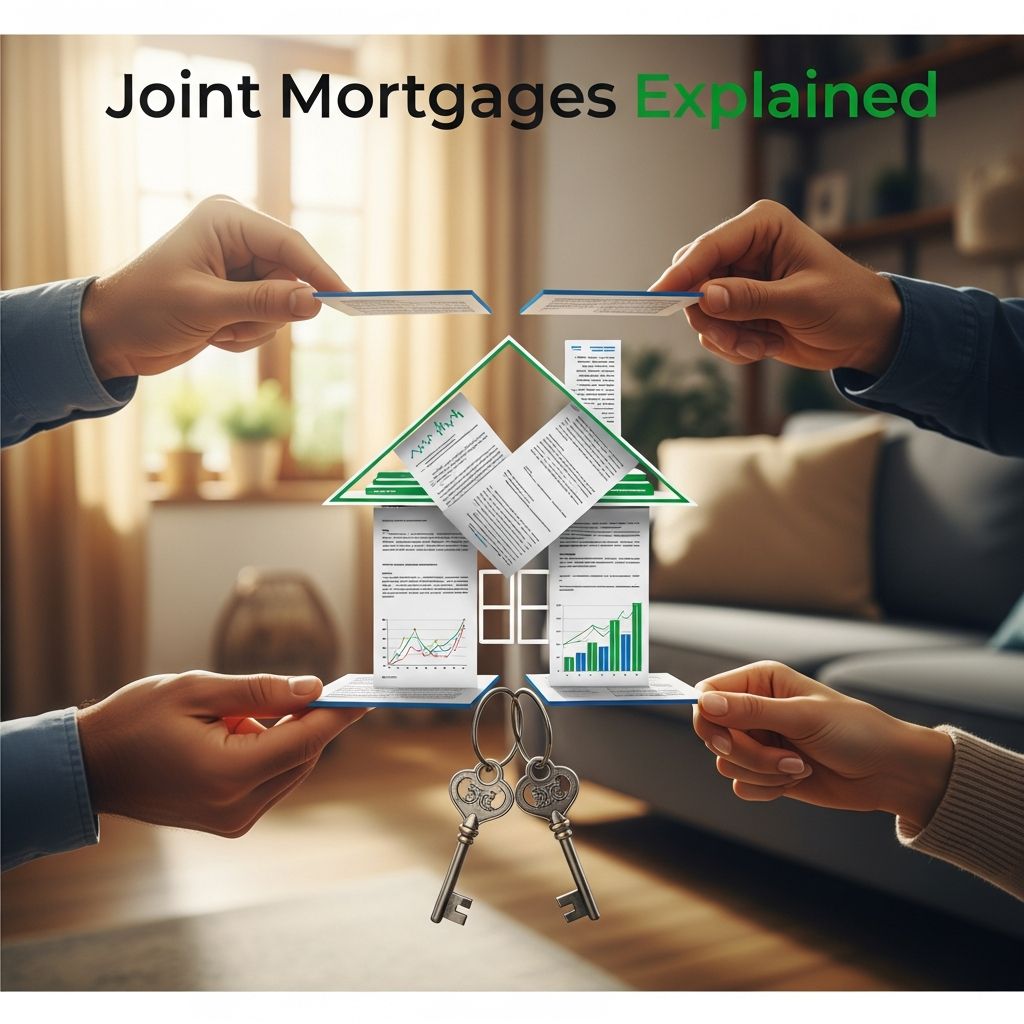
Joint mortgages enable multiple individuals to apply for and share responsibility on a home loan, pooling their financial strengths to qualify for better terms or larger amounts. This approach suits couples, family members, or friends purchasing property together, but requires careful planning due to shared liability.
Understanding Joint Mortgages and Who Qualifies
A joint mortgage involves two or more applicants submitting a single loan application, where all parties become equally responsible for repayment. Lenders evaluate the combined financial profiles, including credit scores, income, and debts, to assess risk. All co-borrowers must be at least 18 years old, and the lender must offer joint loan products.
Eligibility hinges on meeting standard underwriting standards, such as stable employment, sufficient income, and manageable debt levels. Non-married individuals, like partners, siblings, or parents with children, can apply as long as they demonstrate joint intent—a regulatory requirement under laws like Regulation B, which mandates clear documentation of shared credit application at the outset.
- Age Requirement: Every applicant over 18.
- Lender Approval: Confirm the institution supports multiple borrowers.
- Joint Intent: Both parties must affirm their intent via signatures or statements on the application.
Demonstrating joint intent prevents misclassification of loans and ensures compliance. For instance, signing a joint financial statement alone does not suffice; explicit acknowledgment is needed, especially in phone or email applications.
Financial Factors Lenders Evaluate
Lenders scrutinize several metrics from all applicants to determine loan viability. A strong collective profile can secure lower rates or higher approval amounts, but weaknesses in one borrower’s history may drag down the entire application.
| Factor | Description | Impact on Joint Application |
|---|---|---|
| Credit Scores | Average or lowest score among applicants influences rates | Poor score from one can raise costs for all |
| Debt-to-Income (DTI) Ratio | Total debts divided by combined income | High DTI may limit loan size |
| Income & Employment | Proof of steady earnings from all | Boosts qualification if balanced |
| Savings & Assets | Down payment reserves and reserves | Combined funds strengthen case |
The “4 Cs” of underwriting—capacity (income), capital (savings), credit, and collateral (property value)—apply rigorously to joint applications. Lenders verify employment history and income stability for each person, as inconsistent earnings from one can jeopardize approval.
Step-by-Step Guide to Applying
Securing a joint mortgage follows a structured process, starting with preparation and ending at closing. Both parties must participate fully at each stage.
- Assess Finances Together: Review credit reports, calculate combined DTI, and estimate affordability using online calculators. Agree on budget, contributions, and property type.
- Research Lenders: Compare rates, fees, and joint-specific policies. Opt for those accommodating varied credit profiles, like scores as low as 500 in some programs.
- Obtain Pre-Approval: Submit joint applications with income proofs, bank statements, and IDs. This reveals your borrowing power.
- House Hunt: Partner with agents to find homes within pre-approved limits.
- Submit Full Application: Provide detailed docs like tax returns, pay stubs, and debt statements from all borrowers.
- Underwriting & Appraisal: Lender verifies info and appraises the property.
- Close the Loan: All sign documents, bringing funds for closing costs.
Document joint intent explicitly—via application notes, separate statements, or initials—especially for non-traditional setups like business loans.
Pros and Cons of Joint Borrowing
Joint mortgages offer advantages but carry risks, particularly in shared liability.
- Advantages:
- Higher combined income qualifies for larger loans.
- Better rates if all have strong credit.
- Shared down payments ease entry.
- Builds equity for multiple owners.
- Disadvantages:
- Full liability for all, even if one defaults.
- One’s poor credit harms everyone.
- Complicates separation or selling.
- Credit impact from missed payments affects all scores.
For couples, joint applications promote equality, even if one is a non-working homemaker with good credit.
Legal and Ownership Considerations
Joint mortgages tie borrowers legally to repayment, but ownership can vary—joint tenancy with rights of survivorship or tenants in common. Consult attorneys for deeds matching intent, especially unmarried pairs. In community property states, additional disclosures apply.
Co-borrowers remain liable post-separation unless refinanced. Legal review of terms is advisable for complex scenarios, though not mandatory.
Alternatives to Full Joint Applications
Not always ideal, solo applications may suit if one qualifies alone, avoiding long-term ties. Or, one as primary borrower with non-occupant co-signer for income boost without ownership.
Frequently Asked Questions
Can unmarried people get a joint mortgage?
Yes, friends, siblings, or partners over 18 can apply if the lender allows and joint intent is documented.
What if one borrower has bad credit?
It may increase rates or deny approval; improve scores or seek flexible lenders first.
Do both need to attend closing?
Typically yes, for signatures and funds.
How does DTI work for joint loans?
Combined monthly debts divided by total income; aim below 43%.
Is a lawyer required?
No, but recommended for reviewing docs in non-standard cases.
Joint mortgages demand teamwork in finances and commitment. Thorough preparation maximizes success while minimizing pitfalls.
References
- What Is A Joint Mortgage, And Should You Get One? — Bankrate. 2024. https://www.bankrate.com/mortgages/joint-mortgage/
- Clarifying the Joint Intent Requirements at Application — TCA. 2023. https://www.tcaregs.com/clarifying-the-joint-intent-requirements-at-application/
- What is a Joint Mortgage and How Does It Work? — Guaranteed Rate. 2024. https://www.rate.com/mortgage/resource/joint-mortgage
- The Legal Implications of Joint Mortgages — Super Lawyers. 2023. https://www.superlawyers.com/resources/real-estate/residential-real-estate-transactions/the-legal-implications-of-joint-mortgages/
- Applying for a Joint Mortgage — Midwest Bankers. 2024. https://www.mwbankers.com/blog/applying-for-a-joint-mortgage
Similar Articles








Read full bio of Sneha Tete