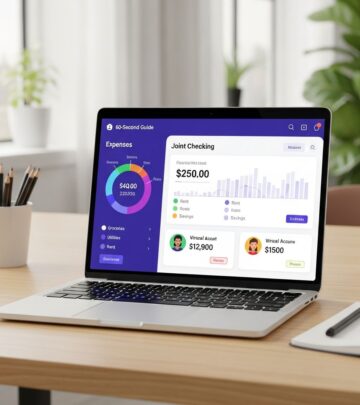
Joint Bank Accounts: 4 Life-Stage Strategies To Share Finances
Understand how joint bank accounts work, their pros and cons, and how to use them wisely at every life stage.

Joint bank accounts can simplify shared finances, but they also create legal and financial ties that require trust, planning, and clear communication. As your life changes — getting married, supporting aging parents, or helping a child learn money management — the way you use joint accounts should change too.
This guide explains how joint bank accounts work, the key benefits and risks, and how to decide whether a joint checking or savings account fits your life stage and financial goals.
What Is a Joint Bank Account?
A joint bank account is a checking or savings account owned by two or more people, such as spouses, partners, relatives, or business co-owners. Each listed owner has full legal access to the money: they can deposit, withdraw, pay bills, and view the balance and transactions, typically without needing permission from the other owner.
Joint accounts are common among couples and families to manage shared expenses like rent, mortgage, utilities, groceries, and childcare. According to the U.S. Census Bureau, a majority of married couples hold at least one joint account, though many also maintain separate accounts for personal spending.
How Joint Bank Accounts Are Titled
Most personal joint accounts are opened as “joint tenants with rights of survivorship” (JTWROS). This means that if one owner dies, the surviving owner automatically becomes the sole owner of the account. Banks may use different labels, but the survivorship feature is common for spouses and partners.
Because titling affects who owns the money if a partner dies or if a relationship ends, it is essential to confirm with your bank how the joint account is structured and whether survivorship applies.
How Joint Bank Accounts Work
Functionally, a joint account works like a regular checking or savings account, with one crucial difference: every owner has equal and independent control over the funds.
- Either owner can deposit money, set up direct deposit, or transfer funds in.
- Either owner can withdraw any amount, write checks, use the debit card, or make electronic payments.
- Both owners can see all transactions and the full account balance.
- The bank typically does not track which person deposited which funds.
From the bank’s perspective, each owner is equally responsible for what happens with the account, including overdrafts and fees.
Joint Checking vs. Joint Savings
| Feature | Joint Checking Account | Joint Savings Account |
|---|---|---|
| Main purpose | Daily transactions, bill payments, debit card use | Short- or long-term savings goals, emergency fund |
| Access | Frequent; checks, debit, ACH, online bill pay | Less frequent; transfers or limited withdrawals |
| Ideal use | Shared household expenses and regular cash flow | Shared goals (e.g., emergency fund, house down payment) |
| Risk of overdraft | Higher, due to frequent transactions | Lower; often used as overdraft backup |
Pros and Cons of Joint Bank Accounts
Before you open a joint account, weigh the advantages against the risks. Whether you are newly partnered, married for years, or coordinating with a parent or child, the same core trade-offs apply.
Benefits of Joint Bank Accounts
- Simplified bill payment and budgeting: One shared account for rent, mortgage, utilities, groceries, and subscriptions can make it easier to see total household spending and ensure bills are paid on time.
- Greater transparency: Both owners can see all deposits and withdrawals, which can encourage open conversations about money and priorities.
- Access in emergencies: If one partner is ill, traveling, or incapacitated, the other can still pay bills and access cash without needing power of attorney or court orders.
- Estate and survivorship convenience: When accounts are titled with rights of survivorship, the surviving owner often gains full access without going through probate, which can speed up access to funds after a death.
- Increased FDIC insurance coverage: At an FDIC-insured bank, each joint owner typically receives up to $250,000 in insurance coverage per bank, so a two-person joint account can be insured up to $500,000 if structured correctly.
Risks and Drawbacks
- Loss of financial privacy: Every transaction appears on the same statement. This can make it difficult to surprise a partner with gifts or keep certain expenses private.
- Shared liability for overdrafts and fees: If one person overspends or mismanages the account, both owners may face overdraft charges, negative balances, or account closures.
- Exposure to creditors: In some cases, creditors of one owner may be able to reach funds in a joint account, depending on state law and how the account is funded.
- Potential conflict in breakups or divorce: If a relationship ends, any owner could withdraw most or all of the funds. Sorting out who is “entitled” to what may require legal intervention.
- Tax reporting complications: Interest income from a joint savings account must be reported, and if owners file separate returns, they must agree how to divide the reported interest.
Joint Accounts and Life Stages
Your decision about whether to use a joint account — and how extensively — often depends on your life stage and relationship status. Below are common scenarios and strategies for each.
1. Newly Married or Newly Cohabiting Couples
When couples first move in together or get married, they often face overlapping financial responsibilities: rent or mortgage, utilities, groceries, streaming services, and transportation. A joint account can make sharing these expenses smoother.
Fully Joint vs. Hybrid vs. Separate
- Fully joint: All income is deposited into one or more joint accounts, and both partners pay all expenses from these accounts.
- Hybrid (“yours, mine, and ours”): Each partner keeps an individual account for personal spending plus a joint account for shared costs and mutual goals.
- Fully separate: No joint accounts; each partner pays specific bills or reimburses the other for shared expenses.
Many financial planners recommend the hybrid approach for new couples. For example, each partner might transfer a fixed amount or percentage of income into a joint account for household expenses and savings, while retaining separate accounts for personal purchases.
Key Considerations for New Couples
- Agree on which expenses will be paid from the joint account.
- Decide how much each partner will contribute (equal amounts vs. proportional to income).
- Set spending rules — for instance, requiring a joint discussion before large purchases.
- Review statements together monthly to maintain transparency.
2. Long-Term Couples and Families
As relationships mature and responsibilities grow — children, a mortgage, or large shared goals — joint accounts can provide structure and efficiency. Many couples use:
- A joint checking account for everyday bills and family spending.
- One or more joint savings accounts for emergency funds, home repairs, vacations, or education savings.
- Separate individual savings accounts for personal goals and autonomy.
Research indicates that shared financial systems, including joint accounts, are often associated with more coordinated household decision-making, though personal preferences and relationship dynamics play a large role.
Protecting the Household
- Link joint checking to a joint savings account for overdraft protection where available.
- Keep an emergency fund large enough to cover several months of expenses, accessible via joint ownership.
- Use alerts for low balances, large transactions, or unusual activity.
3. Supporting Aging Parents or Relatives
Adult children sometimes open joint accounts with older parents to simplify bill payments and help manage finances. While this can be convenient, it introduces two major issues:
- Ownership and gifting: Adding a child as a joint owner may be treated legally as giving them ownership of some or all the funds, which can have gift or estate tax implications in certain situations.
- Risk exposure: The parent’s money could become vulnerable to the child’s creditors, lawsuits, or divorce settlements.
Alternative arrangements — such as durable powers of attorney, representative payee status for certain benefits, or being an authorized signer rather than a joint owner — may offer similar convenience with less risk. Because laws differ by state, consulting an attorney or qualified financial professional is recommended.
4. Teaching Children About Money
Some banks and credit unions offer youth or teen accounts that can be linked to a parent as a joint owner. These can help children learn to manage money while giving parents visibility and some control.
- Parents can monitor balances and transactions and encourage responsible use.
- Children may have debit cards with daily limits or restricted categories.
- Both parent and child can make deposits, such as allowance, part-time job income, or gifts.
However, because a joint account typically gives the child full access to any funds in it, parents should be clear about expectations, and consider keeping larger savings in a separate, parent-owned account.
How to Open a Joint Bank Account
Opening a joint account is similar to opening an individual account, but the bank must collect information for each owner. Processes vary by institution, but most banks and credit unions allow joint accounts to be opened in a branch or online.
Information You Will Need
- Government-issued photo ID (such as a driver’s license or passport) for each person
- Social Security number or taxpayer identification number for each owner
- Current address and contact details (phone and email)
- Date of birth and, in some cases, employment or income information
Banks may also review each applicant’s banking history through systems like ChexSystems to check for past overdrafts or closed accounts, and they can deny an application if there is a problematic record.
Steps to Set Up the Account
- Decide whether you need a joint checking account, joint savings account, or both.
- Compare fees, minimum balance requirements, ATM access, and interest rates.
- Apply together online or at a branch and review the account agreement before signing.
- Fund the account with an initial deposit and set up direct deposits or recurring transfers.
- Establish rules and communication routines for monitoring and using the account.
Managing a Joint Account Safely and Effectively
Because joint accounts affect both owners equally, good communication and clear expectations are critical. Many problems with joint accounts arise from misunderstandings rather than intentional misuse.
Best Practices for Smooth Management
- Communicate regularly: Schedule monthly check-ins to review transactions, upcoming bills, and savings goals.
- Define spending boundaries: Agree on which expenses are “joint” and when it is acceptable for either person to make a large purchase from the account.
- Use alerts and online tools: Enable text or email alerts for low balances, large transactions, or new payees.
- Maintain some personal funds: Even when using joint accounts extensively, many couples benefit from small individual accounts for discretionary spending, which can reduce conflict.
- Document shared goals: Write down goals for the joint account (e.g., build a $10,000 emergency fund) and track progress together.
Tax Considerations for Joint Accounts
Interest earned on joint savings or high-yield checking accounts is taxable. Banks typically issue IRS Form 1099-INT to the primary Social Security number listed on the account.
- Married couples filing jointly: Report the full amount of interest income on your joint tax return.
- Married filing separately or unmarried co-owners: Owners must decide how to split and report the interest, often in proportion to each person’s contributions, though the IRS generally expects the person who receives the 1099-INT to report it unless there is a clear agreement.
Large transfers of funds into a joint account could also have gift tax implications if one person contributes significantly more for the benefit of another, though many situations fall below federal gift tax thresholds. A tax professional can help you navigate complex cases.
When to Reconsider or Close a Joint Account
As relationships and responsibilities change, a joint account that once made sense may need to be adjusted, limited, or closed.
Signs It May Be Time to Change Your Setup
- Repeated overdrafts or unapproved withdrawals by one owner
- Major life changes, such as separation, divorce, or remarriage
- Concern about a co-owner’s debt, addiction, or financial behavior
- Desire for more financial independence or privacy
Steps to Transition Away From a Joint Account
- Open individual accounts if you do not already have them.
- Redirect direct deposits and automatic payments to the new accounts.
- Allow a full billing cycle to ensure all pending transactions clear.
- Transfer the remaining balance according to your agreement or court order.
- Follow the bank’s procedure to close the joint account; some institutions require signatures from all owners.
Frequently Asked Questions (FAQs)
Q: Is a joint bank account right for every couple?
A: Not necessarily. Some couples value the convenience and transparency of joint accounts, while others prefer separate finances to maintain independence. A hybrid approach — combining a joint account for shared expenses with separate individual accounts — often offers a balance of both.
Q: Can any joint account holder withdraw all the money?
A: In most standard joint accounts, any owner can withdraw up to the full balance at any time, and the bank is not responsible for disputes between owners. Legal remedies, if needed, typically occur outside the banking system, such as through divorce courts or civil actions.
Q: Does a joint account affect my credit score?
A: Everyday checking or savings activity does not usually appear on credit reports. However, if your joint account is connected to overdraft lines of credit or you have joint loans or credit cards, missed payments or defaults can affect both owners’ credit scores.
Q: Are joint accounts safer in terms of bank failure?
A: Joint accounts at FDIC-insured banks can provide higher total deposit insurance because each co-owner typically receives up to $250,000 of coverage for their share of the account, potentially doubling coverage for two-person accounts if all FDIC rules are met.
Q: What is the difference between a joint owner and an authorized signer?
A: A joint owner has full ownership rights to the funds and may have survivorship rights if another owner dies. An authorized signer can transact on the account but does not own the funds. This distinction is important when helping aging parents or managing business accounts, and the exact rights depend on the bank’s agreements and state law.
References
- What is a joint bank account? — Bankrate. 2024-05-29. https://www.bankrate.com/banking/what-is-a-joint-bank-account/
- Joint Checking Accounts: What to Know in 2026 — Sunward Credit Union. 2025-01-05. https://gosunward.org/articles/joint-checking-accounts-what-to-know-in-2026/
- Should married couples have separate bank accounts? — MoneyRates. 2023-11-14. https://www.moneyrates.com/checking/should-married-couples-have-separate-bank-accounts.htm
- Should I Link My Bank Account With My Child’s Account? — MoneyRates. 2022-09-19. https://www.moneyrates.com/advancedstrategies/joint-account-with-child.htm
- 1-Minute Guide to Managing a Joint Checking Account — MoneyRates. 2022-03-03. https://www.moneyrates.com/checking/60-second-guide-to-managing-a-joint-checking-account.htm
- Couples’ Finances: Married but Separate — U.S. Census Bureau. 2025-09-19. https://www.census.gov/library/stories/2025/09/married-but-separate.html
Similar Articles








Read full bio of Sneha Tete