Johns Hopkins University: Excellence in Research & Innovation
Discover Johns Hopkins University: A leading institution for research, innovation, and academic excellence.
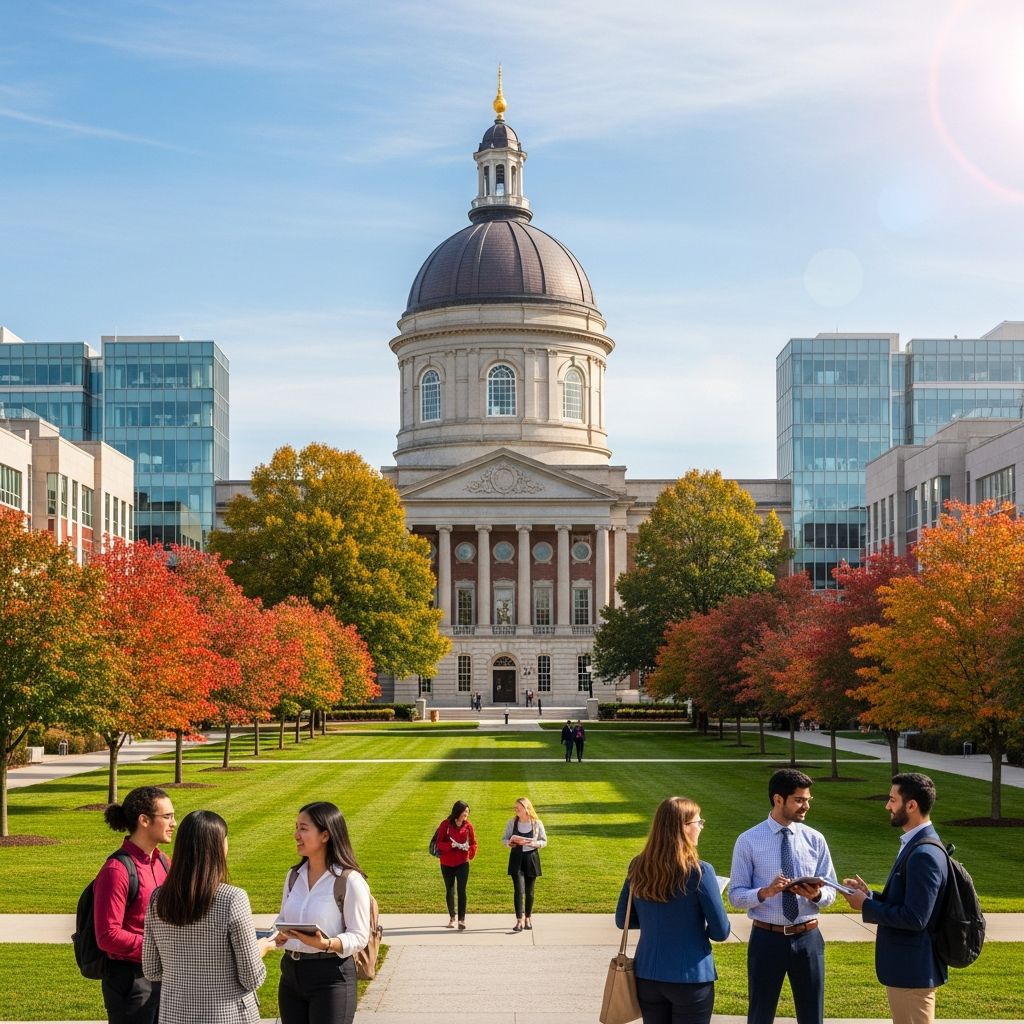
Johns Hopkins University: A Premier Research Institution
Johns Hopkins University stands as one of America’s most prestigious institutions, renowned for its commitment to research, innovation, and academic excellence. Located in Baltimore, Maryland, the university has established itself as a leader in undergraduate education, graduate studies, and cutting-edge research across multiple disciplines. With a strong emphasis on providing students with opportunities to engage in meaningful research and scholarly work, Johns Hopkins continues to attract top-tier students and faculty from around the world.
Overall Rankings and Recognition
Johns Hopkins University maintains an exceptional position among the nation’s leading universities. The institution was ranked No. 6 among national universities in the 2024-2025 U.S. News & World Report rankings, tied with the California Institute of Technology, Duke University, and Northwestern University. In the 2025 rankings, Johns Hopkins moved to No. 7, tied with Duke University, Northwestern University, and the University of Pennsylvania. This consistent placement within the top 10 reflects the university’s unwavering commitment to educational excellence and student success. According to global rankings, Johns Hopkins is ranked No. 24 in the QS World University Rankings 2026 and holds a position in the top universities worldwide according to multiple international ranking systems.
The university has maintained its status among the nation’s top universities since 2019 and has been included in the top 20 in all but one year since the U.S. News rankings launched in the 1980s. This remarkable consistency demonstrates Johns Hopkins’ dedication to maintaining the highest standards of academic quality and institutional performance.
Academic Discipline Rankings
Johns Hopkins excels across numerous academic disciplines, particularly in engineering, biomedical sciences, and technology fields. The university’s strength in specialized areas is evident through its exceptional rankings:
| Program | Ranking |
|---|---|
| Biomedical Engineering | No. 1 (tied) |
| Biocomputer/Bioinformatics/Biotechnology | No. 4 (tied) |
| Psychology | No. 8 (tied) |
| Engineering | No. 13 |
| Computer Science | No. 16 (tied) |
| Artificial Intelligence | No. 20 |
| Mechanical Engineering | No. 23 |
| Chemical Engineering | No. 24 |
Johns Hopkins is particularly distinguished as a leader in biomedical engineering, where it holds the top position, reflecting the university’s historical strength in biomedical sciences and research. The institution’s ranking improvements in artificial intelligence, moving from No. 18 to No. 20 between 2024 and 2025, demonstrate its commitment to emerging technologies and interdisciplinary innovation.
Value and Affordability
One of the most significant advantages of attending Johns Hopkins is the university’s commitment to financial accessibility. The institution ranked No. 10 for value in 2024 and improved to No. 12 for value in 2025, based on a combination of academic quality and net cost of attendance. More impressively, Johns Hopkins ranks No. 6 nationally for low levels of student debt, a distinction the university has maintained for the second consecutive year.
This achievement is largely attributable to a transformative $1.8 billion gift from philanthropist and Johns Hopkins alumnus Michael R. Bloomberg, designated to support undergraduate financial aid. This substantial endowment has had a profound impact on student outcomes, helping to cut the average Hopkins graduate’s federal loan debt in half since the donation was made in 2018. This investment in student financial wellness ensures that brilliant students from all socioeconomic backgrounds can access a Johns Hopkins education without excessive debt burden.
Research and Innovation Opportunities
Johns Hopkins University is renowned for providing exceptional opportunities for undergraduate research and creative projects. Over 90% of Hopkins undergraduates participate in at least one research experience during their time at the university, with students averaging 6 to 10 hours per week participating in research endeavors. This extraordinarily high participation rate distinguishes Johns Hopkins from many peer institutions and reflects the university’s core commitment to experiential learning.
The university’s emphasis on research has earned it recognition in multiple ranking categories. Hopkins ranked No. 10 for innovation in 2024 and maintained this position in 2025, while simultaneously climbing to No. 9 for undergraduate research and creative projects in 2025, up from No. 12 in the previous year. These rankings underscore the institution’s success in fostering a research-intensive culture that empowers undergraduates to contribute meaningfully to their fields from their first year.
Teaching Excellence and Undergraduate Experience
Johns Hopkins has earned recognition as an institution with outstanding undergraduate classroom experiences. The university is included among schools with the best undergraduate teaching, based on surveys of academics asked to identify institutions where faculty demonstrate a remarkable commitment to undergraduate scholars. This distinction reflects the dedication of Johns Hopkins faculty to creating engaging, rigorous, and supportive learning environments.
The commitment to undergraduate education extends beyond the classroom. The university provides comprehensive support systems, mentorship opportunities, and engagement in meaningful academic discourse. Faculty members at Johns Hopkins are not only leading researchers but also dedicated educators who recognize the importance of mentoring the next generation of scholars and leaders.
Social Mobility and Access
Johns Hopkins has made significant progress in social mobility, moving up 17 places in the U.S. News rankings for this metric in 2025. Social mobility measures institutions’ success in enrolling and graduating large proportions of students who are awarded Pell Grants—federal grants for low-income students. This improvement reflects Johns Hopkins’ commitment to expanding access and creating pathways for talented students from underrepresented socioeconomic backgrounds.
The combination of generous financial aid, strong academic support, and a vibrant campus community makes Johns Hopkins an attractive option for students seeking both academic rigor and an inclusive environment where students from diverse backgrounds thrive.
Campus Culture and Student Life
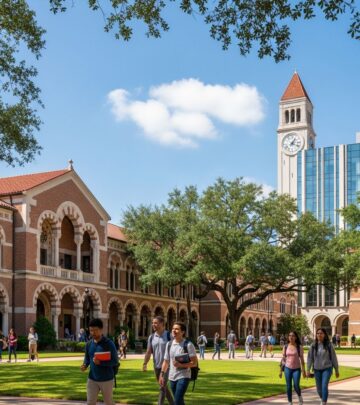
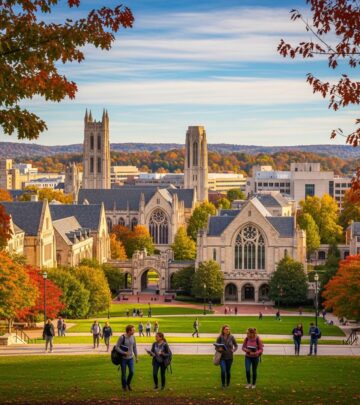
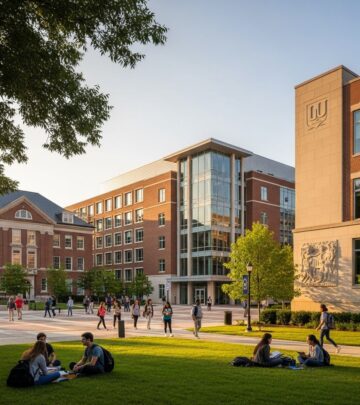
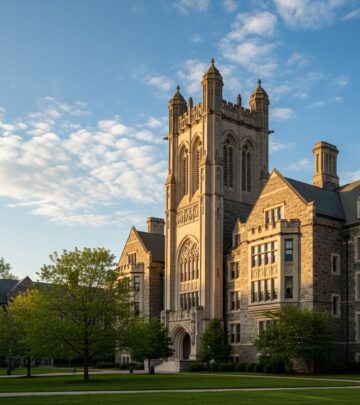
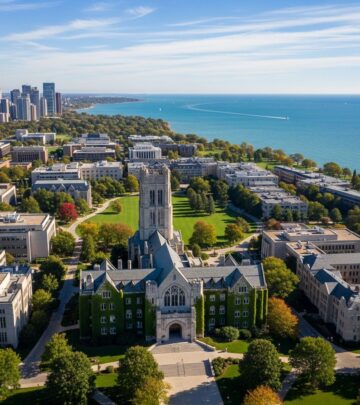
Johns Hopkins offers a dynamic campus environment where intellectual curiosity thrives. The university balances rigorous academics with vibrant student life, offering numerous clubs, organizations, and activities that enrich the undergraduate experience. Students benefit from the university’s location in Baltimore while also accessing the resources of an internationally recognized research institution.
The residential college system at Hopkins fosters community and intellectual engagement, creating spaces where students can develop lifelong friendships and professional networks. The combination of academic excellence and community-building initiatives creates an environment where students feel supported while being challenged to reach their full potential.
Admission and Enrollment
Johns Hopkins maintains highly selective admissions standards, reflecting the exceptional quality of its student body. The 2024 admission cycle received 45,134 applicants, with an acceptance rate of 5.7%, and enrolled 1,288 students from an admitted class of 2,558 students, resulting in a yield of 50%. These statistics demonstrate the university’s ability to attract highly qualified applicants and retain admitted students who choose Hopkins over competing institutions.
Global Recognition
Beyond domestic rankings, Johns Hopkins maintains a strong international reputation. The university is ranked among the world’s leading institutions by multiple global ranking systems, including the QS World University Rankings (No. 24 in 2026) and the Shanghai Ranking (No. 19 in 2025). This global recognition reflects the university’s contributions to research, innovation, and scholarship that transcend national boundaries.
Ranking Methodology
The U.S. News rankings evaluate universities using 17 measures of academic quality applied to nearly 1,700 U.S. four-year bachelor’s degree-granting institutions. These metrics encompass educational excellence, graduate outcomes, and considerations that vary person to person, such as campus culture, strength in specific majors, and financial aid offered. This comprehensive approach ensures that rankings reflect multiple dimensions of institutional quality rather than relying on a single metric.
Frequently Asked Questions About Johns Hopkins University
Q: What is Johns Hopkins University’s current national ranking?
A: According to the 2025 U.S. News & World Report rankings, Johns Hopkins University is ranked No. 7 among national universities, tied with Duke University, Northwestern University, and the University of Pennsylvania. In the 2024-2025 rankings, it held the No. 6 position.
Q: What are Johns Hopkins’ strongest academic programs?
A: Johns Hopkins excels particularly in biomedical engineering (No. 1), biocomputer/bioinformatics/biotechnology (No. 4), psychology, and engineering disciplines. The university is also recognized for its strengths in computer science, artificial intelligence, and mechanical engineering.
Q: How affordable is Johns Hopkins University?
A: Johns Hopkins ranks No. 12 for value and No. 6 for low student debt levels. The university received a transformative $1.8 billion gift from Michael R. Bloomberg for undergraduate financial aid, which has helped cut average graduate federal loan debt in half since 2018.
Q: What percentage of Johns Hopkins undergraduates participate in research?
A: Over 90% of Johns Hopkins undergraduates participate in at least one research experience during their time at the university, with students averaging 6 to 10 hours per week on research endeavors.
Q: How selective is Johns Hopkins’ admission process?
A: Johns Hopkins is highly selective, with a 5.7% acceptance rate in 2024. The university received 45,134 applications and enrolled 1,288 students, demonstrating its status as one of the nation’s most competitive universities.
Q: How is Johns Hopkins recognized internationally?
A: Johns Hopkins is ranked No. 24 in the QS World University Rankings 2026 and No. 19 in the Shanghai Academic Ranking of World Universities 2025, reflecting its strong international reputation and contributions to global research and scholarship.
References
- Johns Hopkins rises to No. 6 in U.S. News best colleges rankings — Johns Hopkins Media Relations. 2024-09-24. https://hub.jhu.edu/2024/09/24/us-news-best-colleges-rankings-2024/
- Johns Hopkins No. 7 in U.S. News Best Colleges rankings — Johns Hopkins Media Relations. 2025-09-23. https://hub.jhu.edu/2025/09/23/us-news-best-colleges-rankings-2025/
- Johns Hopkins University — Wikipedia. Accessed 2025-11-29. https://en.wikipedia.org/wiki/Johns_Hopkins_University
- Johns Hopkins University: Rankings, Fees & Courses Details — Top Universities. Updated 2025-06-30. https://www.topuniversities.com/universities/johns-hopkins-university
- Johns Hopkins University — Times Higher Education World University Rankings — Times Higher Education. 2026. https://www.timeshighereducation.com/world-university-rankings/johns-hopkins-university
- Johns Hopkins University — Shanghai Ranking — Shanghai Ranking. 2025. https://www.shanghairanking.com/institution/johns-hopkins-university
Similar Articles








Read full bio of medha deb